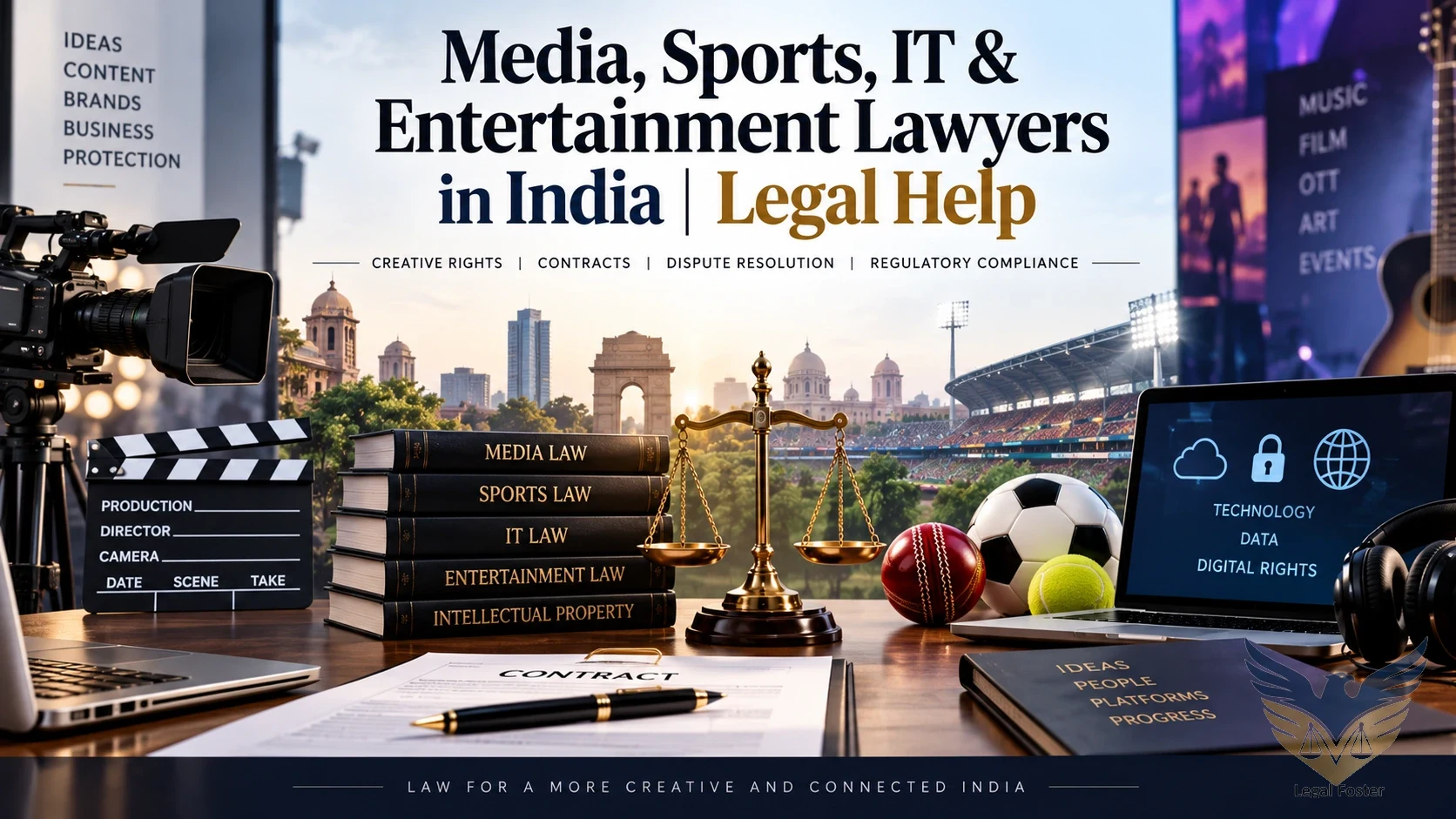
How Do Media, Sports, IT and Entertainment Lawyers Assist Clients?
A Film producer signs a distribution deal but discovers the platform allowing third party use of his content outside the territory granted to them. A sportsperson/organisation signs a sponsorship deal but isn’t paid on time. A tech startup hires an external developer, but realise down the line that their contract makes no mention of who owns the source code. An influencer signs an exclusivity clause without knowing what ‘exclusive’ entails when it comes to working with other brands in the future.
Whilst every dispute has its own facts, many of these disputes involve similar legal questions. Who owns the rights? Who can use them? Where? For how long? On what terms? What if someone doesn’t do what they said they would?
These are just some of the examples where Media, Sports, IT and Entertainment Lawyers can assist.
MS(IT) Lawyers represent clients at the crossroads of contracts, intellectual property, data protection, technology, commercial rights, sponsorships, licensing, reputation management and digital commerce. Often times, the work involved does not include any courts or disputes. The legal risks occur before a dispute has even arisen- when contracts are signed but vital aspects such as ownership, payment terms, exclusivity, termination provisions or permitted use is not clearly stated.
BK Singh Advocate reviews contracts for businesses, professionals and commercial clients to better understand the legal risks involved when entering into agreements for media, sport, technology and entertainment purposes.
Clients range from production companies, digital media companies, sportspeople, sports management firms, software developers, startups, web platforms to advertising agencies, content creators, music companies and influencers to tech service providers.
While nothing can prevent a disagreement from happening, a well drafted contract can at least set out the rights and obligations of all parties clearly should a disagreement arise.
Why Do Media, Sports, IT and Entertainment Legal Issues Matter in India in 2026?
Media and technology companies commonly conduct business across various platforms. A film may be released theatrically and licensed to an OTT platform, before being repurposed in promotional clips. Athletes and celebrities may enter into separate agreements for sponsorships and appearances, merchandise sales, and social media promotions.
Different rights may apply to all of the above based on the commercial deal struck.
Clients with operations in Delhi NCR,Mumbai,Bengaluru, Hyderabad, Chennai, Kolkata,Noida,Gurugram and other regions may also have multiple parties to a dispute spread across various states and countries. Jurisdiction, arbitration, intellectual property ownership, and digital clauses are just a few clauses that should be revisited with this in mind.
Our Corporate Law Firm can help you better understand your commercial rights long before a dispute turns into expensive litigation.
Digital / Technology companies should also keep abreast of changing regulatory requirements. Companies that collect digital personal information should now be considering their obligations under The Digital Personal Data Protection Act, 2023 and Digital Personal Data Protection Rules, 2025.
Websites, intermediaries, and digital news platforms should each consider the Information Technology Act, 2000 and the various Information Technology Rules that may apply to them based on their unique business activities.
BK Singh Advocate can assess your contracts, digital usage, and commercial arrangements to identify where personalized legal consultation is required.
Clients often care less about the legal issue at hand and more about how it can impact their business. Lawsuits can stop you from releasing new products, distributing your content, earning advertising revenue, damage sponsorship deals, or lose valuable IP under someone else’s control.
Quick Facts
- Copyright (Intellectual Property Rights) can cover movies, songs, photographs, scripts, computer programs etc.
- Trade marks ( Registered Trade marks) can cover brand names, logos, trade dress,event names,etc.
- Technology agreements would typically cover ownership, licensing, confidential information, payments and termination related provisions.
- Data controllers and data processors ( Digital personal data ) would need to ensure compliance with the DPDP Act, 2023 which will embody the coming into force (phase wise implementation) of the Digital Personal Data Protection Rules, 2025. .
- Law Relating to Sports can cover sports sponsorship, endorsements, personality / image rights, sports event management, contracts etc.
- E-commerce law is relevant for online intermediaries and start-ups operating in digital-media. (governing law would be the IT Act and the relevant IT Rules in effect).
- Remedies would depend on the contract, right affected and the violation. These could include injunctions, damages etc.
How Can Copyright Law Affect Media and Entertainment Clients?
Intellectual property law, and copyright in particular, is one of the most important areas of law for media and entertainment businesses.
Intellectual property law, and copyright in particular, is one of the most important areas of law for media and entertainment businesses.
Copyright can arise under the Copyright, Designs and Patents Act, 1988 (“the Act”) in literary works, dramatic works, musical works, artistic works, cinematograph films, sound recordings and computer programmes.
For example, a production company may need copyright advice on scripts, music, photographs, posters or promotional material or film stills. Digital content is covered under copyright so a technology company may require advice on software code, databases or digital media.
One mistake that people often make is assuming that copyright is transferred on payment.
This is not always the case. The ownership of copyright and the right to use that copyright can dependant on the work being carried out and the relationship between the parties. For this reason it is important that the ownership of copyright and rights to use that copyright are clearly set out in writing.
Here at Corporate Law Firm we can review copyright clauses, assignments and licence agreements for our clients prior to the content being commercially exploited.
What Is the Difference Between Copyright Ownership and Licensing?
Ownership does not equal licensing. Ownership, when referring to copyright generally means who owns the legal rights to the copyright work. A licence allows another party to use that work in specific ways without transferring ownership of the work to another party.
For example if a photographer allows an advertising agency to use photographs for a specific campaign, the licence to use those photographs may not allow the agency to use them in any campaign they work on indefinitely.
- Similar issues can arise from the distribution of films, licensing of music and usage of software.
- A licence agreement should set out :
- the rights being licensed;
- whether it is an exclusive or non-exclusive licence;
- the territory where the material can be used;
- the term of the agreement;
- whether sub-licensing is permitted;
- how much payment or royalty is payable; and
- termination provisions.
BK Singh Advocate can review such provisions to determine if the wording is commercially appropriate.
How Can Trade Mark Law Protect Media, Sports and Entertainment Brands?
Frequently, brand identity develops some commercial value before the owner thinks to register it.
If you find that any of the areas below apply to your business you may have trade mark provisions under the Trade Marks Act, 1999 which can be applied to protect brand names, logos, marks or other ideas.
Sporting teams, entertainment businesses, production companies, social media and tech start ups are usually particularly brand aware. You may have issues with brand identity if:.
- someone launches a business with a similar name to yours;
- your logo is being used by someone selling merchandise;
- someone has copied the “look and feel” of your website;
- signed merchandise is being used beyond agreed terms;
- an ex-partner or former employee is using the brand you created.
BK Singh Advocate can help you assess the surrounding contractual and commercial issues to identify what legal options you should pursue.
Brand identity can often be an emotive issue if your public reputation is involved. Taking an emotional approach may not allow you to act in a legal sense.
What Is the Core Legal Issue in Media, Sports, IT and Entertainment Matters?
Most problems generally stem from who owns a right, who has the ability to exploit that right, for what purpose, for how long and for what remuneration.
Take for instance a Film maker who may own rights but can license the distribution rights to another party. A Software developer may write software for another party but may not address how IP is treated in their contract. An athlete signing an endorsement deal can give you that right but retain other rights to their personality/commercial image.
BK Singh Advocate will review the actual agreement and not be swayed by email and oral representations.
Many disputes arise because parties agree to terms they are not aware of what the legal definition is such as “exclusive” “own” “perpetual rights” or “all rights”.
What Documents Should Clients Keep Ready?
Legal review is made easier when complete records are available. Examples of useful records include:
- artiste, player, agency and sponsorship agreements;
- software development and licence agreements;
- assignment and IP agreements;
- production, distribution and publishing agreements;
- invoices, payment confirmations, royalty statements;
- non-disclosure / confidentiality agreements;
- website or app terms;
- privacy policy and consent records;
- email correspondence and other business records;
- notifications of infringement or breach;
- endorsement agreements and personality rights agreements;
- agreements with platforms or vendors.
Corporate Law Firm can review records to help you understand what was agreed and where the risk lies.
The contract rules. It’s signed. A screenshot and a Whats app can help to explain what happened. But they should not necessarily constitute your contract if complete records are not available.
When Should You Consult a Lawyer?
If a third party is:
- Copying your content, using your logo or software without authorization;
- Bargaining in bad faith over a manufacturing/license agreement;
- Avoiding royalty / revenue share payment;
- An endorsement contract dispute; A N Celebrity athlete
- Leaking trade secrets; OR
- Programming software without a clear definition of ownership;
- You have received a cease and desist letter regarding your website;
- You have concerns about the use of personal- data your business collects;
- Cancelling a sponsorship contract; or
- Assigning valuable commercial rights.
BK Singh Advocate can have your agreements reviewed prior to you signing away valuable rights you may never be able to reclaim. Although price is often the main focus of a client's concerns. The rights section deserves equal attention.
How Can Corporate Law Firm Help Clients?
Corporate Law Firm can assist producers, companies and commercial clients with contract review, IP agreements, technology agreements, commercial disputes, as well as general media, entertainment, sports and IT law.
BK Singh Advocate can assist you in understanding your contractual position, rights and obligations under an agreement, review notices received or to be sent and advise you on whether negotiations, enforcement, arbitration or litigation needs to be considered.
If you are a production company that needs to have a contract reviewed before signing away distribution rights. If you are an IT startup who wants to know who owns the software created by your employees or vendors. Or if you are a sports body which needs a sponsorship/endorsement agreement reviewed prior to making a commitment for next 3 years.
At Corporate Law Firm we focus on the commercial reality of your situation and the law that applies. Not by promising a specific outcome.
Frequently Asked Questions
01. What sort of legal matters do Media, Sports, IT and Entertainment Lawyers handle?
BK Singh Advocate can assist you with any legal issue relating to media and technology. This can range from contracts, copyright, trade marks, software, licensing agreements, sponsorship and endorsement contracts, privacy, platform regulations and commercial disputes. The type of legal matter would depend on what the client does or what legal problem they need to solve.
02. Can BK Singh Advocate review an entertainment contract?
Yes. Entertainment contracts and any commercial and legal terms can be reviewed by BK Singh Advocate. This includes agreements with producers, artists, licensing, distribution agreements, payment terms, IP rights and termination clauses for any type of transaction.
03. Who owns copyright in material created for a business?
It depends on what work is being done, any agreement signed and who owns the copyright under Indian copyright law. Clients should never assume that if they pay for a service, they automatically own unlimited rights to that material.
04. Would I need a lawyer for help with a sports sponsorship problem?
Yes. If there is a sponsorship issue there could be a problem with payment, exclusivity clauses, use of a persons name or image, a specific event not going ahead, termination or general breach of contract. BK Singh Advocate would review the contract and any correspondence.
05. Is a software agreement only covered by IT Law?
No software agreements just because they can deal with technical aspects, do not limit the agreement to IT Law. Other areas of law such as contract law, copyright, confidential information, data protection and general commercial disputes can apply.
06. Do I, as an Indian business, need to comply with data protection legislation?
Possibly. If your business handles any digital information about individuals then the DPDP Act, 2023 and/or DPDP Rules, 2025 may affect your organisation. It depends on which section applies to you and when exactly it comes into force.
07. I need help with copyright infringement. Can BK Singh Advocate help?
BK Singh can review the agreement, licence, assignment and any supporting proof of copyright infringement before advising on any next steps.
08. Do I need a contract with influencers?
Yes. Influencer agreements can relate to specific requirements, payment, exclusivity, intellectual property, advertising obligations and termination. It is always good to have a written agreement rather than a verbal one.
09. Can I avoid going to court with an entertainment dispute?
Yes. Many commercial disputes can be solved by negotiating with the other party or by invoking the dispute resolution section of the contract. It depends on your situation as to whether its better to settle, go to arbitration or litigation.
10. When should I first contact a Corporate Law Firm?
Do not sign any major rights document or if you are already in a dispute regarding ownership, payment, licensing, technology, sponsorship, digital media or any commercial rights you believe you are entitled to.
Final Thoughts
Media, sport, technology and entertainment businesses are often driven by intangible rights. Whether it's a contract, licence, brand, software asset, personal- data database or content catalogue - these can all hold significant commercial value.
BK Singh Advocate Media Lawyers can help our clients understand who owns those rights, how to leverage them and what remedies are available to protect them when commercial relationships break down.
BK Singh Advocate can review any contracts, rights documents and history of disputes for clients across Delhi NCR, Mumbai, Bengaluru, Hyderabad, Chennai, Kolkata and anywhere else in India.
Our clients can instruct our Corporate Lawyers either before entering into major transactions or after a contractual or rights-related dispute has occurred.