Corporate Lawyers in Noida for Business and Startup Legal Support
Businesses in Noida often don’t start with law on their radars. They start with gusto. They start with an idea that’s ready to take off. One or two (or ten) founders. A rented office. A few early customers. Dreams of expansion. Employees. Contracts. Money. Coming soon.
And then growth happens.
The first large customer contract lands on your desk.
You get asked to do diligence by a financier.
A co-founder inquires about his options regarding equity.
A vendor doesn’t pay you.
An employee joins your competition and takes your trade secrets with her. You discover your MCA compliance has expired. Someone on your team realizes you never actually filed to protect your company name.
Law starts to seep into your revenue. Your control over the company. Your business’ very survival.
Partnering with a Corporate Law Firm in Noida that can help with company formation, commercial contracts, compliance, founder agreements, transactions, employment contracts, intellectual property and commercial disputes can put safeguards around your business. Every company needs different support based on its corporate structure, industry, ownership structure and stage of growth.
One of the most common pitfalls we see founders stumbling into is waiting to retain a lawyer until a dispute has already arisen. By then, a poorly written agreement or unclear ownership structure can have already placed unnecessary stress on your business.
That’s why Corporate Law Firm Advocate BK Singh tries to educate businesses on potential legal pitfalls before it’’s too late.
For early stage businesses, this could mean talking through the benefits of forming a private limited company vs an LLP. Getting founder’'s rights in writing. Reviewing an investment term sheet. For more established Noida businesses, we’'ve helped with vendor contracts, board issues, compliance difficulties, employee agreements, acquisition due diligence, and even commercial disputes.
While no amount of legal assistance can completely shield your business from risks, it can help you see those risks and understand them.
And hopefully, put them into writing.
At Law Firm BK Singh, we understand that Noida is quickly becoming a technology hub, with startups, manufacturers, IT and IT-enabled services, professional services, e-commerce businesses and real estate businesses popping up every month. Businesses come to start here and transact with customers, employees, investors, vendors located across Uttar Pradesh and India.
What happens when just one of those entities raises a legal issue? A small corporate dispute can become a full-fledged business headache.
Why Does Corporate Legal Support Matter in Noida in 2026?
Corporate legal services are important because most commercial decisions create legal rights and obligations long before a dispute ends up in court or tribunal. Issuing shares, accepting investments, appointing new directors, entering into a lease of commercial property, hiring an employee that you don’t want to lose, acquiring technology or selling the business – many of the decisions that your Noida company will make may need to be documented and will often need to comply with government regulations.
India’s corporate compliance laws also change from time to time.
Starting 1 December 2025, the definition of what qualifies as a “small company” under the Companies Act regime, was widened to include companies with a paid up capital of up to ₹10 crore and turnover of up to ₹100 crore, subject to satisfying certain statutory conditions and exemptions.
The Director KYC requirements were also changed starting 31 March 2026. The current annual KYC requirement has been replaced with a simple KYC requirement once in three years, subject to certain provisions.
Just these two examples show how regulatory compliance can be a moving target. A compliance checklist you created three years ago may no longer be sufficient for today’s standards.
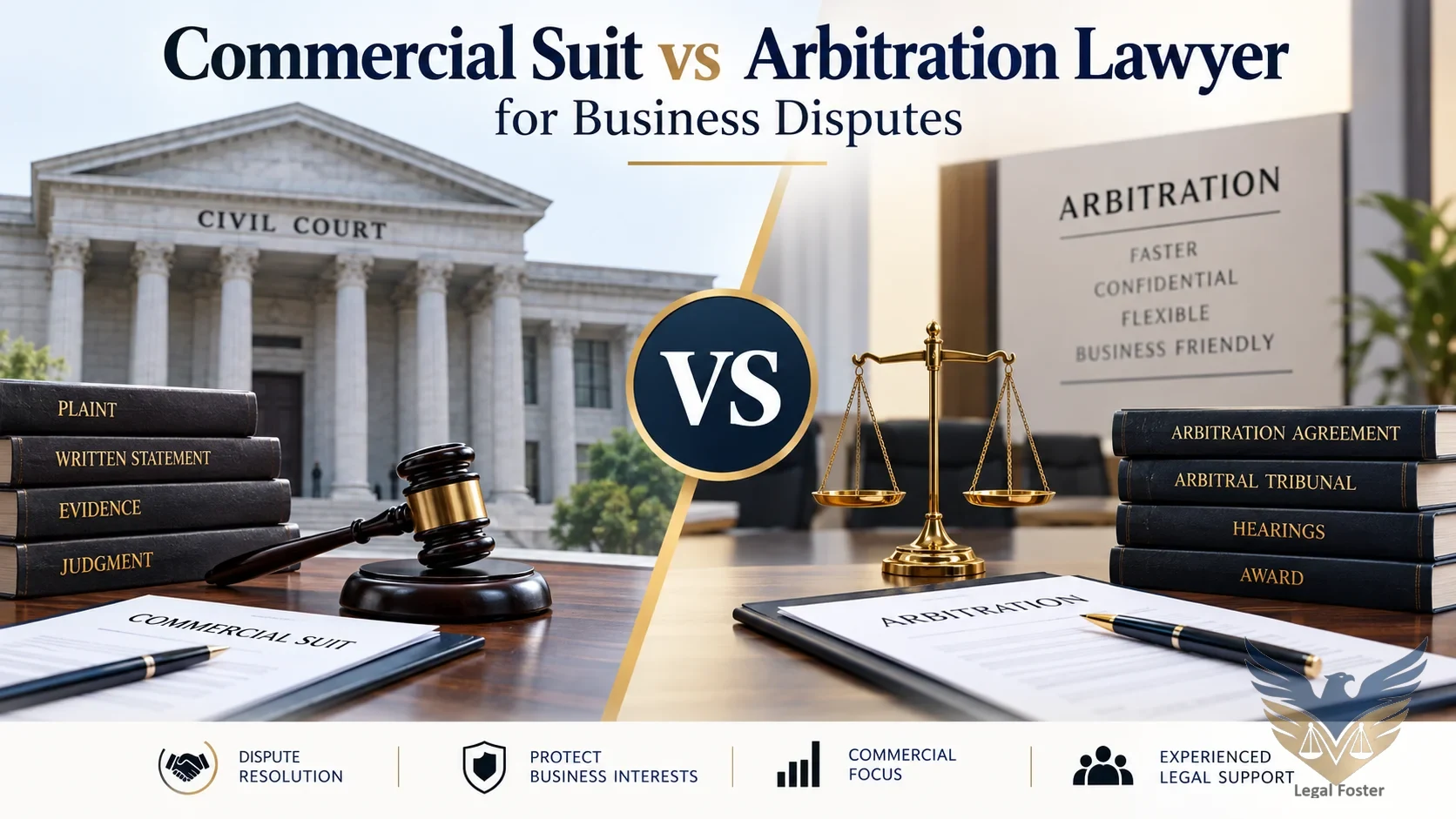
when they arise. Your company may find itself litigating in civil courts or commercial courts (contract disputes), in arbitration (if the parties choose) and, for certain company law issues, in the National Company Law Tribunal.
Quick Facts for Noida Businesses and Startups
- Incorporated entities are primarily governed by the Companies Act, 2013.
- LLPs are governed by Limited Liability Partnership Act, 2008 and LLP Rules made there under.
- Contracts are usually governed by Indian Contract Act, 1872 and the specific law governing the transaction.
- Foreign investments / cross border transactions are governed by Foreign Exchange Management Act, 1999, RBI guidelines and relevant FDI norms.
- Shareholder Rights are subject to the contractual documents and the Companies constitutional documents if any.
- Statutory compliances required depends on the type of entity, the turnover, shareholding pattern, nature of business and transaction.
- Even if a contract is duly executed by all parties to the contract, it does not make every clause in the contract legally enforceable.
What Does a Corporate Law Firm in Noida Actually Do?
Corporate Lawyer Firm Noida help companies at every stage of a business’. Whether it be Incorporation & Preparing early stage agreements, raising investment, expanding, restructuring and even disputes.
Corporate law doesn’t stop at the registration of a company.
The article of registration simply states that the company exists. It won’t define the voting rights of shareholders, what happens if a founder leaves the company, who owns the intellectual property founders create, how much ownership gets diluted with future investments or what remedies are available to shareholders if someone breaches the agreement. Your companies documents take care of those details.
Corporate Lawyers will help you with anything business related and look at the big picture of why your business is entering into a particular transaction rather than viewing each contract separately.
Legal needs for early stage companies and growing businesses can be broken into 4 categories: Business Structure, Contracts, Compliance and Risk.
Which Business Structure Should a Startup Choose?
Selecting a legal structure is one of the initial legal decisions a founder will have to make. Your ideal structure depends on your ownership plans, fundraising expectations, tax requirements, liability tolerances, compliance capabilities and the type of business you operate.
Private Limited Company
Founders who want to raise funds from outsiders, give equity to employees, or have structured shareholding can look to register a private limited company.
Companies are governed by the Companies Act, 2013. Operating a company includes board procedures, share capital, statutory books, annual returns, and more compliance.
If you are raising money from outsiders, it also means shareholder agreements, preferential rights, reserved matters, and exit rights.
Limited Liability Partnership (LLP)
An LLP is a separate legal entity but with some contracting capabilities in between the partners. How they contract is up to the partners.
Launching a professional service? Doing a business that does not require crowdfunding via traditional equity? An LLP may be right for you.
As above, that doesn’t necessarily make LLP formation easier or more suitable. Keep the commercial objectives of the founders in mind as well.
One Person Company (OPC)
Single promoters seeking a corporate vehicle should ask if an OPC would be a good fit for them under the Companies Act and rule eligibility.
Traditional Partnership
Partnership agreements aren’t a thing of the past just yet. Just be wary of the liability and partnership deed consequences if you’re entering into one with another person.
Before jumping into a structure, we at BK Singh Advocate can help you work through your proposed ownership structure, founder relationship, and intended capital structure. If you need more comprehensive formation services, please visit Incorporation & Licensing Services.
Why Do Founder Agreements Matter for Startups?
Founder disputes seldom begin with boilerplate provisions. Usually they begin with assumptions. “I built the product,” declares Founder 1. “I brought the clients,” insists Founder 2. “We never intended for anyone to have more shares than another,” states Founder 3.
None of these statements make for pleasant discussions after the company has value.
A founders’ agreement, or shareholders’ agreement, can address ownership, roles and responsibilities, voting and transfer restrictions, intellectual property /confidentiality, decision making, founder exits, vesting schedules and dispute resolution, amongst other topics.
Clauses should be tailored specifically to the facts. Blindly copying and pasting a Silicon Valley inspired shareholders’ agreement without regard for Indian company law and the company’s Articles of Association will almost certainly backfire later.
Corporate Law Firm can review your founder/shareholder agreements as part of our comprehensive Startup Advisory services.
Founders should remember that the agreement among shareholders must be carefully coordinated with the company’s constitutional documents. An agreement signed by all the founders is not always enforceable by law.
How Can Legal Support Help During Startup Funding?
Investment means opportunity and dilution.
When presented with a term sheet that you’re excited about, it’s natural to get caught up on valuation. Valuation isn’t the only thing being negotiated.
Term sheets/investment agreements can contain provisions relating to rights of the board, liquidation preference, anti-dilution rights, transfer restrictions, information rights, founder obligations, reserved matters and investor exits.
There are certain provisions that can take away control from founders even if they hold a majority of shares. For this reason it’s important legal review takes place before documents have reached their commercial tone.
BK Singh Advocate can assist founders with understanding the legal implications of the terms being offered by investors and help identify where commercial negotiations can occur.
If your investment is coming from abroad, foreign exchange laws provide another layer. Depending on the investor, industry and instrument, FEMA, RBI and Indian foreign investment regulations could apply.
No responsible lawyer will tell you that every investment needs to have the same terms. They won’t make that statement because every situation is unique.
How Should Businesses Protect Intellectual Property?
Desks. Computers. Product inventory. For many entrepreneurs, intellectual property (“IP”) is likely more valuable than all of the above.
From brand names and software code to unique designs and proprietary processes, IP can be your company’s most valuable asset. For that reason, ownership should be considered and documented from day one. A founder may believe that code commissioned from a freelancer belongs to the company simply because the company hired the freelancer and paid for his or her services. Not so. The law (and more specifically, the contract you signed with the freelancer) may grant rights to the freelancer.
Similarly, your logo and marketing materials, technical drawings, and product designs may not belong to your company. If created by a third party, the same aforementioned issue could occur.
Do you have trademarks you should be taking stock of? Do they need protection? Do your employment and consultant agreements properly address IP ownership? What about confidential information? Corporate Law Firm can assist you in making sure your corporate documents are working together so that your IP ownership works with your business’ commercial infrastructure.
Desks. Computers. Product inventory. For many entrepreneurs, intellectual property (“IP”) is likely more valuable than all of the above.
From brand names and software code to unique designs and proprietary processes, IP can be your company’s most valuable asset. For that reason, ownership should be considered and documented from day one. A founder may believe that code commissioned from a freelancer belongs to the company simply because the company hired the freelancer and paid for his or her services. Not so. The law (and more specifically, the contract you signed with the freelancer) may grant rights to the freelancer.
Similarly, your logo and marketing materials, technical drawings, and product designs may not belong to your company. If created by a third party, the same aforementioned issue could occur.
Do you have trademarks you should be taking stock of? Do they need protection? Do your employment and consultant agreements properly address IP ownership? What about confidential information? Corporate Law Firm can assist you in making sure your corporate documents are working together so that your IP ownership works with your business’ commercial infrastructure.
Documents and Evidence Checklist for Businesses
Your lawyer will be able to provide better advice if the company’s records are organised.
Maintain copies of:
- the certificate of incorporation and constitution;
- the current share register and capital structure;
- any shareholders’ or founders’ agreements;
- minutes of directors’ and shareholders’ meetings; and
- statutory registrations and licences.
In addition, keep copies of:
- key contracts with customers and suppliers;
- employee and consultant contracts;
- intellectual-property registrations and correspondence;
- financial agreements and investments;
- loan agreements and security documents; and
- notices received from regulators or counterparties.
Finally, make sure you also retain:
- invoices, purchase orders and related payment correspondence;
- copies of compliance documents and statutory filings;
- emails and other business correspondence that may have legal implications; and
- copies of any prior legal opinions or settlement agreements.
- If a dispute arises, don’t destroy documents.
Retain the original document and all email communications and attachments related to that document. Often the “cleaned” version of a contract that is sent to your lawyer is not what was actually agreed.
When Should a Business Consult a Corporate Lawyer?
If you are transferring control of a business, assuming financial risk, taking on liability for compliance or changing contractual risk, get legal advice.
Examples: investing in a business, selling equity, adding/removing a founder, entering a large contract, purchasing a business, receiving a legal claim or entering a regulated space.
It's also smart to have a lawyer when you realize your business can't make payments again, are concerned an employee is about to share trade secrets, have shareholder disagreements, receive a notice from a regulator or an investor requests due diligence.
Don't wait until you need to sign something tomorrow night to get legal advice.
If you wait until after you've negotiated the commercial terms then the attorney doesn't have much opportunity to provide practical solutions.
BK Singh Advocate can get involved at the outset so we can identify legal risks and your commercial decisions can be adjusted.
How Can Corporate Law Firm Help Businesses in Noida?
Corporate Law Firm provides corporate and commercial legal advice to startups, entrepreneurs, MSMEs, small family businesses as well as larger corporations on issues relating to business law in Noida and across India.
This may include services such as incorporation services, agreements, founders paperwork, corporate-commercial advice, compliances audits, funding documents, restructuring or litigation related legal services.
If your business isn't staffed with its own in-house counsel department, outside counsel on retainer can help management review contracts and legal matters as they arise. Learn more about Outside General Counsel Services.
BK Singh Advocate will give you the big picture on where you stand legally, in terms that can be appreciated from a commercial perspective. However, advice may still need to be qualified based on the facts at your particular company, industry specifics, transaction or governing law
No matter how thorough your corporate attorney is, they cannot guarantee a transaction will close, a investor will fund, or a lawsuit will go away.
Great legal advice can provide you with information to make better business decisions. It should not make the decisions for you.
Frequently Asked Questions
1. What services can a corporate lawyer firm provide?
A Corporate Law Firm in Noida can advise you with respect to incorporation of your company, agreements, corporate governance, shareholders agreements, investor documentation, compliance requirements, investment documents, employment contracts, coordinating your IP and commercial disputes.
Depending on where your company is at and its business model.services you require would differ.
2. Do I need a corporate lawyer for my startup from day one?
You would not need a lawyer for your startup at all times. But if your startup has multiple founders, is raising funds from outside, relies on intellectual property or is entering into significant contracts with customers. It is beneficial to have someone review your legal documents sooner rather than later.
BK Singh Advocate can help you figure out what issues needs getting your “paperwork” in place at the earliest and what can waited out without causing you immediate risk.
3. Does my startup need to be registered as a private limited company?
Not always.
While Private limited companies are the preferred choice of incorporation for startups that plan on taking investors. Depending on the nature of your business. LLPs, OPCs or some other structure could be more suited. You must understand liability, ownership, fundraising plans, tax liability and compliance responsibilities before deciding what’s best suited for your startup.
4. Can a corporate lawyer firm draft shareholders’ agreement?
Yes.
Corporate Lawyers can draft shareholders agreements. Corporate Law Firm can draft and review shareholder agreements, founders’ agreements and related documents.
BK Singh Advocate can also assist you in reviewing whether shareholder rights under any agreement should be included in a company’ Articles of Association or whether there are any mandatory provisions to be included under the Companies Act.
5. What should I negotiate before signing an investor’s term sheet?
Negotiate more than valuation.
Rights of the board, pre-emptive rights, liquidation preference, transfer restrictions, anti-dilution clauses, obligations of the founders, Tag along rights, Drag along rights etc. can impact future ownership and earnings greatly. Always have your term sheet reviewed by a lawyer before you proceed and negotiate the commercial terms instead of accepting them.
6. Can a corporate lawyer firm help me recover my unpaid invoices?
Yes. Your lawyer can review the contract which you signed with the buyer, review the invoices sent and correspondence sent and received between you and the buyer. Your lawyer can then advice on what are your options to recover your money. This could include sending a notice of contractual default, discuss the matter and negotiate a settlement, arbitration (if provided for in the contract), commercial litigation or some other remedy provided by law.
Which course would be recommended would entirely depend on what you agreed to when you entered into the contract and the facts of your situation.
7. Will every corporate dispute be filed at NCLT?
No. While NCLT has jurisdiction over certain company law and insolvency issues. Civil suits, local commercial disputes would be filed in courts or with the arbitrator as agreed to in your contracts.
Just because you are dealing with another company doesn’t mean the NCLT is the right forum to address your disputes.
8. I’m located in Delhi but do business in Noida. Can I get assistance from a Corporate Lawyer in Noida?
Yes. Drafting contracts, reviewing business transactions, advisory on corporate set up are a just few services provided by lawyers which is not restricted to where your company is located geographically in India.
Visitations to courts, registrations and filings would differ depending on where your company is registered or what agreement provides for legal proceedings to be filed. BK Singh Advocate would assist you in understanding what your legal options are.
9. How can a corporate lawyer help me if I want someone who can provide legal support on an ongoing basis?
If your startup has the resources to access general counsel, you can have your lawyers review your legal issues as part of the decision making process in the beginning instead of getting legally isolated and consulting a lawyer only when there is a dispute.
Such legal services include reviewing standard contracts, addressing your compliance requirements, sending notices, hire employee contracts, investing in another company etc. Depending on your requirements the scope of work can be tailored to provide you regular assistance.
10. When should I contact a corporate lawyer?
You should immediately seek legal help from BK Singh Advocate if you’ve received a notice from income tax, revenue authorities, government or law enforcement agency; received a legal notice; asked to provide information during due diligence by investors; disagree among founders on ownership; about to terminate an important contract with client or supplier; believe your confidential information has been abused or about to enter a major transaction.
Corporate Law Firm will help you review the relevant documents and understand any legal issues that need to be addressed.
Final Thoughts
Many people think of Corporate Lawyers when something goes wrong and they need assistance with litigation. But retaining Corporate law firm Noida should take place much earlier. When you choose your business structure, define your relationship as founders, negotiate that first major deal, stay in compliance, or make decisions about fundraising or growing your business.
At BK Singh Advocates we represent startups, family businesses, manufacturers, technology companies and more established service businesses. While each has their own specific needs. There is one thing all these businesses can learn from. Get your major business decisions in writing.
It only takes a few minutes to call before you sign a transaction. And we can save you tens of thousands of dollars by discovering an issue before it’s too late.
BK Singh Advocate and our team of Corporate Lawyers can help you and your business with any corporate-commercial need no matter where in India you are located. Whether it be Bangalore, Hyderabad, Gurgaon, Noida, or Greater Noida. We provide advice based on the facts of your unique situation and the law.