Legal Help with Agreement & Contract Drafting in India
Agreement & Contract Drafting Issues can impact your rights, business operations, property, reputation, finances and future legal rights. Timely review may be critical, as remedies are often subject to laws of limitation, procedure and stages of development. Legal Foster connects individuals and businesses with advocates for Agreement & Contract Drafting issues across India. The lawyer reviews the facts, discusses available options and helps prepare a response appropriate to the laws and forum involved. Every situation is unique. Relief depends on the documents, actions of both parties, relevant statutes, procedural history and evidence. Consult a lawyer before assuming you have a claim or strong defense.
Understanding Agreement & Contract Drafting Issues
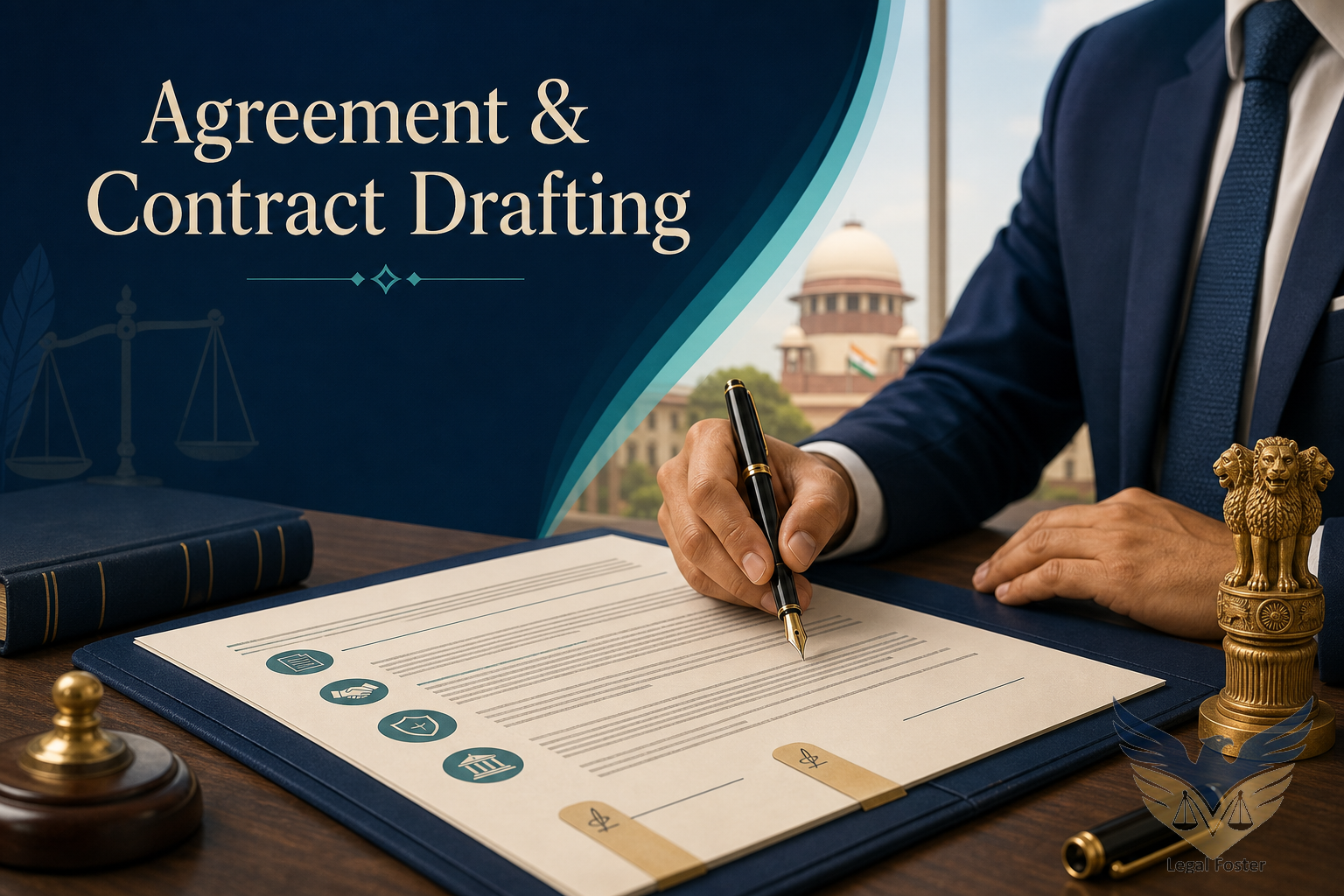
Drafting a Contract translates the parties' business agreement into enforceable rights, obligations, milestones, payment terms, risk allocation and exit consequences.
- Counsel identifies the transaction, key decision makers, interdependencies and mandatory law before drafting terms.
- Definitions, representations, indemnity, limitation and confidentiality clauses, intellectual property provisions, data restrictions, force majeure events, termination rights and dispute resolution mechanisms should function together as a system.
- Effective drafting includes issue lists, version history, negotiation records, signature authority lists, checks for stamp and registration requirements, and schedules that operational teams can implement.
An Agreement & Contract Drafting matter starts with defining the precise legal relationship between parties and what event gave rise to the dispute or need for advice. Issues that appear similar may involve different laws, agreements, agencies and relief.
- Counsel will therefore consider who has legal standing, which obligations are being challenged, what the client has done so far and where the matter can be heard.
- Legal advice may be preventive, transactional, regulatory in nature or negotiated / contentious.
- Representation could include preparing a document, responding to a notice, preserving rights during proceedings or making claims and defenses.
- Legal Foster only connects you to a lawyer; once engaged, the advocate provides advice tailored to your facts and laws.
Meeting With Counsel – Initial Assessment
The lawyer will normally ask about your goals, timeline, chronology and evidence.
- Counsel may inquire about the date(s) of material events, written and oral communications, if any admission or settlement occurred, and related proceedings.
- This conversation allows you to identify urgent issues and avoid procedural errors.
- Preparation is critical when a deadline, hearing, filing deadline, investigation or sale is imminent.
- Clients should be honest about favorable and unfavorable facts.
- Advice based on assumptions may be incorrect.
- Information or documents your opponent later produces could change counsel’s advice.
Documents and Evidence Reviewed
Agreements commonly reviewed include:
- term sheet and commercial proposal;
- party and authority representations;
- prior agreements and amendments;
- project scope and specifications;
- pricing and milestone details;
- risk allocation and compliance conditions;
- negotiation comments;
- signature authority, stamp and registration requirements.
Counsel will also review any agreements, notices, responses, payment receipts, emails, official orders, identity proofs, registrations, photographs, expert reports, pleadings and evidence filed previously. Counsel’s exact review depends on your matter and engagement.
- Keep original documents safe and provide legible copies.
- Paper files should be organized chronologically.
- Electronic documents should retain metadata if possible.
- Documents should not be altered.
- Counsel can only opine on evidence they understand.
- Consider having the lawyer prepare an index referencing the date, author, recipient and relevance of each key document.
Legal and Procedural Review
Once organized, counsel will highlight the laws, clauses, regulations and legal principles that apply to your agreement and dispute.
- Topics can include jurisdiction, limitation, maintainability, authority, notice and payment requirements, burden of proof, admissibility and the types of relief available from the forum.
- Procedural errors can derail a strong claim or defense.
- A meritorious position may become time-barred, filed in the wrong jurisdiction or dismissed due to lack of evidence.
- Technical defenses should also be weighed.
- Counsel should consider whether an objection is legally valid and would impact the outcome before it is raised.
Planning Your Legal Approach
Every Agreement & Contract Drafting strategy should consider both rights under the law and your priorities. Some matters require swift protection of rights; others call for negotiation, a specific document or corrective plan that anticipates future problems. Counsel will discuss the estimated cost, time, evidence and enforceability of various options.
- Advocates can make recommendations based on experience, but only you can decide how to prioritize time, cost and probability of success.
- Your strategy may evolve if new evidence comes to light or your opponent takes further action.
- Significant decisions should be confirmed in writing.
Drafting and Filing
If filing a claim or response is needed, counsel will prepare pleadings stating facts clearly, identifying legal positions and requesting relief. Affidavits, annexures, authorizations forms and procedural documents may also be required.
- Draft pleadings should not exaggerate, unless supported by available evidence.
- Proper drafting separates facts the client knows from inferences or information from documents.
- Each material fact should be supported by available evidence.
- Counsel should review the pleadings before filing to ensure they satisfy jurisdiction, limitation, parties, valuation, fee payments and service requirements.
- Procedures and practices vary between private and government counterparts, notaries, registrations offices, commercial authorities and courts.
- Local rules and practices should be considered when drafting and filing documents.
Temporary & Interim Relief
Some Agreement & Contract Drafting cases require temporary relief before hearing the full dispute.
- Based on the law and facts, a party can seek to preserve property, restrain another party from taking an action, maintain a current position, protect documents or request another temporary order.
- Because interim orders are discretionary, most statutes require urgency, evidence and explanation of potential harm.
- Merely filing a case will not automatically stay earlier agreements.
- Clients should continue complying with notices and deadlines until a written agreement or order provides relief.
- No lawyer can guarantee that a court will grant temporary relief.
Trial Hearings, Evidence and Advocacy
Representation could include preliminary hearings, procedural applications, exchange of evidence, witness preparation, written arguments and final advocacy.
- The advocate will explain what to expect from the forum and guide you in following directions and procedures.
- Evidence should not contradict pleadings and documents.
- Where the law permits, expert evidence may be used for technical, financial or professional issues.
- Oral arguments are tailored to the decisive facts, legal provisions that support your position and relief sought.
- Clients should avoid acting or making statements outside of counsel’s advice that would weaken your case in progress.
Negotiation and Settlement
Litigation may not always be necessary. Negotiation, mediation or a written settlement may save time, money and uncertainty if an agreement is legally possible and fits your business needs.
- Every deal includes negotiation on price and terms, so think carefully about obligations you can meet, timing of payment or performance, release of claims, confidentiality if allowed by law, discontinuing or striking pending claims and what records each party should keep.
- Counsel can help draft an agreement so obligations are clear.
- Do not rely on verbal assurances.
- Before agreeing to settlement, clients should understand tax, regulatory reporting and enforcement consequences.
- Settlement alone does not guarantee a limitation period will pause, a hearing will be vacated or enforcement can be stayed.
- Check the statutes, written agreements and judge’s orders for specific language.
Risks and Practical Matters to Consider
- Clients should consider legal fees, time required to pursue a claim, quality of evidence, impact to business, ability to enforce a judgment and risk of losing or unfavorable order.
- Public proceedings can also impact reputation or operations.
- Practical advocacy limits filed applications and focuses costs on core issues.
- Preserve all records, track important deadlines and follow agreed protocols for communication.
- Clients should not destroy evidence, provide false information to opposing parties or court, threaten another party or try to influence a witness.
- Existing orders should be complied with unless stayed, set aside or modified by a court or agency with power over the subject matter.
How Legal Foster can Assist
Legal foster provides a platform for those seeking lawyers with experience in Agreement & Contract Drafting work.
- Depending on the desired help, services may include an initial consultation, review of documents, legal opinion, drafting assistance, representation at negotiations or hearings and referral to other lawyers.
- Terms, professional fee and responsibility for filings or appearance are agreed directly with the chosen lawyer.
- Legal Foster does not guarantee outcomes.
- Connecting to an advocate allows you to assess your documents and seek advice relevant to your goals.
Preparing for the Initial Consultation
- Have a chronological list of events, list of parties, copies of any notices and orders received, key agreements, evidence of payments or performance and your expected result.
- List any pending proceedings and upcoming deadlines.
- Facts should be separated from beliefs.
- Organize documents by date and labelBinder tabs or electronic folders consistently.
- Bring questions concerning jurisdiction, limitation, procedure, evidence, fees, settlement and enforcement.
- Counsel can address prioritized concerns during a focused consultation when they have access to the full chronology and understand your business constraints.
Talk to Lawyer About Agreement & Contract Drafting
Don’t let timing harm your rights. Legal Foster introduces you to lawyers who work on Agreement & Contract Drafting matters across India. Your lawyer can review your records, clarify where to file and explain next steps. Legal advice is important when you receive a notice, learn about an unfavorable action, need to close a transaction or face delay that threatens your rights. Strategies vary with changing laws, procedural rules and specifics of each case. Retain copies of every filing or communication sent. If delivery is important, request an acknowledgement.
- Double check dates against original documents. An incorrect timeline can impact jurisdiction, limitation and credibility.
- A legal opinion should separate stronger arguments from possibilities and explain realistic results you can achieve under each option.
- Coordinate with other parties and counsel as needed. Unified directives can prevent mixed pleading and avoid duplication of costs.
- Record your commercial goals at the beginning and revisit them if costs, evidence or settlement change."