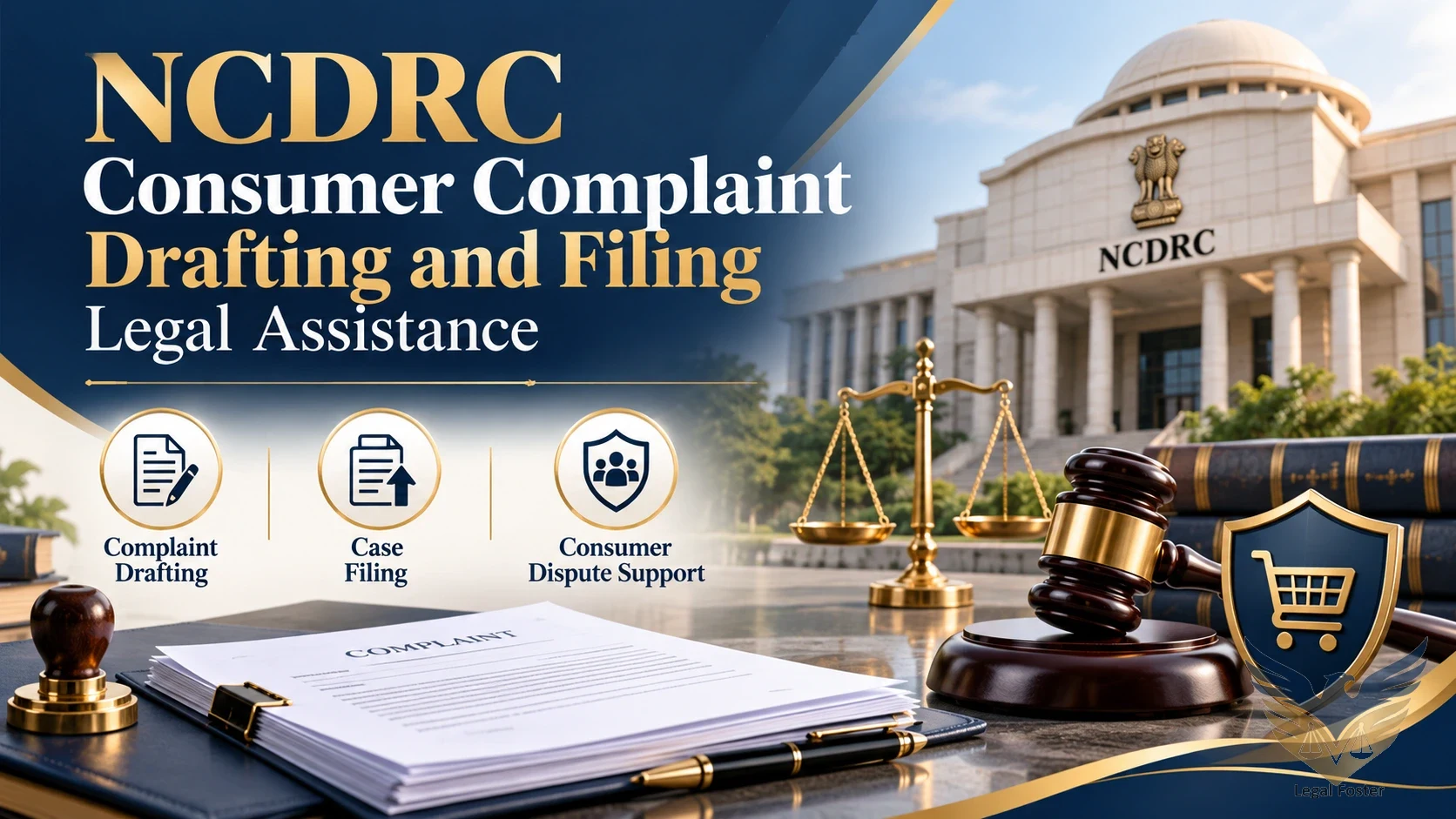
Why Legal Drafting Matters When Filing an NCDRC Consumer Complaint
Your consumer complaint can begin with a straightforward grievance. Builder delays possession, insurer refuses a legitimate claim, manufacturer supplies defective goods, your service provider underperforms. But when that consumer complaint is filed before the National Consumer Disputes Redressal Commission (“NCDRC”), the difference between a well drafted consumer complaint and a hastily written complaint can go a long way in how succinctly your consumer claim is put forth.
Your complaint is your opportunity to explain to a judge. Drafting that complaint properly matters because the pleading needs to lay out the facts, connect the facts to establish a consumer relationship, identify the deficiency or unfair trade practice, point out documentary evidence, plead jurisdiction and most importantly specify the relief sought. A complaint is not pages of paragraphs detailing what occurred. Rather, a complaint is a legal document which places the dispute squarely before the Commission.
Preparing a proper complaint also helps weeding out unnecessary issues like limitation, jurisdiction, documents and relief sought for consumers living in Delhi NCR, Noida, Gurugram, Ghaziabad, Mumbai, Bengaluru, Hyderabad, Chennai, Kolkata, Lucknow, Jaipur or any other city in India.
That is exactly why NCDRC Lawyers educates consumers about these aspects before proceeding to draft a complaint. When drafting, keeping a complaint clear and precise will help explain the consumers legal cause instead of trying to cram every possible allegation in the pleading.
Consumer complaints are instituted before the District, State and National Consumer Commissions established under Consumer Protection Act, 2019. Under Section 11(1)(a) of the CPA, 2019 along with the 2021 jurisdiction rules, the National Commission has original jurisdiction if the value of the goods or services along with the amount paid as consideration exceeds ₹2 crore.
Bad drafting can open your complaint to challenges on jurisdiction, limitation, maintainability or otherwise questions regarding admissibility of evidence. No one drafting skill predicts the outcome of a consumer complaint but being clear on what the consumer’s real grievance is helps.
Why Does Expert Legal Drafting Matter in 2026?
As consumers nowadays are tech savvy and have a large digital footprint. Emails, bills, payment acknowledgments, agreements, Whats App chats, ads, booking forms, policies, service logs and photographs can become a part of your complaint.
The struggle is not to always find the documents. Rather, the struggle is explaining what these documents show.
Drafting your consumer complaint with NCDRC Lawyers also teaches you to link the facts to your legal complaint. For example, a homebuyer may have an allotment letter, schedule of payments, email and correspondence. But only establishes that possession was delayed. Merely attaching those documents does not make the legal relevance of such delay clear.
If drafted correctly, the complaint will mention the said transaction, explain the existence of consumer relationship, clarify the alleged deficiency or unfair trade practice, highlight the evidence that supports the claim and very clearly mention the relief sought.
You may believe a company took advantage of you. The Commission on the other hand will have to assess the complaint from the legal perspective of statutes. The pleading therefore has to be factual, specific and well supported by documents.
What Should a Well Drafted Consumer Complaint Include?
Every complaint has to tell the story in a legally coherent manner.
First the who, what and when. Parties involved, what was the transaction, when did you buy/pay for it. Next what was bought/service availed, what was paid as consideration and then what happened.
Next, the pleading should connect those facts to the legal deficiency in service provided, defect in goods, unfair trade practice or some other wrongdoing recognised under consumer law.
Lastly, the relief section is where many people lose focus. Consumers can claim a refund, replacement, rectification, compensation or some other form of relief depending on facts and applicable laws. But that relief has to be connected to the evidence and documents rather than stating some arbitrary demand.
Law drafting at NCDRC Lawyers will make sure that your factual story matches the relief section with respect to documents you have available.
Which Documents Will You Need?
Like mentioned above, the record again depends on your dispute. However, as a broad rule consumers should retain any document which proves the transaction happened and supports your consumer complaint.
For property complaint this would include Agreement, Receipts, Possession letters, Demand letters, correspondence with builder, brochures and advertisements. For insurance complaints, the policy document, claim form, any survey report, repudiation letter and correspondence would likely be relevant.
For services/products it could be sales invoices, warranties, service records, photographs, emails and chat messages, complaint acknowledgements etc.
Our lawyers at NCDRC Lawyers can go through the record you have and bring to your notice any gaps which should be addressed before finalizing your complaint.
When Should You Contact an NCDRC Lawyer?
Legal advice should be sought when
- Value of transaction is high
- There are multiple opposite parties
- Agreement terms are extensive
- Questions regarding limitation or appropriate Consumer Forum arise.
Legal advice at the initial stage can also be considered if the opposite party has sent you a legal notice, refused your refund request, refused your insurance claim, denied liability or is trying to protect themselves using clauses from your agreement.
Issues regarding jurisdiction also call for legal advice.
Note that consumers should not file a complaint with NCDRC just because the compensation they seek is high. You need to have your facts analyzed to determine what jurisdictional rules would apply and what was paid as consideration.
NCDRC Lawyers offer a free initial review of your dispute, documents, jurisdictional eligibility and relief asked for before we start drafting your complaint.
How Can NCDRC Lawyers Help You?
NCDRC Lawyers have experience drafting consumer disputes regarding :
- Deficiency in services
- Defective goods
- Unfair trade practice
- Delayed possession complaints
- Insurance claim disputes
- Non-delivery of promised services
- AND more consumer related matters
While practicing our legal drafting skills. We focus on understanding the said transaction, arranging the facts around the cause of dispute, identifying the main complaint, going through the documents at your disposal and representing the demanded relief in a legally justifiable manner.
However, if you reside in states other than Delhi or New Delhi. We can also offer legal advice depending on the nature of your matter. If you from Noida, Greater Noida, Ghaziabad, Gurugram, Faridabad, Meerut, Lucknow, Jaipur, Bangalore, Mumbai, Pune, Hyderabad, Chennai, Kolkata and Ahmedabad can also contact NCDRC Lawyers for a legal consultation.
Before you decide which way you want to take your consumer case.
One thing we at NCDRC Lawyers will not do is guarantee you a certain outcome.
The outcome of the matter depends on facts, evidence you have, pleadings made by both parties and the orders passed by the forum you chose.
What Are Common Drafting Mistakes People Make?
Story telling: Sometimes consumers have decades worth of emails and documents related to the transaction. That doesn’t mean your pleading has to attach every single bit of evidence.
Statements without documents: Don’t make statements in your complaint which can’t be backed by documents. The second mistake is asking for relief which doesn’t correspond to the facts.
Limitation: Another rookie mistake is overlooking limitation. Consumer complaints have a limitation of two years as per Section 69 of the CPA, 2019. This means a complaint needs to be filed within two years from when the cause of action arises.
Jurisdiction: Similarly, jurisdiction needs to be checked before filing. Consumers should make sure their complaint is vetted against the statutes and rules applicable prior to filing.
NCDRC Lawyers can help you address these drafting issues at the initial review stage.
Frequently Asked Questions
1. Why do I need professional drafting help for filing a consumer complaint with NCDRC?
Legal drafting helps you properly organise your transaction, grievance, jurisdiction, limitation, documents as evidence and relief into a legally coherent complaint format. NCDRC Lawyers can help you with the legal organisation of your complaint without overstating/ omitting your actual consumer claims.
2. Can all high value consumer disputes be filed with the NCDRC?
No. The NCDRC has limited original jurisdiction based on statute and monetary value. According to the 2021 jurisdiction rules , consumer disputes which have an original pecuniary jurisdiction before the National Commission involves a value of the goods/services and amount paid as consideration exceeds ₹2 crore.
3. Does the compensation I am seeking affect NCDRC jurisdiction?
No. The compensation being sought by the consumer is irrelevant to NCDRC pecuniary jurisdiction. The statute refers to the value of the goods/services and the consideration paid when deciding pecuniary jurisdiction. This was discussed and confirmed by the Supreme Court in its recent 2025 verdict dismissing the Writ Petition challenging the amended jurisdiction rules.
4. What is the time limit for filing a consumer complaint?
Consumer complaints need to be filed within two years as per Section 69 of CPA, 2019 from when the cause of action arises. However, there is provision for Condonation of delay if the consumer can prove sufficient cause for not filing the complaint within two years and the Commission records reasons for the delay.
5. Can I e-file my consumer complaint with the NCDRC?
Yes. CPA, 2019 allows for e-filing of complaints “in such manner as may be prescribed.” I consumer complaints can now be filed online using the NCDRC prescribed fillable forms and uploading copies of documents as well.
6. What documents should I attach while filing NCDRC complaint?
It depends on the nature of your consumer complaint. Some documents which are generally useful are agreements/contracts, invoices, receipts, insurance policy, correspondence, legal notices, photographs, service tax bills etc.
7. Can consumers claim compensation from opposite party in NCDRC complaint?
Asking for compensation is not prohibited per se. Consumers can claim compensation in their Consumer Complaint if the facts and relevant laws support such relief. The compensation asked from the opposite party should be linked to the consumers real grievances and provable loss instead of mentioning a rounded off figure.
8. Will NCDRC Lawyers guarantee me a favourable order?
No lawyer can guarantee the outcome of a legal dispute. NCDRC Lawyers can help consumers assess their claim, draft a consumer complaint and represent you before the forum. The order would depend on all of the facts, evidence, pleadings, arguments from opposite parties and the decision of the forum you chose to file the complaint with.
9. What happens if I mistakenly file the complaint with the wrong Consumer Forum?
You do not want to be sent back or dismissed on a jurisdictional ground. That is usually more time consuming than filing your complaint with the correct forum. Understand the pecuniary, territorial and statutory requirements before filing your complaint instead of filing and then reacting to an objection.
10. Is legal consultation needed before I try drafting my own NCDRC complaint?
Consumer lawyers can help you understand which consumer forum to approach, limitation period if applicable, important documents to gather, main legal grievance and nature of relief you can claim.
Conclusion
Don’t just file a consumer complaint because you are irritated. A NCDRC complaint must state the facts, explain documents on which it relies and most importantly place before the judge how the transaction impacted your legal rights as a consumer.
Legal rights for consumers are defined by statute (read Consumer Protection Act, 2019) and rules (read jurisdiction related rules). Understanding limitation, evidence, pleadings and relief help consumers avoid common pitfalls while drafting their complaint. NCDRC Lawyers can help consumers understand these aspects before we begin drafting of the complaint. When large sums of money are involved in real estate, insurance claims, service deficiencies or defective products consumers should have their complaints reviewed by a lawyer. You don’t want to waste time and money fixing avoidable drafting and filing errors.
If you have any query regarding your NCDRC complaint, drop an email to NCDRC Lawyers with your transaction and correspondence documents for a free initial legal opinion.