What Are the Legal Penalties and Punishments for a Cheque Bounce Case in India?
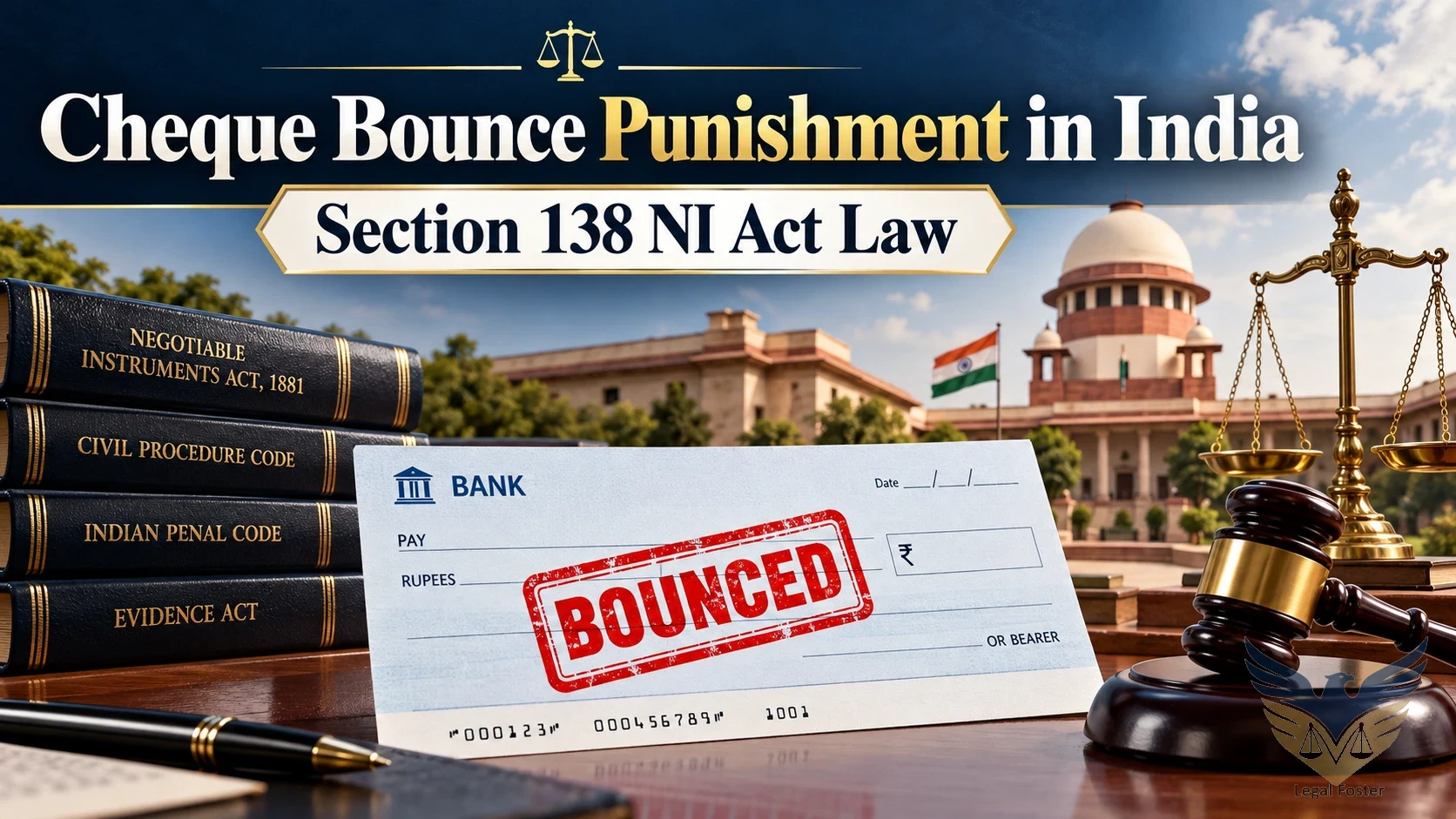
Courts in India have the power to sentence you to imprisonment, fine, or both for cheque bounce. Jail time can be for up to two years on conviction under Section 138, with fines of up to twice the cheque amount, or both. Facts of each situation dictate if jail, fine, or both are appropriate.
The cheque drawer wonders if he or she will go to jail after the cheque is returned unpaid. The payee wonders how to collect on the dishonoured cheque. Both parties are better served by knowing how NI Act, 1881 Section 138 works. With the right knowledge, both cheque drawer and cheque beneficiary can make informed decisions early in the dispute resolution process.
Your cheque can be returned due to insufficient funds, stop by bank or customer or for any other reasons. A returned cheque does not always mean criminal liability will follow. Facts surrounding the creation of the liability and compliance with the notice requirements will affect any decision to prosecute for cheque bounce.
A Delhi businessman does not intend to go to jail when writing a cheque to a supplier. He may even be facing temporary cash-flow problems and still have no intention of defrauding the payee. That does not excuse the Delhi businessman from legal punishment if he cannot honour his cheque. A supplier in Noida or lender in Ghaziabad should not expect an overnight deposit into their bank account because the cheque did not clear. All the statutory preconditions to filing a lawsuit must be met.
Read below to learn about the Punishment for cheque bounce in India in 2026 and how the law applies to Delhi NCR. Topics include: Cheque bounce punishment in India in terms of jail and fines, what to do after receiving a cheque return notice, and courses of action for the cheque drawer and cheque payee.
Why Cheque Bounce Punishment Is Important in Delhi NCR and India in 2026?
Cheque dishonour disputes often stem from routine commercial transactions that should have been uncomplicated. A vendor supplies goods or services and receives a cheque in payment. A landlord has accepted a cheque in payment of overdue rent. A friend or family member has issued a cheque to repay a private loan.
Delhi residents encounter the same problems as those faced by people in Noida, Ghaziabad, Gurugram and Faridabad. When an individual is unable to honor their cheque as promised, it disrupts their business or finances. Everywhere in India, from Mumbai to Bengaluru to Hyderabad to Lucknow, pending or impending litigation is a concern.
Issuing a cheque that bounces is not a criminal offence until the drawer has been convicted by the court under Section 138. Even after conviction, the sentencing will depend on the facts and evidence presented. When it comes to a valid payment dispute, facts should matter.
The payee may lose their ability to file a complaint under Section 138 if they fail to issue a legal notice within the statutory period. If the drawer disregards a cheque bounce notice or fails to answer a court summons, they will have a harder time defending themselves. By speaking with a cheque bounce lawyer, you can find out about timelines, what the drawer can respond with and which documents you must be mindful of.
If you have further questions about cheque dishonour disputes or legal remedies, please call Advocate BK Singh through the cheque bounce lawyer website.
Quick Facts
Following are some facts about punishment under Section 138:
- Governing law:Section 138, NI Act, 1881.
- Maximum jail time: Two years in prison upon conviction.
- Maximum fine: Twice the cheque amount.
- Imprisonment and fine: Court can sentence both.
- Demand notice: Sent by payee to drawer within 30 days of bank disorder.
- Opportunity to pay:Drawer has 15 days from receipt of notice to pay.
- Settle: Cheque bounce is a compoundable offence in accordance with Section 147 of the Act.
Convictions don’t always receive the maximum sentence. Courts analyse the evidence and the law. In addition, procedural requirements must be met in order to pursue punishment under Section 138.
What Is the Punishment for Cheque Bounce Under Section 138?
Penalty or punishment under section 138 shall be given by the court when it convicts the drawer for making a cheque which is returned by the bank unpaid due to insufficient funds in the drawer’s account. Conviction under section 138 entails punishment of imprisonment up to two years or fine which may be equal to twice the amount of the cheque or with both.
Courts will not sentence everyone to the same punishment. The court will order imprisonment, or fine or both depending on the facts of the case after weighing in the evidence, the transaction and the law. It is within the sentencing court’s discretion to determine the nature and degree of punishment.
So if a cheque was of 2 lakh, and the court convicts the drawer for cheque bounce then the law allows a sentence of 2 years jail along with a fine of 4 lakh. It does not mean that the court will punish the drawer by sentencing him to pay a fine of 4 lakhs. It also does not imply that the drawer will be sentenced to go to jail.
Which Law Applies to Cheque Bounce Cases in India?
Indian cheque bounce laws are covered under The Negotiable Instruments Act, 18 81. Several sections cover different parts of your dispute.
Section 138. This section contains the elements of the offense as well as the maximum sentence you may face. It includes provisions related to presentation of the cheque, time to issue a notice of the failure to make good on the cheque and the failure to make good on the cheque.
Section 139. This section creates a presumption in favor of why the cheque was accepted.
Section 141. If a cheque is issued from a company, both the company and certain persons involved with conducting the company’s affairs may be liable. Liability is not solely determined by a person’s position within the company but by the statutory requirements for each accused.
Section 142. Section 142 lays out when a court may recognize the offence. This includes the time limit to file a complaint.
Section 143A and Section 147. Section 143 A allows the court to order the accused to pay interim compensation if certain conditions are met. Section 147 states that offences under this Act may be compounded. .
Knowing which sections apply to your situation can help both parties understand what issues are at stake. Rather than treating every cheque bounce as a cut and dry offence, your attorney can help you identify what sections the opposing party may have violated.
Who Should Consult a Cheque Bounce Lawyer?
Cheque bounce problems do not just impact the person who wrote the cheque without sufficient funds. Consider who else could be involved:
Traders and Company Owners: As a trader, if you get a cheque from one of your customers that gets dishonoured, the cheque may have bounced due to a dispute regarding the transaction underlying the cheque.
Individuals: Even if you lend money to a friend or family member, that doesn’t mean you and that person have agreed on how much is owed, or that the underlying transaction was legal.
The issuer of a bounced cheque: If you are the person who issued a cheque that bounced, and you receive a notice from the payee, you will have to respond to that notice within a specified period. Failure to respond, or sending an incomplete response, can cause you legal problems. This becomes even more troublesome if you actually did have the funds to cover the cheque amount, or if you had a legitimate defense as to why the cheque should not be paid.
Companies and Company Officers: When a cheque is bounced against a company, the liability of the company is not the only thing at issue. Every officer’s actions must be evaluated in determining the course of action you want to take in responding to the notice or issuing a notice.
Payees looking to recover money from a bounced cheque: Only because you are on the receiving end of a bounced cheque does not mean you can go file a complaint right away. You will have to analyze the transaction to make sure you meet the statutory requirements.
The other parties version of events is not always your version of events. You may have issued the cheque as a form of security. However, the person who gave you the cheque may consider it was issued as an amount due and payable. The law will look at the transaction, supporting documents and evidence of what happened.
What Should You Do After Your Cheque Has Been Dishonoured?
Here are the legal steps involved after your cheque has been bounced by bank.
Bank returns and initial review
Upon receiving the bank return, retain the cheque, bank’ return memo along with all supportive documents which were used while processing the transaction. Scrutinize the cause of bank dishonour. Reconfirm that the statutory period for filing the claim has not expired and cheque was valid at the time it was presented.
Issuance of demand notice
If Section 138 becomes applicable, then the payee / holder in due course has to issue a statutory demand notice to drawer within 30 days of receiving the bank’ return of cheque. Notice must explicitly specify the cheque number and the exact amount which the payee intends you to deposit.
Waiting for the dues
After the notice is served successfully on the drawer, he or she has fifteen days time to pay up to the payee. If the payment is received, the right to initiate a Section 138 complaint with respect to that notice is extinguished proportionately.
Filing a complaint in court
If all the conditions are met and drawer fails to pay within given time, the payee has the right to file a complaint before a court of law within the prescribed period. Such a complaint has to be in accordance with limitation and jurisdiction. Upon receipt of the complaint, the court will ask the parties to present their case, may ask them to produce evidence and help them reach a conclusion.
A lawyer will help you analyse your records and guide you on the right legal course of action you must take at every stage. If you have received a notice or if you want to send a reply to any notice for cheque dishonour, you can consult Advocate BK Singh.
What Documents and Evidence Should You Keep
Having good records can help you present your side of the story. Maintain any records that are relevant to your involvement in the transaction.
If you’re the recipient of the cheque
- Original cheque or copies, if any.
- Bank return memo or other information on the cheque being dishonoured.
- Copy of the notice served on the drawer and evidence of sending or service.
- Invoice, agreement, loan records or any other document that supports your claim of liability.
- Any relevant payment records. Correspondence with the drawer is helpful as well.
If you’re the drawer of the cheque
- Cheque copy or counterfoil, if it was retained.
- Bank statement and account records from the drawer’s bank.
- Loan agreement, contract, invoice or other document pertaining to the transaction.
- Evidence that the cheque amount was paid, if it was already paid prior to bouncing.
- Notice received from the payee. Keep the envelope and record any related communications.
Don’t destroy records or hand over selected records that paint an inaccurate picture of the transaction. If there were multiple payments or settlements made between you and the other party, prepare a ledger of what was paid and when.
Advocate BK Singh can help you figure out what documents will help your case.
When Do You Need To Meet A Cheque Bounce Lawyer?
It may be beneficial to seek advice as early as possible if:
- You have received a Section 138 demand notice and wish to know about the 15 days to pay.
- Your cheque has been dishonoured and you want to know if a statutory complaint can be filed.
- You do not owe the claimed amount or think the liability has already been paid.
- The cheque was issued in respect of a loan, business deal or for securing a transaction.
- You have been sued or received a summons from court.
- You would like to discuss a written compromise and settlement while your case is pending.
- The cheque was issued by a company and there are questions about who can act for the company or its officers or directors.
Getting ahead of the situation can be particularly beneficial where limitation is running or if the transaction involved multiple invoices, instalments, or part-payments. Advocate BK Singh may be consulted to go over documents and understand the legal options. No option can promise that some result is guaranteed.
How Can You Get Cheque Bounce Lawyer Help With Your Cheque Bounce Issue?
Legal assistance will differ based on if you are the payee or drawer of the cheque in question. Lawyers can assist a payee with reviewing the returned cheque and memo, ensuring the demand notice was adequate, reviewing evidence of the underlying obligation and deciding whether to file a complaint. Clients who wrote the cheque may want the underlying transaction to be reviewed.
They should also know why the amount they're being asked to pay is higher than what they paid, what the payment records show, and what was communicated to the payee about the cheque. If there is a legal defense available, they will be advised.
Finally, if settling is possible, your lawyer will go over settlement terms as well as how to enter into and accept it. Advocate BK Singh can review your cheque and the facts and explain all your issues in lay terms. You will understand your options, timelines to file a complaint, and what risks are involved with each decision. ChequeBounceLawyer will guide you to make an informed decision. We do not predict acquittal, recovery or sentencing based on hope.
We base our services on the documents and laws. Please visit ChequeBounceLawyer.com to learn more about this service. Hire/Engage us based on your facts and documents.
FAQs
Q1. Can I go to jail for cheque bounce case in India?
Ans. Yes. The offence under Section 138 is punishable on conviction by imprisonment for a term which may extend to two years, or with fine which may extend to twice the amount of the cheque, or with both. The fact that a cheque has been returned unpaid is not an offence in itself. It does not mean that the drawer will be convicted of the offence.
Q2. Cheque bounce of 1 lakh what is the maximum punishment?
Ans. The maximum fine you could be sentenced to under Section 138 would be ?2 lakh (being twice the amount of the cheque i.e. ?1 lakh). But this is only the maximum prescribed by statute. The punishment awarded will be at the discretion of the judge based on the facts of each case. Just because the law provides for a maximum, it should not be assumed that this is what the courts will impose as a fine.
Q3. Will every cheque bounce case go to jail?
Ans. No. Section 138 only provides for imprisonment as a possible punishment. When someone is convicted of the offence, the court has the discretion to impose imprisonment, or a fine or both. Cases can also be settled by parties entering into a legally binding compromise.
Q4. Can you do cheque bounce case compromise outside of court?
Ans. Yes. Settlements can be negotiated between the parties. Section 147 allows offences under the NI Act to be compounded. Compounding is a legal method of settling disputes. If a complaint has been filed with the court, the parties will need to follow some formalities in order to get the compromise recorded and the prosecution discontinued.
Q5. What happens if I deposit the amount within 15 days?
Ans. If you can pay the person the amount that they have demanded in the notice within 15 days, then the cause of action under Section 138 will not arise in respect to that notice providing all other statutory conditions are met. Be sure to obtain proof of payment and triple check that you are paying the correct person and you are paying the correct amount.
Q6. Can I file cheque bounce case against my own security cheque?
Ans. Probably. Simply because you called a cheque a “security cheque” will not stop the cheque being used for Section 138 purposes. The Court would have to inquire into whether there was a debt or liability that was legally enforceable at the time that the statutory conditions were met.
Q7. Cheque bounce case how many years will it take in India?
Ans. There is no prescribed timeline for how long cheque bounce cases should take to dispose of in India. Cheque bounce cases can be resolved in a matter of months if the court is speedy and both parties are cooperative. Taking into account how long it takes to serve summons, prove your evidence, apply for adjournments, compromise the matter, undertaking discovery, appealing orders and more. Cheque bounce cases have taken years to dispose of. Keep in mind this is just the statutory period.
Q8. My friend has cheated me and did the cheque bounce. I have already paid him the amount back. Can I defend myself when he file cheque bounce case against me?
Ans. Perhaps. Receipts, bank statement, bank deposit slip, any admission in writing from your friend can help you defend your position. How much was paid back, when was it paid back, how much is he demanding now?, what stage of the proceedings are we currently at. These are all things you should discuss with your lawyer.
Q9. Can CEO and director of a company punished if their company did the cheque bounce?
Ans. Not always. Because someone is the director of a company, it does not automatically make them criminally liable for the offences of the company. Section 141 lays out who can be held liable for offences committed by a company. Their position in the company would need to be looked at, and whether they fulfil the statutory requirements by looking at the facts.
Q10. Is it advisable to meet Advocate BK Singh after receiving cheque bounce notice?
Ans. Yes. You can meet up with Advocate BK Singh to have the notice explained to you, time limitations calculated, your transactions gone over and potential responses drafted. I would need to know more about your documents, what the underlying liability is and where the matter is at procedurally in order to determine whether you should send something back or not.
Conclusion
Maximum punishment for cheque bounce is imprisonment up to two years or fine which may be twice the amount of cheque or both. The actual outcome would depend on facts of the case, legal provisions, evidence & defence and arguments presented before the court.
If you have issued a bounced cheque, don’t panic and think you will be jailed. If you have been paid a cheque that bounced, don’t think that because a complaint has been made, you will soon get your money back. Both the receiver and giver of the cheque must remember the limitation period and preserve the documents.
BK Singh can guide you about the legal recourse available and what factors need to be considered in the specific circumstances. Analysing the facts of the case at an early stage can help you understand your options about how to reply to the notice or whether to file a complaint or negotiate a settlement.