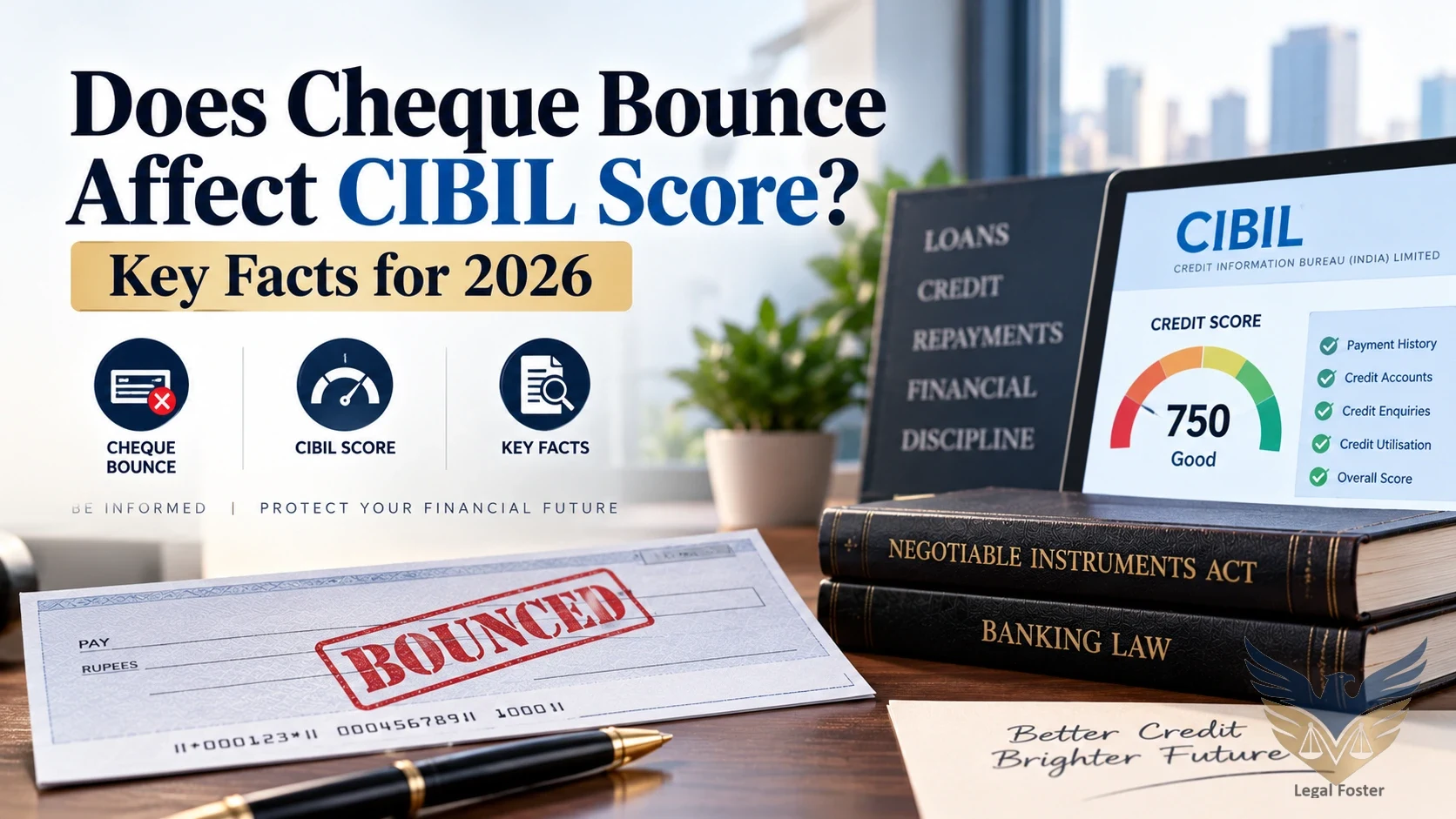
Does Cheque Bounce Affect Your CIBIL Score? Key Facts for 2026
When your cheque bounces, it can feel like your world is crashing down financially and legally speaking. However, a cheque bounce does not automatically hurt your CIBIL score. Your credit score could be affected depending on why the cheque was returned, whether the cheque was issued for repayment of a loan or credit card payment, and how you subsequently handle the original obligation.
There are millions of individual borrowers, consumers, business owners, and sole proprietors in India who get confused about the difference between a credit score issue versus a cheque bounce case according to Indian law. We’ve put together this reader’s guide for ChequeBounceLawyer.com clients and website visitors:
Imagine you issue a cheque to your creditor for the repayment of an instalment due on your personal loan. It could also be a cheque written to pay an outstanding bill from some business related transaction or to a supplier for a settlement amount owed to them. In any of these scenarios, let’s say the cheque bounces due to insufficient funds in your account. You receive a notification from your bank and are subsequently contacted by the payee for payment. Now you start to worry about legal consequences of a cheque bounce offence and how a bounced cheque affects your credit score.
Both of these are legitimate concerns. A bad credit score makes it difficult to get loans or credit cards in the future. Your interest rate and loan terms can be affected by your creditworthiness as well. On the other hand, cheque bounce is a criminal offence that starts with you receiving legal notices and can even result in cases being filed against you if certain requirements are met.
Cheque bounce does not affect your CIBIL score automatically, but…
Here’s what you should know about cheques and your credit score: Since your credit score is based on credit information reported to the credit bureaus by lenders and selective other agencies that report on credit data, a cheque bounce is not synonymous with missing a loan payment that will be reflected on your credit report.
If your cheque was issued for payment of a loan EMI or credit card payment, or is related to a credit account some other way, your lender may report the missed payment or defaults to the credit bureaus. This would then have a negative impact on your credit score.
The reason why a cheque bounce issued to an individual doesn’t hurt your credit score, but may hurt your credit score if linked to a loan, is because if you write a cheque to a private individual and it bounces, that person is not going to report you to the credit bureau for having a “credit score issue”. However, if you default on a loan taken from a bank or finance company by bouncing your cheque, then that lender will report your delinquency.
(In many cases your credit score will not be affected by a cheque bounce, but you could still face legal consequences due to cheque bounce. You’ll need to learn how to handle those issues according to BKSingh.com laws)
BK Singh can help you with those legal issues. Our readers can access information on what to do when you get a cheque bounce notice, what defenses you may have for cheque bounce, how to settle cheque bounce out of court, and what to expect if you have to go to court over cheque bounce.
For information about the legal notice process, see cheque bounce legal notice assistance. You can also read about Section 138 complaint-related legal issues.
Why Does This Issue Matter in Delhi NCR and Across India in 2026?
Cheque bounce for a borrower could be caused by any unforeseen cash flow situation. It could also happen because you might have faced a delayed salary, there might be some dispute over a business payment or you might have simply forgotten about paying your loan EMI. The reasons for your short term problem might be many but one default on a credit payment can become a much bigger problem if the lender reports the overdue amount to the credit bureaus.
The same concern applies to people living in Mumbai, Bengaluru, Hyderabad, Chennai, Kolkata, Lucknow and other cities in India where commercial activities are high. The person whose cheque got dishonoured might be a businessman who issued the cheque to one of his suppliers. The person could be an individual who used the cheque to clear a personal loan he had taken. Depending on where the cheque was used and for which transaction, the impact on your finances as well as the legal consequences will be distinct.
Credit reporting of overdue payments and a cheque bounce lawsuit filed by the lender are two separate matters. While credit bureaus record information only when it is reported to them by member lenders, the courts decide a cheque dishonour case based on the law and facts of the case. Just because you have one, it will not automatically trigger the other.
If you have been issued a cheque bounce notice or if you see an unfamiliar overdue item on your credit report, it is best to address both matters separately rather than thinking that clearing up one will erase the other as well.
Quick Facts: Cheque Bounce and CIBIL Score
- Cheque bounce itself will not affect your CIBIL score
- Defaulting on a loan EMI/ payment to your credit card company may affect your score when they report your missed payment to the credit bureau which will appear on your credit history.
- Writing a cheque to somebody (individual/private party/ supplier) is not automatically recorded as an entry to your credit report.
- Section 138 of the Negotiable Instruments Act,1881 comes into play when the necessary legalities are fulfilled.
- Pay your overdue EMI and clear the cheque bounce complaint separately.
- You can file complains against incorrect entries in your credit- report; however updating information about your accounts as they have been reported normally needs verification from the respective credit institution.
What Does a Cheque Bounce Mean for Your Credit Score?
A cheque bounce/dishonour occurs when your bank declines the cheque presented to it for payment. Either you don’t have sufficient funds to cover the cheque amount or there is some error/account-related issue which prevents it from being paid.
A CIBIL score is a 3-digit number that is determined using the data present in your credit information report (credit history). Now, it doesn’t consider every transaction that you make using your savings/current account. It takes into account only credit transactions.
Here’s how – The returned dishonoured cheque you receive isn’t considered a missed credit payment.
Scenarios when cheque bounce can affect your CIBIL score
Unpaid loan EMI
If the EMI remains unpaid even after your cheque has been returned to you, the lender may report that particular overdue EMI. It’s this reporting of overdue payment and not the cheque bounce that affects your score.
Missed credit card payment
If you issued a cheque for credit card payment and it bounced, your credit card payment will be overdue if you don’t pay the entire amount due by the due date. That overdue payment can affect your credit profile.
You bounced a cheque to clear a personal loan
If you issue a cheque to your friend, landlord or vendor and it bounces, that won’t immediately harm your CIBIL score.
What Is the Legal Framework for a Bounced Cheque in India?
Negotiable Instruments Act, 1881 deals with dishonour of cheque. Section 138 talks about dishonour by reason of insufficiency of funds in the account or it meeting certain criteria (which are mentioned in that provision) subject to satisfaction of requirements of that provision.
Cheque bounce is not a CIBIL dispute.
Section 138 complaint concerns a potential legal liability which may become applicable to you on dishonour of cheque. Credit-report dispute is about the inconsistency/inaccuracy of information lodged with credit information company.
Section 138 explained
Section 138 mandates that for a properly executed cheque, payee would generally need to present the cheque within its validity, issue a demand notice within 30 days of his bank returning ‘notice of dishonour’ and allow drawer 15 days from the receipt of notice to settle his dues. Only when he fails to do so and statutory requirements are satisfied would a cause of action arise and complaint-filing formalities kick in.
Facts matter. There can be several reasons why your cheque got returned. Cheque being returned alone does not result into offence under Section 138. Nature of liability incurred, cause for dishonour and technical compliance with statutory requirements would be factors to consider.
If you have received a notice, speak to Advocate BK Singh. He will help you analyse the notice along with underlying documents of the transaction to help you understand what you can do. Issued a cheque? Well don’t sit over the notice because it has not affected your CIBIL score! !
For details on the settlement process, visit cheque bounce settlement cases.
Will cheque bounce case get reflected in your CIBIL score?
No. Cheque bounce complaint cannot be reflected as a negative entry in your CIBIL report on its own. Whether your account against which cheque got issued (say loan/credit account) gets reported in your credit report and how the lender treats it are entirely different question. Yes, the lender can look into your past history along with other information that is available and relevant at the point of your application, but that doesn’t conclude that “Cheque bounce case – Pending” would get reflected on your credit report.
Who Should Be Concerned About Cheque Bounce and Credit Reporting?
- Many categories of people fall prey to this issue. However they are not always affected for the same reasons in the short term:
- \
- Salary account borrowers: The cheque you issued to pay for your home loan / personal loan / vehicle loan EMI could bounce against you if your salary credits are delayed.
- Self Employed businessmen and traders: The cheque you issued to pay your supplier could bounce against you if the amounts you are supposed to collect from your customers are delayed. Further, if this cheque was also issued against your business loan account, then that loan account will also have to be settled separately.
- Private money lenders: You are issued a cheque against your account by someone, and when you deposit it, it bounces. You will then have to address the issue with them legally. Note that this may not affect your credit report immediately (or at all).
- Credit card users: You issued a cheque to pay off your credit card bill, but the cheque got bounced. Now you have an unpaid credit card bill. Also your credit card account can get reported overdue.
- Guarantors and Joint loan applicants: If someone whose loan account you guaranteed defaults, your name will be reported along with them on the lenders credit report. The cheque issue is entirely different.
- If you're still confused as to whether this applies to you because you've already been reported overdue, or because you received a repayment notice, or a legal notice: Separate the two issues. Most times, that is the best way to figure out what to take care of first.
What Should You Do After a Cheque Bounces?
The next steps you should take depend on whether the cheque bounced due to a credit repayment or something else. Also, don’t fall for the trap of thinking that the bank return memo indicates your CIBIL score has already gone down.
First, Ascertain why the cheque was returned
Go through the bank cheque return memo and make a note of the dishonour memo that explains why your cheque was rejected. Check if the cheque was issued against EMI, credit card bill, private loan account repayment, rent or a business transaction.
Second, Confirm the underlying dues
In case it was for repayment of instalments, contact the lender via its official payment portal and confirm the outstanding amount, due date and any other fees applicable, if any. You can also ask if you can make the payment right away.
If you had issued the cheque to someone else or it was for a business transaction, refer to your agreement, invoice/receipts and correspondence to ascertain the amount that is payable and if there’s a dispute about it.
Third, Pull your CIBIL report and analyse it
Check your loan or credit card account to confirm overdue amounts, payment-history and any other discrepancies. Any payments made recently may not reflect as most lenders report account information to credit bureaus cyclically.
You can raise a dispute with CIBIL if any incorrect information shows up. It’s advisable to also contact the lender who supplied the information. Keep in mind that CIBIL will not change any information requested to be changed by the lender unless they verify it to be true.
Fourth, Respond to any legal notice received
The legal notice issued to you under Section 138 of the Negotiable Instruments Act is a matter separate from your credit score and must be treated as such. Ascertain when you received the notice, how much money they demand and which transaction has been cited.
Mr. Singh can read you the notice and go through any documents you have that can help determine your position from a legal standpoint. If you think you don’t owe the money, explain the facts and make sure you support your claim with evidence. Do not provide a settlement via phone.
Fifth, Get proof that you have settled or made the payment
After you’ve made the payment or have reached a settlement, ensure you obtain bank confirmations, receipts and written settlement terms if any. Clearing the dues will help that particular aspect of your credit report. However, other grievances or negative entries will have to be settled otherwise.
Documents and Evidence Checklist
The next steps you should take depend on whether the cheque bounced due to a credit repayment or something else. Also, don’t fall for the trap of thinking that the bank return memo indicates your CIBIL score has already gone down.
First, Ascertain why the cheque was returned
Go through the bank cheque return memo and make a note of the dishonour memo that explains why your cheque was rejected. Check if the cheque was issued against EMI, credit card bill, private loan account repayment, rent or a business transaction.
Second, Confirm the underlying dues
In case it was for repayment of instalments, contact the lender via its official payment portal and confirm the outstanding amount, due date and any other fees applicable, if any. You can also ask if you can make the payment right away.
If you had issued the cheque to someone else or it was for a business transaction, refer to your agreement, invoice/receipts and correspondence to ascertain the amount that is payable and if there’s a dispute about it.
Third, Pull your CIBIL report and analyse it
Check your loan or credit card account to confirm overdue amounts, payment-history and any other discrepancies. Any payments made recently may not reflect as most lenders report account information to credit bureaus cyclically.
You can raise a dispute with CIBIL if any incorrect information shows up. It’s advisable to also contact the lender who supplied the information. Keep in mind that CIBIL will not change any information requested to be changed by the lender unless they verify it to be true.
Fourth, Respond to any legal notice received
The legal notice issued to you under Section 138 of the Negotiable Instruments Act is a matter separate from your credit score and must be treated as such. Ascertain when you received the notice, how much money they demand and which transaction has been cited.
Mr. Singh can read you the notice and go through any documents you have that can help determine your position from a legal standpoint. If you think you don’t owe the money, explain the facts and make sure you support your claim with evidence. Do not provide a settlement via phone.
Fifth, Get proof that you have settled or made the payment
After you’ve made the payment or have reached a settlement, ensure you obtain bank confirmations, receipts and written settlement terms if any. Clearing the dues will help that particular aspect of your credit report. However, other grievances or negative entries will have to be settled otherwise.
How Long Does a Cheque Bounce Affect CIBIL Score?
There is not universal timeline after which every cheque bounce will harm your credit score. A cheque bounce does not automatically report itself as a standalone negative item. It depends on whether a past due obligation is reported, how the lender modifies the account and what credit reporting / retention rules they follow. Making a payment can stop additional delinquency from being accrued after the payment posts, but will not suddenly improve your score or remove accurate older data.
Different time limits apply to a Section 138 offence. Generally speaking, a statutory demand notice must be issued within 30 days of the issuer receiving the notice of dishonour from the bank, and the drawer will generally have 15 days from receipt to make good on the payment requested. Section 142 places the time limit on filing a complaint, as well as specifies when the cause of action arises and allows for extensions based on condonation of delay.
A credit reporting cycle is not the same thing as a statute of limitations. If you receive a notice, seek counsel immediately. Don't wait for your credit report to update.
When Should You Consult a Lawyer?
You might want to consult a lawyer if you have received a Section 138 notice but want to challenge the liability on which the notice is predicated. You have already paid up and the other party is demanding the same amount from you; You want to settle and need advice on what terms you should accept. Or, you issued a cheque from your company account and multiple transactions are being disputed. What if it is a security cheque and the dispute pertains to the liability it secured?
If there are mistakes in your credit- report you would ordinarily want to speak to the lender as well as the credit information company concerned. But you would require a lawyer’ s advice if the mistake stems from an underlying contractual dispute or recovery proceeding / legal suit.
Advocate BK Singh will review your documents, explain your legal options and help you prioritize what needs to be done urgently.
How ChequeBounceLawyer.com Can Help
ChequeBounceLawyer. com begins with educational resources for people who want to learn about legal issues concerning cheque dishonour disputes. Rule #1. Triage. First, let's figure out the facts. Then we can think about what to do.
If you talk to Advocate BK Singh, we will likely discuss the cheque / bank return memo, the underlying transaction, the demand notice, evidence of payment, and any compromise letters. If the matter could be a Section 138 complaint, we will also review the statute of limitations and other timing issues.
If you are one of those readers who isn't sure whether your cheque bounce dispute needs lawyers or is simply an "administrative" recovery matter, visit our cheque bounce legal services website or read cheque bounce versus civil recovery. It might help you understand why you would choose one option or another based on the documents you have and the results you desire.
We won't promise you anything. We will explain your legal options, preserve evidence for you, and let you decide what to do.
Frequently Asked Questions
Q1.Can cheque bounce affect CIBIL score in India?
Ans: No.Cheque bounce does not automatically generate a negative entry on your CIBIL report. If the cheque cleared was issued for repayment of a loan/credit card statement amount and the account is overdue, then how your lender reports that overdue loan or credit card amount would affect your score.
Q2. Will cheque bounce decrease my CIBIL score?
Ans:Not necessarily. Cheque return may not affect your score immediately. It would depend on whether there was an associated credit obligation with the returned cheque and how the lender reported the account.
Q3. Will cheque bounce impact my CIBIL score when cheque issued to my friend?
Ans: Usually no. When you issue a cheque to your friend and it returns, there will be no impact on your CIBIL score at all. However, if that cheque was issued towards repayment of an account which is separately reported to us, then your situation will be different.
Q4.What will happen if my loan EMI cheque bounces?
Ans: Your EMI may go unpaid, depending on whether another form of payment was made/copied against that loan account. You can always immediately contact your lender, verify the amount due and pay using a legitimate payment source. It is the overdue EMI as reported by your lender that will impact your credit history.
Q5.Can cheque bounce under section 138 affect my CIBIL score?
Ans: No.Not because a Section 138 complaint has been filed against you will there be an automatic negative entry created against your name with CIBIL. Your score can only be impacted based on what information gets reported to us by your lender concerning that loan or credit card account.
Q6.If I clear the cheque amount will my CIBIL score get improved?
Ans: Once you make up your missed payment and clear your credit obligation, that overdue amount will not grow further based on your payment and how the lender applies that payment. Please note your score will not improve overnight and historical entries (correct) will never be removed from your report.
Q7.Can I apply for home loan after cheque bounce?
Ans: Yes. Even if a cheque issued from your account bounces, you can still qualify for a home loan. Every lender evaluates applications differently and may look at your overall credit history, income, liabilities as well as their lending criteria before approving a loan. If your repayment history is reported as overdue or defaulted, then it could impact your ability to qualify.
Q8.What should I do if overdue amount is shown in my CIBIL report even after I paid?
Ans: Please contact the lender that reported that account and file a dispute with CIBIL. Make sure to keep any records of payment and any written communication. Changes to your credit file will be subject to verification of the information and how responsive the lender is to your request.
Q9.If my CIBIL score is not affected, can I ignore cheque bounce legal notice?
Ans: No.First and foremost CIBIL score is only one aspect of your overall credit history. If your score is not affected by the returned cheque, you should not ignore any legal notice issued to you under Section 138. A Section 138 notice has various deadlines and requirements statutorily assigned to it.
Q10.Can Advocate BK Singh help me if my cheque is bounced?
Ans: Advocate BK Singh can review your paperwork, go over how Section 138 applies to you and explain your possible courses of action. These courses of action will depend on the facts surrounding your case. No legal outcome can be guaranteed.
Conclusion
Can cheque bounce damage your CIBIL score? Just bouncing a cheque will not affect your credit score negatively. However, what is important is whether the bounce results in an unpaid installment of a loan, credit card bill or any other credit related payment towards your liabilities which get reported to credit bureaus.
Go through your credit report and check the payment status. Keep records of documents related to the above payments safely. If you have received a legal notice for cheque bounce, handle it separately within the given time limit.
Advocate BK Singh will review your documents and guide you on the options available to you as per Indian law. The sooner you act will help you from making further mistakes. We cannot guarantee your credit score or legal issues to improve.
Author Bio
Advocate BK Singh guides his clients on matters concerning cheque bounce cases, default in payments, issuance of legal notice and Litigation under NI Act, 1881. You can read about simple and easy to understand information on cheque bounce complaints under section 138, cheque dishonour notice, settlement and defense against cheating etc. on ChequeBounceLawyer.com. He tries to go through the documents related to the said transaction, understand the liability and explains the legal position in layman terms. Please read this as a guideline to know what options you have and contact him if you are an individual or a professional or business owner who is seeking assistance with a cheque bounce matter. Every case is unique and is to be analysed on its own facts, evidence available, the statutory requirements and the procedural position of the matter.