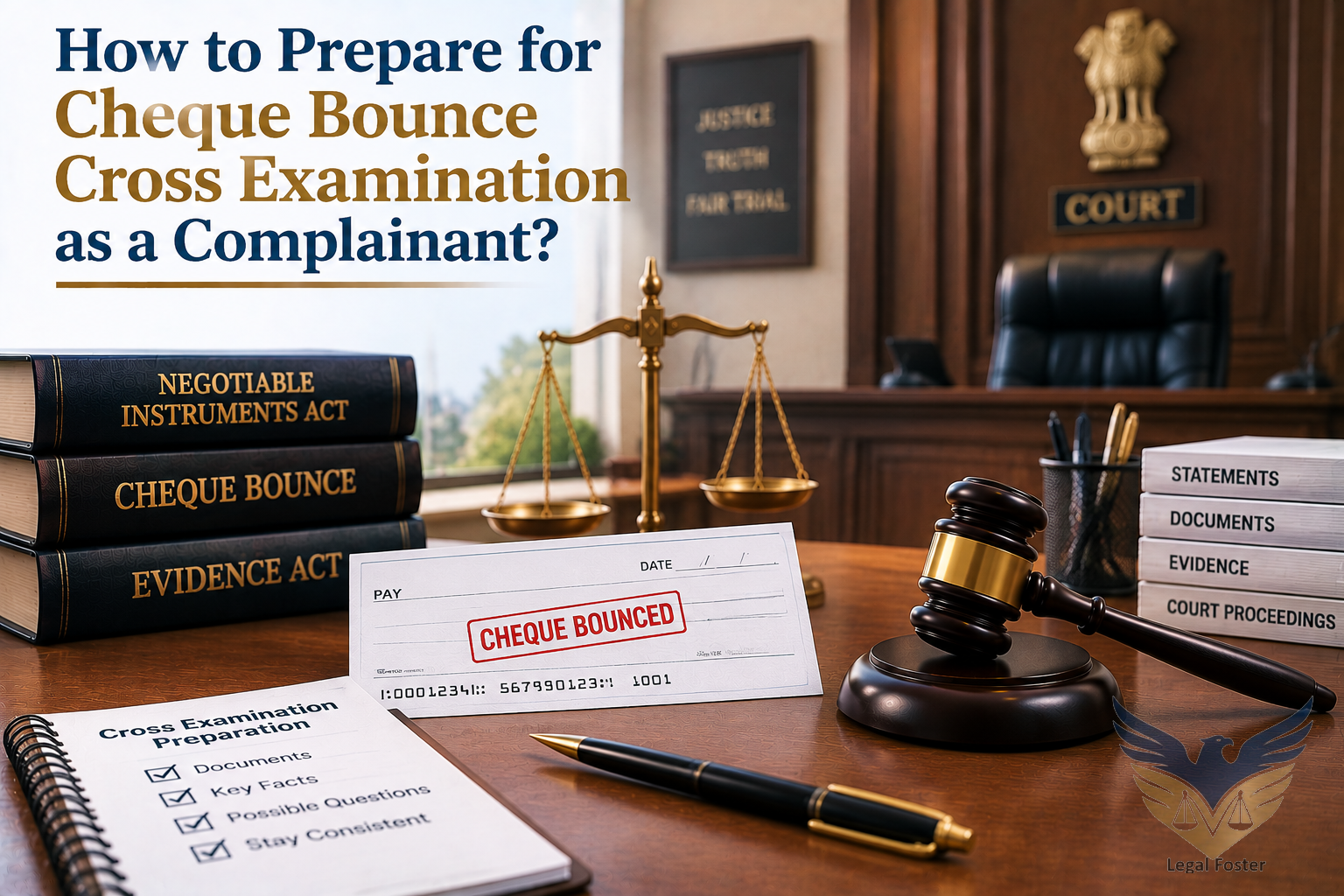
How to prepare for Cheque Bounce Cross Examination as a Complainant?
Legal strategy, evidence and defence
Cheque bounce trial or cross examination for complainant? Lets begin with understanding how a cheque bounce case looks like from the complainant’ perspective. Issued a cheque to pay a debt, cheque bounced, sent a legal notice and now a complaint is filed. Simple, right? Hardly. Once the matter goes to trial everything that the complainant stated during his statement on oath is questioned.
Vague answers to questions about the transaction, lacking certain documents, getting confused when asked about mode or timing of payment or simply forgetting small details about the deal can land you in hot water.
Preparing for Cheque Bounce Cross Examination as a complainant means preparing yourself and your witness to give a consistent testimony, not letting the documents produced by you to be twisted by the other side and knowing how to answer questions thrown at you by the accused.
For most businesses, lenders, traders and individuals from Delhi NCR, Noida, Ghaziabad,Gurugram and other parts of India fighting a cheque dishonour case, money recovery is not the only thing online. Reputation, time and pressure are at stake. Along with understanding the law and complying with legal formalities, a smart and prepared complainant also knows what to expect when he walks into a courtroom.
The legal team at cheque bounce lawyer has Advocate BK Singh who guides his clients fighting cheque dishonour cases on multiple aspects of litigation, ranging from preparation of evidence, representing you in Court to preparing you for trials.
Why Cheque Bounce Cross-Examination is important in India in 2026?
Today even if cheque bounce cases have streamlined into matters dealing with the existence of debt or liability, if payment was done or if the person who issued the cheque had the authority to do so along with relevant documents. But that does not mean that the case is won!
Just because a complainant has a dishonoured cheque doesn’t mean he can win the lawsuit. He is still required to prove all ingredients of the offence as per the law. The Court takes note of the fact whether the cheque was issued to discharge a debt or liability which was legally enforceable at the time of delivery of the cheque. The Court also verifies if the complainant had complied with the mandatory requirements.
Cross Examination becomes vital as at this stage the defence lawyer gets a chance to weaken the complainant’ version. They can question him on:
- Source of funds
- Nature of transaction
- If it was a loan or in furtherance of business
- Any supporting agreement
- Accounting records
- Correspondence between parties.
- Authority of the complainant to even file a complaint.
Preparing yourself and your witness for cross examination leaves no room for confusions and your evidence stands credible.
Quick Facts
- The offence is governed by Section 138 of NI Act, 1881.
- There are necessary ingredients that need to be proved to establish the offence.
- Cross examination by defendent is done to challenge the evidence and credibility of the complainant.
- Cheque with Bank return memo, Legal notice and its proof of service are important documents.
- The Court peruses the facts after seeing the evidence produced before them during trial.
- Every case is decided based on facts and record of transaction.
- A good lawyer guides his client about the process of Court and ways to prepare for hearings.
Cross Examination Strategy for Cheque Bounce Complainant?
Cross examination strategy means preparing your complainant to tell the truth, testify consistently and confidently while remembering the evidence you have.
It is not coaching answers or avoiding the truth. What judges appreciate most is a truthful rendition of events supported by evidence.
Make sure your complainant is aware of the entire story behind the transaction. Including:
- Why the cheque was issued
- Why there was a liability
- Prior payments made towards this liability
- Evidence that supports your claim
- Methods of communication used to talk to the other party
Cases can go south for the complainant because the witness may remember the original deal but cannot testify to the supporting evidence when asked under oath.
What Law Applies to Cheque Bounce Cross Examination?
Section 138 of NI Act, 1881 lays down the offence relating to dishonour of cheque for insufficiency of funds or it being exceeded the amount arranged to be paid by drawer.
To prove an offence under Section 138, the following must be proved by complainant -
- The cheque was issued by the accused
- The cheque was presented to the bank within its validity period.
- The cheque was dishonoured by the bank.
- The statutory notice was sent to the accused within the time provided from the date of dishonour of cheque.
- The accused failed to make payment within 15 days of receiving the notice.
- The complaint was made by the complainant to the Court within a period of limitation.
During cross examination, the complainant is examined by the defence. The defence can cross examine the complainant and try to disprove the liability, transaction or documents that support the transaction.
The Court will not believe on allegations made by the parties. It looks into the evidence, examination and the facts and circumstances of the case.
Preparing your Complainant for Cheque Bounce Cross Examination?
Preparing your complainant should begin before you have even approached the Court for hearing the matter.
Make sure your complainant has gone through the following:
- The cheque
- Return memo by the bank
- Legal notice
- Postal receipts or Electronic acknowledgement of legal notice being sent
- The Complaint that was filed
- Agreement (if any)
- Invoice/Payment records
- Bank statements of your complainant
- Any correspondence between parties.
Never ever rely on your memory. Civil suits are heard after a long time from when the cause of action actually arose. Get all documents in writing.
Advocate BK Singh ensures his clients and assist his clients in understanding the manner in which his evidence will be tested during the trial of a cheque bounce case and how to keep your pleadings and oral statements coherent.
Documents Produced by Complainant to Establish Prima Facie Case
| Document | Description |
|---|---|
| Dishonoured cheque | It proves that a cheque was issued by drawer in favour of the complainant. |
| Bank return memo | It specifies the reason for dishonour of cheque. |
| Copy of legal notice | It shows that a notice as per statutory requirements was issued to the accused. |
| Proof of posting/ by email | It shows that notice was dispatched/ sent by email to the accused. |
| Documents which evidence the transaction | Complainant can prove his claim of liability against the accused. |
| Account statements | Helps in tracing the payment |
At what stage you need a ChequeBounce Lawyer?
You may consider taking the help of a lawyer if:
- He has verbally denied the transaction that you have alleged.
- Amount involved in the transaction is huge.
- Complainant has issued numerous cheque cases against him.
- Documentation regarding business transactions is complex.
- Cross examination has been scheduled.
- Errors have been spotted while you were deposing your evidence.
- etc.
Hiring a lawyer will allow your lawyer to go through your documents, prepare you for the questions that the Court may ask and help you present yourself properly at the Court hearing.
How Cheque Bounce Lawyer can help you?
Cheque Bounce Lawyer helps individuals, traders, companies & businesses understand the legal issues related to cheque dishonour. Advocate BK Singh analyses the facts, reviews the evidence at his disposal and represent you in the appropriate courts of law.
We strive to make sure you know your legal position in the matter, prepare you well in advance for the Court hearings and stop you from doing anything that might jeopardise your case.
FAQs
Q1. Why is cross examination significant in a cheque bounce case?
Ans. The purpose of Cross-examination is to test the veracity of the complainant statement. The respondent has the right to cross examine the complainant based on his statement on oath, documents he has produced and knowledge about the transaction. Details like cheque number, amount paid, source of funds, reason for liability and supporting records can be questioned.
Q2. What can the defence ask the complainant during cross-examination?
Ans. Questions regarding background of transaction, date of payment, purpose of cheque was issued, ability to pay, prior demands, documentary evidence to support transaction can be asked. Additional questions regarding invoice, account statements, delivery notes, outstanding payments can be asked in business transactions.
Q3. Can a complainant win the case just by producing the dishonoured cheque?
Ans. No, producing a dishonoured cheque is not enough. The complainant must prove that the cheque was issued for discharge of a debt or liability and that said debt was legally enforceable.
Q4. What should a complainant do before cross examination?
Ans. It is advisable that a complainant goes through all the documents related to the case prior to his cross examination. Some of these documents include the original cheque, bank memo, legal notice sent, proof of posting of legal notice, agreement/payment records, invoice and history of communication between parties.
Q5. Will my case be jeopardised if I say something that contradicts my statement?
Ans. Complainant giving a reply that contradicts his previous statement on oath will immediately raise suspicion against the evidence produced by him. Court take various facts, documents and all relevant circumstances into account.
Q6. Can the source of funds of complainant be questioned?
Ans. Yes, if a complainant has entered into a transaction for a large amount, the source of funds and his ability to pay can be questioned. In certain cases, mode of payment and documents regarding funds can be questioned.
Q7. My transaction was settled by a security cheque, can the accused still dispute my cheque bounce complaint?
Ans. Facts regarding whether the transaction was settled or not can be pleaded by accused as a defense against cheque bounce complaint. Court will look into the facts and documents to determine if there was any liability when cheque was presented by the complainant.
Q8. Why should business consult a lawyer before cross-examination?
Ans. Business transactions involve multiple documents like invoices, delivery notes and payment records. Collecting all the documents and going through them before your cross examination can help business understand the questions that Court may ask.
Q9. Can I settle my cheque bounce case after I have filed a complaint?
Ans. Yes, parties can enter into a settlement even after a cheque bounce complaint is filed. The process for settlement would depend on whether its mutual between parties. Complainant should ensure the terms of settlement do not affect his interests.
Q10. When should I meet a lawyer?
Ans. It is best to consult a lawyer when the transactions are disputed, amount is huge, if it’s a business transaction, if you have multiple proceedings going against you or if court has fixed a date for cross examination. A lawyer can go through the evidence and advise the complainant on procedures and how to answer questions in Court.
Conclusion
Just having a cheque that got bounced is not enough to win you the case. Cheque bounce cases are fought on multiple battlegrounds and solid Evidence, credible witnesses and understanding the Courtroom are what.
Make sure you and your witness are well prepared before you enter the courtroom. A prepared mind will have all the facts sorted and you will be able to present your side effectively to the judge. Consulting a lawyer in the beginning will ensure you don’t slip during the important stages of the trial.
Experienced Lawyers like Advocate BK Singh can help you prepare for cross examination, go through the evidence with you and represent you at Court regarding Cheque Dishonour cases. Contact us to know your legal options.