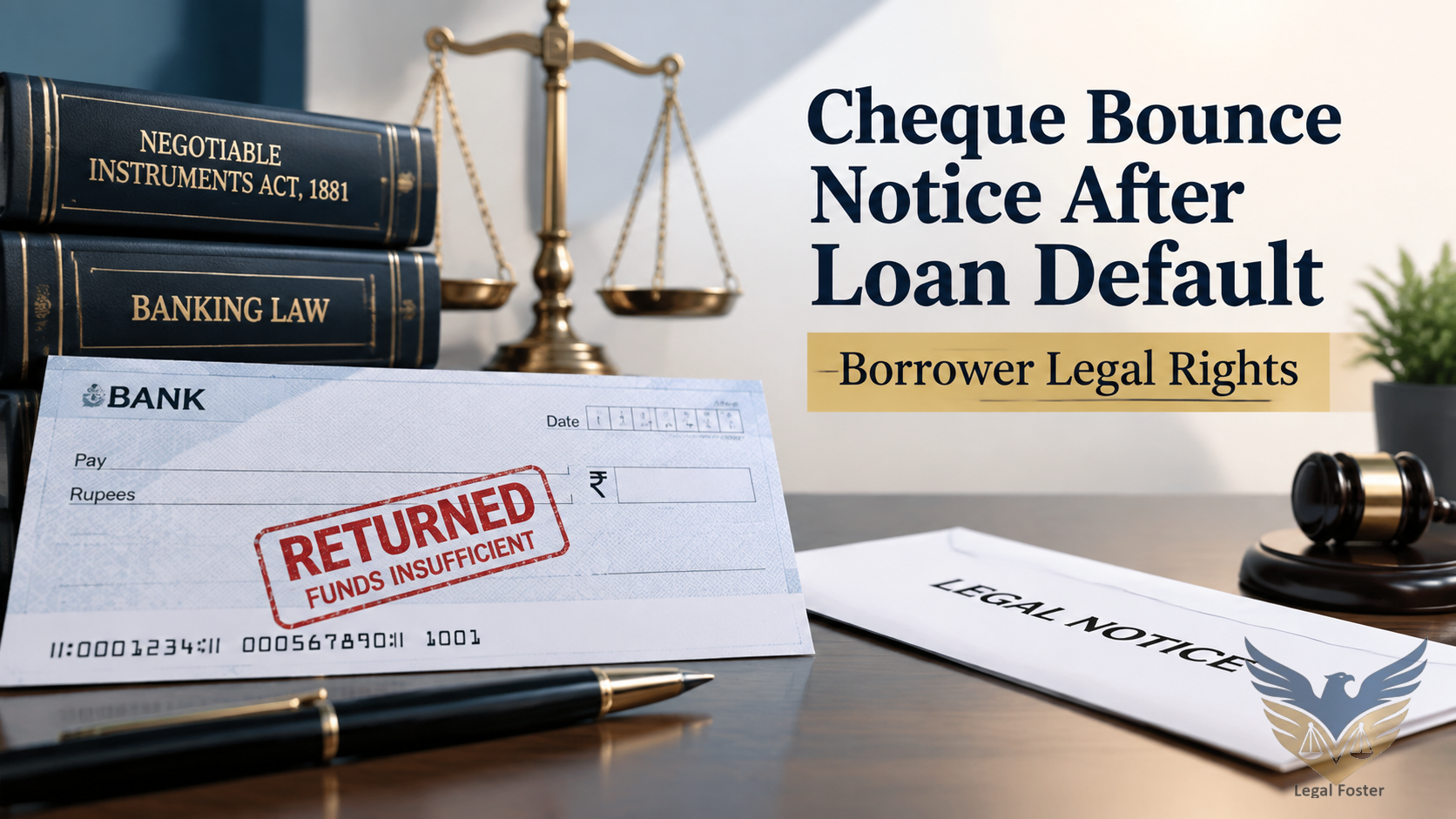
Cheque Bounce Notice After Loan Default: How Can Borrowers Protect Their Legal Rights?
Defaulting on a loan is stressful but receiving a cheque bounce notice surely feels like a nightmare. Most loan borrowers believe that failing to pay even one EMI is a criminal offence. That is far from reality.
If you have given a cheque to your lender towards repayment of loan and the cheque bounces, your lender can initiate legal action against you under NI Act, 18 81 (primarily Section 138) if certain prerequisites are fulfilled. One thing that borrowers need to understand is that Cheque bounce cases have lots of technical aspects related to legal requirements, documentation and prescribed timelines.
We often receive clients after they have received these notices. They panic and believe that they will be arrested soon, need to appear in Court or that they have ruined their reputation. After reviewing their loan agreements, reason for cheque issued, history of repayment, communication and notices served by the lender we analyse their position to suggest appropriate action.
Getting a cheque bounce notice against your loan dues is not only a notice for recovery of loan. It has potential of becoming a criminal law issue if handled incorrectly. Whether you have taken loans from banks or NBFCs, availed personal loans, business loans or credit cards or borrowed money from private lenders, here is what you should know as a borrower if your cheque bounces after defaulting on a loan.
Why Cheque Bounce Matters for Borrowers Across India in 2026
Loan recovery agents are turning more aggressive towards defaulters these days in Delhi NCR,Mumbai,Pune,Bengaluru, Hyderabad, Chennai, Kolkata and other metro cities. There can be multiple reasons for a borrower to default on a loan. Be it job loss or slow business or a medical emergency or delayed payments from your clients or some any kind of financial crunch.
Getting a cheque bounce notice is one big hassle as it involves both recovery as well as criminal proceedings under cheque dishonour law.
Ignoring the notices or thinking that talking can wipe off any legal liability is one error borrowers commit when they default on a loan. “ One should understand their legal position before taking any step”, says Advocate BK Singh.
Few of the consequences include litigation,hassles of cost involved, settlement discussions and stress which affects your home and work both.
Quick Facts About Cheque Bounce Notice After Loan Default
- Section 138 of NI Act deals with offence of dishonour of cheques
- Yes, there are prescribed legal criteria to sustain a valid cheque bounce case.
- Issuance of statutory notice before filing of complaint is compulsory in most cases
- Settlement can be possible depending upon the facts of the case and stage it is at.
- Loan defaulters and cheque bounce are related but 2 separate legal matters.
- Court looks into the documents, evidence and facts related to each individual case.
- One can get a good idea of his options by understanding the legal aspects involved.
What Does a Cheque Bounce Notice After Loan Default Mean?
Cheque bounce notice is a legal notice issued for the dishonor of cheque. Whenever a cheque deposited by the payee/ beneficiary /bank is returned by the drawer’ bank unpaid, the payee can issue this notice. Cheques related to loans, securities cheques or loan repayment cheques/forms issued at loan can be presented by lenders.
This notice is a demand letter where the payee essentially asks for the payment of the cheque amount within the time period mentioned in the notice from the date of dishonour. Subject to making such payment and meeting other conditions, a complaint can be initiated under Section 138 NI Act. However, every cheque bounce complaint will not result in liability. All the facts related to cheque issued, due amount, agreement and other evidences would be considered.
Borrowers who need assistance in understanding a dishonoured cheque, return memo, Section 138 notice or possible response can also review the Cheque Bounce Guidance service.
What Is the Legal Framework for Cheque Bounce After Loan Default?
Cheque dishonour issues are primarily dealt under The Negotiable Instruments Act, 1881. Section 138 deals with the criminal liability in cases of cheque dishonour under certain conditions. Generally, the complainant must prove certain factors such as-
- A legally enforceable debt or liability must have existed.
- Cheque must have been presented to the bank within a specific time frame.
- The cheque was dishonoured by the bank.
- Statutory Notice must have been issued.
- No payment was made by the sender within the period stipulated by law.
The complaint is usually filed before the competent criminal court having jurisdiction under the principles of law. Borrowers ought to know that loan recovery proceedings and cheque bounce proceedings can run parallel. Bank can initiate recovery remedies and sue under the cheque dishonour provisions simultaneously if conditions are satisfied under law.
BK Singh guides borrowers about Civil Recovery Pressure Vs Cheque Bounce Proceedings so that appropriate response can be made.
Who Needs Guidance After Receiving a Cheque Bounce Notice?
These notices are generally issued to:
Loan Borrowers
If you have taken a personal loan and are facing issues such as salary deduction problems, change in job or unexpected expenses, you may get these notices after failing to pay an EMI.
Business Owners
Oftentimes small businesses or companies may receive such notices from lenders for cheque related issues due to reasons such as insufficient funds, delayed receivables or temporary hardships.
Guarantors and Co-borrowers
Sometimes, friends or relatives who are associated with the loan transaction may also require legal counsel. This will be dependent on their involvement in the transaction and the nature of documents they have signed.
Advocate BK Singh has helped many such people understand the notice before they reply to the bank or lender.
What Should Borrowers Do After Receiving the Notice?
First things first, do not panic. The borrower should keep the notice, cheque information, bank return memo, loan documents and prior correspondence in a safe place.
Typically, a legal analysis will cover at least the following:
- The purpose for which the cheque was given.
- If the amount claimed is actually owed.
- If any previous payments have been accounted for.
- If the notice includes mandatory information.
- If there is a bona fide dispute regarding the transaction.
Borrowers should not make statements or promises without first knowing the legal implications of what they are saying.
Many borrowers do nothing because they assume the lender will just drop the matter. Do not let assumptions take you down a path of more problems.
Before deciding whether to respond, discuss, negotiate or fight, says Advocate BK Singh, review the entire record.
Where a borrower needs help reviewing and responding to a formal lender communication, the Legal Notice Reply Service can be relevant to the notice-response stage.
Documents and Evidence Borrowers Should Preserve
Documents can speak for themselves. Some of the important documents can be:
| Document | Purpose |
|---|---|
| Loan agreement | To understand what you have agreed to |
| Cheque copy | To see the details on the cheque you have issued. |
| Bank return memo | To confirm the reason for dishonour |
| Legal notice | To see the allegations and the time given to you to respond |
| Receipts | To prove that you have made payments previously. |
| Emails/Messages | To prove that there has been conversation between the two parties. |
| Settlement talk | To understand what was discussed. |
Availability of right documents can tilt the scale of the matter.
When Should You Consult a Lawyer?
When you should consider legal consultation:
- If you have received a statutory cheque bounce notice.
- If complaint has already been filed against you.
- If the cheque amount is being disputed.
- If payments were made already.
- If you are trying to negotiate settlement, but failing.
- If there are multiple recovery actions.
- If your borrower needs help planning his defense.
Reviewing your case in the beginning can help you avoid pitfalls and know where you stand.
How Loan Settlement Agency Can Help Borrowers
Loan Settlement Agency offers help to borrowers having issues with repayment and associated financial conflicts. They attempt to understand borrower issues, assess options and advise on loan issues.
Loan settlement help can also be found at Loan Settlement Agency
Talk to Loan Default Expert Advocate BK Singh for professional advice on cheque bounce issues arising from loan defaults. Advocate BK Singh will explain the legal standing, necessary documents and realistic expectations before you decide to proceed further.
You can speak with Advocate BK Singh about your situation and see if loan settlement, response to notice or any other option may be applicable.
Borrowers seeking a broader review of EMI default, NPA status, legal notices and settlement options can also explore the Loan Settlement Consultation service.
For borrowers specifically dealing with personal-loan repayment difficulties, the Personal Loan Settlement service is also relevant.
Frequently Asked Questions
1. Can bank file cheque bounce case against me after defaulting loan?
Yes. Cheque bounce complaint can be lodged if all conditions are fulfilled under NI Act. Facts and circumstances of individual cases would determine the position applicable to such cases.
2. If I default loan will it lead to conviction for cheque bounce?
Not in every case. Loan default and cheque dishonour are two different things. Proceedings in relation to cheque bounce would have to be examined with evidence/statutes.
3. After receiving cheque bounce notice, what should I do?
Notice needs to be examined, documents preserved and thought through before reacting to such notice.
4. Can cheque bounce case be settled?
Settlements are always a possibility depending on facts of the case, status of the proceedings and the parties involved. Borrowers can consult BK Singh to understand what options are available to them.
5. Is Cheque bounce offence of criminal nature?
Section 138 NI Act deals with Cheque bounce and enforcement of criminal statutes. But most matters are settled.
6. What are the documents I should gather to defend against Cheque bounce?
Loan documents, proof of payment, notices received, bank documents, correspondence would be required depending on the facts.
7. Can a borrower raise a dispute against the cheque amount issued by him?
Yes. A borrower can raise issues as and when required depending on the evidence and facts of the underlying transaction.
8. If I have already sent a cheque bounce notice, as a borrower should I not reply to recovery calls?
You don’t have to reply to every communication, but at the same time you don’t want to take a position that may cause inconvenience to you in future. All such communications need to be reviewed and a reply should be sent creating an esitemap.
9. Is business loan cheque bounce treated differently?
Business loan and related cheque bounce matters would be different depending on parties involved and commercial agreement.
10. Why should I approach Advocate BK Singh for cheque bounce after defaulting a loan?
Advocate BK Singh can guide borrowers about legal notices, procedural nuances and help you understand what options are available to you based on the facts.
Final Thoughts
Don’t view Cheque bounce notice after defaulting loan casually. When you default a loan and receive cheque bounce notice you must understand that you are under financial stress and you have got legal liability. These are two different issues and you need to assess both of them.
Course of action to be taken would depend upon facts i.e. documents, transaction history, notice, stage of proceedings already completed. You can speak to Advocate BK Singh and understand the whole issue of cheque bounce and legal problems related to loan transactions.
Advocate BK Singh advises borrowers not to wait for the fire to become bigger, instead get to know the right legal advice at the right time. We can guide you to take the right decision for yourself as well as your business.