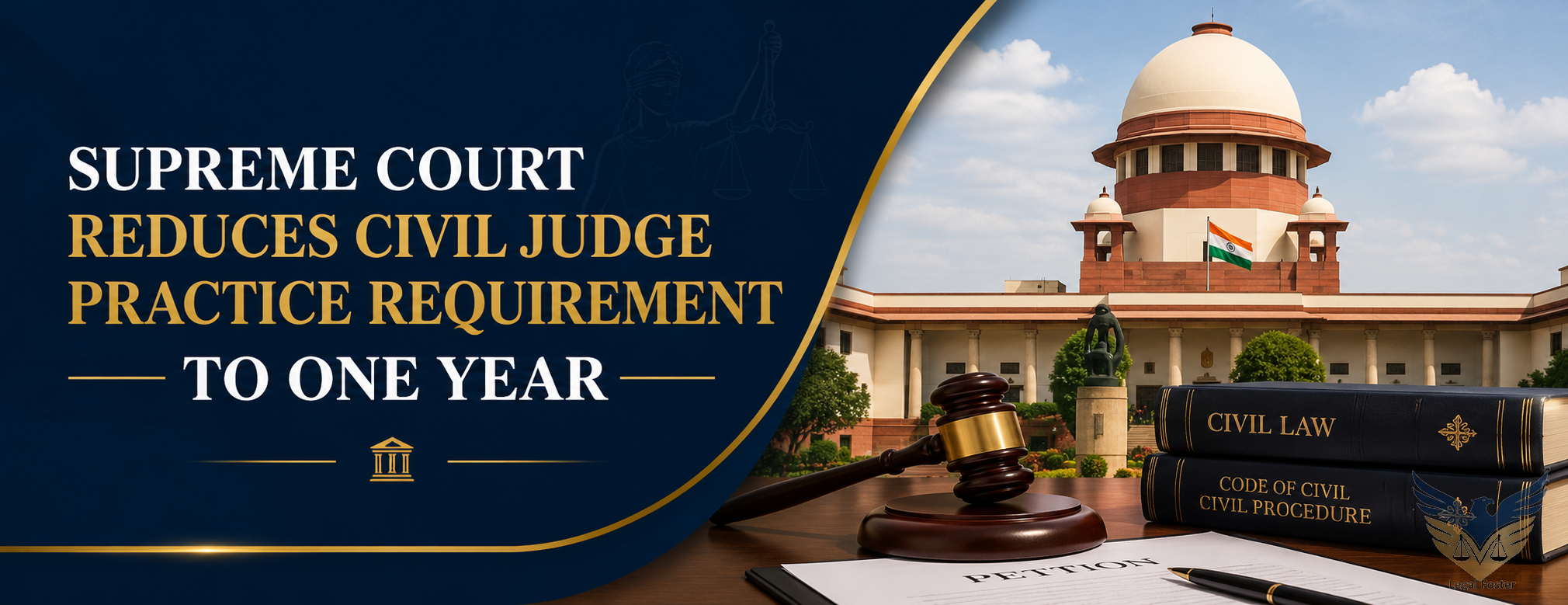
Supreme Court Eases Civil Judge Eligibility Norms by Cutting Practice Requirement to One Year
Civil Judge Eligibility Practice Requirement Reduced From 3 Years To 1 Year
The Supreme Court has modified its earlier direction regarding eligibility criteria for recruitment to judicial services. The apex court has reduced the mandatory practice experience required for candidates appearing for Civil Judge (Junior Division) examinations from three years to one year.
The modification came while hearing review petitions challenging the earlier judgment that required candidates to have at least three years of legal practice before entering judicial service.
Supreme Court Revises Civil Judge Eligibility Requirement
A Bench headed by Chief Justice of India Surya Kant stated that candidates must complete one year of practice as an advocate before becoming eligible for judicial service examinations.
The court also clarified that this requirement will not apply to recruitment processes that were already underway on the date of the modified order.
Training And Clerkship Requirements Added
Along with reducing the practice requirement, the Supreme Court directed successful candidates to undergo structured judicial training before taking charge as judges.
- One year mandatory practice as an advocate before judicial service examination.
- One year training at State Judicial Academy.
- Six months clerkship under District Judge or higher judicial service officer.
- Six months practical training under a sitting High Court Judge.
Earlier Three Year Practice Requirement Challenged
The earlier Supreme Court order dated May 20 required candidates to possess three years of advocacy experience before appearing for Civil Judge examinations.
Several review petitions were filed challenging this condition on the ground that it could affect fresh law graduates and candidates from economically weaker backgrounds.
Arguments Raised Against The Earlier Direction
Senior Advocate Colin Gonsalves and Advocate Chandra Sen Yadav challenged the earlier requirement through review petitions.
The petitions argued that previous Law Commission reports and judicial reform recommendations did not support mandatory practice experience as an eligibility condition for judicial service examinations.
The petitioners also raised concerns regarding equal opportunity under Articles 14 and 16 of the Constitution, stating that mandatory practice requirements could create difficulties for young graduates and disadvantaged applicants.
Impact On Future Judicial Service Aspirants
The revised order provides relief to law graduates who wish to enter the judicial services while ensuring that candidates receive practical exposure before performing adjudicatory responsibilities.
The decision is expected to influence recruitment rules across different States as High Courts and governments update their judicial service regulations.