Delhi Police Tells Supreme Court Facial Recognition at CJP Protests Was Used Only to Identify People With Criminal Records
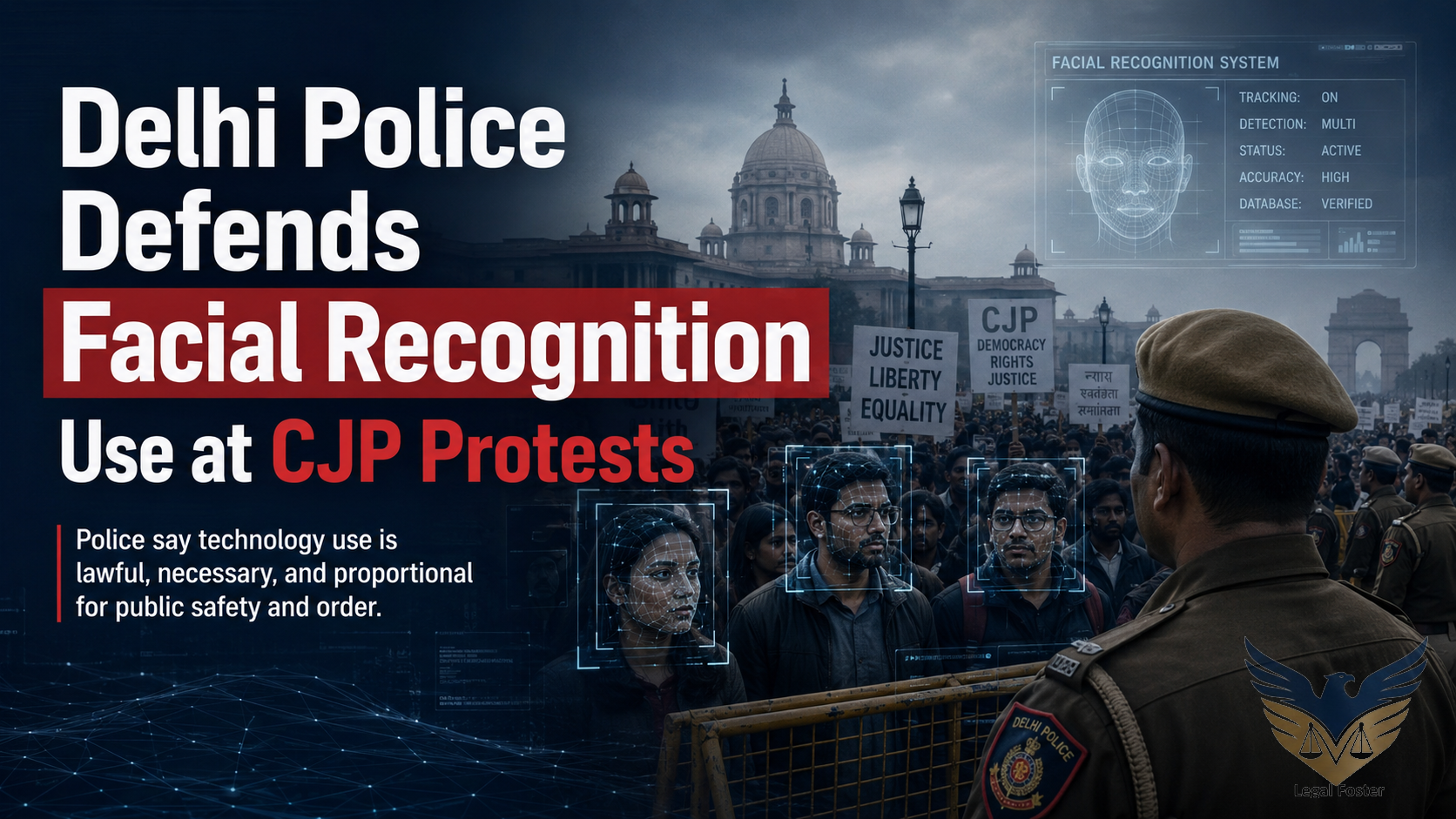
The Delhi Police has informed the Supreme Court that facial recognition technology used during protests at Jantar Mantar was deployed only to identify individuals having existing criminal records and not for indiscriminate surveillance of peaceful protesters.
Police Defends Use of Facial Recognition Technology
The Delhi Police made the submissions in an affidavit filed before the Supreme Court while responding to a petition seeking regulation of surveillance measures allegedly adopted during protests organised by a group identified as the Cockroach Janta Party (CJP).
According to the police, use of the facial recognition system was a legitimate and proportionate measure intended to maintain public order, prevent crime and protect the life and property of members of the public.
System Allegedly Matches Faces With Existing Criminal Records
The police told the Court that the facial recognition system does not automatically create or maintain profiles of every individual visiting a protest site.
It was stated that the system captures a face and checks whether it matches records maintained in relation to individuals accused or previously booked in serious criminal cases.
Delhi Police further submitted that minor information such as traffic challans, which are treated as petty offences, is not part of the database relied upon for such identification.
2,873 Individuals Flagged During Protest Period
According to the affidavit, 2,873 persons having a criminal history were flagged through the facial recognition system between July 20 and July 26.
The police further said that 92 of these individuals had allegedly been involved in more than ten cases.
What Delhi Police Told the Supreme Court
- Facial recognition was not used for mass surveillance.
- The system was intended to identify persons with existing serious criminal records.
- Traffic challans and similar petty offences were not included.
- 2,873 individuals were reportedly flagged during the protest period.
- Police verification was carried out after a facial match.
- No action was said to be taken automatically merely on the basis of an FRS match.
Solicitor General Says Verification Is Not Automatic
Solicitor General Tushar Mehta told the Bench that there appeared to be some misconception regarding the operation of the facial recognition system.
He submitted that the technology does not automatically capture every individual visiting the protest site. Instead, it checks whether a captured face corresponds with records relating to persons having serious criminal antecedents.
Mehta further told the Court that after a possible match is generated, verification is carried out on the ground and no coercive action is taken automatically through the technology.
Petitioners Raise Questions Over Surveillance and Privacy
Senior Advocate Menaka Guruswamy, appearing for some of the petitioners, submitted that issues surrounding facial recognition technology required a separate hearing before the Supreme Court.
She argued that the controversy was not limited merely to the matching of faces with existing records. According to her submissions, the collection and processing of facial images itself raised constitutional concerns.
Guruswamy also raised concerns regarding the alleged involvement of private companies in processing facial recognition material.
Question Raised Over Legal Authority to Collect Data
Senior Advocate N Hariharan, also appearing for the petitioners, questioned whether the police had legal authority to collect and process such facial information.
He argued that surveillance ordinarily requires legal backing and that there were separate questions concerning both the collection of facial recognition data and the subsequent processing of such material.
Supreme Court to Examine Proportionality and Legal Questions
During the hearing, Justice Joymalya Bagchi observed that the proportionality of the measure would have to be examined in the context of public order.
Chief Justice of India Surya Kant clarified that the proposed committee in the matter would primarily perform a fact-finding role and that legal questions would ultimately remain for determination by the Supreme Court.
High-Powered Committee Proposed
The Supreme Court indicated that a high-powered judicial committee would be constituted to examine allegations relating to police excesses, violence against police personnel during protests and connected factual issues.
The petitioners, however, maintained that the legality and constitutional implications of facial recognition technology should ultimately be adjudicated by the Supreme Court itself.