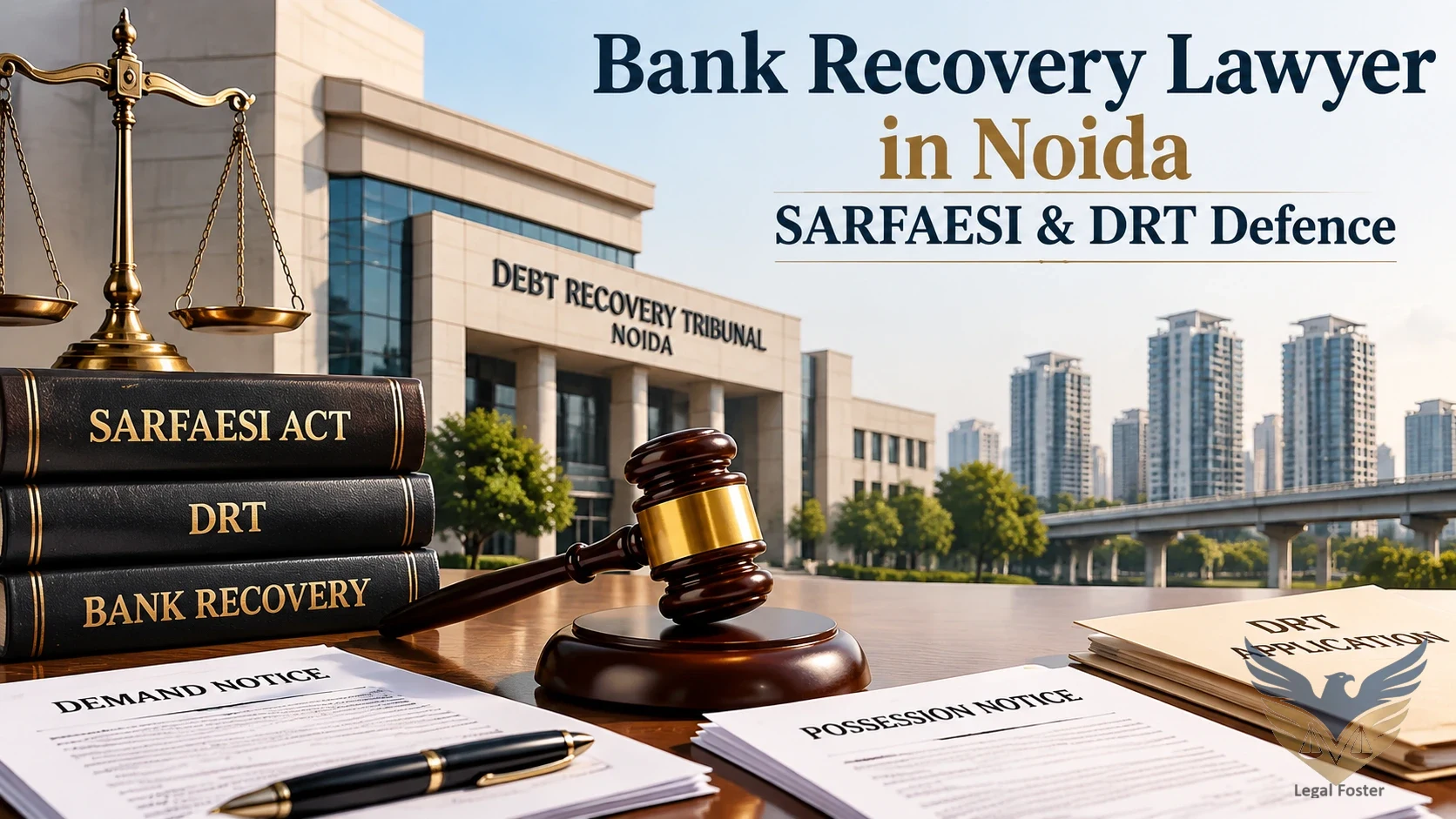
Why Should Borrowers Consult a Bank Recovery Lawyer in Noida?
One moment you are battling delayed EMIs or business losses. The next moment you get a bank recovery notice. Suddenly you are facing a demand notice, SARFAESI action, possession proceedings, auction notice or Debt Recovery Tribunal case.
It is not just overwhelming if you are a borrower from Noida. It can get very personal when the loan was taken against your house, shop, office, factory, warehouse or other asset. For businesses there is the added concern about interference to daily business operations. Families fear homelessness.
Your Bank Recovery Defence Lawyer in Noida will help you understand – what exactly has the bank done; what law applies; what stage has the recovery process reached; and what options (if any) may be available to you. It is not about how to stop bank from recovering what is rightfully owed. It is about reviewing whether the bank has complied with the law in its recovery efforts. You may have defenses, objections, settlement options or relief at tribunal.
BK Singh Advocate represents borrowers, guarantors, MSMEs, companies and property owners affected by bank recovery notices, SARFAESI notices, DRT cases and similar issues. Consulting a lawyer at the beginning can be beneficial as your legal position can change at different stages of the bank’s recovery process. When you first receive a notice for demanding payment the legal position is one thing. Once the bank has started the process for taking possession or conducting an auction your legal position could be entirely different.
Why Does Bank Recovery Become a Serious Issue in Noida?
Let’s just say that bank recovery starts out as a phone call or two from the bank. Recovery becomes serious when a default on payment escalates to legal enforcement action. A borrower might first start receiving reminder letters or collection calls. The lender may then proceed with official legal notices. Or they may initiate action under applicable debt recovery laws depending on the loan type and security.
Noida has many residential/homeowners, commercial property owners, MSMEs & startups, businesses of every kind including manufacturing units, office spaces, warehouses & service industry establishments. So a secured loan conflict has potential to affect more than just an overdue account statement.
Imagine your business mortgaged a commercial property for a working capital loan. Now if that account stays in default long enough, your property is at risk for bank enforcement action. An individual may have taken a mortgage loan against his home or business. He then starts getting a notice of possession/forced sale.
BK Singh Advocate can help clients understand exactly what stage the bank/finance company has reached. The lawyer will not assume that every letter received from bank/lender means the same thing in law.
While a notice of demand may simply be that. Once the bank has initiated possession proceedings your legal rights and options could be very different if the bank has filed an auction auction notice.
Quick Facts About Bank Recovery Defence in Noida
- Don’t ignore a bank recovery notice just because you as borrower does not agree with the amount demanded.
- SARFAESI is typically used for enforcement of security interest by qualified secured creditors.
- SARFAESI Act, sections 13 & 17. Section 13 deals with the Enforcement of security interest without the intervention of court. Section 17 specifies the statutory remedy.
- You cannot file a suit to challenge SARFAESI proceedings and a DRT case are very similar but have key differences.
- Simply filing a lawsuit will not stay every type of recovery or auction proceeding automatically.
- RBI regulated banks and their agents cannot act in a manner which is inconsistent with fair practices in collections and cannot resort to “intimidate and harassment”.
What Does a Bank Recovery Defence Lawyer Actually Do?
A Bank Recovery Defence Lawyer will review your loan paperwork, account history, bank notices, related security documents and actual recovery actions taken to assess the legal position you are currently in.
Essentially the lawyer will review 4 main areas
- What does the borrower owe?
- What does the bank claim is owed to them?
- What action has bank taken?
- What legal remedies could be available?
This will typically include reviewing the loan agreement, sanction letter, mortgage documents, guarantees, account statements, account payment history, correspondence, recovery notices and auction-related papers. Exact documents would vary based on facts, type of loan and stage of recovery.
BK Singh Advocate will analyze your case based on the strength of the available facts & documents. No law firm can guarantee you a specific outcome before inspecting your documents. Sometimes a borrower may have legitimate complaints about the amount claimed, service of notice, validity of the security documents, payments made towards the account, wrong account classification by bank or actual enforcement actions taken by bank. In another situation the borrower may have no real legitimate disputes against the debt but needs assistance from a lawyer with regard to a settlement or structured repayment.
Where a bank has already initiated formal tribunal proceedings, borrowers may also require DRT Case Defence assistance to understand the claim, documents and appropriate legal response.
What Happens After a SARFAESI Notice?
Once a SARFAESI action is initiated the matter can proceed through various stages and the legal position of borrower varies at each stage depending on what action the lender has taken next.
Lets say a borrower receives a section 13(2) notice which demands repayment of the entire amount secured by the mortgage. This notice serves as notice of demand under the Act in respect of the circumstances where the said section applies. Upon receipt of the section 13 demand notice the borrower has right to make a representation/objection to the secured creditor under section 13(3A) where the law so requires.
If the secured creditor then initiates enforcement action covered under section 13(4) of the SARFAESI Act then the borrower may have remedies available before the Debt Recovery Tribunal under section 17 depending on the requirements of statute and the facts of the case.
So a borrower should keep every single notice he receives from the bank and note the date it was received. Action can be taken at the initial stages of recovery. Don’t wait till the auction is scheduled.
Handle urgent matter smoothly by talking to Indian Debt Recovery Lawyers in India. BK Singh Advocate advises borrower if he is asked to produce documents relating to his loan by bank, he should bring along the entire chain of notice received from bank starting from the first letter. The 1st notice might provide information on how the bank allowed the account to get to this stage. Take all the notices to the lawyer.
If enforcement measures under Section 13(4) have already been taken, a borrower may need to examine the statutory remedy through a SARFAESI Section 17 application, depending on the facts and applicable law.
What Documents Should a Borrower Keep Ready?
Having a complete organized set of documents can help you and the lawyer significantly during the 1st legal consultation. Borrowers should typically have the following documents ready:
- Loan sanction letter & loan agreement
- Mortgage, hypothecation or any guarantee documents
- Bank statements/ proof of repayment
- Notice from bank / financial institution
- SARFAESI demand notice/ possession notice
- Auction/ sale notice, if applicable.
- Emails/letters and any written representations sent/ received from bank
- Proof of payment/ disputed credits
- Particulars of security asset
- Any previous legal notices sent, DRT filing or lawsuit papers.
Commercial borrowers should also have any related financial correspondence/papers which discuss the business background of matter (if applicable to the issues in dispute/negotiation).
Documents showing timeline helps to understand what actions lender has taken. Preserve all envelopes, email headers or receipts showing dates documents were delivered. Date are very important in recovery lawsuits.
BK Singh Advocate will go through the documents you have. The lawyer will also advise you if you are missing any documents depending on where the matter actually stands.
When Should You Consult a Bank Recovery Defence Lawyer?
A borrower realizes the benefit of legal advice when he or she gets a bank recovery notice, SARFAESI demand notice, notice of possession, auction notice or DRT lawsuit.
Similarly, a guarantor would want to know his options if bank has initiated recovery action against him/her based on the guarantee/property.
An entrepreneur should consult a lawyer at the earliest if the disputed property is part of his business and can’t wait until the auctioneer shows up at his office.
Once the notices/documents are reviewed it becomes clear what the problem relates to. Documentation, account calculations, recovery process, one time settlement or tribunal relief.
BK Singh Advocate can guide you even if you want to negotiate OTS/ settled repayment with bank. Remember settlement is a commercial decision, not granted by right of law. Know the settlement deal before you accept it.
Where the immediate concern involves a proposed sale of secured property, borrowers can also review the available DRT Auction & Sale Challenge service in the context of their documents and recovery stage.
How Can DRT Lawyer Support Borrowers in Noida?
DRT Lawyer provides legal services to borrowers, guarantors, MSMEs, companies or property owners facing debt recovery related issues. Visit Noida page to learn more about how Debt Recovery Tribunal proceeding works, SARFAESI notices, possession of property, loan defaults, auction/ sale of property and banking disputes.
If hired, legal services would possibly include: analysis of the loan agreements and notices, understand what stage of recovery the matter is at; draft any required legal pleadings; appear on your behalf before the forum; negotiate a settlement if desired.
Looking for DRT Lawyer in Noida? Don’t just search for lawyers that describe themselves as DRT lawyer. You want someone who understands how your loan document relates to the notice of recovery; SARFAESI action; DRT proceeding and subsequent remedy (if any) such as an appeal.
BK Singh Advocate specializes in reviewing documents and providing actionable legal advice.
BK Singh & Associates responds to each and every query. If you have any query please leave your contact details or submit your query below.
Borrowers facing an immediate concern about recovery, possession or auction may also consider the available DRT Stay Application service, subject to the facts and orders applicable to the matter.
FAQ’s
Q1. What is a Bank Recovery Defence Lawyer?
Ans. Bank Recovery Defence Lawyer advises borrowers/guarantors on lawful bank recovery actions taken and the borrowers rights & options to respond. Tasks can include review of loan documents, notices received from bank, SARFAESI actions taken, DRT proceedings initiated, proposed settlement amounts and other legal documents.
Q2. Can borrower apply to DRT against SARFAESI action?
Ans. Yes. Borrower or any other aggrieved person can file an application before DRT against measures taken under Section 17 of SARFAESI Act. The nature of remedy & timing of such remedy would depend on the action taken and facts of the matter.
Q3. Can we challenge a Section 13(2) notice under Section 17?
Ans. Section 17 refers to “any measure” taken in exercise of the powers under Section 13(4). It does not usually include the sending of a Section 13(2) notice of demand. However, a borrower has other remedies at the demand stage such as making a representation/objection in the manner required by statute.
Q4. How long does borrower have to apply to DRT?
Ans. Section 17 has a statutory limitation period within which you must make an application under that section against the relevant measure. Typically, the limitation period is 45 days from the date of the measure complained of. Calculation of “date of measure” can be fact specific. Consult a lawyer right away.
Q5. Can bank auction my mortgaged property?
Ans. Secured creditor can enforce its security interest under SARFAESI Act. But certain statutory preconditions must be met first. Whether a particular auction was conducted in a legal manner depends on the facts of the case, notices sent, underlying security documents and compliance with various procedural requirements.
Q6. If we file DRT case against SARFAESI action, does it stop auction?
Ans. No. Just because you file an application that does not mean all recovery or auction proceedings will be stayed automatically. Obtaining an interim stay or suspension of all recovery proceedings will depend on the facts of the case, how the pleadings are drafted, applicable law and what order is made by the appropriate forum.
Q7. Can a guarantor defend against bank recovery case?
Ans. Yes. Guarantor can have defenses based on the terms of the guarantee, underlying loan documents, payments made under the loan, whether security was provided, nature of recovery action initiated by bank. Borrowers & guarantor should have their separate positions reviewed rather than assuming they will be liable or not.
Q8. What should I do after receiving bank recovery notice in Noida?
Ans. After receiving a bank recovery notice, preserve the notice and note date of receipt. Get copies of loan documents, account statements, account payment history and any previous correspondence with bank.
Q9. Can borrower negotiate OTS with bank during recovery process?
Ans. Yes. Borrowers can discuss settlement at any time while a recovery action is pending. Whether you can agree to an OTS and have the matter concluded depends on the lender and specific facts. Signing an OTS does not automatically terminate suspend any pending legal proceedings. Whether legal proceedings are terminated suspended depends on the terms agreed by lender and subsequent actions taken by bank.
Q10. Can recovery agents abuse borrowers?
Ans. RBI instructions state that regulated entities and their agents should not “intimidate and harass” borrowers. They have specifically spoken about behaviors such as threatening phone calls & making calls at unreasonable hours. Borrowers should preserve evidence of such misconduct and pursue RBI grievance or legal channels.
Conclusion
Don’t let a bank recovery notice turn into another harassment call. Once you have legal notices, attached property, DRT or auction involved it is no longer a normal debt collection call.
Borrowers in Noida need to understand what stage of the bank recovery process they are in before deciding how to respond. The right legal forum and strategy could depend on whether you are at the stage of a demand notice, SARFAESI enforcement, possession/ auction of property, DRT lawsuit, guarantor being held liable or attempting to negotiate a settlement.
BK Singh Advocate has successfully represented borrowers, guarantors, MSMEs, companies and property owners in bank recovery cases. Please consult him sooner to see if your documents would help determine what forum you need to approach and what legal options you may have in your specific situation.
If you have been sued under SARFAESI or received a bank recovery notice pertaining to SARFAESI, possession of property, auction or DRT proceedings please do not wait until the matter escalates. Meet BK Singh Advocate with a complete set of documents related to your case.
Attorney will go through documents with you and advise you what can be done legally and what can not be done. If there is a legal way to handle your situation attorney will advise you on course of action depending on facts. No ethical attorney will promise you the world.