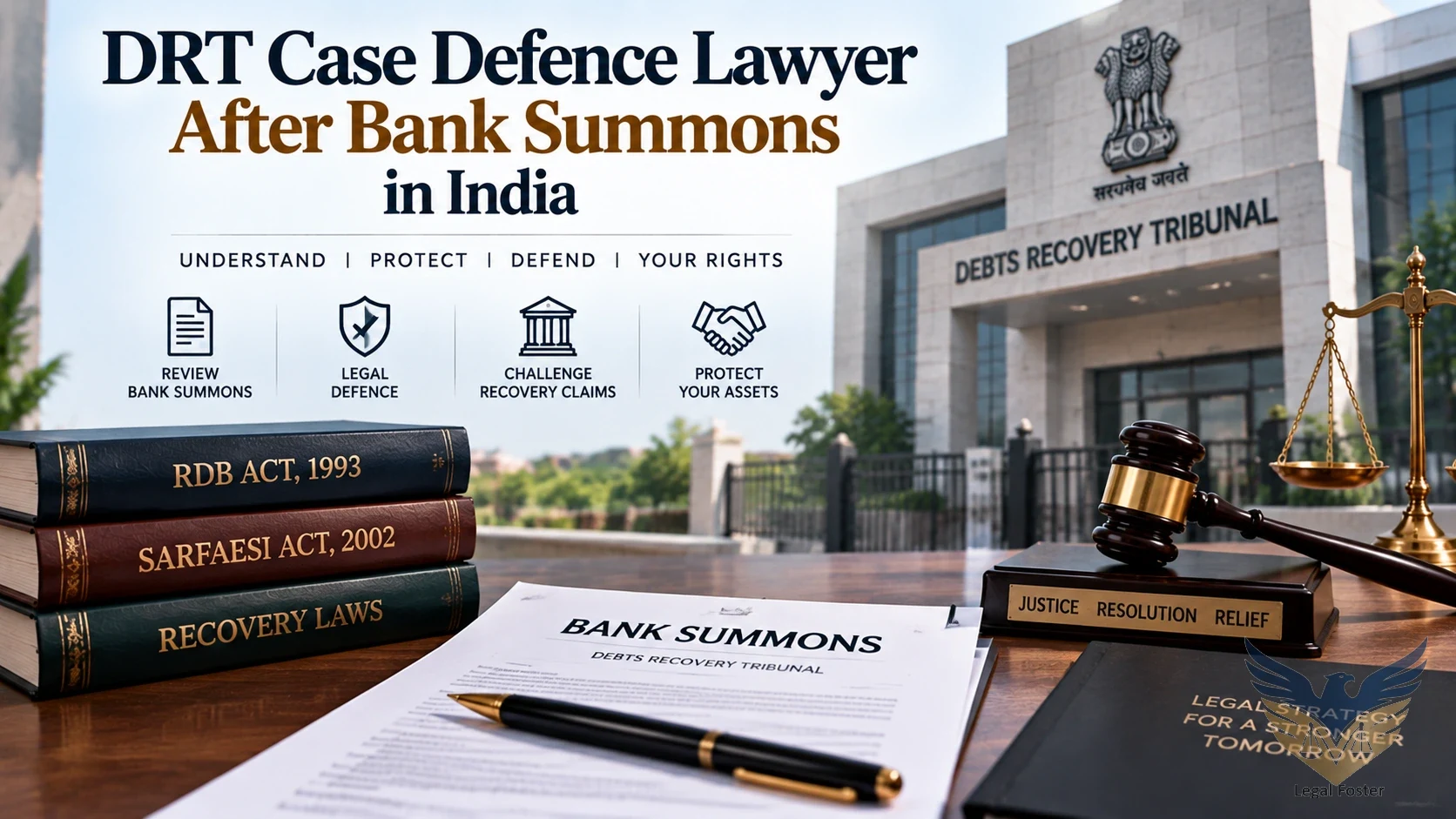
Why Do You Need a DRT Case Defence Lawyer After Bank Summons?
Being dragged to Debt Recovery Tribunal by the bank for recovery of loan can convert your simple loan difficulty into legal hassles. Often you have already received phone calls, reminders and recovery letters before this. But now out of the blue, you receive a DRT summons along with Original Application, claimed amount and date of hearing. This is the time when the seriousness of the matter strikes most households and businesses.
However, don’t ignore DRT summons as it’s not a decree against you. Talk to a DRT Case Defence Lawyer who can review bank’s claim, loan documents, account details, securities and SARFAESI related documents, procedural history and advise you the best legal course to respond. Clients located in Delhi NCR (Delhi, Noida, Greater Noida, Ghaziabad, Gurugram, Faridabad, Meerut, Hapur) and Mumbai, Pune, Lucknow, Bengaluru, Hyderabad, Chennai, Kolkata, Ahmedabad and rest of India have benefitted from consulting a lawyer early on. You will be in a much stronger position to defend yourself when you have legal support understanding DRT/ PRA fees and defending your case.
BK Singh Advocate has been representing borrowers, guarantors, MSME and business owners facing DRT, DRAT, SARFAESI and bank recovery proceedings. We focus on solving your matter instead of delay recovery.
Why Should You Care About a DRT Summons in 2026?
Issuance of a Debt Recovery Tribunal summons indicates that bank/financial institution has initiated recovery proceedings before the Tribunal. As per Section 19 Recovery of Debts and Bankruptcy Act, 1993 (RDDB Act), “Any bank or financial institution may institute an original proceeding for recovery of any debt due to it under this Act before the Tribunal.”
In simple words, a summons means that you need to do more than ignoring that loan collection letter. The summons may order the defendant to show cause why certain specified information should not be disclosed and an affidavit filed; or file a written statement or other defence allowed under this Act within such time as may be specified. Most recently issued summons in DRT proceedings that I’ve reviewed are show cause issued under Section 19(4) asking the defendant to respond within 30 days.
Waiting until few days before the hearing means you will have very less time to gather loan documents, account entries, understand bank’s default notice and draft an appropriate response. Like BK Singh Advocate said in his post read the entire paperbook, not just summons first page.
What Does a DRT Case Defence Lawyer Cross Verify?
He would first understand what is bank’ s case. For this, he will go through the Original Application, loan agreement, sanction documents, security papers, guarantee documents, account statement and correspondence bank plans to rely upon.
Next, he will cross check if amount claimed by bank tally with your records and if payments made, restructuring agreed, settlement undertaken or any other correspondence has been considered while calculating the demanded amount.
He would check your Loan & account documents
Loan & account documents have every details related to your loan account. Loan disbursed, interest applied, payments made etc. would be find here. As soon you start verifying with bank’s claim with loan account documents, you and your lawyer would know if bank has recorded everything properly.
Whether it’s due to interest, charges, payments recorded or restructuring granted on loan account. There could be errors in recording those in loan account too. Verifying this, doesn’t mean bank has made a mistake. It just mean the claim made by bank is disputable and needs to be checked before you decide on how to defend your claim. You can also review the wrong interest calculation dispute service where the claimed figures require closer examination.
He would go through Security/ Guarantee documents you have provided.
You might have offered your property, machinery, book debts or any other asset against loan. If you have provided a guarantee, Guarantee document would enlist liability of guarantor too.
BK Singh Advocate would read these and analyze the nature of liability bank has filled you owe and if/how bank has filled up its Application to Tribunal.
Loan may have previous recovery notices /speedy repayment notices issued by bank.
Notice of filing DRT Proceedings can’t be the first legal notice you received from bank. There could have been SARFAESI demand notice issued previously, possession notice, auction notice or maybe a notice regarding restructuring/ settlement proposal from bank.
If the matter also involves SARFAESI enforcement, you may need to understand the available SARFAESI legal assistance separately from the DRT recovery proceedings.
Which Documents You Should Share With Your DRT Lawyer?
If you have managed to get these documents before meeting with lawyer, that’s great. But if you haven’t, don’t worry. You aren’t expected to know every tiny legal notice received by the bank. Here are some important documents which you should try to preserve:
- DRT summons and complete set of Original Application.
- Loan sanction letter & loan agreement.
- Account statements/ History of Payments made.
- Mortgage/ hypothecation /Security documents offered.
- Guarantee docs (if any).
- Any SARFAESI notices received / possession / auction notices.
- Copies of any reply sent to bank.
- Any settlement/ restructuring/OTS related correspondence with bank.
- Proof of payments made to bank.
- Any business/ financial documents which would help clarify disputes.
Try not to throw away old bank emails/ letters/ statements because they “looks boring”. Remember, a detail which might seem useless to you could help your lawyer understand the timeline of what transpired.
When to Meet a DRT Lawyer?
First and the earliest time you can review your summons is when you receive it along with complete paper book.
You would need to meet a lawyer if
- summons specifies a time within which you must respond;
- bank has claimed a huge amount;
- if security involving property is provided; or
- if borrower is undergoing SARFAESI action simultaneously.
Guarantors should also care about receiving summons. Just because you signed a guarantee over a loan doesn’t mean you cannot dispute every allegation made by bank. But we would have to review your contract and facts to determine your specific situation.
Businesses have one more thing to worry about. DRT proceeding for recovery of loan is just one battle. You may be receiving pressure from bank on your working capital account, loan against security of property/machinery other business assets. Taking the legal advice early on would help you understand what’s a legal issue and what’s a commercial decision you have to take.
BK Singh Advocate would review the Summonses served to you and the loan/account documents you have provided. We will advice the legal options available to you for contesting the banks claims. We will not guarantee any outcomes but will definitely suggest you the choices you have.
Can Lawyers help negotiate a Settlement?
Defense and Settlement negotiations can happen together. Just because a borrower has potential defense against lender’s claim, he still might want to consider if its commercially viable to settle the matter.
Willingness to settle would depend on what lender is willing to accept, loan documents, amount involved, security, commercial factors and terms offered by lender. Just because you file a Defence, doesn’t mean parties would settle. Also, entering into Settlement talks doesn’t mean you can get out of DRT proceeding.
BK Singh Advocate would help borrowers understand their legal rights and potential along with reviewing any settlement/OTS documents offered by bank. Remember, any settlement should be in writing and include amount of settlement, payment terms, what happens to securities offered and what happens to current pending proceedings.
Where settlement is being considered during an ongoing DRT matter, the Loan Settlement by DRT service is also relevant to this stage of the dispute.
How Can a Lawyer Help With Bank Summons in DRT?
BK Singh Advocate provides legal assistance to borrowers, guarantors facing recovery actions from bank in Debt Recovery Tribunal and Debt Recovery Appellate Tribunal.
As your DRT Case Defence Lawyer we would help you with DRT recovery related case handling and support. This would include representing you and assisting you with matters related to Debt Recovery Tribunal in accordance with facts of your case. This would generally include:
- Reviewing pleadings filed by bank and understand bank’s version of events
- Understand the nature of default as claimed by bank.
- Draft response required to be filed on your behalf and get it filed before Tribunal.
- Review documents bank would be relying on.
- Appear before Tribunal and argue SARFAESI/recovery based questions/issues at Tribunal when required.
We also help with legal issues regarding bank recovery notices, SARFAESI claims, possession claims, auction related disputes and review/re-negotiating recovery settlements.
Where applicable and subject to nature of your case, we can even provide pleadings and advice for clients remotely located in Delhi NCR and other cities of India. But as mentioned earlier, we would need to review documents related to your matter before we can advise on proper forum and legal strategy.
If the bank has already initiated Original Application proceedings, clients can also review the lawyer for OA proceedings in DRT service for assistance relating to the tribunal recovery proceeding.
Quick Guide To DRT Summons
- A DRT summons can be issued to a person based on application filed by bank under Section 19 RDDB Act.
- DRT summons is not the final decision on bank’s claim.
- Sub-section (4) of Section 19 mandates for issuance of summons to appear and show cause against claim within prescribed time limit.
- Lately DRT have allowed 30 days from date of service of summons to file written statement by Defendant.
- SARFAESI notices served under Section 13(4) of SARFAESI may also lead to separate remedy initiated by borrower against bank under Section 17 of SARFAESI Act.
- 45 days from relevant action being taken is the general limitation to be complied with for filing Application under Section 17, subject to the statutory framework and facts.
- Settlement negotiation and discussions can still be made despite initiating DRT proceeding. However, any settlement should be in writing.
Frequently Asked Questions
Q1) What should I do if I receive DRT summons notice from bank?
Ans. Read it carefully. Get a copy of Original Application and all documents filed by bank. Note down date of service and date of hearing mentioned on Summonses. Keep copies of your loan documents safe. Lastly, consult a lawyer at the earliest. Please don’t ignore summons.
Q2) What is DRT summons?
Ans. DRT summons is issued against a person at the time of proceedings in Debt Recovery Tribunal. Typically a DRT summons would order the defendant to show cause why certain reliefs as claimed by bank should not be granted to bank. (as per Section 19(4) Recovery of Debts and Bankruptcy Act, 1993)
Q3) Can I receive DRT summons and SARFAESI notice?
Ans. No. But Yes. DRT summons is issued when bank has filed Original Application before Debt Recovery Tribunal. Bank would have initiated proceedings under Recovery of Debts and Bankruptcy Act. SARFAESI notice would be issued by bank under Securitisation and Reconstruction of Financial Assets and Enforcement of Security Interest Act. But yes, both proceedings can be initiated against borrower based on facts.
Q4) Can defend against bank recovery suit before DRT?
Ans. Yes, you can defend yourself against bank recovery notice before Debt Recovery Tribunal. Defendant have right to contest bank’s claim based on loan agreement, account records, securities offered, pleadings filed before Tribunal and facts.
Q5) What is the time limit to respond after receiving DRT summons?
Ans. Sub-section (4) of Section 19 allows Defendant a period of 30 days from date of service of summons to show cause against claim. Once proceedings are initiated in DRT, you typically have a period of 30 days to file written statement by Defendant. Please refer to summons received and check the relevant provision of law.
Q6) Will I receive DRT summons if I am a guarantor?
Ans. Yes, if bank chooses to. Banks can initiate recovery proceedings against Guarantor based on nature of Guarantee, loan documents and law governing the guarantee contract. If in doubt, Guarantors should have their guarantee documents reviewed and should not assume that only borrower is liable to pay.
Q7) Can I dispute amount claimed by bank in DRT?
Ans. Yes. Often amount first demanded by bank at the start of recovery can be disputed based on loan agreements, account records, payments made, interest applied etc. Loan documents. Legal merit of any such dispute would be evaluated based on facts.
Q8) Can I settle my loan if DRT case has been filed against me?
Ans. Yes, depending on lender. Every lenders are different and have their own threshold of settling a matter. Just because you have a pending DRT case doesn’t go poof if you speak to bank. Every case is different and would depend on lender and situation.
Q9) Can DRT Proceeding and SARFAESI Proceeding be filed against me at one time?
Ans. Yes, both can be initiated against you. DRT Proceeding and SARFAESI Proceeding against borrower can go side by side. Although both statutes provide for different remedy, they can be invoked against borrower for same overlying recovery demand. Whether its appropriate to go with DRT versus SARFAESI would depend on what actions lender has already taken and proceedings already entered.
Q10) Can BK Singh Help if DRT Summons has been issued against me?
Ans. Yes. BK Singh Advocate at DRT Lawyer helps clients get their DRT and related forums like DRAT, SARFAESI and bank recovery proceedings. BK Singh Advocate would first review the summons notice served to you, Bank’s Recovery Application filed, loan agreements, securities offered and correspondences received from bank to suggest you what legal action can be taken.
Conclusion
If Bank has issued you a summons, do not panic. Bank summons is not a decree against you. Bank summonses you only means they want to sue you before Debt Recovery Tribunal.
Get all the documents/statements related to loan/ account. Meet a lawyer to know your rights and what legal remedies are available to defend yourself. BK Singh Advocate has practiced DRT matters and Debt Recovery Appellate Tribunal hearings. You can contact him if you have any queries regarding DRT summons.
If the dispute also involves a secured property facing recovery or auction pressure, the Property Auction Stay Lawyer service may be relevant depending on the facts and stage of proceedings.
Where immediate temporary protection is being considered, the DRT Interim Relief service provides a separate service route for matters involving interim protection.