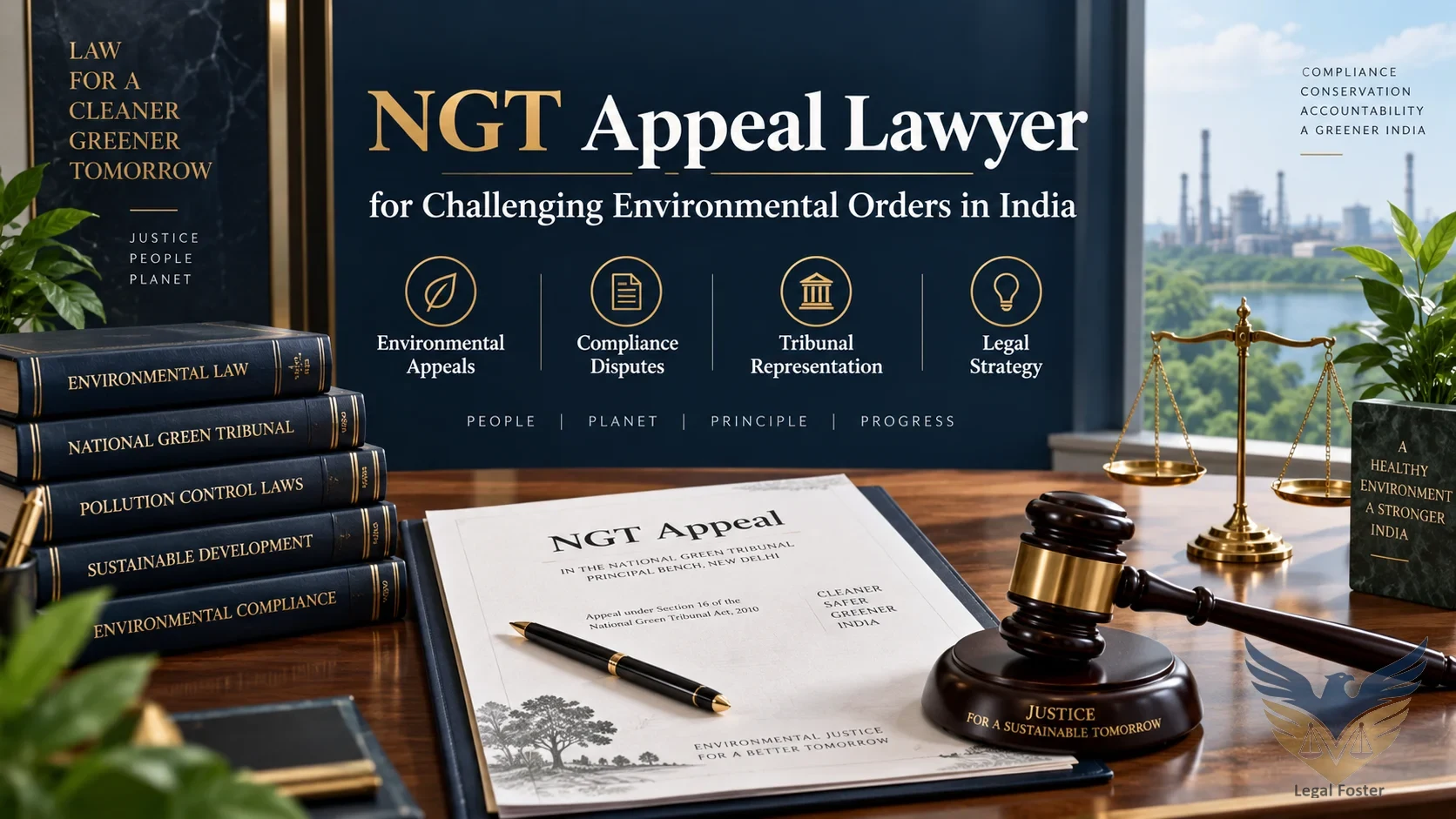
When Can an Environmental Order Be Challenged Through an NGT Appeal?
It’s not a good feeling to receive an environmental order. Suddenly your project is restricted, your environmental clearance is denied (or granted with conditions), your pollution-control order limits how you do business, or your authority has issued an order threatening you, your company or your community.
Is it possible to appeal that order to the National Green Tribunal? In many cases, yes. But you cannot appeal every environmental decision just because you don’t like it. The type of order, the authority who issued it, the statute under which it was issued, limitation periods and your specific grievance all factor into your legal options.
If you are considering appealing to the NGT, your first step should be to seek expert advice. Don’t jump in feet first with preparation. First you need to determine whether the order is actually appealable and if the NGT has jurisdiction over your matter.
Advocate B. K. Singh and Environmental Lawyers can help individuals, companies, project proponents and others understand their environmental orders, determine the best course of action through the NGT and prepare their case for presentation by legal experts.
Why Does an NGT Appeal Matter in 2026?
Environmental orders often have consequences that spill over into another proceeding. Projects can receive operating restrictions, costs to achieve compliance, environmental mitigation requirements, suspensions of operations, or limitations on receiving future approvals.
You don’t want an unfavorable environmental order to become a major business problem for your company in Delhi NCR, Noida, Greater Noida, Ghaziabad, Gurugram or any other industrial/commercial city in India. The same goes for businesses with facilities in Mumbai, Pune, Bengaluru, Hyderabad, Chennai, Kolkata, Ahmedabad, Jaipur or other cities in India.
The National Green Tribunal Act, 2010 established the National Green Tribunal as a specialized forum to adjudicate environmental disputes. The NGT has jurisdiction over cases which involve questions of environmental protection and conservation of forests and other natural resources, as well as enforcement of any legal rights that relate to the abovementioned topics.
Did you receive an environmental order from the National Green Tribunal and wonder “is there a NGT appeal”? Contacting legal counsel early on can prevent you from dealing with a statute of limitations problem or the filing of an incorrect proceeding.
Environment law attorney B. K. Singh can review your order and tell you what your legal options are before you spend money on litigation.
Environmental orders often have consequences that spill over into another proceeding. Projects can receive operating restrictions, costs to achieve compliance, environmental mitigation requirements, suspensions of operations, or limitations on receiving future approvals.
You don’t want an unfavorable environmental order to become a major business problem for your company in Delhi NCR, Noida, Greater Noida, Ghaziabad, Gurugram or any other industrial/commercial city in India. The same goes for businesses with facilities in Mumbai, Pune, Bengaluru, Hyderabad, Chennai, Kolkata, Ahmedabad, Jaipur or other cities in India.
The National Green Tribunal Act, 2010 established the National Green Tribunal as a specialized forum to adjudicate environmental disputes. The NGT has jurisdiction over cases which involve questions of environmental protection and conservation of forests and other natural resources, as well as enforcement of any legal rights that relate to the abovementioned topics.
Did you receive an environmental order from the National Green Tribunal and wonder “is there a NGT appeal”? Contacting legal counsel early on can prevent you from dealing with a statute of limitations problem or the filing of an incorrect proceeding.
Environment law attorney B. K. Singh can review your order and tell you what your legal options are before you spend money on litigation.
What Are the Key Facts About an NGT Appeal?
- NGT Appeal is mostly dealt under National Green Tribunal Act, 2010.
- Section 16. Appellate jurisdiction of Tribunal.
- Section 18. Application and appeals to be made to the Tribunal.
- Only particular Environmental Clearance orders are covered under section 16.
- Orders in environmental laws which are appealable elsewhere also.
- Check if the person is legally aggrieved.
- Nature of impugned order.
- Nature of authority passing the order.
- Nature of statutory provision under which order was passed.
- Limitation is VERY IMPORTANT.
- There is a limitation of 30 days for the specified appeals under section 16.
What Exactly Is an NGT Appeal?
An NGT appeal is a statutory remedy available to be exercised against certain orders, decisions or directions issued by environmental authorities that fall within the appellate jurisdiction of National Green Tribunal.
Orders against which NGT appeals can be filed
Section 16 National Green Tribunal Act, 20 10 specifically mentions orders falling within its appellate jurisdiction to include certain orders under the Water Act, Air Act, Forest (Conservation) Acts and rules made there under Environment (Protection) Act 1986 and orders granting certain environmental clearances etc.
Notice the distinction.
Every time you don’t like a notice you receive, administrative communication or have an environmental dispute that arises, cannot be taken up at NGT. You need to look at the underlying legislation under which the decision was issued and understand the nature of the impugned decision.
If you are still unsure if your grievance can be heard by NGT as an appeal, consult environmental lawyers who will be able to understand if the particular order falls within appellate jurisdiction of NGT.
When Can You Challenge an Environmental Order Before the NGT?
The order or decision you are challenging may be something where you already have an NGT remedy available to you in the form of a statutory appeal under Section 16 of the NGT Act.
These include:
- Environmental clearance;
- Directions issued under Section 5 of the Environment (Protection) Act;
- Certain orders issued under the Water Act;
- Certain orders issued under the Air Act;
- Certain forest related orders; and
- Certain biodiversity related decisions.
- Notice how Section 16 neatly itemizes categories. It does NOT provide a general right to appeal any order dealing with an environmental issue.
- For this reason, your first legal question should NOT be “How do I file an appeal?” Your first question should be, “Is this order appealable before the NGT?”
- Figuring out the answer to that question is where counsel can assist you.
Which Environmental Orders Need Careful Legal Review?
Orders pertaining to environment can have highly diverse consequences. An environmental clearance can come with qualifications on the operation of a project. A rejection of environmental clearance can kill a proposed operation right in its nascent stage. A regulatory order can pressure an ongoing operation to comply with environmental norms.
Similarly, an order concerning pollution control can be effectively analyzed by examining the statute that conferred power to issue the order and the forum for appeals against the order.
Upon examination of the actual order along with supporting documentation and any pertinent environmental background, Advocate B.K.Singh will suggest the appropriate legal remedy.
What Does the NGT Appeal Process Usually Involve?
The work flow depends on what kind of order is received. Most times the tribunal proceeding begins with an Order Review/Document review along with what jurisdiction applies.
First the order being appealed is reviewed. Counsel will then review the statutory provision that the order was made under, date of order, how it was communicated, what notices apply, what representations have been made in the past, any environmental clearances and any records that support any of the above.
Once it is determined that a viable appeal can be maintained, pleadings and supporting documents can be prepared in line with the applicable NGT procedure.
NGT Act states that – Every appeal under section 16 shall be made in such form and with such particulars and documents and fees as may be prescribed.
Procedure
13. (1) The Tribunal shall be governed by the principles of natural justice and shall not be bound by the Indian Code of Civil Procedure, 19
08 in respect of its procedure.
(2) The Tribunal shall have all the powers of a Civil Court while inquiring into and deciding an application or proceeding under this Act.
Clients benefit by having their attorney handle the order review process and prepare them/file the necessary paperwork for your pleadings as well as representing you instead of having to battle each procedural issue yourself.
What Documents Should You Keep Ready?
Your counsel will not be able to properly or meaningfully assess your environment petition on the basis of a 1-page order summary.
Documents that will assist you:
- The order under challenge;
- The order granting/f denying environment clearance, (if any);
- Notices received before the order;
- Your reply/representation filed in response to the notices, if any;
- The consent/authorization order
- Letters to/from pollution-control boards;
- Inspection reports;
- Environment/environmental impact assessment reports;
- Any other clearances obtained in respect of the project;
- Compliance details
- Pictures/site plans, if any;
- Previous orders/proceedings/orders passed in regard to the same issue; and
- Proof of service of the impugned order.
Just because you have a copy of the latest order, don't discard old correspondence. Chronology will enable counsel to understand how and why the order was passed and whether due process was followed.
When Should You Consult an Environmental Lawyer?
Why not instruct us at the earliest? If :-
You have been made subject of an unfavorable environmental order
Environment clearance has been denied
Environment clearance already granted to you has been challenged or disturbed
Regulator has served notice/ direction relating to your business
Notice/order received from pollution Board/Tribunal/situation
You are uncertain about maintainability of NGT appeal.
Time limit is looming
You have already received a notice and want to know what’s in it for you
More than one environmental Statutory bodies are involved;
Order has potential of affecting your project/property/business materially;
Remember you need not hire us only when the matter has snowballed into a dispute.
Why Should You Hire Advocate B.K. Singh for an NGT Matter?
The mere existence of a problem and the NGT do not mean you automatically have environmental litigation. Two very important thresholds questions include identifying the proper legal remedy and determining what order is at issue.
Our Lawyers, Advocate B. K Singh, offers professional legal services to clients on environmental disputes and NGT related matters. We strive to guide our clients through the following:
Whether a remedy under the NGT is available;
What documents to review;
What limitations issues may arise;
What environmental order is at issue;
Which legal route makes the most sense; and
What (if any) representation is needed.
Last thing we want is unnecessary litigation. Sometimes the best advice we can give is to challenge an order. Other times we may advise clarification/compliance, representation or another statutory remedy is required. We provide case specific legal analysis. We do not promise cookie cutter results.
Frequently Asked Questions About NGT Appeals
1. When can I challenge an environmental order before the NGT?
YES! But only if that order falls under the appellate jurisdiction of the NGT as per Section 16 of the National Green Tribunal Act, 20 10. There are certain orders passed under the environmental laws, as well as certain environmental clearance decisions listed under Section 16. Please verify under which provision your order was passed before approaching the Tribunal. Your order can be reviewed by Advocate B. K. Singh who will let you know if filing an appeal before the NGT is even tenable in your situation.
2. What is the limitation period for filing an appeal before the NGT?
It depends on the type of appeal you wish to file. If you are filing an appeal under Section 16, the limitation period is normally 30 days from the date of communication of the order, decision or direction. However, the Tribunal may allow another 60 days if you can show "sufficient cause" for the delay to the satisfaction of the Tribunal. Because the limitation period will vary depending on the facts of your case as well as the statutory provision you are looking to file under, we recommend you speak with someone who can provide an accurate calculation rather than making an assumption just based on your order.
3. Can I challenge an environmental clearance before the NGT?
Yes, but not all environmental clearances can be challenged before the NGT. If your environmental clearance order was passed under Section 16 of the NGT Act, YES, you can challenge it before the Tribunal. Whether or not a particular environmental clearance order CAN be challenged depends on many factors including the nature of the order, under which statute the order was passed, who is filing the challenge and of course limitation issues. Environmental Lawyers can review your environmental clearance and the conditions incorporated into that clearance as well as the records upon which that clearance was granted before advising you on whether approaching the NGT is the correct forum for your dispute.
4. Can a pollution- control order be challenged before the NGT?
Maybe. But, as stated in the question above, it depends on what statute the order was passed under as well as the nature of the order itself. Both the Water Act and the Air Act have their own statutory mechanism to challenge orders, and then Section 16 of the NGT Act goes on to describe what orders fall under the appellate jurisdiction of the Tribunal. Having an environment/pollution related grievance does not automatically mean that the NGT is the best forum to hear your appeal. Advocate B. K. Singh will review your order and explain to you what remedies are available.
5. Who can file an appeal before the NGT?
Technically, "any person aggrieved by the order, decision or direction". But who that "person" is varies on what type of NGT proceeding you are filing as well as the order that is being challenged. Cases involving the environment are unique because there may be several individuals affected by a decision including the company/project proponents as well as other people. Environment Lawyers can review your case and help you understand whether the person you are looking to file the NGT appeal satisfies the legal requirement of being "aggrieved".
6. Does filing an appeal before the NGT automatically stay the order I am challenging?
No. Just because you file something with the NGT doesn't mean that whatever it is you are trying to stop must STOP while your case is pending. If you need something suspended immediately, you need to tell your lawyer and file for an interim relief with the Tribunal. It is decided on a case-by-case basis whether you receive a stay from the Tribunal depending on the merits of your case as well as the specific orders the Tribunal issues. Advocate B. K. Singh can help you understand what relief the NGT has the power to provide you with based on your facts.
7. If I don't agree with the NGT order, can I challenge it before the Supreme Court?
Yes. And no. Section 22 of the NGT Act allows for appeals from the NGT to the Supreme Court from "any award, decision or order" of the Tribunal as long as the appeal is done so per the language outlined in that section. What this means is that you would have 90 days from the date of communication of the NGT order to file an appeal with the Supreme Court. However, there are some orders which provide their own limitation period for appeals. Environmental Lawyers can review your NGT order and let you know if going all the way to the Supreme Court is something you want to do.
8. What documents are required in order to file an appeal before the NGT?
Again, it depends on what type of NGT appeal you are filing. Normally, you should have copies of the order you are looking to challenge, any previous notices/communications you may have received, your replies to those notices, the environmental clearances or permission granted to you from the relevant government agency(ies), any correspondence you've had with the regulating authorities and any technical records/compliance documents that you have pertaining to your project. Advocate B. K. Singh can review what you have and let you know what documents will be needed to specifically address your environmental dispute before you go about drafting your NGT appeal.
9. Why should I hire a NGT lawyer when I can file the case myself?
Environment law is not your typical law. The law itself can be extremely technical. You can have issues involving multiple regulatory authorities. You have very strict timelines to challenge orders or decisions passed by Government Agencies and the consequences of not meeting a deadline can be disastrous. Not only can Environmental Lawyers assess whether the relief you are seeking is viable, they can guide you through the process so you don't miss any important steps. While we can't guarantee you will win your case, what we can guarantee you is that we will point you in the right direction by actually analyzing your situation from a legal standpoint rather than giving you false hope and telling you what you want to hear.
10. Can Advocate B.K. Singh look at my order before I decide what to do?
YES. Request a FREE review of your environmental order from Advocate B.K. Singh today. You will NOT only find out if the NGT has jurisdiction to hear your appeal, but you will find out the limitation period to file your NGT appeal, what documents you should preserve immediately and what your legal options are. This review is FREE and in no way obligates you to hire Advocate B.K. Singh to handle your matter. You will be instructed as to what steps to take next.
Final Thoughts
An environmental order affects your project, business, property, investment or community interest for years to come. The real question is not whether you just don’t agree with the order. It’s whether you have a remedy available under the law and if so, whether you need to take action before the limitation period runs out.
Although National Green Tribunal Act, 2010 has created a specialized appellate tribunal for certain types of environmental orders, Section 22 has separately laid down a mechanism for appeal to the Supreme Court of India from NGT.
So if you or your company have received an environmental order and think you may want to challenge it before NGT, getting the order reviewed by a professional at the earliest will help you understand your legal rights and options.
At Advocate B. K. Singh and Environmental Lawyers, we provide environment order review, NGT related legal advice, documentation and representation services across Delhi NCR and India. Remember, you need not challenge every environmental order received. Know your legal position first.