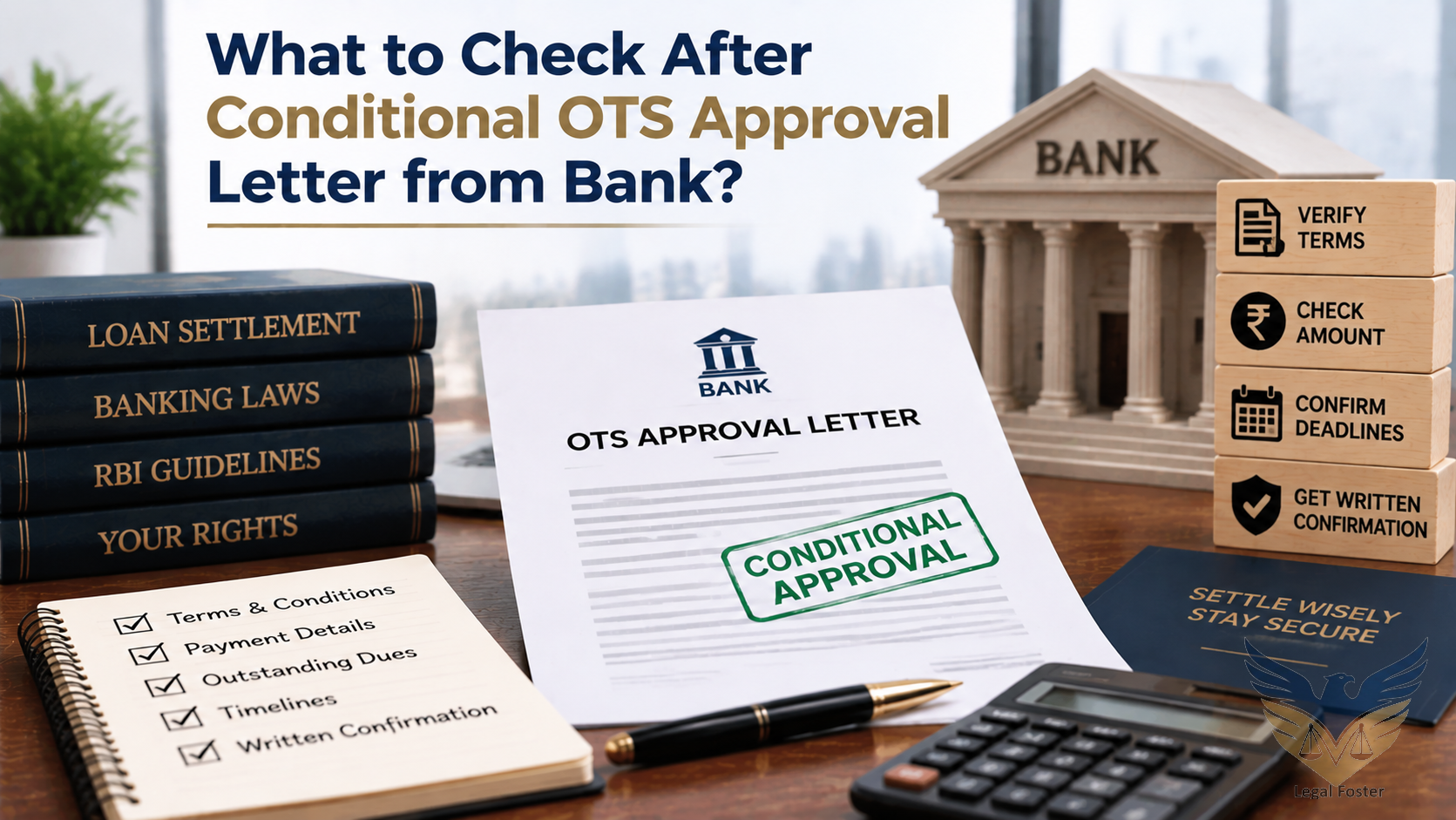
What Should You Check After a Bank Issues a Conditional OTS Approval Letter?
Loan borrowers who have received a conditional One Time Settlement letter from the bank feel relieved from harassing recovery calls. Banks have offered an OTS, they think their problem is resolved now. But a conditional One Time Settlement letter is not quite like settlement of dues. Based on conditions, approvals, payment and compliance borrower’s rights & entitlements can be altered.
Loan borrowers facing recovery notices, tagged as NPAs, receiving SARFAESI notices or unable to repay loans should understand the consequences of receiving conditional OTS letters from banks. Banks generally send conditional OTS letters where they lay down terms such as settlement amount, timeline to pay the settlement amount, source of payment, documents required and conditions which need to comply to get approval. Borrowers should beware of the below points else could land into trouble again.
BK Singh Advocate has handled many loan recovery cases where borrowers had approached the firm only after they had received OTS offer/ letters from the bank. The borrower was confused about certain matters- Will the bank stop recovery against me, will they suspend or stop pending proceedings, what if the bank changes their stance after I pay them, what are my legal rights to stop them from turning hostile afterwards.
Banks generally raise important aspects related to RBI rules, contractual laws and recovery laws in a conditional OTS letter. Borrower’s rights against conditional OTS letter would vary depending on the language used in the letter, has he agreed to terms/bank’s conditions, made any payment against OTS offer, made any representations through email/ letters or whether the matter was pending before any forum such as DRT.
Should you take a Conditional OTS Letter Seriously
You should take a conditional OTS letter seriously because banks send this letter with an intent to settle the matter. It doesn’t mean the bank has already settled your outstanding loan liability. Borrowers should ensure that whether the bank has accepted your settlement amount unconditionally or the proposal is subject to their internal approvals and other conditions.
Thousands of borrowers reach out to loan consultants in Delhi NCR, Ghaziabad, Noida, Gurugram, Faridabad and other states across India because their business suffered losses, lost their job or due to high medical expenses or any temporary financial setbacks. Recoveries start, accounts are treated hostile when bank has already started recovery proceedings against your loan account.
One major mistake borrowers do is they feel bank will not take any action against them because they have received an OTS letter.
Legal stance would be decided upon: –
- Important terms mentioned in OTS letter/email
- Whether you accepted the offer sent by bank or not.
- Whether you paid the demanded amount within a given time.
- Whether bank accepted OTS after completing their internal approvals.
- Whether bank has filed a recovery application against you before DRT or another forum.
If you are discussing a settlement offer with bank it is advisable to keep all correspondence in writing. Verbal discussions are helpful but won't suffice as evidence to prove intentions, understandings and compliance by borrower.
A conditional OTS can exist alongside recovery proceedings. You can review your matter through DRT Consultation and understand the documents, timelines and available legal options.
Quick Facts you should know about Conditional OTS Letters
- OTS letter is basically a conditional settlement offer.
- Accepting OTS offer doesn’t mean your loan account will get closed instantly.
- Banks can demand you pay the settlement amount within a period as mentioned in offer.
- Incidental to existing recovery proceedings will also have to be addressed accordingly based on stage of case.
- Emails, Documents, Proof of payment, writing are considered admissible evidence
- Approval/ Acceptance of settlement is subject to bank’s policies & facts of the case.
- Inquire if they will report your account as settled or closed.
Understanding Conditional OTS Letter
If bank has mentioned in OTS letter that the offer is conditional, it means lender is willing to settle your dues subject to certain conditions. The offer will specify how much you need to pay, when to pay, until when the offer is valid and other terms on which they can approve your settlement.
When you get such an offer from bank, you need to understand its not a settlement until you comply with all the terms they laid down in the offer. Conditional letter still binds you to fulfill certain terms before bank closes your account.
For example, bank can send you an OTS application where you need to pay the mentioned amount by a certain date. If you fail to comply with the terms of offer, bank can start recovering the amount against you as per loan agreement and law.
Many borrowers approaching DRT Lawyer for help have queries regarding how OTS offer would impact their SARFAESI action against them pending at the bank, bank sending recovery notice, notice for possession or any matter pending before tribunal.
Reading an OTS letter carefully can help you understand –
- Does the mentioned settlement amount is final or bank can change it.
- Are interests and/or charges applicable?
- Are there any legal proceedings which are covered under this settlement?
- Does bank have any conditions on which they can retract this settlement?
- Is your acceptance of offer/terms mentioned clearly?
Which Law Would Apply After You Give Receivers Consent to OTS Proposal Offered by Bank?
This would entirely depend on nature of loan, securities provided, stage of recovery. Generally, matters which concern banking settlements would have application of Contract Law, Law concerning loans & associated agreements, RBI guidelines which govern such expectations and Law under which banks can recover dues.
Provided requisite conditions are met, bank can initiate recovery proceedings under The Securitisation and Reconstruction of Financial Assets and Enforcement of Security Interest Act, 2002 (“SARFAESI Act”) in respect of secured loans. Borrowers can file suit before Debt Recovery Tribunal under SARFAESI ACT, where they can oppose certain recovery proceedings.
Debt Recovery Tribunal and Debt Recovery Appellate Tribunal hears cases pertaining to recovery permitted under Recovery of Debts and Bankruptcy Act, 1993.
When borrower gives his consent to OTS proposal offered by bank, it does not mean bank has waived its statutory right to recover the dues from you, unless the settlement has been duly concluded as per terms agreed. It is crucial for borrowers to understand how settlement negotiations affect the ongoing proceedings.
BK Singh Advocate Each case dealing with OTS has to be seen based on its own facts. Facts include all the documents, history of communication between borrower and bank, status of payment made, if any and what stage is the recovery at.
For borrowers dealing with SARFAESI measures, the SARFAESI Lawyer service can be relevant where the OTS is being discussed alongside recovery or enforcement action.
Which Documents to Preserve After Receiving Conditional OTS Letter?
Typically following documents would work in favour of borrower –
- Loan Agreement/ Sanction letter /original docs
- OTS proposal letter sent by bank
- Letter /email/any communications from borrower which shows acceptance of settlement terms with bank.
- Receipts showing payment of settlement amount.
- Bank statements.
- SARFAESI notices/demand notices/ any communications received for possession.
- Copy of DRT case papers, if any.
- Emails/Whatsapp conversations/any Written communication with bank officials.
- Particulars of Guarantor/ Securities provided /Mortgage documents.
Borrower should also keep copies of any written communication where bank has agreed to negotiate about settlement. Anything in verbal format discussed with bank officials won’t help as evidence.
At what stage should you meet a DRT Lawyer if you received a Conditional OTS letter?
Meet a lawyer when OTS letter asks for high monetary liability, asks for security/property as collateral, has ongoing recovery action against borrower or if you simply don’t understand the terms of settlement. Hiring a lawyer would be helpful in following situations –
OTS is issued by Bank But Recovery Action Against You Is Still Continuing
When SARFAESI action against you, possession suit or DRT proceeding have not been stopped even though you have been negotiating with bank to settle, it is advisable to first know your legal standing that you can take based on your documents and what stage your case is at.
If recovery proceedings are continuing, borrowers may need to understand their position through DRT Case Defence and consider whether urgent relief is appropriate.
Unable to Pay the Amount offered to be settled in OTS within given time
Borrowers sometimes go through financial crunch where they are unable to pay the amount which was offered to be settled within the timeline mentioned in OTS. It would be useful to know how to go about talking to bank and what would be implications of not meeting OTS deadline.
Conditions of Settlement mentioned are not clear
OTS letters can come with terms and conditions where it is clearly mentioned when and how they can approve your settlement. It mentions mode of payment, requirement to withdraw your current proceedings/initiate withdrawal of certain charges or may require you to provide/release security or property. It is advisable to talk to lawyer before agreeing to the settlement offer.
OTS concerns about your Property or Business Assets
If settlement letter you received concerns about commercial property, residential apartment, machinery or any other business asset related loan. It is advised to get your OTS offer reviewed by lawyer since wrongful intentions from your end can have serious consequences.
Where an OTS matter is connected with auction or sale proceedings, borrowers can review the DRT Auction & Sale Challenges service for issues involving e-auction sale notices and auction proceedings.
How Can DRT Lawyer Help You After Receiving Conditional OTS Letter?
DRT Lawyer can help you understand whether OTS communication is legal/ recovery proceedings initiated by bank is as per legal standards/ taking any illegal action.
Although settling with banks is one scope of work for lawyers. DRT Lawyer can help you understand your entire recovery scenario.
BK Singh Advocate will help you with Bank Recovery Notice, SARFAESI, DRT Matters or any Settlement issue.
How Can Lawyers help you?
- Understand OTS and its implications.
- Understand connection between settlement and existing recovery proceedings.
- Understand what documents can help your borrower case
- Look into any issues while communicating with bank/financial institution.
- Look into legal issues which can be foreseen against secured assets.
Many borrowers contact a lawyer when they see bank recovery efforts are now affecting their personal finances or business. Lawyers are usually hired by borrowers from Delhi NCR, Mumbai, Bengaluru, Hyderabad, Chennai, Kolkata, Ahmedabad, Pune and many other cities in India.
Hiring a lawyer to look into your matter can help you from jumping to conclusions. Every case is judged based on facts of loan documents, any communication received from bank, payment made till date (if any) and legal proceedings involved.
The DRT Stay service can be relevant where recovery, possession or auction action requires urgent legal assessment and possible interim relief.
FAQs
OTS letter is basically a settlement offer which has been laid down on certain terms by the bank. It doesn’t become a settlement until borrower has complied with conditions mentioned by bank and bank has finalized the matter as per their policies.
Ability for bank to continue recovery against you would depend on facts of the case, terms used in OTS letter, has borrower complied with terms, stage at which recovery proceedings was.
You can get a lawyer review your specific position and let you know what your options are.
Acceptance of OTS from borrower may not stop SARFAESI suit automatically. Bank would need to confirm suspension of proceedings based on settlement terms, compliance by borrower and facts.
Any legal remedies would entirely depend on type of actions bank has taken, what documents you have to support your claim and what provisions of law can you rely upon. Borrowers should understand their position before jumping into any legal action.
If borrower fails to comply with terms of OTS, bank may not be obligated to finalize your settlement. This would entirely depend on how OTS letter is worded.
Once settlement is completed your dues are settled as agreed but this would also depend on how bank documents the finalized settlement.
DRT proceedings doesn’t stop until recovering against borrower is fully settled. Borrowers should not assume that both the processes would wait for each other while negotiating.
Borrowers should look into OTS amount mentioned, timeline given to pay the amount, conditions to fulfill, check status of legal proceedings if any and benefits of providing securities against OTP letter. Ask bank if they can provide you written confirmation
Lawyer can review your documents and speak on your behalf depending on your situation. Results would vary depending on facts and bank policy.
BK Singh Advocate can help you get legal consultation on all matters which concern borrowers. Borrowers who have received conditional OTS letters, receiving notices from bank for loan recovery. Contact our office and we will analyse your facts and help you understand your legal standing.
Conclusion
Receiving a conditional OTS letter from bank allows borrowers to settle loan conflicts, but is not necessarily the end of it. Borrowers shouldn’t stop worrying about loan recoveries just because they have received a letter. If borrowers understand the terms mentioned in the letter, keep necessary records and know the legal consequences they can make a well-informed decision.
Bank matters which involve security assets, tribunal notices should always be taken seriously. A small mistake can cause you huge monetary losses.
If this article was helpful and you’re still confused about what you should do after receiving a conditional OTS letter. Feel free to contact BK Singh Advocate and we’ll analyse your situation based on facts.