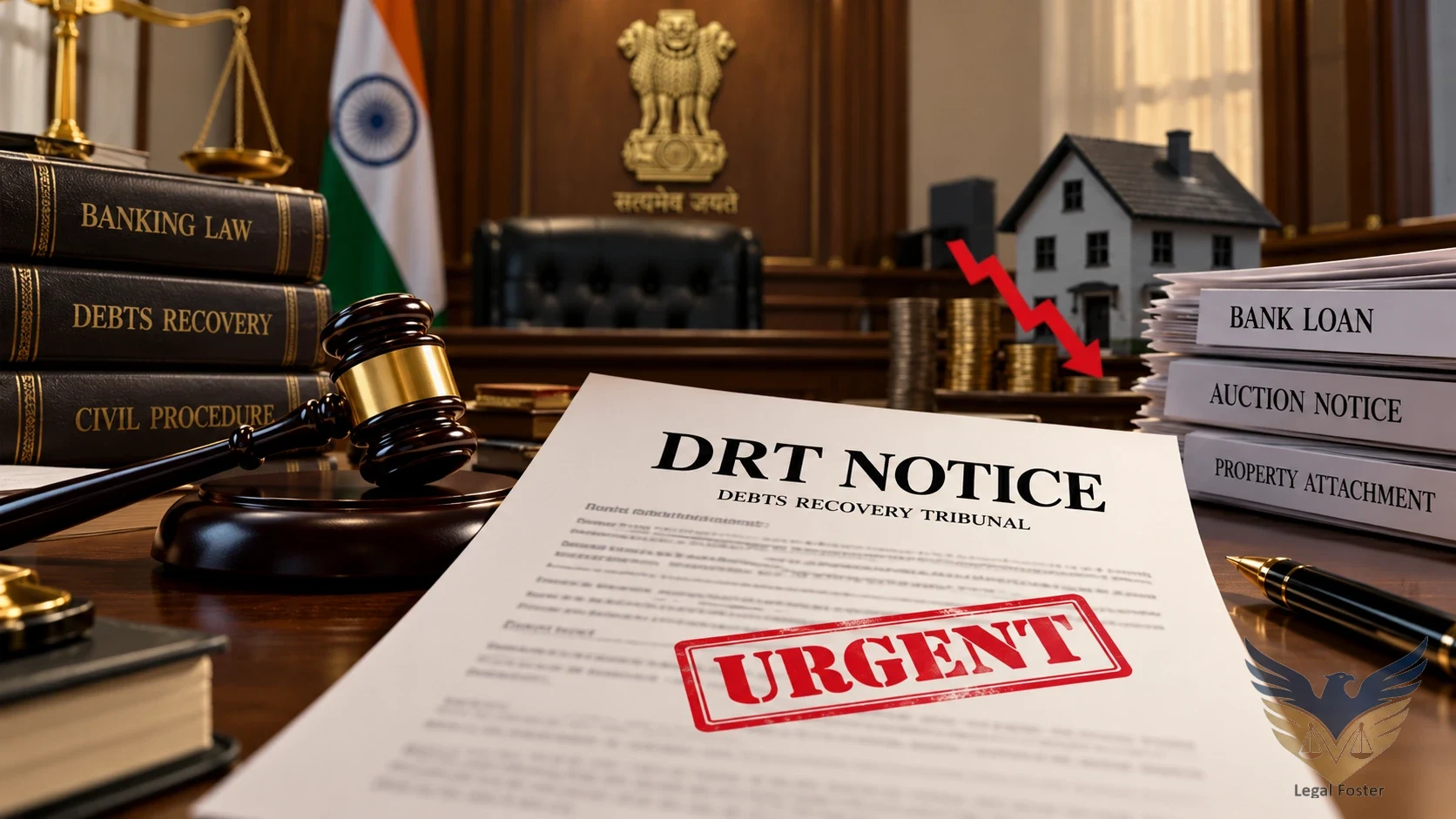
What Are the Legal Consequences of Ignoring a Debt Recovery Tribunal (DRT) Notice in India?
Ignoring a Debt Recovery Tribunal (DRT) notice can have serious consequences for borrowers in India. Here are some answers to commonly asked questions on the subject.
A DRT notice may be more than just a reminder of pending EMIs. Your bank/ financial institution may have initiated legal recovery against you. Don’t ignore the DRT notice as it could put your property, money, legal rights and future loans at risk.
If you have missed a few loan instalments, you may start getting frequent recovery calls. Then there are letters from the bank. And one day, a piece of paper with Debt Recovery Tribunal written on it arrives at your doorstep.
Many defaulters think that if they refuse to accept the notice or avoid attending the hearing, the issue will go away. Some believe that they are protected as long as they keep talking to the bank recovery agent.
A DRT case can go against you even if you don’t show up in court as long as certain legal conditions are met. You could lose the opportunity to explain why the lender’s entire demand is not payable. Or explain why certain payments were made earlier. You could also lose the chance to dispute excessive interest or charges and seek relief from the court.
The stakes are high especially if the matter involves your home or any other mortgaged or attached property. Even your personal guarantees may come under scrutiny.
Advocate BK Singh from Loan Settlement Lawyer can help people facing issues with DRT summons, recovery claims, property possession and outstanding bank dues.
Why Ignoring a DRT Notice May Put At Risk Your Property and Future Loans in India?
DRT notices and disputes arise for borrowers with regular salaries as well as small business owners, self-employed professionals or companies.
If you live in Delhi NCR, including Noida, Greater Noida, Ghaziabad, Gurugram or Faridabad you may feel stressed about daily expenses, recovery notices and threats to your home or rented office.
Residents of Mumbai, Pune, Bengaluru, Chennai, Hyderabad, Kolkata, Ahmedabad, Jaipur, Lucknow and other Indian cities have similar concerns.
The tribunal notice could be about a large outstanding amount. Ignoring it once formal proceedings start could leave you unable to defend yourself against the bank’s claims effectively.
Many debtors do not know three important facts about DRT notices:
- The bank has not automatically won your case just because a DRT notice has been issued.
- If you ignore a summons that was properly served, the bank can apply for your case to continue without you.
- Loan settlement discussions will not automatically pause the legal proceedings at DRT.
What happens if you stop attending DRT hearings because a bank manager has offered you a possible settlement? You might learn the hard way that the case is no longer in hiatus.
Talk to Advocate BK Singh if you need help figuring out whether you have a disputed debt, an enforceable recovery order against you, an impending enforcement action or a loan settlement proposal waiting for your acceptance.
What Every Debtor in India Should Know About Ignoring a DRT Notice:
A Debt Recovery Tribunal notice usually means that there are formal proceedings concerning the recovery of money owed.
Section 19 of the Recovery of Debts and Bankruptcy Act, 1993 applies to banks and financial institutions applying for recovery at DRT.
For example, the law ordinarily allows 30 days from service for the defendant to file his written statement. A slightly longer extension is possible only in very limited circumstances.
If you don’t show up, the bank could get an ex parte order if it complies with the necessary legal requirements.
A recovery certificate allows the bank to start recovery against your assets or other properties which can be attached.
Offering to pay the lender’s amount through a One Time Settlement (OTS) won’t automatically pause recovery actions.
While ignoring a DRT notice will not automatically lead to arrest, prison is also not a punishment for defaulting on a regular bank loan.
Can Ignoring a Tribunal Notice Lead to Loss of Property?
You can get arrested for not appearing before DRT if ordered by the presiding officer. However, ignoring a tribunal notice may lead to loss of property under certain circumstances.
DRT stands for Debt Recovery Tribunal. A DRT tribunal notice is a legal notice issued under Section 19 of Recovery of Debts and Bankruptcy (RDDB) Act, 1993.
The tribunal notice may require you to respond to the bank’s claims, appear in person before the tribunal or follow a particular instruction.
Your loan account statements are different from a genuine DRT summons. Make sure you know the difference between a bank recovery notice and a legal notice from DRT.
If DRT issues a notice to you, it means that an eligible bank or finance company has applied to it for recovery of a debt due to it. On the other hand, DRT is also empowered to look into actions taken by banks under SARFAESI Act, 2002.
Not all bank notices require you to appear before DRT. Further, not all recovery claims go through this legal process.
Lawyers from Loan Settlement Lawyer can help you understand these issues and learn about your rights. Advocate BK Singh can also speak to you about your DRT notices and potential legal exposure.
Can the Bank Continue with DRT Proceedings If I Ignore the Tribunal Notice?
Yes, the bank can apply to continue with DRT recovery case without you if you don’t show up.
Furthermore, DRT can pass an order ex parte which means that it could decide the matter without hearing your side of the story. However, this does not mean that the bank will get everything it asks for in the notice.
An ex parte order is still subject to the law. But by not appearing in person, you give up your chance to tell the tribunal about your side of the story.
You could be leaving money on the table by ignoring a DRT notice. For example, you might have paid part of the bank claim but the lender has not updated their records.
The bank could also have wrongly calculated interest or included amounts that you do not owe per your loan agreement.
Can DRT Summon You if the Bank Has Made Errors in the Notice?
It is not uncommon for banks to make errors in their notices. While these may not be enough to stop DRT summons from being issued, they can help you defend yourself against the bank’s claims.
Ignore no more! Educate yourself about DRT and find out how you can defend your rights. Advocate BK Singh may speak with you about your case if you need help understanding your legal position.
What Powers Does DRT Have to Recover Your Loan?
DRT is a statutory body which operates under Recovery of Debts Due to Banks and Financial Institutions Act, 1993.
DRT has different powers than your local debt collection agency. These powers are outlined in Section 19 of the RDDB Act.
Section 19 not only allows banks to file recovery applications. It also lays down the procedure for DRT summons, defenses and interim relief or directions. The section even explains how DRT can make a final order for recovery of debt.
According to Section 19(5), a defendant is required to file his written statement within 30 days of service of summons. However, the Presiding Officer has the discretion to allow an additional 15 days in exceptional cases.
Please note that the tribunal will only allow this extension if you fulfill certain legal conditions.
DRT powers include the ability to grant interim relief or impose interim restrictions on a borrower. It can adjudicate on the amounts recoverable and issue a recovery certificate.
Once DRT issues a recovery certificate, the bank can start recovery against your properties as per law.
Who Needs Legal Help Because of a DRT Notice?
Someone who received a DRT notice may have very different financial issues.
The salary guy might have a large outstanding liability he’s disputing. The retired owner of a residential plot might have mortgaged his home to fund his business. Directors and personal guarantors can get DRT notices because of loans taken by companies.
Small business owners have a lot at risk if the property they offered for loan collateral is at stake. Borrowers can lose their money too if DRT lawsuits remain unresolved.
You may want to speak to a lawyer if you:
- Dispute the bank’s calculations.
- Have mortgaged property the bank is threatening to attach.
- Are an MSME struggling to pay your EMIs.
- Are a personal guarantor being asked to repay someone else’s loan.
- Own a company with a contested bank claim.
- Want to negotiate a lawful settlement of your dues.
BK Singh can listen to your concerns and help you understand whether you need to challenge the bank’s claim, deal with DRT orders or if you can talk to the bank about a settlement.
Contact Loan Settlement Lawyer to learn more about DRT issues. Advocate BK Singh can advise you on specific concerns after hearing your situation.
What If You Ignore a Notice Issued by Debt Recovery Tribunal?
The impact of ignoring a DRT notice depends on what stage the case is in.
If DRT issues a summons to you, ignoring it will weaken your position to dispute your lender’s claims.
If the bank continues with the case, DRT may make an order based on whatever documents it has. DRT’s order can allow the lender to recover the money from you once it fulfills certain conditions.
DRT may allow the bank to attach (take over) and sell your property if it decides in the banks favor. By then, ignoring a DRT notice will have cost you a lot of money.
You haven’t missed all the deadlines just because you missed your DRT hearing date. If you know DRT has issued an order against you, there may still be relief available.
Loan Settlement Lawyer can help you understand your options. Advocate BK Singh can provide free legal advice about DRT notices.
Which Documents To Gather After Receiving a Notice from DRT?
It’s easier for lawyers to help you if you have all the necessary documents.
Relevant documents can include:
- DRT notice, order and case papers.
- Loan approval letter and loan agreement.
- Bank statements and records of payments made.
- Documentary evidence of disputed interests or charges.
- Documents showing properties mortgaged or offered as security.
- Demand notices or bank letters you received previously.
- Any communication from bank about a settlement.
- Documents that prove you were served the DRT notice.
- Documents showing why you could not repay the loan.
Did you make large payments to the lender? You may have receipts or bank statements showing these transactions. These could prove useful when challenging the lender’s calculations.
Did you ever talk to the bank about restructuring your loan? Any emails or letters could help your case.
BK Singh can review these documents when you consult him about your DRT notice.
How Soon Do You Need to Act on Receiving a DRT Notice?
You need to act on a DRT notice as soon as you receive it.
Once a DRT notice gives you a deadline to respond or comply, the clock starts ticking.
For instance, Section 19 of RDDB Act allows borrowers 30 days to respond to a bank’s application. However, Rule 9(3) of the Debt Recovery Tribunal Rules, 1993 allows DRT to extend this period by 15 more days only under specific conditions.
What if the bank already appealed to Debt Recovery Appellate Tribunal (DRAT) against an order in your favor? You will have only 30 days from service of summons to file an appeal under Section 20 of RDDB Act.
Don’t assume bank meetings, a phone call from your lender or your settlement offer will stop DRT from proceeding with your case.
BK Singh can help you figure out what options are left if you already missed a deadline. Loan Settlement Lawyer can connect you to BK Singh.
Can You Lose Your Property Because You Ignored the DRT Notice?
Yes, if you ignore the bank and DRT, you might lose your valuable property.
Once DRT allows the bank to recover the dues, the bank will likely attach your properties.
You don’t automatically lose your property just because you received a DRT notice.
The type of law under which DRT issued the notice is important. So is the nature of the debt, securities you provided to the bank and the orders passed by DRT.
DRT issues notices under Section 19 RDDB Act. Sometimes, banks can recover debts by forcing DRT to take notice of their demands under SARFAESI Act.
The consequences of ignoring a DRT notice issued under SARFAESI will be different from a DRT notice under RDDB Act.
If DRT issues a notice under SARFAESI, the bank can attach and sell your property. It must follow the procedures under the SARFAESI Act, 2002.
A DRT notice can cause a Noida resident to lose his home. Ignoring the DRT notice can cause a businessman in Gurugram to lose his factory.
BK Singh can provide free legal advice on matters related to DRT notices and risk of property loss.
Can You Settle Your Loan After DRT Has Issued a Notice?
Yes, it’s possible to negotiate a settlement with the bank even after DRT issues a notice. The bank must agree to settle and you must meet certain legal conditions.
A One-Time Settlement is an agreement where the lender agrees to allow you to repay the debt on their terms.
Negotiating a settlement with the bank is not a right you’re automatically entitled to.
The bank will look at how much you owe, the interest accrued, your payment history and more.
They can refuse your settlement offer if the terms are not favorable enough. Also, the lender is under no obligation to settle if they already have a recovery certificate from DRT.
The bank also has the upper hand if it is already in the process of attaching your property.
Loan Settlement Lawyer represents borrowers with disputed payments and loan settlement issues. BK Singh can advise you on DRT notices and loan settlements.
Should You Hire a Lawyer for Your DRT Notice?
Ignoring a DRT notice can cause you serious legal problems. You don’t want to face these alone. Here’s why you need a lawyer to help with a DRT notice:
The DRT lawsuit is more than a dispute over pending EMIs. It’s a legal case with deadlines, documentation and complicated calculations.
You might know why you stopped paying. You might not know if the bank’s entire claim is valid.
A DRT lawsuit could affect more than just your ability to borrow from banks. If you offered collateral or gave a personal guarantee, your property and finances could be at risk too.
The bank has sent you a statement of account. A lawyer can help you understand the extra charges. Maybe your earlier payments weren’t applied to your account correctly.
The personal guarantor wanting to ignore a DRT notice has separate reasons to hire a lawyer. A lawyer can help him understand his liability under his contract with the bank.
A good lawyer can understand these questions based on your documents. Don’t try to figure this out on your own.
Hiring a lawyer is even more crucial if you’ve already received a DRT notice. You need help if DRT issued an order without you being present. You should definitely hire a lawyer if the bank plans on seizing your property.
BK Singh can help you with DRT notices. He can also represent you in court if need be.
BK Singh from Loan Settlement Lawyer can provide you with professional legal advice.
BK Singh has experience helping clients facing problems with DRT lawsuits and notices. He can help you understand your rights and explain your options.
Call Loan Settlement Lawyer to speak with BK Singh about your DRT notice and related legal issues.
Frequently Asked Questions
1. What will happen if I do not respond to a Debt Recovery Tribunal notice?
If a borrower defaults on a repayment schedule or fails to respond to a DRT notice, the Tribunal can commence ex parte proceedings and issue an unfavorable recovery order. Contact a DRT lawyer to understand your legal options.
2. Can the bank attach my property if I do not respond to a Debt Recovery Tribunal notice?
If you have defaulted under the terms of your loan agreement, the bank can initiate a recovery action against your permissible assets. This may include attaching secured property after due legal process. A lawyer can help you understand your rights.
3. Will I be arrested if I do not respond to a Debt Recovery Tribunal notice?
You will not be arrested merely for not responding to a notice from the Debt Recovery Tribunal. However, you may be subject to arrest if you disregard certain lawful directives issued by the Tribunal.
4. Can I file a petition against an ex parte order issued by the DRT?
The borrower may have legal recourse depending on the nature of the order, facts of the case, and timeliness of the remedy. Advocate BK Singh may help you determine your options.
5. Can I settle my loan after the bank issues a notice to DRT?
It is possible for a borrower to negotiate a One-Time Settlement or OTS with the bank. Your lender is under no obligation to agree to your settlement terms. A notice to DRT will not automatically pause the Tribunal process.
6. How much time do I have to respond to a notice by Debt Recovery Tribunal?
The borrower shall file his written statement within 30 days from the date of service. The Tribunal shall not ordinarily allow further time to submit the Written Statement unless the case falls under exceptional circumstances.
7. Can a DRT lawyer help me save my mortgaged house from recovery?
A DRT lawyer can evaluate the bank’s recovery notice, your documents related to the secured property, and any viable legal defenses. Whether you can save your house from recovery depends on many different factors.
8. What should I do if I missed hearing date at DRT?
Missing a DRT date can result in an unfavorable judgment against you. Advocate BK Singh may be able to help you understand the current status of your case and any remaining legal remedies.
9. Will a DRT case impact my business and personal bank accounts?
Yes, if the bank obtains a recovery order from the Tribunal, your guarantor, business assets, and personal finances could be affected. Contact a lawyer as soon as possible to learn about your legal exposure.
10. Why should I hire Advocate BK Singh to help with my DRT notice?
Advocate BK Singh can provide legal advice regarding notices issued by the DRT, bank loan recovery actions, borrower rights, and loan settlement negotiations. Only a professional can guide you on the right course of action after reviewing your situation.
Final Opinion
Each case differs based on the unique facts and evidence. Loan Settlement Lawyer advises clients to seek legal guidance when facing a recovery notice from their bank. At , your rights and any defenses you may have will be thoroughly analyzed.