How Should You Respond to a Bank Recovery Notice After Defaulting on a Loan?
A bank recovery letter can scare anyone. You could be repaying entire eMI along with interest penalty. Legal notice, Arbitration, recovery related. You will have to pay up or you choose not to acknowledge it. Trouble shall ensue either way.
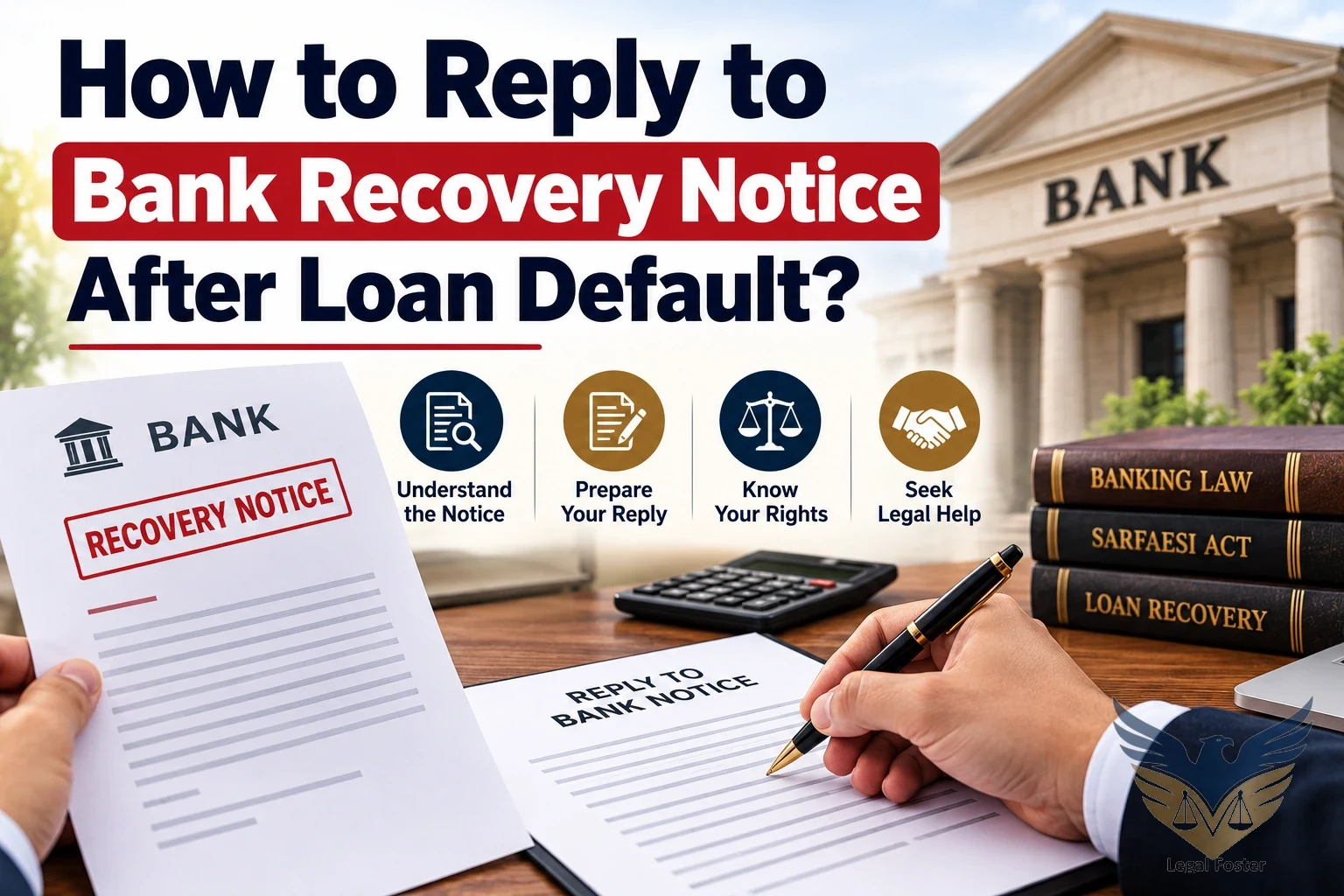
Read your letter. Check if the amount due and account details are correct. Keep record of whatever evidence you have and reply back ONLY what needs to be replied. The way you may reply differs if its a normal recovery letter or Loan recall letter, advocate notice. Whether its an Arbitration letter or lok adalat notice or something related to secured loans.
If your from Delhi NCR or Mumbai or Bangalore or Hyderabad or Chennai or Kolkata or Pune or Jaipur or Lucknow or Ahmedabad or any city in India. Read this if your have received a loan recovery letter.
Defaulting on a payment won’t stop your lender from initiating a recovery process. They can’t take you to court tomorrow but legally they can initiate processes to recover their money. But they can’t high hand you into paying up.
Loan Settlement Agency will help you understand these letters. Assess your account situation and help you draft a reply with necessary documentation. We will not tell you to quote things you cannot promise to your lender. But we will draft your situation on paper and assess if you have any options to settle your account or OTS. Do not ignore these letters thinking your lender will forget about it. They’re worse than reminders.
Why Does a Bank Recovery Notice Matter?
Read below to know Why recovery letter is important -
Once your account is handed over to a recovery team they can take multiple actions against you. Depending on your loan type documentation they have included in the recovery letter. They can mention. Recall of loan, Pay up the complete amount, Send your case to arbitration/Lok Adalat, Recovery and for secured loans they can mention the section available under respective law.
You know there’s money you owe to the bank but aren’t sure how much?
Most Borrowers in Delhi NCR and metro city areas think that they should reply since there’s money owed. But aren’t sure how much or what to write in the reply section.
Loan Settlement Agency will let you go through your recovery notice. You need to reply depending on how much your loan account is overdue.
RBI have issued guidelines to Regulated Entities about recovery through Recovery agents.
They can’t threaten you over phone calls or any written means of communication. Harassment to the borrower and his family by visiting their personal residence is prohibited. If your facing this.kind of behavior then we can help.
Make sure to pay if you have clear intentions of paying what’s due.
Don’t ignore the notice your lender has sent you.
Important Information About Bank Recovery Notices
Just because you received this notice. Does not mean the bank has won a decree against you in court.
Cross check the amount they’re asking for with your loan statement and all the payments you’ve made till date.
You can draft a reply stating your inability to pay or there’s a dispute of facts or you want to settle. All of this can be stated on a written reply to your lender.
Option to settle your account through OTS is possible. But can not be forced.
If it’s a Secured loan against your property then non-payment can have further consequences. Depends on what was the collateral for your loan.
Make sure to get a copy of the letter/statement if your lender has sent you one via post. Along with the collect calls, messages and emails your receiving. Proof of payment if made.
As long your lender is regulated by RBI. They will have to follow the processes as mentioned by RBI for recovery. So don’t think your NBFC lend didn’t get approval to send you these notices.
Why Should You Care About a Bank Recovery Notice?
Banks or lenders send a recovery notice to gather up money that is due or defaulted on your loan. You may start receiving these notices from your Bank or NBFC or from a third party recovery agent. These agents are appointed by your bank or NBFC to collect the dues. Sometimes if the bank has higher chances of not getting the money back. They tend to appoint an advocate to recover the money on behalf of the bank.
Not every notice is the end of the world. It could be a simple demand letter for payment. It could be a legal notice from the banks lawyer. Recovery agents sending you an Arbitration notice. Notice from Lok Adalat if they intend to drag you to the Lok Adalat. Or it can be a statutory notice if bank plans to enforce their security.
Before you panic read the notice. Understand what type of notice you have received and replied accordingly.
Verify the notice sender’s name, your loan a/c no., how much they are asking for, when did your default happen, till when you can pay or take the necessary steps to avoid legal action. What all documents are they referring too in the notice. And what will happen if you don’t comply with what’s stated in the notice. If the bank has calculated the wrong demand. Or maybe they’ve missed out on a payment or calculating more than what your due. Make sure all these points are clear before you speak to your lender or reply to the notice.
Loan Settlement Agency will help you understand your notice. So don’t listen to what your daily call collections are telling you. They are just worried about getting a call next week. We care about your situation! !
Which Laws Cover Loan Recovery in India?
The SARFAESI ACT 2002 covers secured loans. If the loan you borrowed is not under any collateral. Then there’s not specific law that covers your case.
If your loan is through a bank or NBFC you signed a loan agreement at the time of sanction. This has the terms and conditions your loan was disbursed with. Along with RBI has various directives when it comes to lending and recovery from banks/NBFC.
You lender has to follow these rules. As mention in their recovery agents.
“If you have received a notice from your bank/or NBFC stating they will recover the dues using Secured Debt Recovery Tribunals. Then your loan falls under SARFAESI ACT 2002.”
RBI has also issued guidelines to all borrowers lending via banks and NBFC. These guidance’s state that lending money through individuals is not recommended.
Can you file a legal suit against the bank for harassment?
Refer RBI Ombudsman Scheme 2026.
As given on RBI If you are not satisfied with the reply given by the Bank you can approach the RBI Ombudsman Scheme. effective from 1st July 20https\://www\.livemint.com/companies/\_PADBIn3mdhSRjdS97yVpI/RBI-launches-complaint-handling-scheme-for-retail-banking.html26.
Don’t file a case with RBI thinking you’ll get your money back by taking the bank to court. All these schemes are for deficiency in services provided by the lender. If you think you have a case against your lender. Then see our services on how we can help negotiate with the bank.
Do NOT ignore a recovery letter from your bank/lender.
Who Needs To Read This?
If you’ve missed 1 EMI as an Individual. To businesses who have borrowed money but are facing a delay in payments. Either from customers or their suppliers aren’t paying what’s owed to them.
Someone who suddenly have had no source of income or have less income due to circumstances beyond your control.
Maybe you believe that your lender has been unfair to you.
Did your bank not receive your EMI payment? Maybe your lender went ahead and charged you a penalty fee. Or thinks that you’re not replying to their calls or letters purposely. If you’ve had previously discussed with your lender about a settlement. But your lender is ignoring it or hasn’t responded.
Any borrower with Personal loans, Business loans, Vehicle loans, credit cards outstanding or any other loan type will encounter different types of letters.
We look at your past correspondence with your lender. Loan Settlement Agency analyzes your whole account instead of just the recovery letter your lender has sent.
How to Reply to Bank Recovery Notices?
First don’t reply in anger. Take a moment and understand what your lender is asking for.
Lets you respond correctly.
Read every line of the notice. Notice might not come in one single letter. They can attach your notice to a pdf file to be passed along with a cover letter.
Read every page. every statement attached to the notice as reference.
Who has sent the notice, loan a/c no., How much they asking for, when was the loan defaulted on. You have till what date to pay or respond. What are they referring to in the notice. And what happens if you don’t comply with their demand.
If your advocate sent you a notice. Make sure to mention how you received the notice. Is it via email or post? Leave a copy with your mail man if it was a posted document.
Make sure the amount they’ve asked for is correct.
Go through your loan statement provided to you by your lender. And cross check with your bank account statement.
Did you get charged twice for the EMI you paid? Or they’ve not accounted for a payment you made? Tell your lender you’d like to receive a statement and calculation of your loan. If the above happens.
Let them know why you couldn’t pay. Were you hospitalized? Did you was laid off from work due to COVID. Whatever the reason is. Make sure you can provide proof. If they ask for it. And don’t lie about your situation. You’ll just make things worse for yourself.
If you know you can repay your lender. Ask to if they’d take a settlement amount from you. Or pay you back with less interest charges. You can always request the lender to restructure your loan or give you a payment break. Depends if your loan allows for those kinds of payment term.
Loan Settlement Agency will help you get an estimated repayment plans you can afford. Based on your calculations and earnings.
If notice has incorrect dates, payments or any false information. Point it out to them.
Call your lender a liar, yes you will want to in your head. But don’t write that in your reply letter.
Documents You Should Keep If You’re Planning to Reply
Depends on the type of loan you borrowed. But as a borrower these are some documents you should try and gather.
- Copy of the notice.
- Loan sanction letter and loan agreement you signed with your lender.
- Recent loan account statement.
- If your loan has a set schedule for repayment. Keep that safe.
- Proof of EMI payments you’ve made. If you have them.
- Bank statement with the debit entries of your loan payment.
- If you’ve previously tried settling or rescheduling your loan. Keep all that correspondence safe.
- Any mail/SMS/Whatsapp conversations with your bank.
- Reason for why you can’t pay back your loan. Include documents to support your reason. Eg. If you lost your job keep a letter from your employer stating you’ve been fired.
- Include co-borrower/Guarantor details. If your loan has any.
- Any previous complaint letters you’ve sent to bank and there reply.
- Include the notice if your bank has sent you a notice for. Arbitration, Lok Adalat or if the bank has initiated there security under statue.
- If the recovery agent has harassed you. Keep a record of any conversation via call, chat or emails.
- Did you loan your against a asset? Keep those documents safe too. And if the bank has served you a previous notice of recovery. Include that too.
What Are The Consequences of Ignoring a Bank Recovery Letter?
If you decide not to reply or pay your lender there will not be much you can do to negotiate with the lender. Recovery process will begin and lender will follow what they can do under the agreement you signed or under the SARFAESI act 2002. If the loan your borrowing is under this act.
After that your lender can initiate multiple processes to recover the money. They can and will harass you until you pay back what your owe. But there actions can be more than just phone calls.
If it’s a secured loan your lender can gather the amount owed to them by enforcing there security. But if yours an unsecured loan they’ll keep trying to contact you.
Not paying your dues will affect your credit profile as well as showing your account status as defaulted. If you settle with your lender. Your loan status may still be marked as defaulted instead of showing you’ve repaid in full. So settling doesn’t always look good when you apply for loans.
Ignored bank recovery notices can also drive you insane. People tend to get stressed out from the constant calls lenders will make. And if your lender does decide to take legal actions. You’ll constantly be wondering whats going to happen to you and your family.
By providing a written statement to your lender and have it backed up with proofs. Can only benefit you.
When To Hire a Lawyer?
Hire a Lawyer or Professional if
- If the recovery letter has mentioned about them taking your case to court or arbitration.
- Your loan is secured or you have provided your home as mortgage.
- If the notice has mentioned about them taking possession of your property/auctioning it.
- If you owe more than what you think you owe. Or the balance doesn’t match your calculations.
- You’ve previously tried settling with the lender and received a notice from the bank.
- If the bank has sent a notice to your Co-Borrower/Guarantor
- If your lender is accusing you of Fraud or misrepresentation of facts. E.g. you’ve told the bank you have a job but you don’t have one.
- If the notice has provided you with 60 days to respond. They know this probably because someone hired.
- Harassment through a Recovery agent. Loan collectors who are acting in a derogatory way towards you is illegal. Refer to Recovery Agents section above on how RBI feels about harassment.
Loan Settlement Agency won’t recommend you to jump straight into getting a lawyer. If your lender has taken bad recovery actions against you. Document everything. Don’t let the lender think your afraid.
Loan Recovery Through Lawyers. How Can We Help?
We analyze your letters and documents. You’ve received from your lender.
Go through your letters and understand whats your lender trying to say to you. If you owe your lender money then we will advise you to pay them. Easely. If you’re not in a position to pay. Help you assess what you can afford to offer you lender.
We draft reply letters for you to settle with your lender or payment plan. If your lender offers one.
Helps if you’ve received an arbitration letter. Lok Adalat notice. If your lender is forcing you to pay immediately or if your lender has quoted extra charges you don’t believe you should be paying.
Just understand your situation and reply to your lender. Don’t be afraid to send them letters.
Frequently Asked Questions About Bank Recovery Notice Reply
1. Do I need to reply to the bank recovery notice.
Ans: Definitely not! DO NOT IGNORE a recovery notice if its official. Read the recovery notice carefully. Cross check your account and respond accordingly what the notice says. Respond with correct timeline too.
2. Can i settle my loan if i get recovery notice from bank.
Ans: Yes. You can request for One Time Settlement Or any other repayment scheme which you want. Here at Loan Settlement Agency we will walk you through how you need to send them a request. But yes, again it solely depends on the bank/lender whether they will entertain a loan settlement request or not.
3. What should i do if amount they have shown is wrong?
Ans: Inform them where they have got the amount wrong and request them to update there recovery notice or send you detailed breakup of your dues. Attach proof wherever necessary.
4. Can banks hire recovery agents
Through: Recovery agents are hired by bank/lenders but they have to follow certain rules. If recovery has to be done, it will be done through the set guidelines. Banks/lenders and their agencies cant harass or intimidate people.
5. Can I request waiver on charges
Ans: Yes you can request them to waive off certain charges for you. But again its up to them whether they agree to reduce the charges or not. Depending on your account.
6. What should i do if i am not able to pay the complete amount?
Ans: Inform them of your situation and try negotiating for a payment plan or settlement. but make sure if you tell them you'll pay on that day that you are sure you'll be paying.
7. Will they send me to court if i get a recovery notice from bank?
Ans: By seeing the recovery notice, they might have already started a case against you. Or it depends what type of notice you have received. Read the notice carefully.
8. I received arbitration notice from my bank, now what?
Ans: Don't take this casually as how a recovery call would from bank. Firstly check your loan agreement for more details and refer to the arbitration notice received. At Loan Settlement Agency we can assist you in letting you know what type of notice you have received and what kind of documents would you be required to gather to work accordingly.
9. Can RBI assist me if i lodge a complaint against my bank or NBFC.
Ans: Yes.RBI have come up with a scheme for the people who have been cheated or have faced inappropriate experience from certain institutions. This scheme will be commence from 1st July 20/26. Read more about RBI.
10. Can i settle without getting a letter from bank.
Ans: We would always advice you to ask for a letter before paying any money towards settlement. Once you get the settlement letter from bank ensure they've mentioned every detail from when you need to pay till what all is it that you owe..
Final Thoughts
When you start getting recovery notices from your bank for your defaulted loans, it is easy to freak out. The best thing to do is understand what your lender wants from you and where exactly your loan account stands in the process.
Check the amounts claimed. Gather documents. Find out if the notice you got from your lender is a demand letter, a legal notice, arbitration notice, Lok Adalat notice or Statutory Notice. Respond back to them with your information and documents that support your statement.
If you have genuine reasons for not being able to pay your outstanding balance, then consider settling or restructuring your loan. Loan Settlement Agency can help you understand what your lender is asking for from you, prepare your documents and letters and negotiate a settlement on your behalf.
Law isn't black and white. Just because you have all your information and correspondence in order doesn't mean your lender will settle with you. But you'll at least have given yourself a fighting chance.