NCDRC Appeal Time Limit: When Must You File Your Appeal?
Pressure turns acute when you receive orders from the State Consumer Commission. Maybe you're the homebuyer who just lost a refund claim. Maybe you're the insurer ordered to pay compensation. Maybe you're the builder, hospital, bank, service provider or even consumer who believes vital evidence was misrepresented. One question will trump almost all else at this stage: what's the NCDRC appeal time limit?
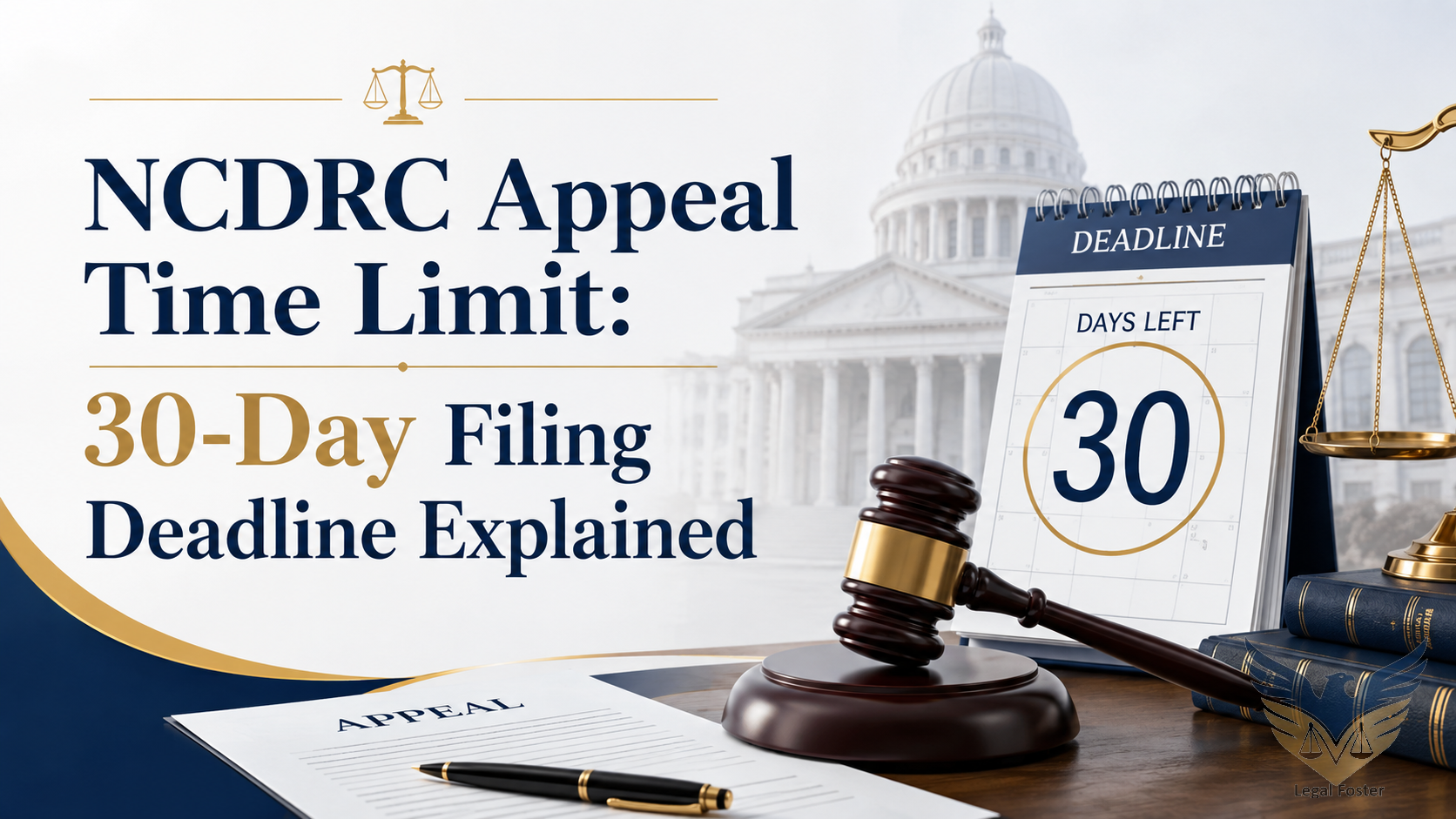
An appeal shall lie to the National Consumer Disputes Redressal Commission against the orders made by the State Consumer Disputes Redressal Commission referred to in sub-section (1) of section 47, by an aggrieved person, within thirty days from the date of the order. - Section 51(1), Consumer Protection Act, 2019
That 30-day limit is strict, as many realize too late. Families agonize for days whether they should continue litigation. Businesses may need internal permissions. Files are sometimes still with previous lawyers. Everyone thinks someone else has the copy of the order so often one person thinks the clock doesn't even start till they personally get the order. These missed opportunities and misunderstandings can cause you to litigate about limitation before you even get to the merits.
BK Singh Advocate typically urges parties to assess the State Commission order ASAP, rather than waiting until midnight on your deadline. Whether the NCDRC or HC is the proper appellate forum, how limitation is calculated, the statutory deposit amount and proposed grounds should all be reviewed at the beginning.
When appealing from State Commissions, there is another important bifurcation to keep in mind for 2026. First appeals from the State Commission, i.e. appeals from their original jurisdiction, are handled differently from further appeals from a State Commission, i.e. appeals from their appellate jurisdiction. Second appeals under Section 51(2), which can only be filed if there's a substantial question of law, were recently deemed by the NCDRC to have a 30-day limitation period as well.
The quicker you take steps to begin appealing State Commission orders to the NCDRC , the better. Don't let a good case become a fight over delay.
Why Does the NCDRC Appeal Time Limit Matter in 2026?
Consumer disputes ranging from lakhs and crores, possession of flat, insurance claim, medical expenses, defective goods, banking disputes and commercial liability are quite common these days. Limitation is another technicality that defeats parties who are already caught in a dispute.
Because the NCDRC is a national consumer forum, parties are spread across Delhi NCR, Mumbai, Jaipur, Bengaluru, Hyderabad, Chennai, Kolkata and many other cities in India. Appellate route to the NCDRC depends on the nature of order passed by the State Commission, and not merely on the geographical location of the party aggrieved by the order.
That is why BK Singh Advocate highlights limitation as a possible file verification trap. Don't get into a comfort zone thinking that every application for condonation will be allowed because you have a reason for delay.
Some Basics
Standard Appeal Period
Standard period for filing an appeal under Section 51(1): Order of State Commission - 30 Days.
Appeal Beyond 30 Days
The NCDRC may entertain an appeal beyond the period of 30 days if the appellant is able to demonstrate sufficient cause for not filing within that duration.
Deposit of Amount
When the appellant is ordered by the State Commission to pay a certain amount by way of compensation or otherwise, he must deposit 50% of that amount before filing the appeal.
Section 51(2)
As per Section 51(2), be careful, a further appeal shall not lie from an order of the State Commission to the Supreme Court except on a certificate granted by the State Commission that the case involves a substantial question of law.
Ex Parte Order
Section 51 permits an appeal from an order of the State Commission granted ex-parte against the appellant.
Disposal of Appeal
Section 52 requires every endeavour to dispose of appeals within 90 days from the date of admission.
What Does the 30-Day NCDRC Appeal Period Actually Mean?
The obvious place to start is that Section 51(1) gives the statutory period as 30 days from the date of the order.
Calculation in reality still needs to be approached with care. Parties can receive copies of the order late, or apply for certified copies of the order late or even know about the order late. Time can run from the date of the order despite a party having no knowledge of the order having been passed. There can also be uncertainty as to whether a period should be excluded.
But equally a party should not assume automatically that any delay in receiving documents allows extra time within which to appeal. If the appeal is out of time the reasons for sufficient cause should explain why. Reason should refer to dates, documents and actual events rather than being a bald statement such as "we were considering the matter".
BK Singh Advocate usually double checks the date of the order, copies available, communication with the previous lawyer and what documents you have received before making any comment on limitation. There is also a limitation and delay condonation service for consumers on the site.
What Is the Legal Framework for an Appeal Before NCDRC?
Section 51 of Consumer Protection Act, 2019 is the relevant section which would be operating.
Per Section 51(1), an appeal shall lie from every order made by the qualifying State Commission to the National Commission by the aggrieved person within thirty days from the date of the order. Supreme Court in NCDRC has entertained appeals even after 30 days if it is satisfied that there was sufficient cause for not filing it within that period.
So far as money is concerned, which appellant is ordered by the State Commission order to deposit, he shall deposit 50% of that amount as mentioned in order in such manner as may be prescribed.
BK Singh Advocate further clarified that a first appeal is different from an appeal filed under Section 51(2). Section 51(2) deals with an order passed by State Commission in exercise of its appellate jurisdiction.
Further appeal before NCDRC under Section 51(2) should raise a substantial question of law and memorandum of appeal shall specifically state the substantial question of law involved in the order appealed against. The latest position laid down by NCDRC in the case coming before it has to be examined. Hon'ble NCDRC has ruled that limitation of 30 days would be applicable for appeals filed under Section 51(2) as well and not in favour of the argument that limitation would be of 90 days.
Important distinction: Section 52 states that every appeal ought to be disposed of at the earliest and every endeavour shall be made to dispose of appeals within ninety days of admission. Ninety days is not the period in which an appeal should be filed.
Which Documents Should Be Checked Before Filing?
Generally speaking, the appellate file contains the order appealed against and the case record. Requirements of memorandum of appeal, certified copy, supporting material and prescribed deposit etc. are provided under Consumer Protection (Consumer Disputes Redressal Commissions) Rules, 2020.
Typically, a file review would include:
- State Commission order
- Certified copy/file copy of order against which appeal is made
- Copy of Complaint/written statement/pleadings made in earlier proceedings
- Copy of Evidence, Affidavits and significant annexures already on record
- Memorandum of Appeal mentioning the specific grounds of appeal
- Chronology/list of dates
- Condonation of delay application and affidavit, if any
- Evidence of statutory deposit, if Section 51 is invoked
- Any application made for interim relief, if any
Learned BK Singh Advocate has also cautioned one to check whether the grounds drafted really attempt to highlight the errors in the order impugned rather than rewriting the complaint prayed for in the suit.
When Should You Consult a Lawyer About an NCDRC Appeal?
BK Singh Advocate prepares review petition when it becomes necessary on account of dismissal of significant claim by the State Commission, reduction in the amount of compensation, monetary liability being imposed, jurisdictional matter, ordering an ex parte order, ordering an appeal from District Commission etc.
Why Is It Urgent When the Deadline of 30 Days Is Already Over?
Request for review arises when one is bewildered whether the remedy available is first appeal or second appeal under Section 51(2) or review or an execution-type remedy or any other proceeding. Filing of papers under wrong jurisdiction would attract avoidable harassment.
When the opposite party would suffer immediate adverse consequences if acts are done against the order passed by State Commission, requirement of prayer of interim protection to be sought has to be assessed.
One should not prefer an appeal against an order with the notion that all the directions would stand automatically on the date of filing of appellate papers.
Visitors who need urgent legal service can visit the site for drafting service concerning interim relief and stay application.
How Can NCDRC Lawyers Help With a Time-Sensitive Appeal?
NCDRC Lawyers can study the impugned order of State Commission and identify the correct appellate provision, verify limitation and extract record necessary for drafting purposes.
BK Singh Advocate can identify whether the suggested grounds point towards factual or legal errors which are arguable before NCDRC. Keep in mind that review has to be more extensive in case of Section 51(2) petitions as a substantial question of law has to be demonstrated.
If limitation is expired, BK Singh Advocate can analyze whether the facts really support filing of an application for condonation. No intelligent lawyer will promise that delay will be condoned; only the Commission can take that call.
BK Singh Advocate can assess requirement of statutory deposit, nature of appellate relief sought, supporting application, if any, and any instant stay related issue. We strive to file a compliant and focused appeal rather than indulging into bloated drafting and misleading assurance.
Frequently Asked Questions
1. Is there a time limit to file an appeal to NCDRC from State Commission order?
If you are filing appeal under Section 51(1), then limitation is of 30 days from the date of order of State Commission.
2. Does NCDRC accept appeals after 30 days?
Appeals are to be filed within the prescribed period. Therefore if you file appeal after 30 days it is said to be "late filing". NCDRC will entertain late filing of appeal only if it is satisfied that there was sufficient cause for not filing the appeal within prescribed period.Just saying that there was sufficient cause will not help. You have to explain the cause along with chronology of events and support it with documentary evidence.
3. Can I take time till last week and get the appeal filed?
That is tempting fate. BK Singh Advocate always recommends that you check the order as soon as it is made available to you. Consider limitation, documents, grounds and even a possible deposit requirement before you file.
4. Is there a 30-day limit for filing NCDRC appeals or is it 90 days?
You have to file appeals within 30 days as per Section 51(1). It is Section 52 which provides that NCDRC shall endeavour to dispose of an appeal admitted by it within 90 days.The 90 days is not the time limit to file an appeal. It relates to the period within which the NCDRC is expected to endeavour to dispose of the appeal.
5. Does NCDRC have a 30-day limit to file a second appeal too?
Until a few weeks ago NCDRC had not clarified its stance on the timing of second appeals under Section 51(2). In orders passed recently and dated in 2025-26, NCDRC has laid down that second appeals also have to be filed within 30 days.BK Singh Advocate can look at the specific order passed and advise you on the current stance.Please contact if you have received an order from State Commission and want to know about filing a second appeal to NCDRC.
6. What is an appeal under Section 51(2)?
Section 51(2) pertains to further appeal to the National Commission from an order passed by the State Commission in appeal. Such appeal shall lie to the National Commission only if the order appealed against as passed by the State Commission in appeal involves a substantihe question of law.
7. Why does NCDRC demand a 50% deposit?
If appellant is asked to pay something by the order of State Commission, you will be required to deposit 50% of that ordered amount. Section 51 provides that 50% of the amount as ordered by State Commission must be deposited in the manner prescribed before NCDRC takes up the appeal.
8. Can delay related to documents be condoned?
It would depend on facts. BK Singh Advocate would review the entire delay period and ask for documents to support your cause for delay. Merely saying that you were collecting or getting papers would not necessarily be sufficient cause to allow delay.
9. Can I appeal against an ex parte order of State Commission?
Yes. Section 51(5) allows appeal from an order passed ex parte by the State Commission at NCDRC.
10. When should I contact you?
When you realize that the State Commission order is not in your favour. BK Singh Advocate can review limitation, whether you can appeal, deposit requirements, grounds and whether documents are ready so that you do not suffer delay.
Final Thoughts
A safe rule would be to treat the deadline of 30 days, starting from when the order of State Commission is passed, like an emergency statutory timeline. The timeline for filing appeal is not to be confused with disposal timeline of 90 days as attempted under Section 52.
Late appeals can be entertained with sufficient cause but condonation will not be granted automatically. These appeals are not granted as of right.
Even appeals filed under Section 51(2) have to be strategized carefully, as such appeals are entertained only when a substantial question of law is involved. Early review helps save time for consumers, flat buyers, corporates, insurance companies and service providers across India.
Get in touch with BK Singh Advocate at NCDRC Lawyers to analyze the order of State Commission, understand the limitation status and decide upon the correct appellate option.