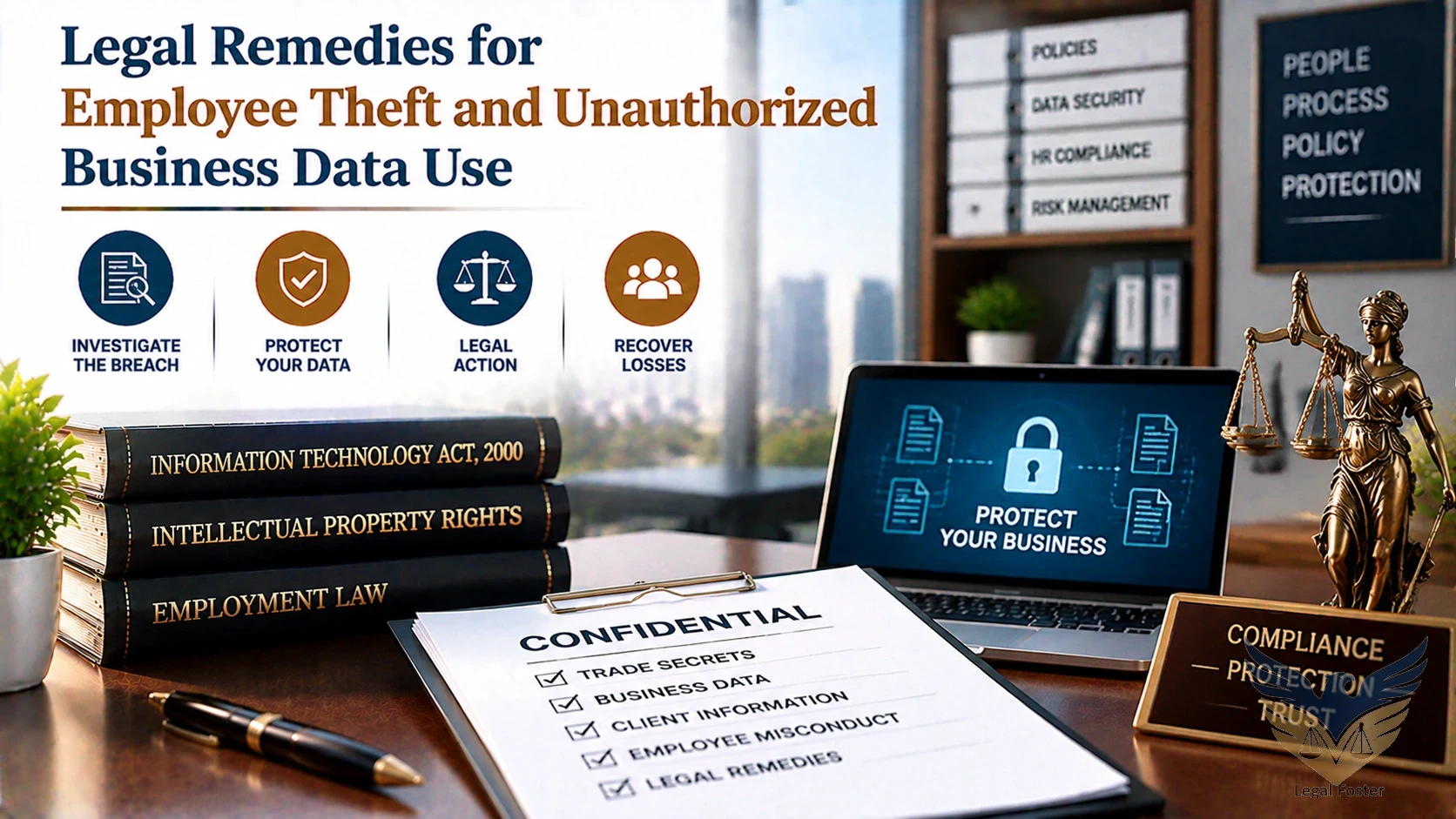
Legal Remedies for Employee Theft and Unauthorized Use of Business Data
Imagine an employee taking company files with them. Customer Lists? Price sheets? Printing out proprietary pricing sheets or confidential business information can create far more havoc than lost productivity. That copied customer database can be on a competitor's desk within hours. That downloaded marketing folder could equal years of customer lists, financial data, contracts and confidential business plans. Anger is usually an employer's first reaction. A sensible legal reaction should start with preservation of the evidence, find out what was taken or accessed, review what the employee agreed to and then decide if civil, criminal or cyber-law enforcement is the best course of action.
Employee theft and misuse of business information can implicate a variety of legal issues. Physical property, electronic data, passwords, customer lists, confidential documents and intellectual property all mean different things and do not always provide the same remedies. Situations always vary.
Remedies against misuse/confidentiality may be contractual & civil. Criminal remedies under Bharaya Nyaya Sanhita, 2023 (BNS), may also be available depending on the facts. If computers/systems/ electronic records were used, provisions under Information Technology Act, 2000 may apply. There may also be data-protection obligations if personal information was abused.
Employment issues under these statutes often come up in Delhi NCR (Delhi, Noida, Gurugram, Ghaziabad and Faridabad) in the course of resignation process or termination, during the notice period or sometimes even immediately after the employee joins the competitor. Delhi based Advocate BK Singh suggests that the employer should assess the evidence first before deciding on a legal course of action.
This article aims to provide an overview of legal remedies against theft/misuse of information by employees. Documents that could be useful in such situations, legal recourse available to employers and common pitfalls have also been discussed.
Employee Data Misuse: Why Should You Care in 2026?
An employee of today’s world can walk out of an office building with more than just office furniture on their backs. All on one laptop or cloud-based account, depending on their role, an employee could have access to customer databases, payment invoices, source documents, competitor price lists, vendor lists, employee contact information and trade sensitive information.
Employee Data Misuse can become serious when that employee looks at information they shouldn’t have access to, copies it for unethical use, saves it to their personal laptop, emails it to a non-company address or utilizes that information while employed somewhere else.
In their pursuit of justice, an employer needs to show more than just that a file was on a company device. Ideally, that forensic evidence can establish what information was used, who was allowed to use it, where that information is located today and if the usage was authorized.
Employers in Delhi NCR deal with this realistic problem just as businesses do in Mumbai, Bengaluru, Hyderabad, Chennai, Pune, Kolkata, Ahmedabad and any other major commercial city in India. The battle may start locally, but the information can physically exist across the globe.
Consider seeking guidance from an attorney, such as Advocate BK Singh, to ascertain if your situation is confined to an employee dispute or if it extends into civil and criminal proceedings.
Quick Facts
Employee theft may include taking physical items, money, documents or other property of the company.
Misappropriation of electronic information could also raise issues under the Information Technology Act, 2000.
Applicable BNS provisions may also apply where the facts constitute offences of theft, criminal breach of trust or cheating.
Confidentiality clause itself may be invoked in a civil claim, subject to the contract terms & enforceability.
India does not have a standalone statutory law called “trade secrets law” which applies to every employee confidentiality dispute.
Where confidential information is comprised of personal data, additional issues may arise under India's data-protection framework.
Obtain evidence before accounts, computers, devices or records are tampered with or deleted.
Instances of Employee Theft or Misuse of Data?
Employee theft is typically defined as the dishonest taking of another’s property. Misuse of data is a broader term that includes browsing, copying, exposing, transmitting, or utilizing data without permission.
Copying a file will not always constitute a criminal act. The item’s nature, whether the employee was authorized to take it, whether they intended to return it, contractual obligations and how the item was taken all play a role.
Copying files that belong to the company may be allowed in the course of their normal job duties. Making a copy of the same information stored on the company’s database, on the sly, before you quit to give to a competitor is theft and misuse of data.
Before accusing employees of theft, employers should look into any allegations of theft or misuse. BK Singh Advocate will decide if the facts trigger an employment issue, contract dispute, civil dispute, Cyber Law Issue or crime.
Which Laws Can Apply?
Employment law in India does not have an employee-data-theft law. Employers can rely instead on a variety of laws.
Bharatiya Nyaya Sanhita, 2023
Offences against property chapter of BNS has theft (Section 303). Statutory illustrations of theft specifically deal with situations where “A, a servant of B, dishonestly takes property out of B’ s possession”.
This chapter also contains a provision on criminal breach of trust (Section 316). This offense covers dishonest misappropriation, conversion or use of property held by someone else in trust in violation of a direction provided by law or contract.
There are other sections covering cheating or other offences. Facts of each situation will determine if these can apply.
Just because an employer feels an employee “did something wrong” does not mean they can pick any offence.
Information Technology Act, 2 000
Computer systems and electronic records bring a second avenue of law that may apply. The IT Act has several sections relating to offences on computer resources and computer related offences.
Section 66, for instance punishes behavior that qualifies as unauthorised access under Section 43 if such actions are performed dishonestly or fraudulently.
Section 72A specifically prohibits disclosure of information that breaks a lawful contract with certain conditions.
Employment Contracts and Confidentiality
Actual contracts can also define what an employee agreed to do. Employment contracts, confidentiality clauses, non-disclosure agreements, information security policies and intellectual property clauses are a few examples.
Indian Contract Act, 1872 contains law on contractual obligations. Section 27 prohibits contracts that restrain trade. Employer should have employment contracts with post termination restrictions clauses drafted carefully to be enforceable.
Data Protection
Employers should also determine if data qualifies as personal data. If yes, then Digital Personal Data Protection Act, 2023 and Digital Personal Data Protection Rules, 2025 would come into play. Pending the commencement of those Acts.
DPDP Act defines “personal data” and “personal-data breach”. Rules provide for processing of personal data and were notified with phased commencement. Businesses will have to ensure which provisions apply at what point in time.
Who should seek legal advice?
The matter mostly arises in connection with employers who employ people that have access to information that is commercially valuable.
An IT Startup may have issues with its customer database. A manufacturing concern may want to protect vendor pricing or technical manuals. A consulting firm may have proprietary client data. An IT company may want to protect source code and login credentials. However, the issue can affect smaller employers as well. Just because a company does not employ hundreds or thousands of people does not mean that information they consider confidential is not of commercial value.
Employers would be well advised to seek legal counsel if an employee:
- copies confidential files prior to quitting;
- sends company data to their personal email or file storage;
- walks out with a box of documents;
- shares customer lists with a competitor;
- logs into someone else’s computer or account;
- deletes or modifies company records; and
- keeps information belonging to the employer after they are no longer employed there, or
- simply appears to have used information that belongs to the employer to start a competitor company.
Advocate BK Singh can help you evaluate what options are available to you legally rather than taking the employee’s word for it.
What Is the Legal Process?
There’s no one-size-fits-all procedure for every employee theft or data-misuse claim. The right answer depends on the facts, evidence, employment agreement and type of information involved.
Preserve the Evidence
The first step is usually preservation of evidence. Relevant emails, access logs, system logs, device records, employment contracts, confidentiality agreements and correspondence should be preserved.
Employers should not casually delete, alter or manipulate records. Electronic evidence should be preserved in a way that allows the employer to prove its authenticity and production later.
Establish the Employee’s Authority
Then, a business will want to consider whether the employee was permitted to access or copy the information.
Just because an employee can access a file doesn’t mean they can use it for every purpose. Access controls, job descriptions and company policies may all become relevant.
Identify the Legal Character of the Conduct
Next, the facts will need to be analysed to see if the claim sounds in breach of contract, unauthorised computer use, misappropriation of trade secrets, theft, criminal breach of trust, cheating, or something else entirely.
Consider the Appropriate Remedy
Depending on the facts, employers can consider sending an internal memo, legal notice, filing a civil lawsuit, making a criminal complaint, filing a cyber-related complaint, or else pursuing another remedy.
The right forum and course of action will depend on the cause of action. For example, a lawyer will be able to explain if the case must (or must not) be brought in front of a civil judge.
Protect the Business Going Forward
Finally, legal action should be paired with practical internal controls. User passwords, ex-employee logins, cloud account passwords, and company devices should be reviewed immediately.
Advocate BK Singh can help businesses understand the contract and documentation aspects of the claim.
Documents and evidence to consider
Employee data-misuse claims often turn on documentation.
Examples of documents that may assist include:
- employment agreement/appointment letter;
- confidentiality / NDA agreement;
- IT / data-security policies;
- resignation/termination letters;
- email and other correspondence;
- access records/logs;
- device / cloud-access records;
- copies of documents / files allegedly misused;
- customer/vendor files affected by the misconduct;
- screenshots / other electronic documents;
- proof that information was transferred/copied / disclosed;
- financial/commercial loss (if any), evidence that can be proved.
Where possible, retain original records and don't rely on screenshots if primary source material exists.
When Should You Consult a Lawyer?
Legal advice can assist you when the suspected behaviour relates to confidential business information, customer lists, financial loss or the departure of an employee to a competitor business.
You may want to speak to Advocate BK Singh without delay if you suspect that confidential information has been copied, a company computer is missing, a former employee has taken confidential records with him and an unauthorised disclosure has occurred.
Seeking advice at an early stage does not mean you have to commence legal action. Often the first step is identifying what evidence you have, what contractual position you are in and what remedies are available.
How Advocate BK Singh Can Help?
Advocate BK Singh can help you and your business or company evaluate the legal aspects of employee theft, misuse of proprietary information, contract violations and other related conflicts. He can review employment contracts, evaluate the facts of the case, suggest possible civil and criminal remedies, draft necessary legal documents and guide you through the legal process.
If you are located in Delhi NCR or other commercial hubs of India, your response should be measured and legally backed instead of emotionally driven. A consultation with Advocate BK Singh will help you decide if the matter needs to be addressed through immediate legal action or if you should begin by preserving evidence and remaining calm.
Frequently Asked Questions
Q1. Can a company file case against employee who steals information from the company?
Ans. Yes. That all depends on the facts. Contractual remedies, civil remedies and even criminal remedies may be available. The IT law provisions may also help. For example, what information did the employee take? How did they access it? Did the employee have authority to access it? What evidence do you have?
Q2. Does copying customer database become illegal?
Ans. Copying does not automatically become illegal or even a criminal offence. It depends on the circumstances. If the employee is authorised to access the customer database, then the copying, use and disclosure of such database would be viewed differently than if the database was dishonestly accessed without authorisation.
Q3. Can you file case against employee who took company documents?
Ans. You may be able to file a case against an employee who takes company documents. It depends on what is in the documents, how the employee took them and whether or not they were authorised to access the documents. Criminal provisions relating to theft, criminal breach of trust or dishonestly receiving property under BNS may apply if the facts meet the elements of those sections.
Q4. Can you file a case against employee sending company files to Gmail?
Ans. You have several routes you can take. However, before accusing the employee of anything, first preserve all electronic information and evidence. Speak to the employee and find out if they were authorised to send company files to their personal Gmail account. Breach of contract, civil claims and even IT law provisions could apply.
Q5. Is there trade secrets law in India?
Ans. There is no stand alone trade secrets law in India that deals with trade secrets specifically. Under Indian law different laws such as contract law, confidential information, equitable and civil law remedies can help provide protection to trade secrets depending on the facts.
Q6. Can company send legal notice to its employee?
Ans. Yes. If you have an actual complaint that is legally supportable then you can send a legal notice to the employee. Just make sure the legal notice clearly sets out the factual and legal position upon which you are relying. Do not try and add frivolous claims just because you can.
Q7. Can employees take customer info when they leave?
Ans. No. Just because an employee had access to information during their employment, they should not think that they can automatically take all that information with them when they leave. Whether a former employee can use certain information will depend on the information, where it was obtained from, any contracts the employee entered into and the law. Customer information is generally considered confidential business information.
Q8. What to do if employee stealing information from company involves personal data?
Ans. The employer should consider what data-protection responsibilities it has by virtue of processing personal data as well as what its obligations are under any employment and other applicable laws. For example, under the DPDP Act, a “personal-data breach” includes not just unauthorised disclosure of personal data, but “a breach of confidentiality, integrity or availability of a computer-resource system”.
Q9. Can we file a case against employee stealing information from company at police?
Ans. You can, but an embarrassed employee going to the police is not always your best first course of action. Whether you should even file a criminal complaint with the police is contingent on whether the evidence you have can prove a cognisable offence under criminal law. You should also know that police investigations are restricted by law as to how they can investigate your matter.
Q10. Should we meet lawyer before meeting employee?
Ans. Yes. If confidential information has been taken or there is electronic information that may support your claim against the employee, it would be advisable to meet with a lawyer first. By meeting an advocate first you can learn how to preserve electronic evidence and what steps you should take. Advocate BK Singh can go over whatever evidence you have and advise you prior to meeting your employee.
Conclusion
Do not treat employee theft or business-data misuse as another resignation issue when customer lists, company property or computer files are at stake. However, do not turn an allegation into a criminal matter without proof. The safest course of legal action is to ascertain the facts, secure the records, review contractual obligations and determine which remedy actually applies to the behavior. Businesses located in Delhi, Noida, Gurugram, Ghaziabad, Mumbai, Bengaluru, Hyderabad, Chennai and other commercial hubs face similar exposure as the workplace becomes more reliant on electronic records and remote access. If you suspect that an employee has stolen, copied or misused business information, Advocate BK Singh can assist you in reviewing your legal options and determining what course of action to take.