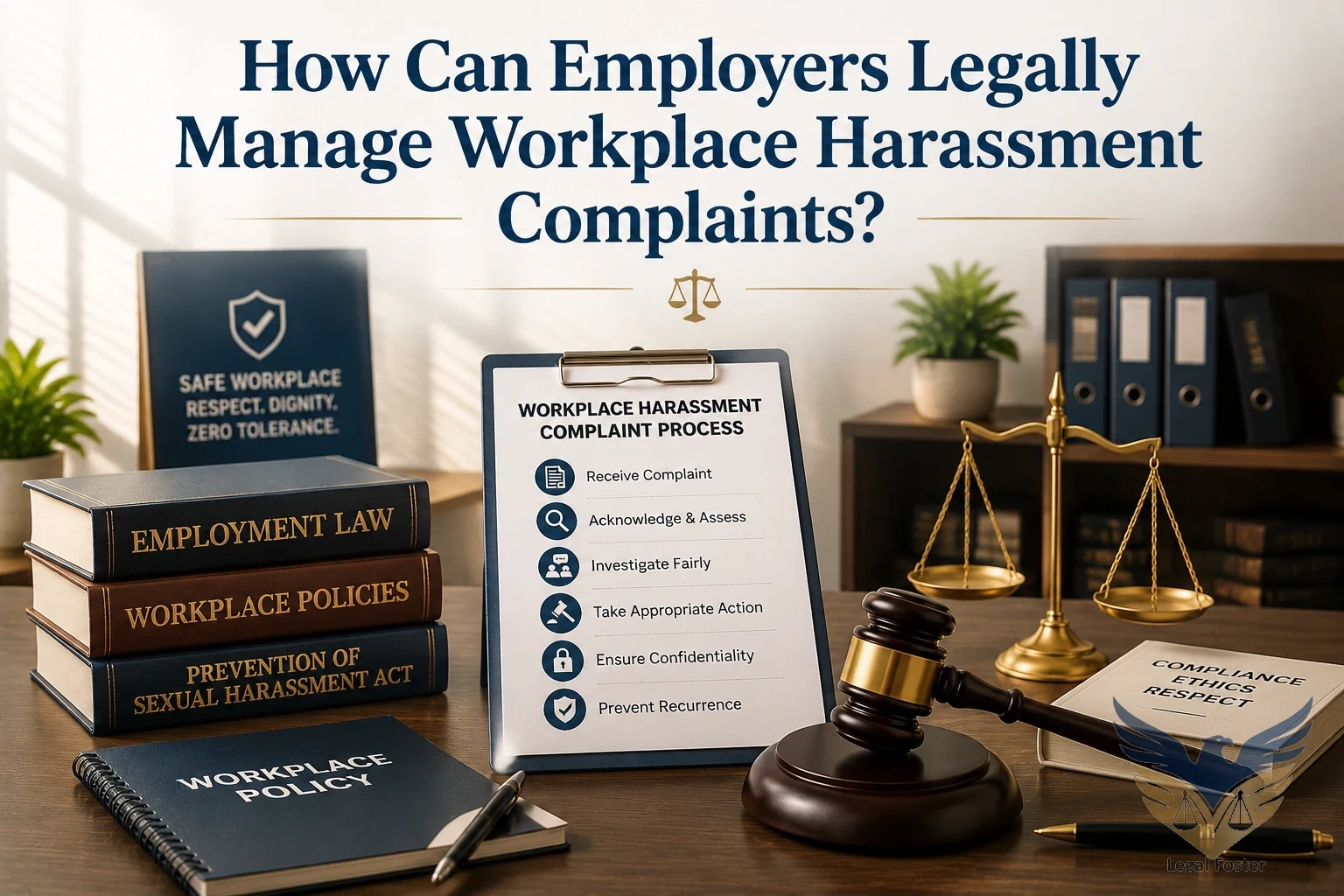
How Can Employers Legally Manage Workplace Harassment Complaints?
Understanding workplace harassment complaints, POSH compliance, Internal Committee procedures, confidentiality, documentation and employment law obligations for employers in India.
Dealing with a harassment issue in the workplace can pose many issues for an employer. One complaint can impact employee morale, your business’ reputation, relationships at work and more. As an employer, you can easily open yourself up to liability by reacting too quickly to a complaint or waiting too long to take action.
An employer should provide a safe environment for their employees. There are also laws an employer must abide by when dealing with these types of complaints. A harassment issue in the workplace can be much more involved than an HR issue that your business may typically deal with on its own. Statutes will come into play. When your business is faced with a harassment complaint from an employee, it’s critical to understand your obligations under the law. You will need to consider the employee’s rights, required notices, potential court hearings and more.
“During the whole process an employer has to be careful on one hand about the rights of the complainant. On the other hand, they need to allow the employee against whom complaint is made to reply to the allegations.” BK Singh Advocate
As an employer, there are many questions that run through your mind about what you should and shouldn’t do once an employee files a complaint. Do you need to assemble a committee? What about privacy? How do you uncover facts? What can you tell your employees about what’s going on? How do you limit yourself from further liability?
BK Singh Advocate and the team at Corporate Law Firm help clients understand what laws apply to their business in any situation involving employees and the workplace. When you know the law, you can prevent yourself from making decisions that may cause further problems for your business and cause you to lose your employees’ trust.
Why Workplace Harassment Complaints Require Careful Handling in India in 2026
Workplace harassment complaints have always remained one of the biggest pain points that businesses faced pan India whether in Delhi NCR, Mumbai, Bengaluru, Hyderabad, Pune or any other business hub. Today’s workforce have high expectations from their organisation. They expect the organisation to hear them out and treat their complaints in a professional manner.
Leaving these complaints unaddressed can cause employee disgruntlement, attract regulatory scrutiny, reputational damage and even litigation. What businesses need to understand is that your company opens itself up to further risk if you decide not to act on a complaint or take an informal route of resolution without knowing all the facts.
The areas in which I have mostly seen employers panic while dealing with workplace harassment/internal complaints committee (ICC) complaints are:
- When the complainant is filing a complaint against a higher-level employee
- The complaint has information that may be sensitive/confidential to the company
- When more than 2 employees are involved and accusing each other
- The allegation is of such nature that it may harm the reputation of the company
If your company falls under the scope of any workplace harassment at work place related laws, then it is mandatory for your company to take action/respond according to the internal procedures adopted by the company. By following the legal framework around handling these kinds of complaints, employers are able to address the situation in the right manner and can stay objective.
Quick Facts About Workplace Harassment Complaints
- As you may be aware The Sexual Harassment of Women at Workplace (Prevention, Prohibition and Redressal) Act, 2013 ("Act") prescribes the mechanism for redressal of complaints of sexual harassment at workplace.
- Provided the statutory criteria are satisfied, the Employer is required to constitute an Internal Committee ("IC").
- The IC shall take cognizance of the complaint made by the aggrieved woman in accordance with the procedure prescribed under the Act.
- Employers should maintain confidentiality with respect to the proceedings of such a complaint.
- Employers should Keep proper records in case of sexual harassment at workplace.
- Employers should follow the principles of natural justice while dealing with the allegations and the reply.
- Please note that there could be certain specific legal requirements based on the nature of your workplace, facts of your case and laws applicable to you.
What Does Handling a Workplace Harassment Complaint Legally Mean?
Employers define harassment complaint management as dealing with an allegation in a fair manner, confidentially and by all legal means. From the moment you acknowledge the complaint, you should begin a set investigative process of collecting information, taking evidence and treating both parties involved fairly.
Employers can get harassment complaints confused with simple workplace conflict. There are times when employees simply do not get along or have different personalities. When other performance issues are mixed with harassment claims, it may be best to separate both employees.
“An employer would be smart not to jump to conclusions that harassment is occurring. Just because your employee reports something happened, does not t mean that there was harassment and the employee is telling the truth,” says BK Singh Advocate.
Whether you run a small company with one employee or a large corporation with one hundred, if you are faced with a harassment allegation you should want to prove that your company did everything in your power to not only resolve the issue. You should show that you resolved it legally and fairly.
What Legal Framework Applies to Workplace Harassment Complaints in India?
Sexual harassment at workplace related complaints are dealt with under The Sexual Harassment of Women at Workplace (Prevention, Prohibition and Redressal) Act, 2013, which is informally known as POSH Act.
It is mandatory for an appropriate employer to set up an Internal Committee for purposes of such complaints and inquiries into complaints. Constitution of Committee, Inquiry proceedings, Confidentiality and Role of Employer have been specifically mentioned under the Act & rules made there under.
Further depending on the facts, the employer would also have to refer to the contract of employment, employee handbook/policies, service rules, discipline code and applicable labour laws.
At BK Singh Advocate we assist employers in reviewing their workplace policies and processes so that all employee issues are addressed legally.
However, employers need to keep in mind that any issue raised by an employee which is related to or arises out of the workplace could encompass multiple issues like sexual harassment, misconduct, violation of company policies, discrimination or breach of contract. Depending on the facts each case would have to be viewed separately.
What Documents and Evidence Should Employers Maintain?
Documentation plays a role in workplace harassment too. Employers should keep all documentation related to the complaint and investigation. This can include:
- Employee's written complaint
- Sexual harassment at workplace policy of the Company
- IC minutes
- Correspondence during investigation
- Statements by involved parties
- Any other workplace documents/electronic records that may pertain to the complaint
- Final investigation report
“Incomplete documentation can come back to bite you if the matter winds up in court or before another third party.” Bk Singh (Advocate)
During this record-keeping process, employers should remember to uphold confidentiality. Employers can be liable for even more if they spread information about a complaint.
When Should Employers Consult a Workplace Harassment Lawyer?
It is recommended that you seek legal advice where the complaint is particularly serious in nature, against a senior level management/individual, against two or more employees, contains extremely sensitive information/evidence and/or has the potential to lead to litigation.
You may want to consult an attorney:
- To design/review your company's POSH compliance program
- To guide your Internal Committee on procedural matters
- If a complaint involves intricate facts
- When your company receives a notice/complaint
- To revise your workplace policies
BK Singh Advocate will guide you through your legal obligations as an employer and provide you with the legal support you need to work through your employment matter. By seeking legal advice early, you can prevent unnecessary missteps and have greater confidence in your internal compliance programs.
How Can Corporate Law Firm Support Employers Facing Workplace Complaints?
Corporate Law Firm deals with advice to businesses and companies with respect to employment laws, workplace relations issues and internal commercial disputes. Providing practical Employment Law advice is one of BK Singh Advocates key areas of law practiced. Employment Law includes assisting businesses with understanding their legal obligations, reviewing company policies & procedures and dealing with employees in a professional manner.
BK Singh Advocate will first listen to your story, review any document(s) related to your specific issue and determine any compliance requirements prior to advising you on any laws which may be able to assist you. Visit BK Singh Advocate if you are an employer looking for Corporate Lawyers
BK Singh Advocate can provide you with solutions that can help you do more than just avoid being sued. Compliance with workplace laws can help you build trust with your employees and set your business apart professionally.
Frequently Asked Questions
The employer should treat the complaint respectfully, keep it confidential and conduct any necessary inquiry above. It really depends on the facts, circumstance and specific situations that apply to your business.
Not all complaints which are filed at a workplace fall under POSH act jurisdiction. Complaint would be evaluated based on nature of allegation, facts and circumstances. Depending on these factors , any allegations made may fall under POSH Act.
An employer will not normally discipline or terminate the employment of an individual until they have gone through your company's disciplinary and inquiry procedure.
Yes. Employees/individuals should always keep information about harassment in the workplace confidential. If you were to discuss details about the allegations or individuals involved with someone who is not involved in helping you process your claim, you could be liable for serious legal consequences.
Yes your company can create their own policy. Just make sure your policy covers these topics and follow requirements stated above.
If you choose to not process any claims, an employer is at risk for non-compliance. Employers should investigate any claims of harassment, check the validity of facts and decide if the complaint qualifies as harassment.
Yes. That depends on how many employees you have and the size of your business. Explain what your business falls under and you will be able to determine what you have to comply with.
Yes. Any individual who has been affected by their workplace can contact a lawyer and seek justice. You will be able to file an appeal depending on your circumstances.
Workplace harassment laws can be complex and overwhelming to understand. You don't want to risk your business by knowing incorrect information. BK Singh Advocate will provide you with everything you need to know about harassment in the workplace. You'll understand what your employees are entitled to, what your business is liable for and what the law requires you to do.
Fill out the form above or send us a message through our contact page. BK Singh and our team of attorneys will respond promptly.
Final Thoughts
Work place harassment complaints should be resolved in a way which ensures the comfort of employees and does not unnecessarily infringe upon the rights of other employees. Informal methods should not be used to settle harassment complaints of a serious nature. Mishandling of the procedures can open up the employer to further legal liability.
BK Singh Advocate and Corporate Lawyer are experienced in assisting companies with their employment law issues and can help guide you through workplace harassment complaints.
Employment disputes, Internal Investigations or Complaints. Whether it's a small business in Delhi NCR, India or a large corporation with manyemployees for all Commercial Establishments becomes extremely difficult to manage when you don't have someone looking out for your business. Managing work place harassment complaints doesn't have to be difficult.