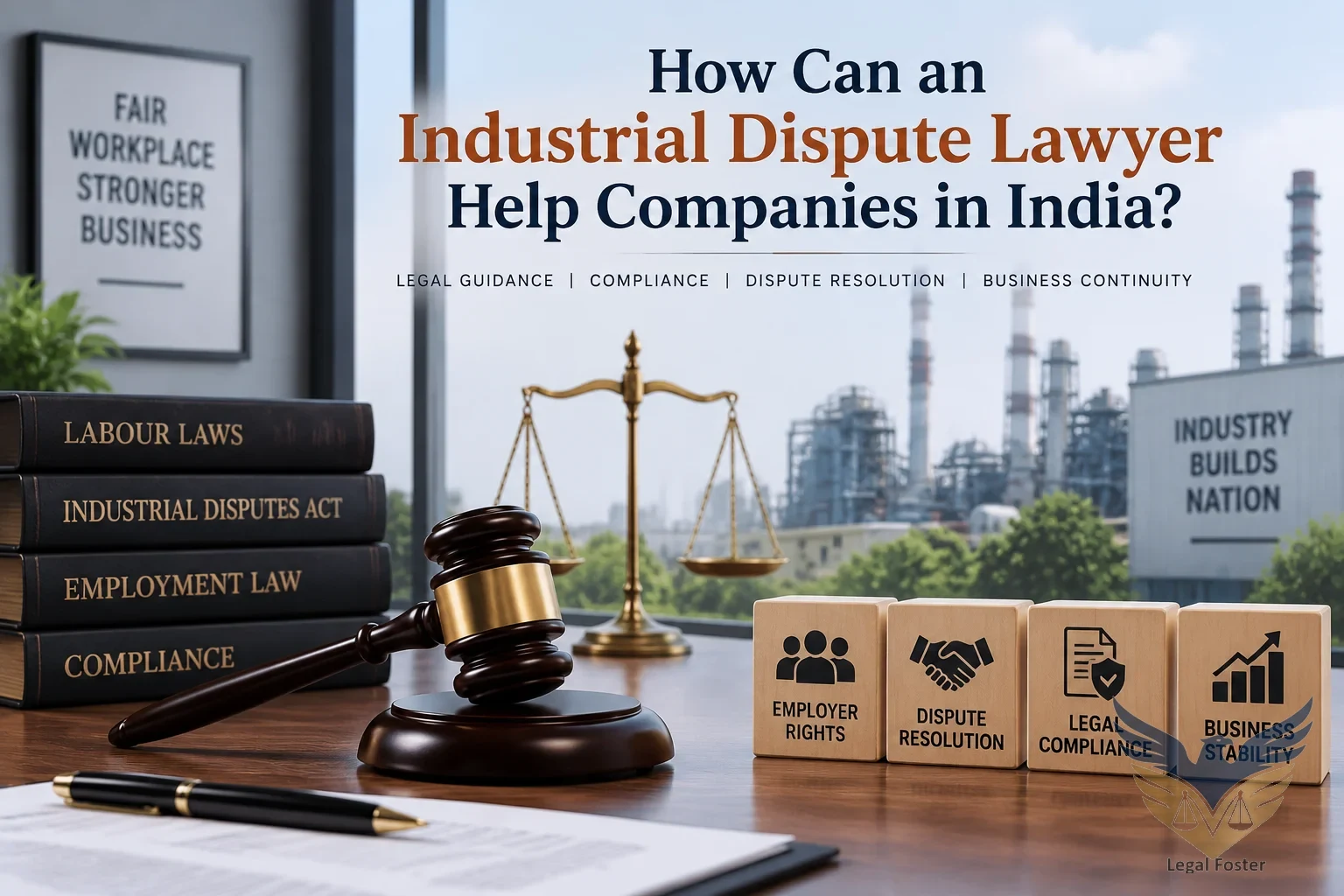
How Can an Industrial Dispute Lawyer Help Companies and Employers in India?
Managing a business becomes stressful when an employee grievance escalates into a legal matter. Conflict over termination, salary, discipline, retrenchment, conditions of service or workplace etiquette can swiftly impact management resources, personnel and operations.
An Employment/Labour Law Attorney helps business owners and management understand their rights in advance of a workplace conflict escalating. Businesses based in Delhi NCR, Noida, Gurugram, Ghaziabad, Faridabad or other major business hubs who need a law firm to review an issue with an employee, union, contractor or labour department can benefit from meeting beforehand.
BK Singh Advocate can help companies analyse employment law disputes, documents related thereto and discuss legal options. Fighting a case is not the goal. Responsible advocacy on behalf of an employer begins with analysis of the facts, law and practical implications.
India consolidated its labour laws into four Labour Codes effective 21 November 2025. According to India's Ministry of Labour and Employment the new Codes subsumed 29 existing labour laws, with the Industrial Relations Code, 2020 being one of four.
This development is relevant for companies doing an employment law compliance or audit in 2026. References to the older Industrial Disputes Act, 1947 will continue to turn up in past records and existing cases, but the new statutory framework should be applied to disputes moving forward. Employers who receive a notice from an employee, union or government agency have the opportunity to review the legal standing of the claim with BK Singh Advocate.
Why Does Industrial Dispute Advice Matter for Companies in 2026?
An industrial dispute may involve multiple employees. It could result in operational disruption, legal costs, managerial stress and reputation risk.
Employers can often benefit from an earlier legal review rather than waiting for the matter to get to adjudication. An attorney can determine whether the dispute relates to termination, retrenchment, standing orders, wages, disciplinary proceedings, collective bargaining, union issues or something else.
The advice will vary widely based on the type of establishment, class of worker, rules applicable, terms of employment and facts of the case. There is no magic solution to all workplace disputes.
Businesses operating in Delhi NCR should note that the right authority or forum may also vary based on the nature of the dispute and the jurisdiction. Covered regions include Noida, Greater Noida, Ghaziabad, Gurugram and Faridabad.
BK Singh Advocate reviews industrial disputes with a focus on your company's best interests. Contact us to learn about your exposure before reacting to an industrial dispute.
Quick Facts for Companies
- On 21 November 2025, the four Labour Codes received assent and came into force.
- The 2020 Industrial Relations Code is the umbrella central legislation governing industrial relations in the new regime.
- Industrial disputes could relate to termination, retrenchment, conditions of employment, collective disputes and other workplace relations issues.
- The recourse available will depend on the facts, status of the worker, applicable establishment and statutory provisions.
- Maintenance of company records can play a vital role in employment-related disputes.
- Consideration prior to terminating employees or issuing disciplinary action can reveal procedural and documentation gaps.
- BK Singh Advocate can guide companies with respect to employment disputes and possible legal action.
What Is an Industrial Dispute?
An industrial dispute can be loosely defined as any dispute related to employment or non-employment, terms of employment or conditions of labour between workers and employers, or between workers and workers or employers and other legally recognised groups.
It may start with what seems like a simple issue for a company: an employee disputes a termination, several employees make a group complaint, a union raises a problem with an employment decision, or asks the company to rescind a retrenchment decision.
The nature of the dispute is legally significant. Not every grievance raised by an employee is a personal grievance, and not every personal grievance will invoke every statutory industrial- dispute process.
BK Singh Advocate can assess the underlying employment relationship and determine what law applies before your company takes a position on how to respond.
What Legal Framework Applies to Companies?
Industrial Relations Code, 2020 regulates industrial relations under the new Labour Code regime post 2025. The Industrial Relations Code, 2020 continues to be listed under the labour laws applicable for the Ministry of Labour and Employment and there is a specific page dedicated to Labour Codes & Notifications.
Some of the matters covered under the Code include industrial disputes, trade unions, standing orders, strikes and lock- outs, retrenchment, lay- off and closure and corresponding adjudication processes.
A provision that applies to an establishment may not necessarily apply to another. Whether someone is a worker, if the establishment is covered under the scope of the Code, which Government is applicable, which set of rules would apply and at what stage the dispute is are few of the legal considerations that may determine the course of action.
Even the website of Central Government Industrial Tribunal under Ministry displays industrial- dispute cases related to termination & retrenchment in the year 2026.
If there is an old pending dispute or proceeding which refers to Industrial Disputes Act, 1947, it would be prudent to analyze the legal stance considering the relevant transition provisions and the stage of the matter. BK Singh Advocate can make that distinction instead of considering every dispute as a new 2026 matter.
What Industrial Disputes Can Companies Face?
An organization might face different kinds of disputes related to employment.
An employee might dispute his dismissal or disciplinary action on the ground that the procedure was not fair or legally compliant, there was a violation of contract, discrimination or any other reason.
Employers should keep accurate employment records and be careful not to contradict themselves in written and verbal communication.
You may need to downsize your workforce as part of a business restructure. Employment decisions such as this can lead to legal issues if statutory provisions relating to retrenchment, notice pay, severance pay or terms specific to your workplace apply.
You should seek legal guidance if you plan to lay-off a significant part of your workforce, rather than trying to fix form afterward.
Employee demands are part of a union or collective will create a legal landscape that is very different from an individual employment issue. Trade union recognition, collective bargaining, strikes, lock-outs, etc. need to be carefully examined in the relevant matrix.
Issues may arise based on payment of wages, terms of employment, work conditions or any alteration to the employee’s situation.
An employer should first understand what the contract of employment, company policies, statutory requirements and your records actually say.
BK Singh Advocate can guide you in understanding the issue at hand and deciding if you should negotiate, issue a formal reply, seek conciliation, adjudication or explore any other legal avenue open to you.
What Documents Should a Company Preserve?
Good record keeping can go a long way in employment litigation. Here are some documents companies should look to retain related to the specific dispute at hand:
- Appointment letters and employment contracts
- HR policies and applicable standing orders
- Attendance and payroll records
- Performance appraisals
- Show cause notices and employee responses
- Disciplinary proceedings
- Termination/retrenchment letters
- Emails and other correspondence
- Settlement or negotiation proofs
- Union letters, if any
- Internal approvals relating to the decision being challenged.
Not all of the above documents would be necessary in all matters. Employers should also refrain from modifying, selectively deleting or creating records backdated after a dispute arises.
BK Singh Advocate can go through the documents you have and spot the glaring holes before your company takes the next step.
When Should a Company Consult an Industrial Dispute Lawyer?
Ideally, legal advice should be taken before a major employment decision has been taken.
You would be well advised to speak to an Industrial Dispute Lawyer for Companies at the earliest opportunity if your Company receives a legal notice or letter, if more than one employee have raised a grievance simultaneously, if you receive notice from a labour authority, if you are contemplating retrenchment /closure or if you are faced with pressure from a Union etc. Employee likely to challenge a disciplinary action arising out of his conduct.
Companies operating in Delhi NCR should consider speaking to an Industrial Dispute Lawyer for Companies prior to responding to any labour related proceedings / communications initiated by or received from the relevant labour authority / tribunal.
BK Singh Advocate will be able to review the facts at the outset and advise you on the practical options available to you without guaranteeing a specific outcome.
How Can BK Singh Advocate Help Companies?
Businesses typically require more assistance than a general overview of labour law. They want to know how the law applies to their specific set of facts.
Preliminary legal evaluation, document review, analysis of employment related disputes, notices and responses, disciplinary actions, termination related issues, retrenchment, settlement and litigation related advice are areas where BK Singh Advocate can help businesses.
The role will vary depending on the dispute. Sometimes early clarification and a well drafted response can eliminate further confrontation. Sometimes the gears of formal process have already begun to turn and the company's energy is directed toward vindicating itself in the proper forum.
BK Singh Advocate tackles these issues by evaluating both legal risk and the company's business concerns.
If you are looking for professional help, please feel free to contact BK Singh Advocate and schedule a fact specific conversation.
What Mistakes Should Companies Avoid?
Treating an employee issue suddenly as an HR matter once it becomes legal in nature.
Sending out termination letters or letters of discipline without examining the employment contract and law.
Employers should refrain from leveling accusations against employees, overlooking official notices, destroying documents or believing that another case already decides the issue in question.
Speaking out of both sides of the mouth. What you put in emails, record memos and official responses should be consistent.
BK Singh Advocate can assist management in assessing your stand prior to your company locking itself into a legal position.
Frequently Asked Questions
1. What does an Industrial Dispute Lawyer for Companies do?
An Industrial Dispute Lawyer for Companies can help the employer understand employment-related disputes. Whether it involves employment documentation, statutory requirements, notices, disciplinary matters, retrenchment concerns, negotiation strategy, litigation strategy, or any combination thereof will depend on the facts.
2. Does the Industrial Relations Code, 2020 apply in 2026?
The Government rolled out the four Labour Codes, including the Industrial Relations Code, 2020, on 21 November 20 25. The answer depends on the facts and the relevant provisions that apply to the matter.
3. Can my company terminate an employee without reviewing the case?
An employer should not assume that it can terminate an employee without legal exposure simply because the employment contract allows termination. The facts and employee status, applicable law, contractual terms and statutory requirements must be reviewed.
4. What is the difference between termination and retrenchment?
Termination and retrenchment are not the same thing. Whether “termination” in a particular situation qualifies as retrenchment for statutory purposes depends on the law and facts.
5. Can you settle an industrial dispute?
It depends on the type of employment dispute. Certain disputes are settled or resolved using alternate consensual mechanisms. Whether and when to settle also depends on many factors.
6. Can my company contest an employee raising an industrial dispute claim?
An employer can respond to claims and contest allegations if doing so is legally supportable. The procedure depends on what happens and when.
7. Do companies need HR records for industrial disputes?
Yes. If an employer is involved in an employment dispute, it should preserve all relevant records. This includes employment contracts, attendance records, prior communications, disciplinary or justification documents, wage records, issued notices, and more.
8. Does every dispute with an employee become an industrial dispute?
No. Whether a dispute with an employee qualifies as an industrial dispute depends on the law and facts. For example, a lawyer must determine whether the “worker” is covered by Industrial Dispute Acts.
9. Can companies in Noida/Gurugram work with you?
Yes. BK Singh Advocate provides employment and industrial-dispute advice to companies located in Noida, Greater Noida, Ghaziabad, Gurugram, Faridabad and other cities in Northern India, subject to jurisdiction and the specific facts involved.
10. Why should I consult with BK Singh Advocate before taking action?
BK Singh Advocate can work with companies to understand their legal rights, review relevant documents and explore options before company management does something that creates additional legal exposure.
Final Thoughts
Once a dispute arises, it can be too late to react and evaluate the situation. Reaction often leads to expensive mistakes. Employers should first try to understand the dispute, collect relevant documentation and seek legal advice.
With the Labour Codes now in effect, it is more important than ever for companies to review existing employment practices and determine how the Industrial Relations Code, 20 20 applies in 2026.
Businesses facing termination issues, retrenchment, employee claims, union matters or labour-tribunal proceedings should speak with BK Singh Advocate. He can provide legal insight based on time-tested employment laws and the unique facts of each matter.
BK Singh Advocate can also help a company understand whether discussion, settlement, statutory proceedings, or litigation can best resolve a dispute. Again, this depends on the facts and the dispute.
Management does not need to wait until a dispute reaches proceedings to contact BK Singh Advocate. Businesses can reach out now to understand their legal options and make informed decisions.
Legal Disclaimer: This article is meant to provide general information about employment and industrial-dispute law in India. This is not legal advice. Please consult BK Singh Advocate or another lawyer if you have specific questions. The law may vary based on the governing jurisdiction and facts involved.