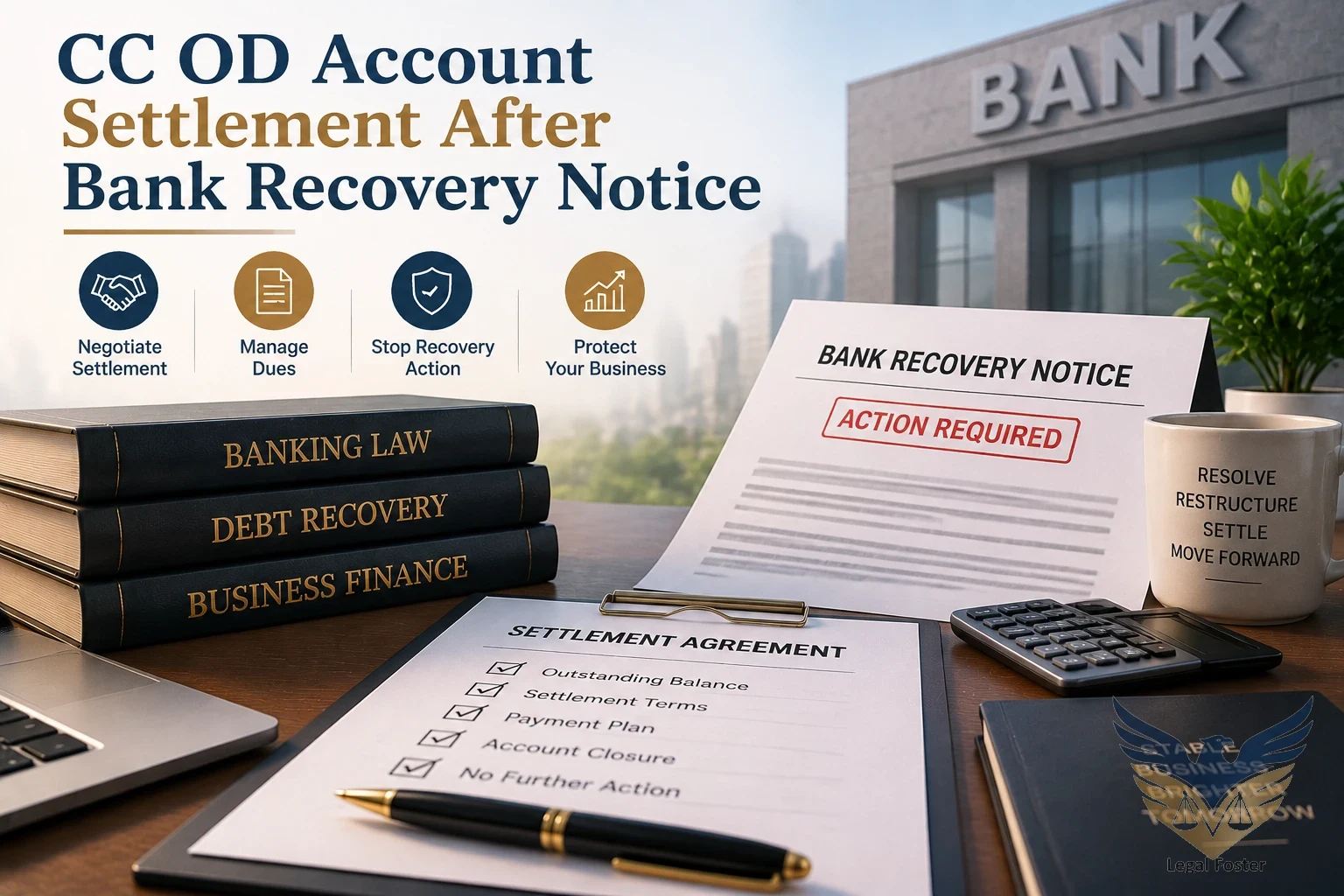
How to Settle CC OD Dues After Receiving a Bank Recovery Notice
Finding out that you have to settle your CC OD account can seem overwhelming once the bank has started recovery proceedings against you. Either the account has become irregular with the bank, been declared an NPA or worse still the bank has served you a formal recovery demand. For a business owner this can be nerve wrecking: when your working capital is tied to the company, suppliers are harassing you for payment, bank has attached your property and notices of recovery are landing on your doorstep while you’re scrambling to pay just to keep up.
But what if you could settle your account?
Many borrowers think settlement is off the table once the bank starts “really” acting on the account. Settlement is not an absolute legal right. The bank may allow an OTS/settlement compromise as per its policies but the borrower would still want to ensure all legal remedies are protected.
BK Singh & Associates have found that acting at the earliest helps our borrowers in Delhi NCR (Delhi, New Delhi, Noida, Greater Noida, Ghaziabad, Gurugram, Faridabad, Meerut, Hapur). However, the same applies to business borrowers in cities like Lucknow, Kanpur, Prayagraj, Varanasi, Agra, Jaipur, Chandigarh, Mumbai, Pune, Bengaluru, Hyderabad, Chennai, Kolkata and Ahmedabad too. Because there are typically continuous business operations associated with a CC/OD facility (as opposed to a traditional term loan which has an amortization schedule), a bank will likely have security in the form of hypothecation documents, mortgage documents, guarantee documents or other forms of security provided by the borrower. By the time the bank starts recovery action on the CC OD account, the outstanding monetary value is simply one facet of the overall situation. Terms of settlement, type of security provided, pending proceedings, ability to pay and legal positioning are all factors to be reviewed with the big picture in mind.
A quick tip from BK Singh Advocate – if you get a settlement ‘verbal assurance’ over the phone from a bank officer, do not celebrate thinking you’ve settled the account. Read through any proposed settlement in writing very carefully. This includes reviewing amount payable, instalments (if any), treatment of security, interest rate and charges applied to outstanding, any pending proceedings that need to be stayed or withdrawn along with requests for release of closure documents.
Why Does CC OD Settlement Matter During Recovery Proceedings?
When acting on behalf of the borrower, a CC OD account can become ‘bad overnight’ as interest and other charges which may apply continue to get added to the outstanding amount during the pendency of the recovery proceedings. An OTS proposal can offer a borrower a chance to get out but simply sending in a proposal will not stay the recovery process.
It’s an even more daunting situation when the CC OD facility is secured against commercial property, residential property, factory premises, plant and machinery or other assets. When the bank initiates the applicable recovery process/es) the borrower will need to quickly consider his options with respect to the opportunity to settle the dues versus any legal recourse available at that point in time.
BK Singh Advocate & Associates takes these factors into account based on the documents involved and time of recovery instead of assuming all CC’s or OD accounts are handled the same way by banks.
One borrower could get a demand notice but may also want to send in a settlement proposal simultaneously. Another borrower could already be in possession/auctioneering stage. Some may already be defending an Original Application in DRT.
Quick Facts About CC OD Account Settlement
- A CC/OD account can be settled by way of a compromise or OTS where the lender’s policy allows for settlements and is subject to its approval.
- Requesting a lender to negotiate a settlement does not automatically stay statutory recovery process/es or tribunal hearing timelines.
- Under the RBI's recently issued 2023 framework on compromise-settlement, a compromise settlement includes an arrangement with a regulated entity to fully, or partly settle a claim for cash that may or may not be accompanied by a sacrifice on part of the lender.
- If there are already pending recovery proceedings in front of a judicial forum, the framework clarifies that any agreed upon settlement will still be subject to obtaining a consent decree or other appropriate order from that judicial forum.
- Where the bank has a valid security interest it seeks to enforce against the borrowers assets, a SARFAESI action may also be initiated.
- A DRT proceeding and settlement negotiation may occur concurrently. They are however not mutually exclusive and the borrower should not expect sending in a proposal to automatically stop the pending proceeding.
- Only after the borrower receives written settlement approval and proper closure documents are executed, can the account be considered settled.
Can You Negotiate OTS After Bank Recovery Proceedings Start?
Yes. While technically a borrower can send in a settlement proposal even after recovery proceedings are started, it does not mean the lender will accept your proposal. Whether a bank will consider your settlement proposal would depend on factors including the lenders policy on settlement, its authority to approve the settlement and specific facts related to the account.
The RBI’s framework on compromise-settlement specifically permits compromise settlements of stressed accounts of regulated entities to occur. It goes further to state that “…where recovery proceedings have been initiated before a judicial forum prior to the recommendation of the settlement under this Framework, such settlement would still be subject to that forum entering the appropriate recording or consent.”
A proposal made prior to the lender taking possession of assets or issuing auction notices would be looked at differently than one sent after auction notices have been issued. If security exists, amount of dues is substantial, there is litigation pending or part of the litigation is in the borrowers control, the lender may be more inclined to consider a settlement.
BK Singh Advocate can pinpoint, based on where the recovery is at what issues need to be considered when sending in a settlement proposal.
Remember the proposal should be supported by a genuine statement of financial position and ability to pay. Additionally, any proposal sent should be consistent with the documents already submitted in any pending proceedings.
What Documents Should Be Checked Before Settling a CC OD Account?
This is where most borrowers lose opportunity to negotiate a better deal. Performing a thorough document review will often uncover avenues for negotiation that are worth more than making a rushed settlement discussion.
Generally the borrower should try to obtain sanction letter and any subsequent sanction or renewal documents; CC/OD agreements, security documents, guarantee documents, mortgage deeds (if applicable), bank statements, stock statements, correspondence with bank/recovery notices, etc. If the bank has initiated recovery proceedings, obtain DRT pleadings, notices/ orders, possession notices/communications, sale notices or other recovery documents.
If you are a business borrower, your financial documents may be relevant too. Consider providing cash-flow documents, audited financial statements, a rundown of collateral and source to where you will get funds to settle. This information can help you make the argument for why the amount you are offering to pay is commercially reasonable.
Following are some items that could be included in your document checklist:
| Document | Reason |
|---|---|
| Sanction & renewal documents | To establish terms and conditions of facility |
| CC/OD statements | To help you identify where the bank is claiming outstanding amount is due |
| Security documents | To understand what collateral is provided and exposure upon enforcement |
| Guarantee documents | To understand liability against guarantor(s) |
| Bank notices | To understand what stage of recovery the bank has initiated |
| DRT/ SARFAESI papers | To understand what legal remedies the bank has initiated and associated deadlines |
| Settlement correspondence | If any, to confirm what the bank has agreed can be negotiated |
| Financial records | To help understand what you can realistically pay |
What Should a Borrower Check in a Settlement Letter?
The Settlement Letter should not be taken at face value. Borrowers should read the letter like its financial and legal documents combined.
The borrower should know exactly how much needs to be settled, when is the payment due, is there penalty for late payment, what happens to interest and other charges applied, status of guarantees, securities provided and what about all pending proceedings? If loan is secured against property, when/how will the bank return the security upon fulfillment of settlement terms.
If there are pending proceedings, how will those be affected by the settlement letter needs to be clarified. For matters pending before a judicial forum, the RBI framework states “the settlement would still be subject to such forum entering the appropriate recording or consent decree.”
BK Singh Advocate recommends borrowers ask these questions and confirm what you’ve been told in writing before making the settlement payment.
Sending in a payment without clear cut written terms may reduce your outstanding amount but does not create a full and final settlement. This small difference could become important to you later.
When Should You Contact a DRT Lawyer for CC OD Settlement?
You should speak to a DRT Lawyer when the bank starts sending you formal recovery notices, your account has been classified as NPA by the bank, the bank has started enforcing security/ initiating recovery proceedings, DRT suit is filed against you, bank has threatened to take possession/auction your property, if you have proposed a settlement but the bank has rejected it or the bank has not responded to your proposal.
Another risky situation is when the amount you believe is outstanding according to your records is different from the banks records. Advice should also be sought from a DRT Lawyer if you are a guarantor and the bank is trying to enforce your liability/security. If you are proposing settlement, you will also want to confirm whether the proposed settlement will cover your overall exposure from the bank or just the one account in question.
Carefully scrutinise all of the above and your settlement proposal before the auction deadline is upon you.
Advocate BK Singh can review your documents, highlight the general legal stance and advise you on whether talks of settlement can proceed along with any legal remedies you have available at that point in time.
Can Settlement and DRT Defence Be Done Together?
Yes. Sending in an OTS negotiation proposal and defending a DRT matter can occur concurrently, where the facts of the case and stage of procedure allow.
OTS negotiation and DRT defence do not automatically extinguish each other. Sending in an OTS proposal to the bank does not automatically stay a DRT proceeding, SARFAESI enforcement, possession application or auction process started by the bank. All timelines and orders issued in the pending DRT or SARFAESI proceedings must still be complied with until the relevant proceedings are stayed, withdrawn, disposed of or otherwise settled.
For example, the RBI released framework on compromise- settlement even contemplates the relationship between a settlement attempt and pending judicial proceedings.
Essentially, yes. Borrowers can negotiate and send in a settlement proposal to the bank recovery officer while a DRT matter is pending. Talking and negotiating with the bank does not nullify what has already been started on the legal front.
That is why BK Singh Advocate likes to manage the settlement along with the litigation file. If talks of settlement are occurring, we review the terms against the standing of the lawsuit.
How Can BK Singh Advocate Help With CC OD Account Settlement?
Advocate BK Singh helps borrowers at DRT Lawyer by dealing with bank recovery and DRT/SARFAESI disputes. This includes negotiation of settlements where possible and applicable.
BK Singh Advocate can assist borrowers by reviewing their CC/OD related documents, bank notices for recovery, any securities linked to your accounts and loans and pending proceedings involving the lender and borrower.
This can include but is not limited to reviewing the terms of any proposed/settled agreement; highlighting what issues need clarity; coordinating the settlement stance with DRT/SARFAESI proceedings if necessary and advising on any paperwork necessary to finalize closure.
Document review is even more helpful for MSME and small business owners as the CC/OD facility could have been bundled with collateral/security, third party guarantees or even other bank loans. Our current service offering for CC/OD recovery defence would cover aspects of recovery defence and potential settlement related queries from borrowers located in Delhi NCR and other cities throughout India.
If your received a bank recovery notice you can have our lawyers review your bank recovery notice to help you decide how you would like to respond to the bank.
Similarly, if a MSME borrower is stressed for working-capital, our MSME loan recovery lawyer service can help you if the CC OD exposure is part of a larger business loan dispute.
What Happens After Bank Accepts Settlement?
Let’s say the bank accepts your settlement, what happens next?
Documentation.
Ensure you keep a copy of the settlement approval and evidence of payment. Correspondence is helpful here. If a proceeding is pending in front of DRT or any other forum you will need to treat the appropriate record as per the terms of the settlement agreement and that forums requirements.
You should obtain a no objection certificate / closure certificate or such other documents necessary upon fulfillment of the agreed terms. This could include based on the account and security provided a no- dues/closure certificate, return of security/freeing of lien on property, return of original documents and an undertaking/confirmation that any pending recovery proceedings (if any) will be withdrawn.
The exact nature of these documents would differ from account to account based on the transaction and terms of the settlement.
Frequently Asked Questions About CC OD Account Settlement
1. Is it possible to settle a CC OD account that has been declared NPA?
Ans. Yes. Subject to the lenders applicable policy and authority to approve a settlement. A lender can consider approving a compromise settlement OTS for a stressed account. While RBI’s framework on compromise settlement allows borrowers to request compromise settlements with regulated entities, it does not give every borrower the right to demand a compromise settlement from the lender.
2. Can I apply for OTS after receiving a SARFAESI notice?
Ans. Yes. A borrower can send in a settlement proposal. However, merely sending in a proposal will not automatically stay the SARFAESI action. All legal stages that have been reached would need to be analyzed and all applicable statutory timelines would need to be reviewed concurrently.
3. Will sending in an OTS proposal stop DRT proceedings?
Ans. No. Sending in an OTS proposal will not automatically stay a DRT proceeding. All requests for stay would have to come directly from DRT through withdrawal, dispose of or another appropriate action with respect to the pending proceeding.
4. Can bank reject OTS proposal on CC OD account?
Ans. Yes. Just because you send in a OTS proposal, the bank can reject your settlement offer. Any compromise settlement is typically subject to the lenders applicable policy and levels of authority to approve a settlement. The borrower should not expect the bank to just accept his discounted payment.
5. Is a settlement on a CC OD account the same as restructuring?
Ans. No. These are 2 different things and can carry different legal / prudential consequences. RBI’s framework on compromise settlement specifically mentions restructuring as a separate process from compromise settlements. The framework treats them differently where the payment term of the settlement amount exceeds 3 months.
6. Will bank return mortgaged property after settlement?
Ans. This would depend on the explicit terms of the settlement agreement and performance of the promised obligations. Borrowers should get a written confirmation from the bank that explicitly states the security will be released upon payment and include return of any property documents.
7. Does settlement on a CC OD affect the guarantor?
Ans. Yes. Just because you reach a settlement with the bank on your CC OD account doesn’t mean the guarantor is off the hook. All guarantees and security provided should be addressed in the settlement documents.
8. Can I settle my CC OD account if there is already a pending DRT case?
Ans. Yes. Settlement is still possible even if the bank has filed a DRT case against you. You would then have to coordinate the settlement with the pending DRT proceeding and ensure it gets recorded with the DRT or otherwise disposed of according to how it may legally require.
9. Do I need to make an advance payment once OTS terms are agreed but bank has not given written approval?
Ans. Be careful when making payments under these circumstances. The borrower should not assume that the payment will be treated as a full and final settlement if the bank has not provided written confirmation to that effect. Have the bank provide a written acceptance of your proposal directly from the bank.
10. When should I contact BK Singh Advocate?
Ans. When in doubt. If your CC/OD account has been irregular, turned NPA, received a recovery notice from the bank, facing SARFAESI notices/ action, has a pending DRT case against you or your bank has offered/rejected an OTS offer, reach out to BK Singh Advocate to learn about your options. BK Singh Advocate can review documents on your behalf, explain the legal options you have and whether a settlement can be done based on where the matter is currently at.
Conclusion
Just because the bank starts recovery process against your CC OD account, it does not mean settlement is no longer possible. You can still ask the bank to settle your account if you’re able to present it with proofs/documents to support your proposal. Filing an OTS will not stay the bank’s right to continue with their recovery process. You’ll have to follow through with the pending proceedings while simultaneously negotiating with the bank for a settlement.
Hire a lawyer to decide the best course of action once you know – how much is due on the account, what security/guarantee was involved, where the bank is in their recovery efforts, how much you have to pay and your ability to pay to settle.
BK Singh Advocate provides legal representation for DRT and SARFAESI grievances for borrowers located in Delhi NCR and India who are facing recovery actions from their bank or want to explore settling their accounts.
Don’t just make settlement calls with the branch/recovery agents over phone. Get a legal opinion on the offer, read the terms of the proposal along with your account statements and any legal notices received by you before making a financial decision you may never be able to reverse.
Give BK Singh Advocate a call and we can review your legal position and let you know of the practical legal options available to you based on the facts and documents you provide us.