How Does NCDRC Review Consumer Commission Orders Through Revision Petitions?
An order from the consumer commission passed against you may appear to be the final nail in the coffin. You may be ordered to forgo your refund; instead take a lesser compensation; or be persuaded that the shop “did not receive” your acknowledgment receipts or that an important document went astray.
But as consumers located in Delhi NCR, Mumbai, Bengaluru or indeed anywhere else in India, one of the first questions to ask yourself if an order is passed against you is: Could the commission in fact pass this order in this manner?
Your question is relevant because not all dissatisfaction you face at the hand of a State Consumer Commission can give rise to a revision proceeding in Supreme Court. Or in other words, before the National Consumer Disputes Redressal Commission (NCDRC).
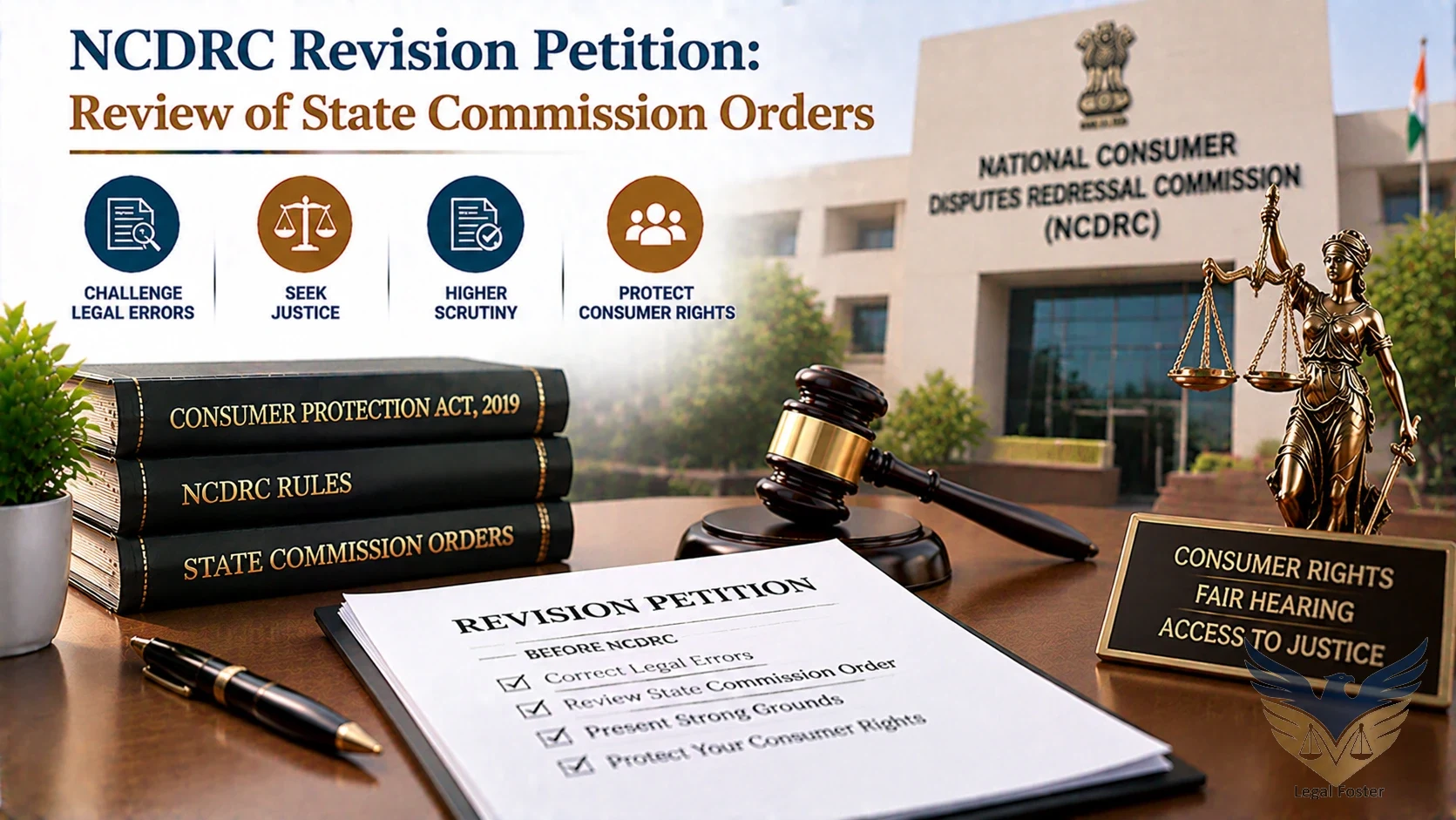
The NCDRC, in entertaining revision petitions has made it clear over the years that it essentially looks for jurisdictional error, failure to exercise jurisdiction, illegality or material irregularity in the manner State Commission conducted the hearing or disposed of the matter. An appeal, on the other hand, allows you to challenge the decision much more liberally. But whether you file an appeal or a revision depends on the nature of the order, and the provision under which it was passed.
The difference could be significant for consumers ranging from home buyers protesting orders relating to possession, to buyers of insurance policies to medical negligence patients to those who bought defective goods or received deficient services.
Lawyer BK Singh says that he first looks to read the impugned order as well as the previous pleadings and material on record before jumping to the conclusion that every adverse finding against you is arrived at erroneously. Knowing this difference can save you time and help you choose the right remedy as a consumer.
Why Does This Issue Matter in Delhi NCR and Across India in 2026?
Consumer disputes are no more petty now. The dispute against builder is of your lifetime savings of several decades. Insurance disputes occur when you are in dire need of money. Dispute against banks,eg,-paymentgateways, e-commerce or any other financial service can financially harass you for years.
If you as a consumer have approached National Consumer Disputes Redressal Commission (NCDRC) having your origin from Delhi NCR (Delhi, Noida, Greater Noida, Ghaziabad, Gurugram, Faridabad, Meerut, Hapur and several other nearby cities), there are already multiple tiers of litigation done by you. Same is the case with litigants approaching the Commission from Lucknow, Mumbai, Pune, Bengaluru, Hyderabad,Chennai,kolkata, Ahmedabad, Jaipur or any other part of India.
Question is no longer whether State Commission passed an order which is not in your favour. Question before you now is whether that order disclose any known ground of revisional jurisdiction.
Advocate BK Singh advises that parties should quickly review that order, particularly where limitation is involved (quick consequence) or where there is a direction which will start operating.
Quick Facts About NCDRC Revision Petitions
- Revisional powers of NCDRC under Section 58(1)(b)
- When State Commission exercises jurisdiction –
- not conferred by or under this Act;
- failing to exercise any jurisdiction conferred by or under this Act; and
- committing errors of illegality apparent on the face of it in the exercise of its jurisdiction.
- Revision is not meant to substitute an appeal in every dispute regarding facts.
- Revision forum has provided 90 days for filing of revision petitions from the date of receipt of free certified copy of order of State Commission in its website.
- Order appealed against and record of case are two essential ingredients need to be considered for looking into the alleged error.
For filing-related guidance, the NCDRC Filing Process Guide provides a dedicated service page covering the filing process.
What Does NCDRC Actually Examine in an Error?
NCDRC has interpreted what it means by “Whether there is transgression of jurisdiction, or non exercise of jurisdiction or gross mis exercise of jurisdiction by the State Commission”. Under Section 58(1)(b), if an act is done in exercise of jurisdiction which it had no power to do under law then there is excess of jurisdiction. If a State Commission had jurisdiction but failed to exercise the same when it ought to have exercised it then that is non-exercise of jurisdiction. Illegal action/material irregularity in exercise of jurisdiction has also been covered under Section 58(1)(b)
“It does not mean that every erroneous finding would convert into a ground for revision.”
Eg.If one party is strongly aggrieved by the consideration/relevant weight attached to two documents on both sides. Such dissatisfaction would not warrant revisional jurisdiction by itself. The exercise has to be tested objectively with reference to statutory parameters of revision and the findings on the recorded evidence
Therefore Advocate BK Singh emphasizes looking at the language/order passed as important evidence. Reasoning employed, jurisdiction invited/approached, applications dealt with, documents considered/relied upon and even the procedure followed would have to be read together.
If the matter requires direct professional assistance with a revision petition, the Revision Petition before NCDRC service is directly related to this issue.
Which Legal Framework Governs NCDRC Examination?
The principal legislation dealing with practice is Consumer Protection Act, 2019. As sections speak for themselves, Section 58 enumerates the powers of National Commission inclusive of appellate and revisional jurisdiction. Section 58(1)(b) specifically deals with revisional jurisdiction of National Commission whereby it can revise any order or for any pending consumer dispute before a State Commission if there arises a question against which statutory requirements are fulfilled.
Procedurally NCDR is governed by Consumer Protection (Consumer Commission Procedure) Regulations, 2020 dealing with procedures to be followed for practice before consumer commissions.
When framing a party has to keep in mind difference between revision and appeal. Appeals from orders passed by State Commission are dealt with separately under Section 58. Application of appeal or revision depends upon nature of order which is sought to be challenged and under what statutory provision the order arises.
One more crucial difference to be kept in mind is between review and revision. Review of order is not to be confused with revision. Section 60 empowers National Commission to review orders passed by itself if there is error apparent on face of the record maintained on paper and subject to statutory conditions.
BK Singh can guide you on above differences before you decide on a matter and choose to proceed further with filing same.
Where the appropriate remedy is an appeal from a State Commission order, the Appeal to NCDRC from State Commission service addresses this separate route.
What Errors May Require Closer Legal Examination?
- Things to consider for the review would be :
- Did the Court exercise jurisdiction properly ?
- See: If the State Commission arrogated to itself a jurisdiction which it was not empowered by law to exercise, or, refused to exercise a jurisdiction that it was bound by law to exercise.
- Was there a material irregularity in procedure ?
- Where a material procedural point impacted on the exercise of jurisdiction , that aspect will usually be brought by way of appeal by a party..The precedential force will depend on the record before it and the facts.
- Was material point of law correctly dealt with ?
- Every omission to consider a submission does not entitle an applicant to revision . But the omission to consider becomes infinitely worse where it relates to jurisdiction, a mandatory provision or a procedural requirement going to the legality of the exercise of jurisdiction.
- Are your complaints basically challenging the merits ?
- See: This is where consumers lose track An undesired result does not automatically connote that there was an error which can be reversed on revision. A legal mind will try and identify the weakness instead of merely stating that you are unhappy with the decision.
If the issue ultimately requires representation before the National Commission, the NCDRC Lawyer and Representation service is relevant to the representation aspect.
What Documents Should Be Reviewed Before Filing?
Ideally, the revision plea should start with the entire record and not just the impugned order.
Documents which will help you :
- Copy of the impugned order of State Commission.
- Copy of the order of District Commission (if any).
- Copy of Complaint and written complaint.
- Copy of all Applications filed.
- Copy of Replies and Written statements.
- Copies of Affidavits and Evidence.
- Copy of Agreement/Invoice/Policies etc. Correspondence or Service logbook
- Copies of any important Order passed during the proceedings.
- Evidence of receipt of order.
- Timeline/Factum of dates.
- Copy of any Application filed on Limitation.
Sample Revision Petition filed in NCDRC gives you an idea about what particulars are required. As you can see, the Revision-petition proforma approved by NCDRC asks for details relating to order of State Commission, Receipt of order from District Commission, Proceedings of District Commission and computation of limitation.
Arrange your evidence systematically. The bulk of documents doesn’t simplify the legal issue. Advocate BK Singh says, It’s all about relating the part of the record that’s relevant to the specific error complained of.
The Evidence and Affidavits in Consumer Cases service is related to preparation and organization of evidence and affidavits for consumer proceedings.
When Should You Consult an NCDRC Lawyer?
Getting legal advice is also valuable when you have recently received an order from the State Commission and are uncertain if filing an appeal, revision or some other type of proceeding is the correct course of action.
It is also wise to seek advice at the earliest possible time if:
- the order has an immediate practical or monetary impact;
- the limitation period will soon expire;
- an important issue appears to have been overlooked;
- jurisdiction was raised as an issue in the matter;
- the order is affected by a serious procedural irregularity;
- the other party is taking action under the order; or
- the documents you have are incomplete or conflicting.
Advocate BK Singh can review your order and record before you make a decision on what, if anything, to file. That review can help you avoid unnecessary procedural issues because choosing a remedy simply because you do not like the result can open up a whole host of procedural issues.
For matters where timing and hearing-related requirements are important, the NCDRC Timelines and Hearings service is also relevant.
How NCDRC Lawyers Can Help With Error Examination
Website Practice Areas Under NCDRC include Revision petitions, Appeals, Representation, Evidence and interim relief & stay. There is merit focused review of the State Commission order itself and then digging into the underlying record.
When a client has a NCDRC revision petition needed, the task becomes isolating precisely what legal/ jurisdictional error is alleged and connecting that to the provision that allows for revision.
Will an appeal truly meet the need? That determination can be made before filing. Really needs IMMEDIATE protection? Whether interim relief/stay is available can be determined without reflexively thinking filing a revision will automatically stay the underlying order by operation of law.
BK Singh can assist with consumer cases and Evidence Affidavits, especially if we can comb through the record and understand what document was alleged to be relevant, what procedural action it triggered and what error is alleged all at the same time.
NCDRC Lawyer also offers Services such as Representation. Let us prepare filings and appear on your behalf at the National Commission.
Your time with me is well spent when you have clarity – not false hope of winning.
Where immediate protection is being considered, the Interim Relief and Stay Applications service is relevant to applications seeking such relief.
Frequently Asked Questions
1. Can NCDRC correct every mistake of State Commission?
No. Revisional jurisdiction is exercised to the limited extent provided by statute. Further, the alleged error must pertain to grounds listed under Section 58(1)(b), i. e. it should not be mere dissatisfaction with the result.
2. Under what circumstance can NCDRC entertain a revision petition?
Section 58(1)(b) has mentioned about excess of jurisdiction or failure of jurisdiction or exercise of jurisdiction illegally or with material irregularity. Each case must be “tailor-made” so as to bring the impugned order within that description.
3. Is filing revision against State Commission order same as appealing against it?
No. Appeal and Revision are different remedies available under different statutes with different scopes. Subject to the nature of order passed by State Commission and ground invoked, appropriate remedy must be exercised.
4. Does NCDRC look at all evidence afresh while deciding revision petition?
No. Revision is not intended to be a re-hearing of the whole case. When a revision petition is submitted, the court only reviews the order passed by State Commission to check if it falls within the ambit of Section 58(1)(b).
5. What if State Commission forgot to notice an important document?
It would depend on what is stated in the document and what is being contended was overlooked. If it goes to legality of procedure, it would need to be examined. If it is a matter of simply disagreeing with how evidence was weighed, then it would not be a ground to entertain revision.
6. How long do I have to file NCDRC revision petition?
Limitation for filing a revision petition against order of State Commission is 90 days from the date of receiving a free copy of order of State Commission. Please refer , published by NCDRC for guidance on filing revision petitions. If there is any delay in filing the revision petition, the reason for delay must be explained at the earliest alongwith an application for “condonation of delay” and affidavit, if necessary.
7. I lost my case from State Commission. Can I still file a revision against their order in NCDRC?
Any party to an order passed by State Commission, which falls under Section 58(1)(b) of the Consumer Protection Act, can file revision against such order. Merely because you lost your case from State Commission, there is no ground to file a revision petition.
8. Does filing revision against the State Commission order in NCDRC automatically stay their order?
No. Filing a revision against an order passed by State Commission will not automatically stay the operation of that order. If you need the order being challenged to be temporarily stayed, you would then have to file an application for the same.
9. Can NCDRC lawyers review orders passed by State Commission?
Yes. Lawyers can review orders passed by State Commission. A Lawyer would review the order passed by State Commission, understand the facts, procedural history, documents on record, limitation status and available remedy before commenting on the merits of filing a revision petition. Advocate BK Singh can review such order and material to advise you on legal merits of filing a revision petition.
10. How can Advocate BK Singh help me in correcting errors from NCDRC?
Advocate BK Singh can help you by assessing the order passed by State Commission and advising you on best course of action. The action may involve preparing a revision petition pointing out legal errors in their order, organizing documents and facts for same and filing the revision petition before NCDRC. Advocate BK Singh can also appear for you at NCDRC, subject to facts of your matter and if the same is maintainable as a revision petition.
Final Thoughts
An unfavourable order passed by the consumer commission ought not to be automatically presumed to be a reviewable case. The question that ought to be asked is what is the legal error involved? Does it fall within Section 58(1)(b) and what remedy is actually available to us under the statute. One can also avoid limitation problems as well as blurring of lines between appeals, revision and review by investing such time at the outset itself.
BK Singh helps our clients analyse orders passed by consumer commissions and possible hearings at NCDRC. By reviewing the order and the record as a whole we can point out to the parties the issue that is actually reviewable from a legal perspective.