How Can Borrowers File SA Before DRT Against SARFAESI Action?
A borrower against whom possession notice/auction notice/recovery action is initiated under SARFAESI is usually under huge financial stress and emotional trauma. Very few know that the statute provides a borrower with a remedy to resist certain actions of banks / financial institutions.
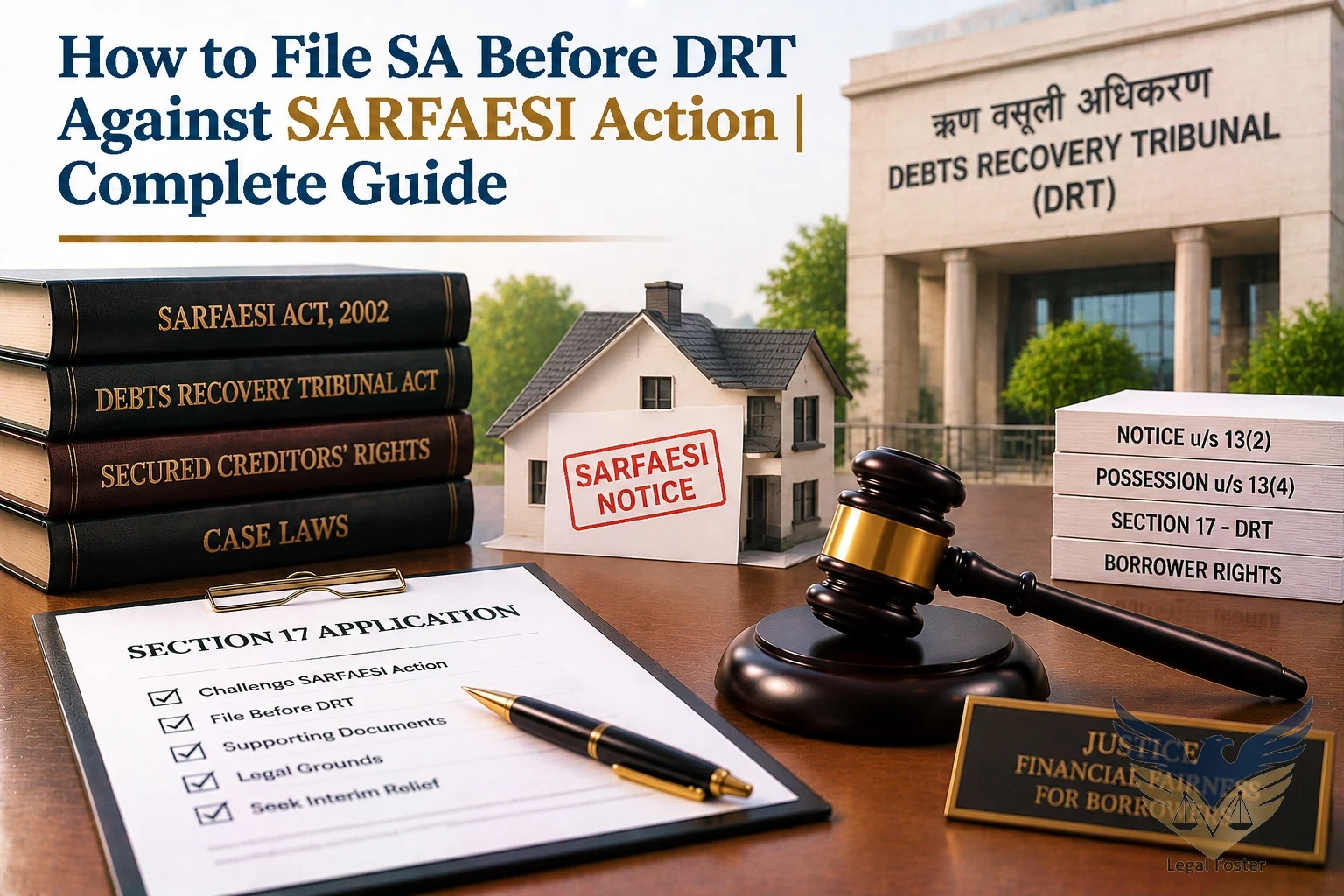
One such powerful remedy is filing of Securitisation Application (“SA”) before Debt Recovery Tribunal (“DRT”). When a secured creditor initiates proceedings under Section 13(4) of SARFAESI Act by taking symbolic/physical possession of secured assets, borrower has a remedy to file an application before DRT under Section 17 of SARFAESI Act which empowers DRT to inquire into whether bank has complied with the provisions of SARFAESI Act and exercised its power properly.
Understanding the SARFAESI process, DRT limits, documents and procedure enables a borrower to decide his course of action. A Loan Settlement Lawyer will determine the merits of the action initiated by the bank, whether any procedure has been violated and what relief can be claimed on the facts.
Why Filing SA Before DRT Matters in India in 2026
Bank Recovery Proceedings have been legalized but borrowers still raise objections against SARFAESI notices & Possession Demands. Majority of the borrowers who approach us from Delhi NCR, Ghaziabad, Noida, Gurugram, Mumbai, Bengaluru, Hyderabad & other business centers are those who have received possession notices/auction letters.
SARFAESI proceedings are initiated against properties & other assets of value. Flats, Office Spaces, Industrial assets, Shops & any other security cannot be saved after the bank initiates recovery proceedings. Delay only makes it difficult for you to claim your rights of ownership & possession when the process has begun & is in latter stages.
Borrowers should understand that DRT does NOT ‘stay’ all bank proceedings. Only issues are heard by the Tribunal to see if the secured creditor has complied with the procedure prescribed by law, exercised his rights in ‘due diligence’ & did not act in an oppressive manner utilizing his powers under SARFAESI.
Thus the borrower can file his grievances before DRT at the earliest stage. The borrower can contest all irregularities & claim compensation as the case may merit.
Quick Facts About SA Filing Before DRT
- The borrower may approach Debt Recovery Tribunal by filing an application under section 17 of SARFAESI Act.
- SA: Securitisation Application filed against the action taken under SARFAESI proceedings.
- Ground for approaching Tribunal: Jurisdiction of DRT is attracted when there is an action taken u/s 13(4) of SARFAESI ACT, 2002.
- DRT looks into whether the action taken by secured creditor was proper.
- SA does not ipso facto enforce stay on proceedings for recovery of debt.
- If required, interim relief has to be sought separately depending upon facts and circumstances of case.
- Loan documents, notice, possession, correspondence will be the crucial evidence.
What Is a Securitisation Application Before DRT?
Securitisation Application means an application made by an aggrieved person before Debt Recovery Tribunal against action taken by secured creditors under SARFAESI ACT, 2002.
In layman terms, SA is made to examine whether possession proceedings/auction process etc initiated by banks/financial institutions against secured assets are legal in nature.
Yes. SARFAESI law allows banks/financial institutions to enforce their security interest without approaching civil court for any decree.
BUT..
While banks/financial institutions have a right to enforce their security interest directly, it does NOT allow them to commit illegal activities.
DRT is the place where borrower can question the bank act of complying with Mandatory provisions of law and whether such recovery measures taken by bank are sustainable in law.
Legal Framework Governing SARFAESI Action and DRT Remedy
The process of filing an SA before DRT has been laid down under the Securitisation and Reconstruction of Financial Assets and Enforcement of Security Interest Act, 2002.
Section 13 of SARFAESI Act
Section 13 authorises secured creditors to enforce their security interest upon the failure of a borrower to discharge his financial obligations.
Firstly, the lender has to send a demand notice under section 13(2) allowing borrower to pay all the dues within a specified time.
On default of the borrower, secured creditor may take action under Section 13(4) by :
- Taking possession of secured assets
- Owning or continuing to manage the business in special circumstances
- Appointing a manager of the secured assets
- Sell the secured property in accordance with law
Section 17 of SARFAESI Act
Section 17 provides a remedy to borrower to file a petition before Debt Recovery Tribunal against the action initiated by secured creditor under Section 13(4).
It examines whether the secured creditor has acted in accordance with the provisions of SARFAESI and the rules made there under.
A borrower has to understand that proceeding before DRT is not a regular civil suit. It’s a special remedy provided with regard to enforcement of security interest.
Who Needs Guidance for Filing SA Before DRT Against SARFAESI Action?
Procedure for initiation of SA before DRT has been prescribed under Securitisation and Reconstruction of Financial Assets and Enforcement of Security Interest Act, 2002.
Section 13 of SARFAESI Act –
Section 13 provides power to secured creditors to enforce security interest if any borrower fails to discharge his financial commitments.
Initially lender has to issue a demand notice under section 13(2) by giving borrower time to discharge all the dues.
On default of the borrower, secured creditor may take action under Section 13(4) by :
- Taking possession of secured assets
- Owning or continuing to manage the business in special circumstances
- Appointing a manager of the secured assets
- Sell the secured property in accordance with law
- Section 17 of SARFAESI Act
Section 17 provides a remedy to the borrower to approach Debt Recovery Tribunal against the action taken by the secured creditor under Section 13(4).
It examines whether the secured creditor has acted in accordance with the provisions of SARFAESI and the rules made there under. One thing that the borrower must keep in mind is that proceeding before DRT is not like any civil suit. It’s a special remedy provided with reference to enforcement of security interest.
Documents Required for Filing SA Before DRT
A paper trail is the king in SARFAESI matters. Documents which are generally required are listed below:
Type of Documents Sample Documents
- Loan Related Documents Loan Agreement, sanction letter, mortgage deeds etc.
- Documents sent by the bank Demand notice, possession notice, auction notice etc.
- Proof of payments made by the borrower Account statements, receipts, transaction details etc.
- Title related documents of the property Title documents, ownership documents, valuation etc.
- Representations / Correspondences Emails, Representations, Settlement offers received etc.
- KYC Documents PAN, Aadhaar, company documents etc.
This is not an exhaustive list and depends on the facts of the case like whether the matter is related to home loan or business loan or mortgage loan or corporate borrowing. A Loan Settlement Lawyer will ensure the documents are collated in a manner that crystallises the position of the borrower in the best possible manner before the Tribunal.
When Should You Consult a Lawyer for SARFAESI and DRT Matters?
Most people contact a lawyer after the bank serves an auction notice. By the time you read this notice, it might be too late to do anything! Approach a lawyer in time, and he can tell you if the SARFAESI process has been followed correctly, and what legal options you have before DRT.
Here’s when you should speak to a Loan Settlement Lawyer:
- Receiving a Section 13(2) demand notice
- Receiving a possession notice on your property
- Bank initiating auction proceedings against you
- The lender may have breached mandatory SARFAESI provisions
- Your security asset is a business or property
- You’re confused about your rights upon receiving recovery notices
- Your representation/objection has been dismissed by the bank
By reviewing your case with a lawyer in time, you can understand what steps you can take next. Whether that be in regard to appearing in DRT proceedings, negotiating loan settlements, having your loan documents reviewed or any other legal recourse available.
How Loan Settlement Lawyer Helps in SARFAESI and DRT Proceedings
SARFAESI issues are related to legal technicalities, banking papers, and timelines. Often, it is not possible for a borrower to assess if bank has acted legally or not unless seen by a professional.
Loan Settlement Attorney can help review the following:
- Loan documents & security agreements
- Bank Notices & Recovery Letters
- Possession & Auction Documents
- Account Statements & Payment History
- Prior settlement discussions
Engaging Counsel means not sending papers in Court. Competent legal counsel would have first understood the borrowers financial position, analyzed the procedure adopted by bank and raised the facts before appropriate forum.
You can get help from us Bank loan Settlement Advocate / Lawyers if you have queries with respect to Banking disputes, loan recoveries and Loan Settlement related matters. We can help you understand your legal position.
Loan Settlement Lawyer Advocate BK Singh guides individuals to assess their SARFAESI issues, DRT proceedings, loan recovery matters and settlement issues.
Frequently Asked Questions
Q1. What is SA before DRT?
Ans. SA means Securitisation Application filed before Debt Recovery Tribunal to challenge the measures taken by secured creditor/bank under SARFAESI ACT.
Q2. When should I file SA before DRT?
Ans. Borrower can file DRT case when he is aggrieved by the action taken under Section 13(4) of SARFAESI ACT.
Q3. Will SA before DRT stop bank auctions?
Ans. SA before DRT will not automatically stay in the bank auction process. You have to apply for Interim relief to stop auction.
Q4. What are the documents required for filing SA?
Ans. Loan Documents, Notices from bank, Notice of possession, Notice of auction, Bank statement showing evidence of payment, Documents of property.
Q5. Can borrower challenge Notice of possession before DRT?
Ans. Aggrieved borrowers can approach Debt Recovery Tribunal to take action against bank measures taken under SARFAESI ACT on merits of the case.
Q6. Is DRT same as Civil Court?
Ans. No. DRT is a separate forum established to expeditiously settle the cases related to debts recovery & SARFAESI ACT.
Q7. Can Guarantors file SA against banks under SARFAESI ACT?
Ans. A guarantor can file a suit when his rights are affected due to the action initiated by bank under SARFAESI ACT against properties which he has interest in as a secured creditor.
Q8. Can we settle loan if bank has already initiated SARFAESI process?
Ans. Yes, a loan can be settled if bank has initiated SARFAESI process against you as it depends on the policy of the lender and facts of the case.
Q9. What if I don't respond to SARFAESI notices?
Ans. If you don’t respond to SARFAESI notices then bank will initiate measures to recover the loan by taking possession of your property and going for auction.
Q10. Why should you consult a Loan Settlement Lawyer before filing SA?
Ans. Loan settlement lawyer will review your documents and will suggest to you what is the best course of action you can take against the bank as per the facts of your case. He will further help you to file a case at DRT.
Final Thoughts
If you get a SARFAESI notice you are naturally going to be concerned. More so if your home or office is at risk of being taken away from you. However there are borrower rights under SARFAESI. The Act provides remedies which allow you to examine the propriety of the recovery. Borrowers lose valuable time because they hesitate to speak to a lawyer. They think that the bank cannot do anything illegal. If you are aware of your rights from the start you will be able to make better decisions. You also save yourself from losing any legal remedies you might have had.Although there are numerous lawyers who can advise you on matters relating to SARFAESI notices, DRT proceedings, loan recovery related issues. You can speak to Advocate BK Singh (Loan Settlement Lawyer) and discuss your legal concerns.
Author Bio
Advocate BK Singh (Loan Settlement Lawyer) practices Law. Loan settlement, SARFAESI cases, DRT proceedings, Banking Laws and Loan are his domain of expertise. Advocate BK Singh knows how the legal aspect of finance industry works, and knows the Recovery process as well. He assists people, entrepreneurs, borrowers by answering their legal questions regarding loan defaults or loan settlements. He studies the matter and provides the legal advice to the concerned individual according to the documents shared with him, the facts of the case and laws of India.