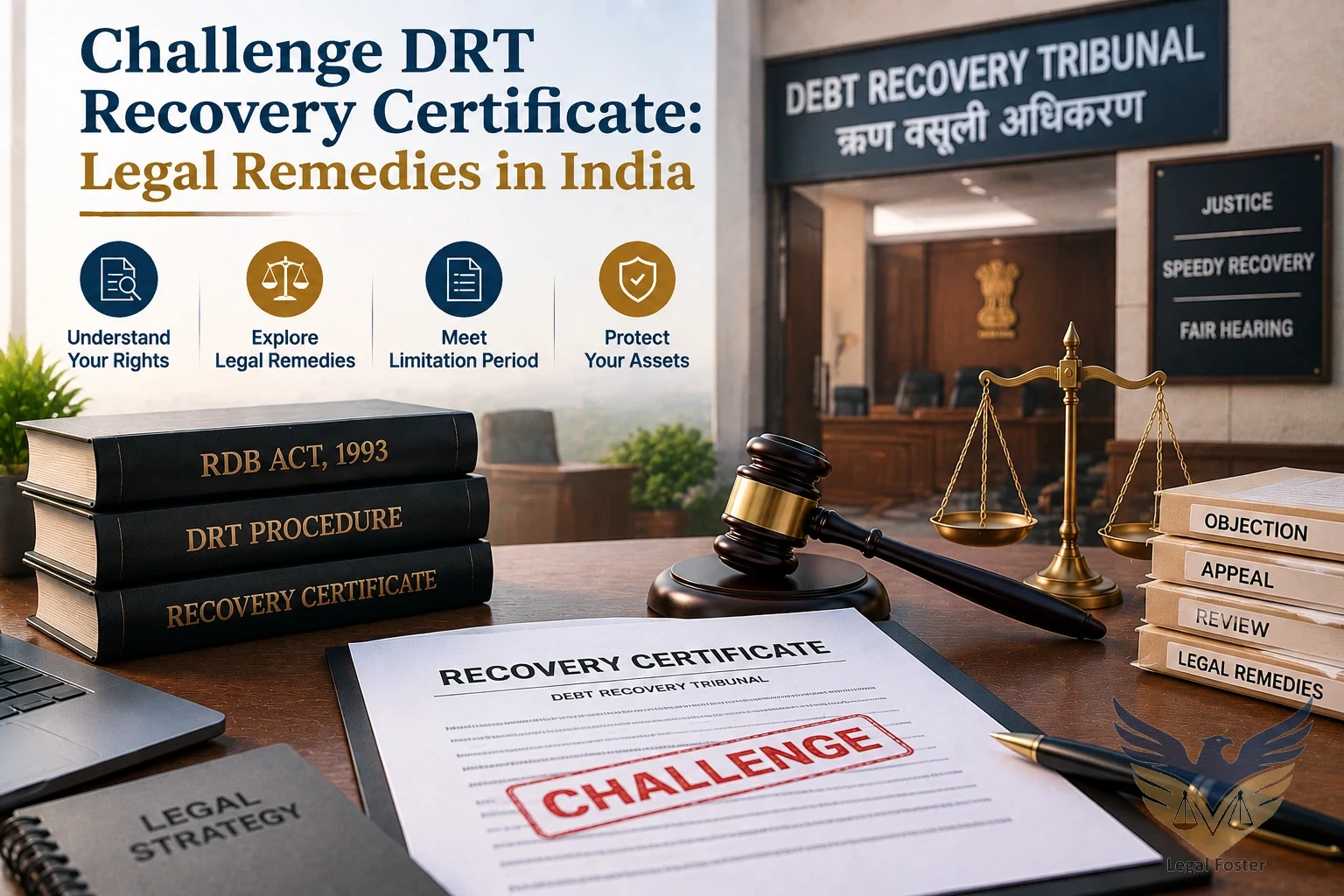
You can go from litigation to bank recovery matters in the blink of an eye. A bank recovery matter can quickly lead to attachment, sale, recovery order proceedings or else enforcement proceedings before the Recovery Officer. Oftentimes the very first question we get asked by a borrower, guarantor or business owner is one of the easiest questions to answer: Can a DRT recovery certificate still be challenged?
Yes. However, the legal remedy depends on what order is being challenged. A recovery certificate issued by the Presiding Officer (the DRT) under the Recovery of Debts and Bankruptcy Act, 1993 (RDB Act) empowers the Recovery Officer to recover the amount of debt as determined by him, in the manner provided in the RDB Act. Typically, the Recovery Officer is not the place to challenge the validity of the underlying debt certificate.
Notice that distinction. If someone is challenging the underlying DRT order, then appeal under Section 20 of RDB Act is a remedy to consider. But if someone is aggrieved by a separate order of the Recovery Officer, then there is a remedy under Section 30 which lies before the very same DRT. One also needs to keep an eye on limitation periods and other statutory requirements.
At BK Singh Advocate, when clients come to us with bank recovery matters, our first question is rarely whether what the bank is asking for is right or wrong. We review the file: DRT order/recovery certificate, loan account, pleadings, evidence, notices, subsequent orders of recovery etc. From those documents we help you understand what legal remedy is actually available to you.
For borrowers dealing with notices or formal recovery communications, timely assistance with a DRT notice and drafting lawyer can help in understanding the documents and the stage of the proceedings.
Need More Reasons To Challenge a Recovery Certificate?
Issuance of a recovery certificate can have financial consequences that reach far beyond the two cities in dispute. Attachments of property, initiation of sale related proceedings or other statutory recovery processes can lead to commercial pressure that cannot be reversed easily after recovery proceedings have been initiated.
That’s why time is of the essence when you approach BK Singh Advocate. Business owners in Noida, Guarantors in Ghaziabad or maybe even borrowers with property in Gurugram might find that their matter is no longer at the DRT but has moved into the recovery phase.
Just like the legal remedy depends on the order at issue, the available action depends on the stage of the dispute. Only a lawyer can evaluate your record and advise you on whether you should appeal the order, file an application, request a stay or take some other course of action.
BK Singh Advocate represents borrowers, guarantors, companies and businesses challenged with DRT and DRAT litigation all across Delhi NCR.
Where immediate protection is being considered, borrowers may also review the DRT Interim Relief Lawyer service for matters involving interim protection and recovery-related proceedings.
Quick Facts About DRT Recovery Certificates
- DRT can pass recovery certificate along with its final order under Section 19(22) of RDB Act.
- The Recovery Officer shall recover such amount due by any mode specified under Section 25.
- No objection as to correctness of amount specified in the certificate shall be allowed before Recovery Officer under Section 26.
- Appeal against order passed by DRT lies before Appellate Tribunal as per provision of Section 20 read with requirements of statute.
- Appeal against order of Recovery Officer shall lie before DRT by aggrieved person under Section 30.
- Attachment and sale of movable and immovable property can be part of Recovery Proceedings.
- Appeal against recovery certificate Order would have to be filed before Original Tribunal (i.e. before DRT ). If you wish to raise any issue against Order passed by Recovery Officer then appeal against his order would have to be filed before Appellate Tribunal (i.e DRAT).
For matters involving an appeal from a DRT order, borrowers can review the DRAT Lawyer and Legal Representation service page for additional information about appellate proceedings.
What Grounds Can Be Reviewed?
The facts would depend on record. Some of the issues which legal review would consider are whether DRT had considered all material documents on record; whether amount claimed was correctly arrived at; whether material objections were considered; and whether order is supported by pleadings as well as evidence placed before Tribunal.
Errors in computation of interest, payments received, account statements, guarantee liability etc. ambiguity in contractual documents or misidentification of parties/ liability of parties are some other areas where queries can be raised.
BK Singh Advocate explains that before making claims like bank has calculated wrong amount etc. it is important to review documents. Merely making generalized statement is no use. It would be easier to pinpoint the particular account entry or document or finding which is in dispute.
What Documents To Collect?
The borrower / guarantor should keep the entire litigation/banking file and show the same to his lawyers before seeking any advice. Some of the useful documents are:
- DRT Final Order and Certificate of Recovery
- Copy of Original Application/Pleadings filed before DRT
- Written statement filed along with documents
- Loan sanction letter & Facility Agreement
- Guarantee
- Mortgage/Charge
- Account Statements
- Receipts/payments & Correspondence with Bank
- Notices served by bank/Recovery Officer
- Orders passed during recovery
- Documents relating to attachment / sale etc.
- Previous offers made & correspondence
- Documents which show payments made/restructuring done/freshening up of accounts etc.
BK Singh Advocate can review these documents and help you point out relevant documents on which the suggested remedy would be based.
If the recovery matter began with a bank notice, the Bank Recovery Notice Lawyer service can also be relevant to understanding the notice, documents and recovery stage.
When To Hire DRT Lawyer?
Get legal advice first when you become aware of the recovery certificate or subsequent Recovery Order especially when limitation period would start running.
If Recovery Officer has passed attachment- in -property order/ order for sale and steps have already been initiated towards sale of property /business asset or your client has just received an order from Recovery Officer and he/ she would now like to appeal against the same then such matters are time critical and you should immediately seek legal advice. Clients should also seek legal advice when they feel that certain charges have been added to the debt figure which have not been properly explained to him, payments made are not reflected in their accounts, there is dispute regarding the validity of a guarantee or if you any other important document which was not considered by Recovery Officer.
Waiting till a sale date is fixed would severely limit your options. BK Singh Advocate would first review the record and help you understand whether you can file an appeal, an application, request an interim relief, negotiate a settlement or some other remedy.
Where settlement is being considered alongside recovery proceedings, the DRT Loan Settlement service can be relevant to borrowers evaluating settlement-related options.
How Can BK Singh Advocate Help With Recovery Certificate?
Advocate BK Singh works on cases where Debt Recovery Tribunal (DRT) and Debt Recovery Appellate Tribunal (DRAT) are involved. Borrowers, Guarantor or company/ business person can consult Advocate BK Singh. The order passed by DRT or Recovery certificate issued by it or proceedings initiated by Recovery Officer or all of the above along with account related documents can be reviewed. Relevant provisions of law would also be considered. Further if appellate remedy is available then BK Singh Advocate would evaluate the merits of the appeal along with good grounds and necessary documents.
BK Singh Advocate also helps clients where DRT appeals are disputed as well as orders passed by Recovery Officers are questioned. We represent borrowers /guarantors in disputes related to bank recovery from our offices in Delhi, New Delhi, Noida, Greater Noida, Ghaziabad, Gurugram, Faridabad, Meerut and other cities in India.
Brochure of legal services currently offered on DRT matters also covers DRAT appeals and representation. Appealing DRT Orders and your queries regarding interim relief from DRAT are also addressed. DRAT Appeal Lawyer in Delhi
For business borrowers and MSMEs facing bank recovery pressure, the MSME Loan Recovery Lawyer service is also relevant where the recovery dispute affects business assets, accounts or loan-related obligations.
Frequently Asked Questions
1. Can I challenge Recovery Certificate passed by DRT?
Yes. You can and should analyze whether you have legal grounds to challenge a recovery certificate. However the remedy you seek would depend on nature of grievance. The remedy to challenge underlying order of DRT is different from the remedy to challenge a subsequent Recovery Officer’s Order.
2. Can I appeal against recovery certificate amount before Recovery Officer?
As per Section 26, defendant is barred from raising any objection before Recovery Officer regarding correctness of amount due under recovery certificate. You would have to explore alternate remedy and file the same before appropriate forum which has jurisdiction to hear the dispute.
3. What happens if DRT issues recovery certificate?
Once DRT issues recovery certificate, such certificate will be sent to Recovery Officer for recovery and he may recover the due amount by modes prescribed under Section 25 including attachment and sale of properties where applicable.
4. Can I appeal against an order of DRT?
Yes. As per Section 20, appeal is a remedy available against an order of Debt Recovery Tribunal or an order which is deemed to be ordered by DRT. Appellate forum would entertain the appeal subject to satisfying statutory conditions and limitation requirements.
5. Can I appeal against Recovery Officer’s order?
Yes. As per Section 30, parties have right to appeal against an order passed by Recovery Officer to Appellate Authority, in this case to Recovery Officer himself.
6. Will I get automatic stay if I appeal the order?
No. Mere filing of a proceeding should not be treated as automatic stay. If you require the court to grant a stay, then you would have to determine what type of interim relief you want from the court and file the same in a court which has jurisdiction to hear your matter.
7. Can I challenge recovery as Guarantor?
Guarantors would have various legal options depending upon the guarantee given by them, the underlying debt, pleadings filed, findings of DRT and subsequent action taken by Recovery Officer. Each case would have to be individually evaluated based on facts.
Borrowers or guarantors dealing specifically with guarantee-related recovery exposure may also review the DRT Guarantor Defence Lawyer service.
8. Can a borrower company challenge Recovery certificate?
Yes. Borrower companies would have various legal options depending on order passed by DRT, recovery proceedings initiated by Recovery Officer and laws applicable in the particular case. Company should first make sure that they have preserved DRT record and bank record before deciding on what course of action they would like to take.
9. How much time do I have to challenge Recovery Officer’s order?
As per Section 30, a party has 30 days to file an appeal from the date on which a copy of order is supplied to them by Recovery Officer. You would have to keep a check on limitation and ensure that limitation is not an issue in your case.
10. Why should you hire BK Singh Advocate to review your case?
BK Singh Advocate specializes in cases involving DRT and DRAT . We help clients who have disputes related to bank recovery, recovery certificate, Recovery Officer proceedings and subsequent appeals. If you consult us early, we would help you determine the correct forum to file your dispute, help you identify relevant documents, limitation issues and potential legal remedies without prejudicing your matter.
Borrowers dealing with property sale or auction-related recovery pressure can also review the Property Auction Stay Lawyer service where a secured property is at risk of auction.
Conclusion
Recovery certificates issued by Debt Recovery Tribunal should not be ignored but likewise their legal effect should not be presumed to foreclose every remedy either. First determine which order you want to appeal. Second review limitation, documents and statutory remedy. In particular, due to Section 26, we would refrain from using Recovery Officer as forum to challenge validity of certificate. If you are a borrower, guarantor or company located in Delhi NCR ( Delhi, Noida, Ghaziabad,Gurugram,Faridabad) and have just received a recovery certificate, order from Recovery Officer, attachment notice or notice regarding sale of your property then you should immediately seek legal advice. BK Singh Advocate can review such documents and inform you of the courses of action available to you under law. We would also help you understand such options based on the facts of your case.
For clients specifically seeking DRT legal assistance in the capital region, the DRT Lawyer Delhi service page provides information relevant to DRT, DRAT and SARFAESI-related matters.
Clients dealing with recovery matters in the wider Gurgaon/Delhi NCR region can also review the DRT Lawyer Gurgaon service page for related DRT, SARFAESI, possession, auction, guarantor and appeal matters.