How Can Bank Statement Analysis Strengthen Your DRT Defence?
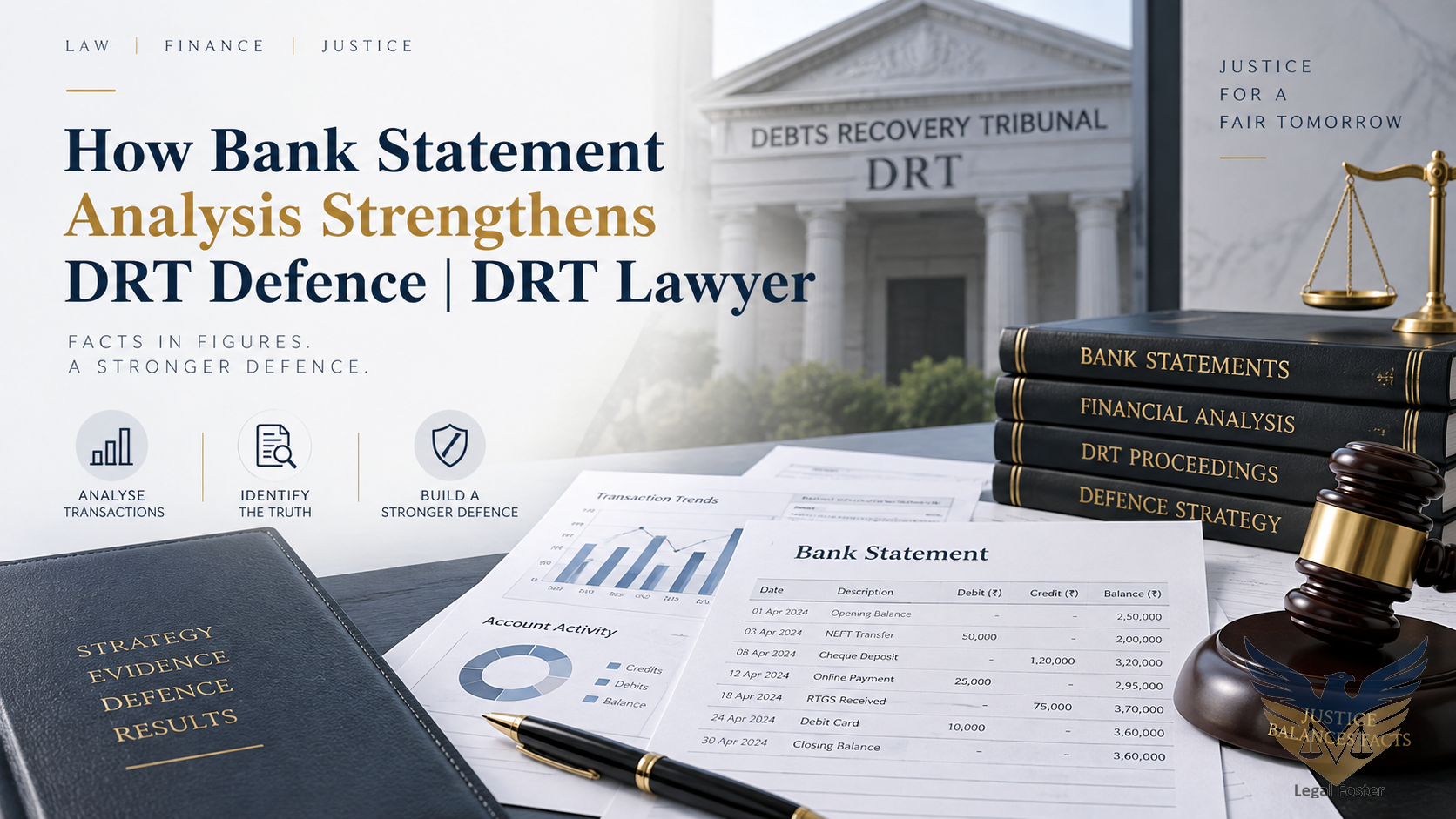
A bank account statement may just be one of the very first documents that can help you out during a DRT proceeding. Loan borrowers tend to focus on what their outstanding amount is as per the bank’s information but do not realize how the statement clearly shows all repayments made, how interest was applied, where charges were deducted, what adjustments/credits were made and what exactly got entered in your bank accounts.
Preparing yourself by going through your bank account statement before filing defence before Debt Recovery Tribunal (DRT) will give you clarity on whether the amount being claimed against you is really true as per your account’s position. There might be errors in the accounting entries done by your bank, there might be money which was not credited into your account or interest could have been charged on incorrect amounts or even entries for certain charges that you weren’t aware of. If there are any discrepancies in your account, they can affect your legal standing as a borrower.
DRT Lawyers can go through each of your bank statements, loan account information and transaction history in order to highlight any potential errors within the recovery notice. BK Singh Advocate performs loan recovery document analysis for borrowers and help draft appropriate response against bank claim as per facts of the case.
Go through your bank statement not because you want to avoid paying what you owe but because you want to know if what they are saying about you in front of the Tribunal is actually true and reflected in your bank statements. When you build your defence based on the truth rather than assumptions, you give yourself a better chance.
If you’re a borrower located in Delhi NCR, Noida, Greater Noida, Ghaziabad, Gurugram or even Bengaluru, Mumbai, Hyderabad, Chennai, Kolkata or any other city in India facing a recovery lawsuit, make sure you know what your statements say before DRT hearings start taking place. You will understand what your lawyer is talking about when he begins to discuss your case if you take some time to review your documents.
Importance of Bank Statement Audit before filing answer to DRT
Loan Account Audit refers to the bank account statement verification process which intends to understand the funds flow and validate lenders claim. It includes cross checking of payments made, interest charged, penalties imposed, adjustments entered and calculation of outstanding balances.
Debtors see the big figures which are mentioned in bank notice/recovery application and accept them. But, the outstanding amount is result of various accounting entries. Sometimes tiny errors goes unnoticed which later creates unnecessary hassles.
Documents are of great value in DRT matters. The Tribunal will go through pleadings, loan documents/accounts, account statements, notices served and evidence produced by parties. Going through your statements help borrower understand facts that needs to be explained.
Why do Borrowers in India need to Review Bank Statements in 2026
Clients have understood the importance of loan documentation and financial statement review only when they have been thrown into bank recovery lawsuits. Whenever businesses, property owners or individuals struggle to pay their EMIs, their loan accounts are classified as distressed loans. Banks and financial institutions initiate Recovery proceedings.
Our Advocates from Delhi, New Delhi, Noida, Greater Noida, Ghaziabad hear from borrowers when they receive legal notices under SARFAESI or Debt Recovery Tribunal. This usually is the stage where clients are confused and lost.
Bank statements consist of various technical entries such as debit interest, overdue charges, lawyer’s fees, adjustments etc. If no analysis is done by the borrower, it will be difficult for borrowers to understand whether what the bank is asking for is an accurate calculation of all your transactions.
BK Singh Advocate educates borrowers on the importance of going through their financial statements before you are summoned to appear before Debt Recovery Tribunal. Each case is subjective and depends on type of loan, supporting documents, transactions made & facts.
Important Facts about Bank Statement Review in DRT Proceedings
- Loan documents/accounts are standard documents produced during DRT hearings.
- Bank statements are produced to show the payment history and funds movement.
- SARFAESI recovery can consists of enforcing legal actions before DRT depending on the case.
- If your bank made wrong accounting entries, you’ll have to explain those to the judge.
- Review Loan documents/ notices along with Bank statements.
- Try building your defence with whatever documents & facts you have before going to DRT.
- Documents Associated with Loan Accounts
A bank statement alone cannot speak the truth about your loan account. There could be associated documents which can help you understand the timeline of your account as well as your legal standing.
Documents which you must review include:
- Loan sanction papers/agreement
- Loan Sanction papers/Agreement
- EMI Payment Schedules
- Bank issued account statements
- Proofs of payment/receipts given
- Notice/recovery messages served by bank
- SARFAESI notices (If issued)
- Documents pledged as security (if secured loan)
- Correspondence of any settlement (if any) was done.
Borrowers should always have access to all original documents and communicate with bank at first sight of difficulty. You don’t want to be at a borrowers disadvantage when trying to explain your situation to the judge because you do not have the required documents to back up your statement.
When to consult a Lawyer to Review facts before DRT hearing?
You should consult a lawyer if you receive recovery notices, if you have received a notice of action under SARFAESI, if you receive a communication from Debt Recovery Tribunal about a filed case against you or if you’ve noticed some discrepancies when you compare your account records to what your bank statement is showing.
You will have ample time to review your documents if you consult an lawyer in the beginning. You may jeopardize your time to respond to the bank if you look for help at the eleventh hour. BK Singh Advocate can assist you by explaining how the DRT process works, what documents you have received from the bank for recovery and what kind of issues you may be facing due to the bank’s claim.
A Lawyer can understand whether your issue is due to calculation errors, incorrect documentation or procedural stage or something completely different. By explaining your side of the story, a lawyer can help you understand your standing.
How Can A DRT Lawyer help you in understanding your bank account standings?
Your DRT Lawyer will analyse each of your loan documents and bank statement in order to analyse your current standing. He will go through every document you have, note potential issues that you would like to be raised and then present those facts to the Debt Recovery Tribunal.
BK Singh Advocate can assist you with the following:
- Loan Recovery Problems started by Bank
- Receive notice of SARFAESI Application
- DRT Case filed or Answer to be filed
- Analyse Loan Documents
- Understand your standing as a borrower in recovery proceedings
- Document Review will not guarantee you anything as every case is fact dependent and based on Judges interpretation. What it will do is help you get your documents in order and hire a lawyer who can represent you and your situation as a borrower in front of the judge.
If you need legal assistance or advice with regard to any DRT issues, you can contact us and speak to BK Singh about the facts of your case.
FAQs
1. Why does a borrower need to audit bank statement before filing defence in DRT?
Ans: Bank account statement audit helps the borrower understand loan repayments, calculation of interest, outstanding dues claimed by banks and any other charges applied to the account. Therefore, borrowers are advised to check bank account statement before filing defence at DRT.
2. Do wrong bank entries affect case in DRT?
Ans: Yes, wrong accounting entri es by bank can affect your case in DRT. But it all depends on the facts, evidence and loan agreement how it can affect you.
3. What records are required for bank account statement audit?
Ans: Loan agreement, account statement, loan account schedule, notices received and proof of payments are helpful to analyse loan accounts.
4. Is loan account statement audit necessary for SARFAESI?
Ans: Yes, It is necessary for borrowers to analyse the financial statements and understand how much the lender is claiming against them.
5. Will BK Singh help me analyze bank documents for DRT hearings?
Ans: Yes, BK Singh can guide borrowers to understand their recovery related issues and what legal courses of action can be taken by reviewing the relevant documents. Your options would be based on facts pertaining to your case.
6. Will my loan recovery halt if I analyze my bank statement?
Ans: No. Analyzing your bank statement will not stop your loan from being recovered. But analyzing your bank statement you can understand the issues involved and raise your arguments legally before the Tribunal. Decision would be based on facts and DRT hearing.
7. Can I get my bank records analyzed at any stage?
Ans: Borrowers can get their bank records analyzed after they receive recovery notices, before filing their answers or defense in DRT or if you find mismatched information when you compare your account records and what your bank is claiming.
8. Can businessman also analyse his loan account statement before DRT?
Ans: Yes. Businesses and individual borrowers can analyse their loan account statements.
9. Does every mistake in bank calculations becomes illegal?
Ans: No Every discrepancy is not considered illegal. You need to review the calculations mentioned in your loan agreements and what entries have been made by the bank.
10. What can DRT lawyers do for me when I am facing loan recovery?
Ans: DRT Lawyers can review your documents, help you understand the legal process and represent you in front of Debt Recovery Tribunal.
Conclusion
Reviewing Bank Account Statements before filing answer to DRT will help borrowers understand how the lender has arrived at the recovery amount. A default notice or demand letter does not specify various details which your bank documents might hold.
Loan borrowers can prepare for DRT hearings by understanding what facts they have and what documents they can produce in order to support their stance.
No matter if the issue is due to incorrect calculations, missing documents or wrongful recoveries each case is unique and must be evaluated separately.
BK Singh Advocate provides legal help for DRT related disputes, SARFAESI proceedings and all banking matters across India. Contact us to receive professional advice to understand your position.