Consumer Law
Consumer Case Compensation in India: How Much Can You Claim and How Long Can It Take?
A practical guide to compensation in consumer disputes, the evidence that can support a claim, applicable limitation periods, Consumer Commission timelines and the factors that can affect the final relief.
Your microwave breaks down after a week. Your flat developer keeps delaying possession. Your insurer rejects a legitimate claim, or an online seller refuses to refund money for products that were never delivered. The financial loss matters, but the inconvenience, uncertainty and frustration can be equally serious.
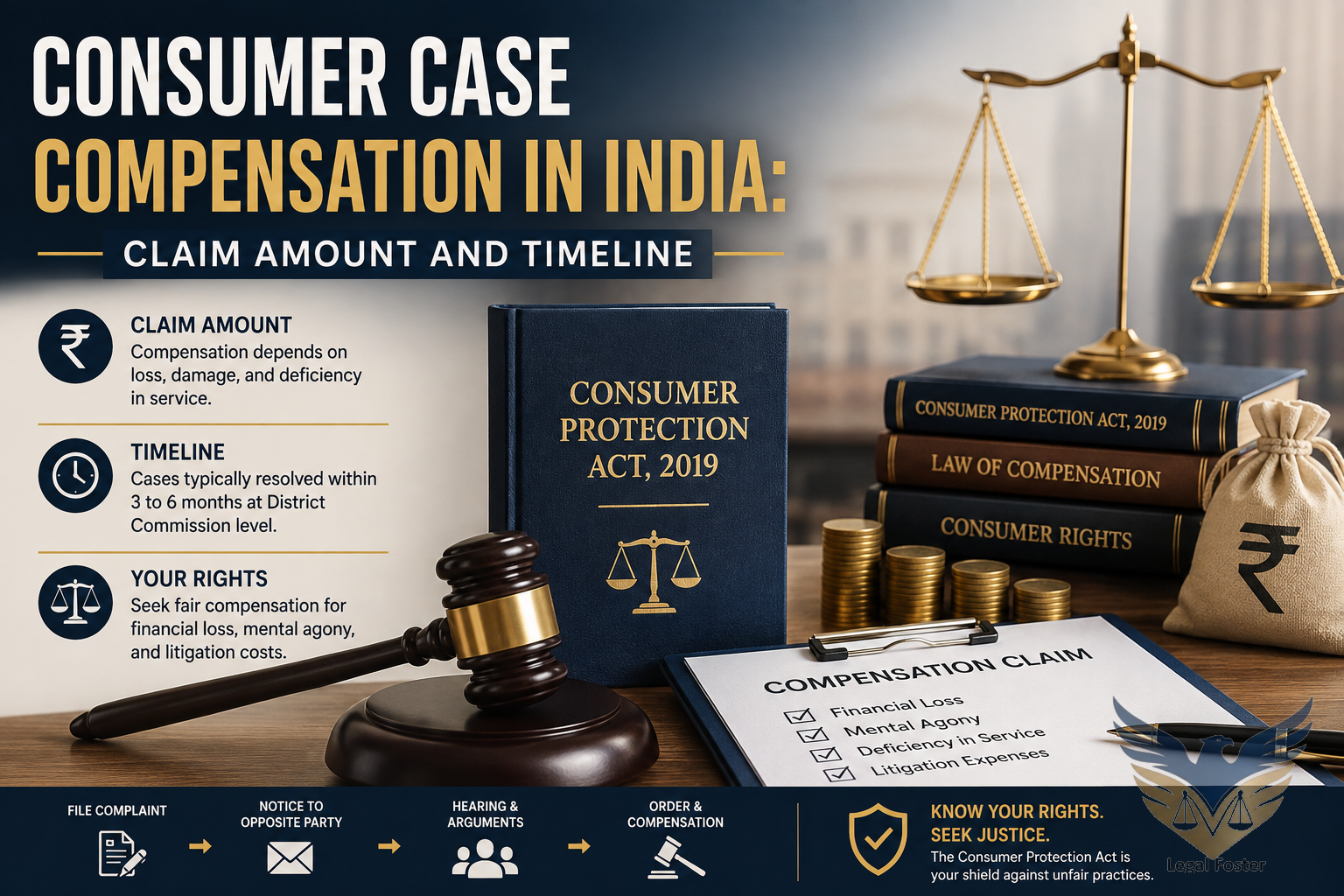
When it comes to seeking consumer case compensation in India, two questions arise repeatedly: How much compensation can I claim? and how long will my consumer case take? There is no universal compensation table that fixes the amount payable in every dispute. Likewise, statutory disposal periods do not always reflect the actual time a contested matter may remain pending.
Consumer compensation may include monetary or remedial relief for defective goods, deficiency in service, unfair trade practices, negligence or other conduct causing harm to the consumer. Depending on the facts and evidence, relief may include refund, interest, compensation for actual loss, litigation costs and reasonable compensation for harassment or mental suffering.
Inflated claims can weaken an otherwise genuine grievance. A sustainable claim normally identifies what was paid, what went wrong, what financial or other harm followed and why the compensation demanded has a logical connection with the evidence.
Consumers considering formal proceedings may also review the consumer litigation services at NCDRC Lawyers before deciding how their dispute should be presented.
Table of Contents
- Why Consumer Compensation Matters in 2026
- What Decides the Compensation Amount?
- Under Which Act Can Compensation Be Claimed?
- Documents Supporting a Compensation Claim
- Why Consumer Cases Can Take Longer
- When to Consult a Consumer Lawyer
- How NCDRC Lawyers and BK Singh Advocate Can Help
- Frequently Asked Questions
Why Consumer Compensation Matters Across India in 2026
Consumer disputes today extend far beyond faulty household appliances. Delayed builder possession, rejected insurance claims, medical negligence, banking disputes, cancelled travel bookings, fraudulent online shopping transactions and defective vehicles can all result in significant financial and personal consequences.
Although the governing consumer law is applicable across India, actual timelines may vary between Delhi, Noida, Ghaziabad, Gurugram, Faridabad, Mumbai, Bengaluru, Jaipur, Lucknow and other cities because of differences in listing practices, service of notice, evidence, case load and local functioning of the Consumer Commissions.
Territorial jurisdiction also requires attention. Depending upon the statutory requirements, a consumer may be able to institute proceedings where he or she resides or personally works for gain. Pecuniary jurisdiction and the amount paid as consideration must also be examined before selecting the appropriate Commission.
Limitation is another important consideration. Section 69 of the Consumer Protection Act, 2019 generally prescribes a period of two years from the date on which the cause of action arises. A delayed complaint may require a specific request for condonation supported by sufficient reasons.
Quick Facts About Consumer Compensation
- There is no one-size-fits-all calculator for consumer compensation.
- The amount should have a reasonable connection with the evidence, actual loss and seriousness of the deficiency or wrongdoing.
- Compensation for mental harassment is not automatically awarded merely because it is claimed.
- Punitive or aggravated damages depend upon the circumstances of the particular case.
- The statute contemplates disposal within three months in certain matters and five months where analysis or testing is required.
- Actual proceedings may take longer because of service issues, evidence, adjournments, applications, appeals and execution.
What Decides How Much Compensation You Can Get?
The amount paid, actual loss proved, seriousness of the deficiency, extent of harm, duration of harassment and quality of evidence may all influence the final relief.
Compensation is intended to address genuine harm. It is not meant to create an unexplained financial windfall.
Reliefs That May Be Claimed
Causation remains important. An opposite party is not necessarily responsible for every loss suffered after something goes wrong. The claimed loss normally needs a sufficiently close connection with the defect, breach or deficiency relied upon.
Under Which Act Can Consumers Claim Compensation?
The principal legislation is the Consumer Protection Act, 2019. Section 39 provides for various forms of relief that may be granted by the District Commission, including removal of defects, replacement, refund and compensation where justified.
Chapter VI of the Act also contains provisions dealing with product liability. Depending on the statutory conditions, proceedings may involve manufacturers, sellers or service providers.
A very high compensation demand does not by itself permit a consumer to directly institute an original complaint before the National Consumer Disputes Redressal Commission. Jurisdiction has to be assessed under the applicable pecuniary and statutory framework.
The date of cause of action is equally important because limitation may begin to run from that date. Consumers dealing with such issues can also read about consumer cases and appellate remedies .
What Documents Support a Higher Compensation Claim?
Documents help convert inconvenience into a legally identifiable claim. They can demonstrate the transaction, contractual promise, deficiency, subsequent loss and the steps taken by the consumer.
Edited screenshots or isolated messages can invite questions about context or authenticity. Oral arrangements can also be difficult to establish unless supported by other surrounding documents.
Why Can a Consumer Case Take Longer Than Expected?
Consumer law emphasises expeditious disposal. Broadly, complaints are intended to be decided within three months from service of notice where testing or analysis is not required, and within five months where analysis of goods is required.
Three Months or Five Months Does Not Always Mean Final Disposal
These statutory periods should not automatically be treated as guaranteed dates on which every consumer complaint will conclude.
The actual duration may depend on service of notice, technical evidence, vacancies, adjournments, applications, appeals, complexity of the dispute and the conduct of the parties.
A straightforward documentary refund dispute may progress faster than a medical negligence claim, construction defect case or product testing dispute involving expert evidence.
Appeals can add additional time. Even after a favourable order, execution proceedings may become necessary if the opposite party does not voluntarily comply.
Service of notice is also important because the statutory period is connected with service on the opposite party rather than merely the date on which the complaint was filed or uploaded.
Online filing can simplify access to the system, but filing a consumer complaint online does not by itself guarantee faster disposal.
When Should You Consult a Consumer Lawyer?
Legal advice may become especially relevant when significant money is involved, limitation is approaching, liability is disputed or technical evidence is likely to be required.
Legal Review May Be Important Where:
- A developer has failed to deliver possession or refund money.
- An insurance company has rejected a substantial claim.
- Medical negligence or personal injury is alleged.
- The seller disputes the transaction itself.
- Technical testing or expert analysis is required.
- Several consumers have been affected by similar conduct.
- Your complaint has already been dismissed.
- You are considering an appeal, revision or execution proceeding.
Questions concerning commercial purpose, arbitration clauses, parallel proceedings, consumer status and jurisdiction can also significantly affect the maintainability and structure of a complaint.
How NCDRC Lawyers and BK Singh Advocate Can Help
Consumer law matters handled through NCDRC Lawyers may include refund claims, deficiency in service, unfair trade practices, builder and property disputes, insurance disputes, medical negligence, defective goods, appeals and execution proceedings.
Assistance may include document review, jurisdiction analysis, assessment of compensation, preparation of complaints, replies, affidavits, appearances and proceedings arising after an order has been passed.
A compensation claim should ordinarily be reasonable, proportionate and supported by evidence. No credible legal professional can guarantee either the exact amount that will be awarded or the date on which proceedings will finally conclude.
Frequently Asked Questions
1. What is the maximum relief I can claim in a consumer case?
There is no universal formula fixing the relief available in every ordinary consumer dispute. Refund, interest, compensation for proven monetary loss, reasonable compensation for harassment and litigation costs may be claimed where they have a factual and evidentiary basis.
2. Can I claim compensation higher than the value of the goods or service?
A claim may exceed the original purchase amount where additional financial loss, injury, prolonged harassment or other consequences can be established. Merely demanding a higher figure does not mean the Consumer Commission will automatically award it.
3. Is compensation for mental agony given automatically?
No. The nature of the deficiency, duration of the problem, conduct of the opposite party and surrounding evidence may all be considered. A bare statement of mental trauma may not be sufficient to justify substantial compensation.
4. How long can a consumer case take?
A consumer case may take a few months or considerably longer depending on its complexity. Service of notice, technical evidence, adjournments, forum delays, appeals and execution proceedings can all affect the total duration.
5. Must Consumer Commissions dispose of cases within three or five months?
The statute seeks expeditious disposal and provides target periods depending on whether testing or analysis is required. These periods should not be understood as an absolute guarantee that every proceeding will conclude within that exact period.
6. Which Consumer Commission should I approach?
The appropriate Commission depends upon the applicable pecuniary jurisdiction rules, consideration paid, territorial jurisdiction and the nature of the proceeding. These factors should be checked under the current legal framework before filing.
7. Can I seek refund, interest and litigation costs together?
These forms of relief can be sought together where the facts justify them. The Consumer Commission ultimately decides which remedies are appropriate, whether interest should be granted and what costs are reasonable.
8. What evidence can support a mental harassment claim?
Emails, unanswered complaints, dates of repeated visits, relevant medical documents, proof of measurable loss and the duration of the problem may provide context. The quality of the evidence remains important.
9. How long do I have to file a consumer complaint?
Consumer complaints are generally required to be instituted within two years from the date on which the cause of action arose. A delayed complaint may require an application seeking condonation of delay supported by sufficient reasons.
10. What happens if the company does not pay the compensation ordered?
Where an opposite party does not comply voluntarily with a Consumer Commission's order, the successful consumer may need to initiate appropriate execution proceedings for enforcement of the relief granted.
Final Thoughts
Consumer compensation should be based on proof, reasonableness and a clear connection between the wrongful conduct and the loss claimed. A well-structured claim distinguishes the amount paid, interest, actual financial loss, harassment and litigation costs rather than presenting an unexplained lump-sum demand.
The three-month and five-month periods found in the statutory framework should not automatically be treated as guaranteed dates of final disposal. Notice problems, missing evidence, technical issues, applications and appeals may substantially extend proceedings.
Before accepting an inadequate offer or presenting an exaggerated demand, the documents, limitation position, jurisdiction and evidentiary basis of the claim should be carefully examined.
Need to Review a Consumer Compensation Claim?
Review the transaction documents, loss suffered, limitation, jurisdiction and available evidence before deciding the compensation and relief to claim before the appropriate Consumer Commission.