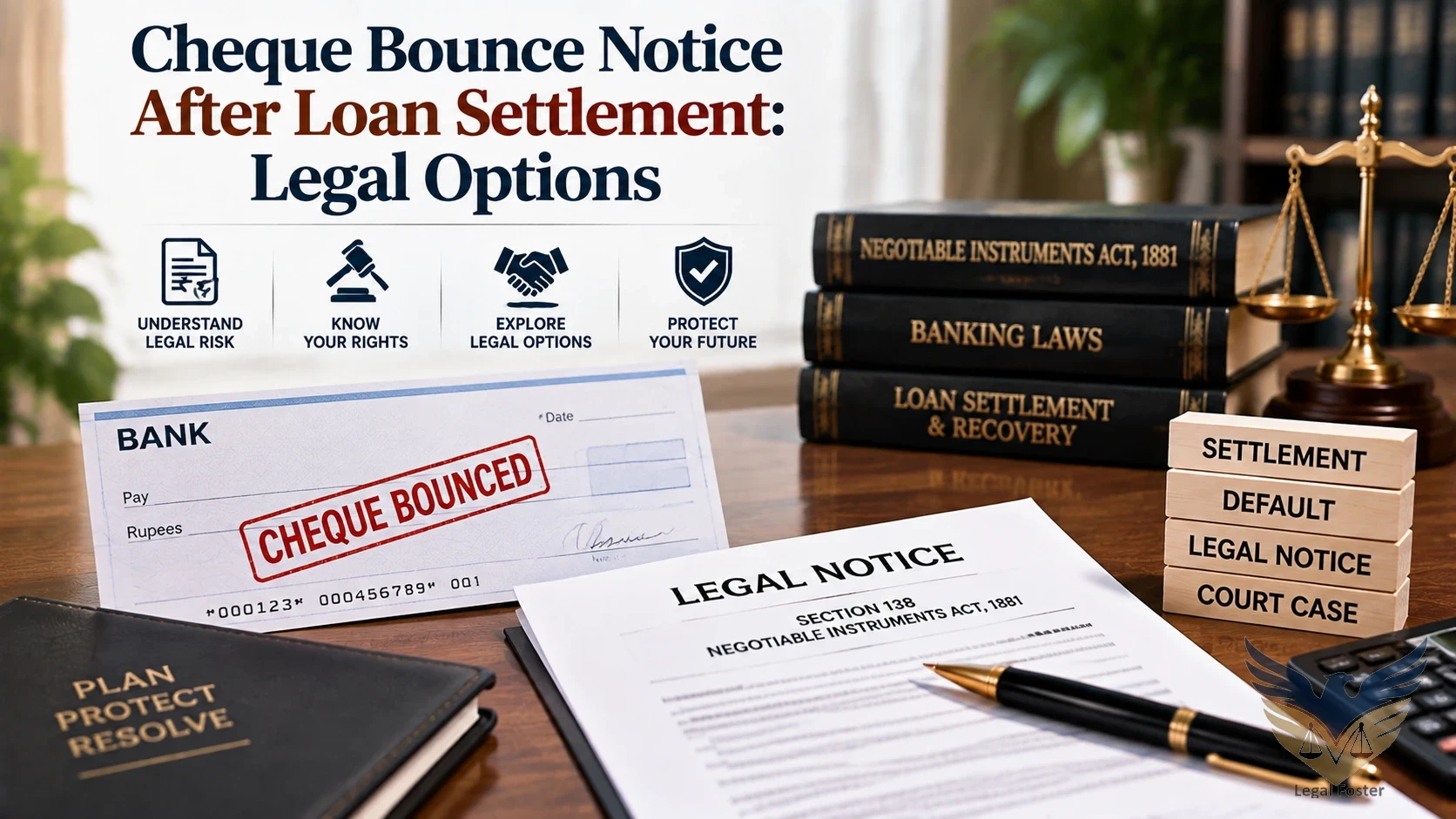
Loan settlements should be cause for celebration. Loan Amount gets mutually determined by lender and borrower, payment due dates are set and sometimes cheques are even exchanged as part of the negotiated agreement. Playtime starts when one of those lovely cheques comes bouncing back uncleared.
The lender is fuming that the borrower was given a break/extension of time but still didn’t come up with the agreed upon settlement amount. The borrower realizes his money problems just mutated into a Section 138 Notice.
Don’t ever dismiss your loan settlement bounced cheque notice. There are statutory limitations when it comes to cheque bounces. For starters Section 138 won’t apply if the cheque was not issued for the discharge, in whole or in part, of any debt or other liability, OR if the statutory requirements aren’t met. It’s not enough to show that the cheque simply bounced. The underlying loan settlement agreement will be examined as well.
Suddenly, all those lovely written documents like the settlement letter, statement of accounts, record of previous payments, bank return memo and any lender/borrower correspondence is vital.
The best way to handle this scenario is not to ask “Did my cheque get beached?” as suggested to me by Advocate BK Singh. Determine what was the actual amount due (legally speaking) at the time the cheque was presented for payment. What did the parties’ settlement agreement actually state. And thirdly, has the countdown begun on issuing a Section 138 Notice by misconstruing any of the above dates.
To learn step by step how to tackle your very own Section 138 NI Act dilemma please visit . Cheque Bounce Lawyer provides this Article as a courtesy to inform lenders and borrowers about what happens when a loan settlement cheque bounces. Topics include notice requirements, evidence, legal action, possible settlement and mistakes that can escalate a simple repayment problem into a prolonged legal headache.
Loan Settlement Cheque Bounce Case From All Cities of India 2026.
Loan Settlement Cheques can be from Personal Loans – They can arise from business loans, loans from friends, credit deals, workout agreements, supplier finance or loans from private money lenders.
Here it is the borrower who has settled arrears in Delhi and issued a cheque in compromise. This borrower is a businessman from Ghaziabad who issues follow up post dated cheques under a written Settlement Agreement. Businesses conduct similar disputes everyday in Gurugram, Faridabad, Mumbai, Bengaluru, Hyderabad, Kolkata, Ahmedabad and all other cities.
So if the cheque bounces you now have the underlying loan plus the liability for the bounced cheque.
When Advocate BK Singh & Associates reviews your case we will examine the settlement agreement and cheque together. We won’t look at one document in isolation. The agreement may change the amount, date due or any other condition that was original to the transaction. The language used in that agreement can become very important.
You may send out a legal notice demanding payment. The criminal section 138 case could be filed, Civil recovery proceeding if permissible by law could be started at the same time followed by more settlement talks and harassment.
For this purpose it’s best not to delay any longer in having these reviewed.
Quick Facts
- Section 138 deals with punishment for dishonour of cheque for insufficiency of funds, etc. when it is drawn in respect of any debt or liability.
- The payee has to adhere to conditions precedent of statutory notice and limitation to initiate a Complaint under Section 138.
- Section 139 provides for statutory presumption in favour of holder that may be rebutted as allowed by law.
- Section 142 & certain other connected provisions of NI Act deal with territorial jurisdiction to initiate proceedings.
- Trial Court is empowered to direct drawer to pay interim compensation not exceeding 20% of the cheque amount to the payee under Section 143A, in specified situations.
- Offences punishable under NI Act are made compoundable offences under Section 147.
- While adjudicating upon Settlement cheque requirement of settlement agreement and proof of liability subsisting when payment was exigible needs to be considered.
What Is the Core Legal Issue After a Settlement Cheque Bounces?
Essentially, the legal question that arises for consideration after a settlement cheque bounces is whether the dishonoured cheque evidenced a legally enforceable debt or liability at the time it was presented to the bank.
The cheque cannot be viewed in isolation.
For instance, assume that a borrower was liable to pay ₹10 lakh to a lender and subsequently, they executed a written agreement to settle the full amount for ₹7 lakh on receipt of instalments. If the cheque issued under that agreement bounces, the settlement agreement, the instalment agreement, prior payments made and correspondence may help establish what debt or liability was outstanding at the time the cheque was issued.
Another example could be when a cheque was always termed (or described) as a security cheque. Mere designation of a cheque as “security” will not be decisive in a Section 138 dispute. The nature of the transaction surrounding the cheque and the liability that existed when the cheque was issued and became payable could be important.
Advocate BK Singh therefore analyses all transactions to first advise either payee or drawer as to their legal standing.
See also this article on cheque bounce vs civil recovery for a discussion on when to file cheque dishonour proceedings vs money recovery lawsuit.
Under which law does the Cheque Bounce Notice come?
Cheque Bounce is governed by the Negotiable Instruments Act, 1881. Specifically Sections 138 to 148.
Section 138: Cheque dishonour
Section 138 penalises certain specified instances of dishonour of cheque by non-payment where the conditions mentioned therein are satisfied.
Cheque is presented within the period of its validity. Statutory notice in writing is served within the time allowed by section 138 after receiving information of dishonour. Drawer has the opportunity to make payment within the period allowed by law after receiving the statutory notice. Complaint is filed only after the cause of action arises as per the statute and within the limitation period prescribed under section 142.
Technical calculations count.
The experienced Advocate BK Singh treats the date on bank return memo, date of dispatch of notice and evidence of receipt together as important because an otherwise good case can get entangled in unnecessary litigation about maintainability if the required timeline is even technically flawed.
Section 139: Presumption in favour of holder
Section 139 creates a statutory presumption as to the fact of the cheque being issued for the discharge of any debt or liability.
Presumption is rebuttable. This does not mean that every case of cheque-bounce complained of by the holder will necessarily succeed. The drawer is allowed to offer legally valid defences and prove his story before the court.
Sections 142, 142A : Where to file Complaint; Jurisdiction
Section 142 deals with cognizance and territorial jurisdiction in relation to offences under section 138. Depending on where the cheque is deposited/ presented for payment, the jurisdiction would change.
Cheque was deposited through what bank? Parties should not jump to conclusions that the case can be filed just because a particular city is convenient to handle the matter.
Sections 143A and 148 : Payments during the course of proceedings
Section 143A allows for interim compensation in certain circumstances subject to statutory limitations. It cannot exceed 20% of the value of the cheque.
Section 148 separately addresses the issue of payment pending appeal against a conviction. These are two different provisions enacted for different purposes. They cannot be taken lightly substituted for one another.
Section 147: Compounding
Cheque dishonour disputes are capable of being settled since offences under the Act are compoundable as per section 147. However.
Settling the dispute is a commercial decision. No inference that payment of installmentmes would suspend or stop the pending proceedings should be drawn.
Who Needs This Guidance?
This problem most often occurs where borrowers (who are individuals) negotiated for reduced repayment terms; lenders with cheque repayments in settlement; Business owners who accepted instalment cheques upon default; Directors signing for company debts; and relatives participating in written private loans. It applies equally to borrowers who have been issued with a statutory demand although they believe they paid part of a settlement.
If someone receives a demand they should compare the demand amount with records of payment, rather than just blowing up. Many lenders make the opposite mistake. They assume that since they have the cheque, there is nothing else to worry about. What they sometimes fail to examine is the settlement paperwork, or the underlying account itself. According to Advocate BK Singh, Both sides would be well advised to divorce the financial dispute from the paperwork. Judges rule on what is presented as material that can be accepted by the court and what law applies. They do not have sympathy contests.
Step by step what happens after loan settlement cheque dishonoured?
As the name suggests, the process typically starts with presentation of the cheque and its return unsatisfied by the bank.
Step 1. Bank return memo.
The memo of dishonour will make note of the reason stated by the bank for refusing payment.
Step 2. Review.
The payee should review the settlement, the cheque and outstanding amount before issuing a statutory demand notice. A statutory notice should not have exaggerated or inconsistent figures just to add pressure.
I personally (Advocate BK Singh) may review the settlement letter, account ledger and bank docs before issuing a notice because the language describing the liability should be consistent with the documents.
Step 3. Issuance of statutory notice.
After the statutory notice is issued the drawer should read the actual notice instead of throwing away the envelope or deleting the WhatsApp copy. Whether or not there was proper statutory service is ultimately a question of law which will depend on the facts and evidence.
Step 4. Lawsuit.
If payment is not made within the statutory period, the payee can initiate a complaint under Section 138 in the court having jurisdiction.
The complaint will lead to appearances, plea, evidence, documents, cross-examination (if any) and final judgment. The process is meant to be summary in nature as per Section 143 and attempts should be made to finish the trial in six months from the date of filing though court cases can take longer.
Step 5. Settle anyway.
Negotiations can still happen after the process starts.
I would generally advise clients to carefully record any later compromise agreement even if it involves payment in future. Include the payment schedule, impact of default, pending cases and what both parties should do. A vague promise of “cleared everything next month” is rarely an acceptable replacement for a written agreement after lawsuits have started.
Documents & Evidence To Be Preserved By Parties
Documents to be preserved by parties includes entire transaction file and not picking and choosing only those documents which support their current position.
Documents that will be helpful are: –
- Original cheque or electronic form of cheque which is legally recognised
- Bank return memo
- Loan document or financial agreement
- Release or Settlement document
- Instalment plan
- Account statement showing prior payments
- Receipts of payments made and bank transfer documents
- Email/chat/SMS/Whatsapp conversation(if any)
- Copy of statutory notice
- Post receipt, tracking number and packaging slip
- Authorization/Resolution of company if payee/drawer is a company.
- Previous admissions regarding the due amount.
Advocate BK Singh can also help you analyse if the numbers mentioned in notice match with settlement account and if any amount paid prior/post presentation of cheque alters the facts of the story.
Avoid editing chats, creating fake receipts or dating things back. This will only hurt your character and can land you in separate legal issues.
When Should You Consult a Cheque Bounce Lawyer?
You should consider a legal review where statutory notice has already been received, the amount of notice is incorrect, the cheque was issued as part of a settlement, several instalments were made or part payment was received prior to presentation.
Advise can also be provided before notice is issued where multiple cheques, amended settlements or company transactions have occurred making the account harder to reconcile.
You should consider reviewing the matter where:
- The cheque was referred to as "security"
- The signature / authority is being challenged
- A company, partnership or third party signer is involved
- The settlement agreement contains a clause allowing default
- Payments were made to the debtor after settlement was agreed
- Negotiations are taking place with limitation expiring
- A court complaint / summons has been received
Advocate BK Singh can evaluate these issues on the cheque dishonour against the documentary evidence and highlight the procedural and settlement options available to you. The outcome can still vary from case to case due to liability, documentation and parties behaviour being different.
How Can Cheque Bounce Lawyer Help?
At Cheque Bounce Lawyer, we offer legal services to parties involved in litigation related to cheque dishonour, non-payment of loans or agreed amounts and statutory notice and Section 138 proceedings.
Litigation often starts with a review of documents instead of filing or responding to lawsuits.
This could mean, for a payee, reviewing the cheque, bank memo, terms of settlement, account calculations and notice prerequisites. For a drawer, it could mean analyzing the legal notice sent, underlying liability, setoffs to date and stage of current proceedings.
Advocate BK Singh can help evaluate if a settlement agreed upon on paper is still commercially viable or what formal requirements need to be followed if the parties agree to settle while proceedings are ongoing.
Clients throughout Delhi NCR and elsewhere in India may consult for similar matters depending on the jurisdiction, courts involved and facts of the transaction.
The goal is not to guarantee outcome. It is to put the client’s position on correct paperwork, timelines and legally defensible understanding of the facts.
Frequently Asked Questions
Q1. In case of loan settlement cheques, can Section 138 be invoked against me?
Ans. As needed. Technically, if it was a legally enforceable debt or liability at the time it was presented to the bank and all other elements of the offense are satisfied under Section 138, the cheque could be subject to prosecution. Terms of settlement, amount outstanding and payment history should be reviewed.
Q2. If I default on an installment of a settlement amount, does that become a cheque-bounce issue automatically?
Ans. No. Cheque default under a settlement agreement may potentially be a violation of Section 138, but they are not the same issue. Section 138 requirements regarding the cheque, date of dishonour, legally enforceable liability, notice and failure to make good within 15 days would still apply.
Q3. Can my security cheque be used to initiate a Section 138 complaint?
Ans. Not always. Just because a cheque is referred to as a security cheque does not mean Section 138 does not apply. The circumstances of any outstanding liability at time of presentment and the agreement between the parties should be investigated. Review of loan documents can be performed by Advocate BK Singh to determine if a cheque can be considered for a Section 138 offense.
Q4. What are the first steps I should take after receiving notice of cheque bounce?
Ans. Try not to destroy the cheque bounce notice or envelope. Preserve it with the date of receipt indicated clearly. Collect settlement paperwork, bank statements and any proof of payment made. Carefully review the notice Amount and see if you agree with the amount based on your account records. Avoid sending an admission just yet.
Q5. Is it still possible to settle after a Section 138 complaint has been lodged?
Ans. Yes. Offenses under the NI Act are compoundable, meaning they can be settled by the parties, in Section 147. If parties reach a settlement after a complaint is filed, terms should be documented appropriately and efforts should be made to dispose of any pending complaint according to law.
Q6. If I make a part payment towards a loan that I owe, can the cheque-bounce case be stopped?
Ans. Not always. Whether part-payment towards a legally enforceable debt extinguishes a cheque offense varies on a case-by-case basis. Timing of the payment, how much is still due versus the cheque amount, other agreements of settlement and where the suit is in the litigation process are all factors. Part payment of an outstanding liability can be analyzed by Advocate BK Singh.
Q7. Can the lender file recovery suit in civil court as well as for cheque-bounce?
Ans. Yes. Recovering a debt through civil litigation is not precluded by the NI Act, however these remedies may not always be available together. Because they have different purposes, facts of the case, limitation periods, relief sought and risk of making inconsistent statements should be evaluated before filing parallel suits in civil and NI Act court.
Q8. In what court can I file or defend against a Section 138 complaint?
Ans. Section 142 of the NI Act covers jurisdiction. It not only outlines how jurisdiction is interpreted for Section 138 complaints, but also clarifies territorial jurisdiction based on where the bank received and processed the cheque. A common mistake is to assume jurisdiction based on where the borrower or lender reside. Transaction determines jurisdiction.
Q9. Is it possible for the court to order me to pay an amount until final verdict?
Ans. Yes. Section 143A allows the court to order interim compensation against the accused while his/her offense under Section 138 is being tried. While this law specifies when this can happen, it also limits the Court to requesting 20% of the cheque amount as interim payment. This does not happen in every case, but is a power granted to the Court.
Q10. Will Advocate BK Singh handle loan settlement cheque-bounce cases?
Ans. Yes. Services include document review of any settlement agreement, assistance with Section 138 notices, evaluating exposure for settlement cheques and issues at filing of complaint and drafting of settlement agreement. Advocate BK Singh will analyze the evidence, limitation, jurisdiction and transactions to help you decide how to proceed.
Conclusion:
Notice of Cheque Dishonour for loan settlement
Notice of dishonour of a cheque issued in payment towards settlement of a loan out stands in its own category. It is both a settlement agreement and a document subject to the strict provisions of the cheque- dishonour law. Viewing it simply as another defaulted installment can prove expensive.
Both lender and borrower can benefit from charting the transaction from the incurrence of liability, through settlement terms and payments made, issuance of the cheque and its dishonour, and sending of the statutory notice.
For the lender, taking care at this stage can prevent an otherwise valid claim from being undone by a simple miscalculation or missed formalities. For the borrower, reviewing the Notice immediately upon receipt can help establish whether the amount requested is actually what is due on the settlement, and what remedies (if any) are available to respond to or settle the claim.
BK Singh Advocate can assist you with matters related to cheques dishonoured in payment towards a settlement, Section 138 notices, and subsequent litigation in Delhi NCR and other UIDS jurisdictions (consult us to confirm jurisdiction if destination is elsewhere) India . Contact us at Cheque Bounce Lawyer.