Can Legal Support Protect Your Rights in SARFAESI Auction Disputes?
A SARFAESI notice can create a property crisis overnight. A borrower finds that he has been asked to respond to a possession proceeding, notice of auction of residential house/shop/business premises or asked to settle lakhs in outstanding dues within days..
With professional legal assistance early on in SARFAESI notice and auction disputes, borrowers across Delhi NCR, Noida, Ghaziabad, Gurugram, Faridabad, Meerut, Hapur or other Indian cities can understand what action banks have taken, what stage of the legal process has been reached and what remedies you may have.
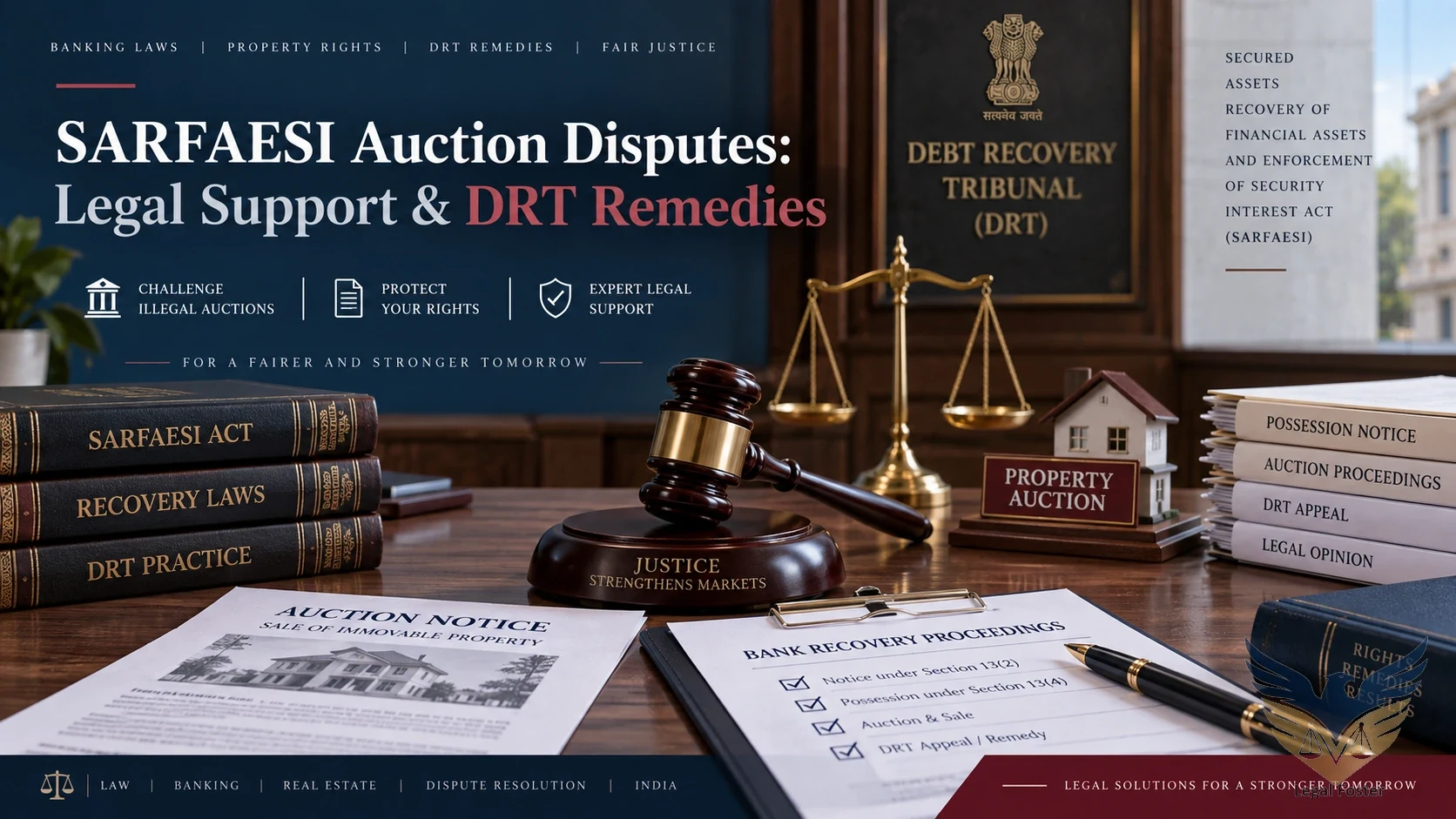
Generally speaking, a SARFAESI dispute concerns a secured creditor taking enforcement action. That could be through sending a Section 13(2) notice, Section 13(4) action, taking possession of a secured asset, valuation disputes, auction/sale notice or even an e-auction process. Specific legal remedies would vary based on what action has been taken.
One mistake borrowers make is waiting till the last moment to get documents reviewed. Many contact us on the day of auction. By then chances are the matter could be in a more advanced stage. Reviewing documents early doesn’t assure a stay/cancellation but helps the borrower understand his position and explore legal/commercial options.
Why Do SARFAESI Notice & Auction Disputes Require Action in 2026?
The residential house on loan could be your family home. The immovable property could be commercial premises such as a factory/shop/office/warehouse. Or it could be a property bought as an investment. To an MSME borrower, this property could also be tied to their working capital borrowings or daily business operations.
Many borrowers across Delhi NCR and India’s commercial hubs may also be receiving communications from multiple banks at the same time. Legal notices from one bank, possession letters/ threats from another and auction ads, calls from recovery agents and settlement offers being sent simultaneously.
BK Singh Advocate will analyze each case depending on facts mentioned, documents provided, stage of recovery started and potential legal remedy. This includes but is not limited to stopping the recovery process. Validity of notice sent, amount claimed unpaid, underlying security documents, possession already taken, manner of auction/terms offered and whether a settlement or statutory remedy is recommended will be looked at.
Quick FAQ About SARFAESI Notices & Auctions
Send Notice Period
Typically a borrower gets 60 days from the date of receipt of Section 13(2) demand notice to rectify the default mentioned therein.
Object to Notice
A borrower has the right to make a representation/objection to a Section 13(2) notice.
Section 13(4) Action
Allows certain enforcement measures to be taken after meeting the statutory requirements.
File DRT case
Section 17 provides for a remedy against actions covered under the section before the Debts Recovery Tribunal.
Application Timing for DRT case
There is a usual limitation of 45 days starting from the date on which the relevant action was taken for a Section 17 application.
Bank’s Rights Under SARFAESI for Sale
Rules 8 and 9 of the Security Interest Enforcement Rules, 2002 speak about important aspects related to possession and sale of immovable secured assets.
Will filing a DRT application stop the auction?
Mere filing of DRT application will not stop the auction from taking place.
What Documents to Keep for SARFAESI Auction Disputes?
Good legal advice starts with the right document history. When you get a fresh auction notice in your mailbox, throw away the old bank notices at your own peril.
Ideally, a borrower should try to preserve the following documents:
- Loan & sanction related documents.
- Security / mortgage documents or any other charge/pledge.
- Guarantee documents if any.
- Account statements & payment receipts
- Notice under Section 13(2)
- Notice of objection/representation sent to bank
- Bank’ reply to representation received.
- Notice of possession received and related correspondence.
- Notice of auction / sale
- Valuation report and floor price documents if available.
- OTS / settlement correspondence.
- Emails, Letters, whatsapp chats etc.
Dates are critical if you want to challenge an auction sale. Lawyers would have to reconstruct what happened based on documents. This starts with the first demand notice sent, possession if taken and the upcoming sale.
Similar to our list above, the DRT Lawyer website discusses bank notices, security document proof, account statements, notice of possession, auction correspondence and settlement letters as documents recommended to preserve for review when faced with bank recovery actions.
When To Consult a Lawyer for SARFAESI Auction?
Please consult a lawyer as soon as you receive a demand notice. Legal advice should not be deferred till the house is about to be sold.
You may consider consulting an advocate upon:
- Receipt of Sec 13(2) notice.
- Rejection of your objection.
- Suit for possession is filed.
- Section 14 proceeding becomes live.
- Notice of auction is sent specifying the date of sale.
Immediate attention is required if the secured property is your home or a place of business.
BK Singh Advocate can understand the facts of the recovery and advise you on whether a statutory reply needs to be filed, response to bank needs to be sent, interim relief prayed for or if a settlement or other legal option is recommended.
How Can We Assist With SARFAESI Notices & Auctions?
BK Singh Advocate is a DRT lawyer who assists borrowers, guarantors, MSMEs, companies or landlords facing bank legal action under SARFAESI, DRT and DRAT. Following are some examples of services provided by us:
- Review of bank recovery notices.
- Advice on property possession or disputes.
- Guidance on issues relating to auctions of property.
- Handling Section 17 Applications.
- Representation before the Debt Recovery Tribunal.
- Appeals before the Debt Recovery Appellate Tribunal.
- Legal Assistance at settlement or OTS stage.
You can also check our Property Auction Stay Lawyer page if your case concerns an auction sale specifically. This is because staying of auction would be our immediate concern if the secured property is scheduled to be sold.
If you have received a bank recovery notice and the bank has not yet sent an auction notice, please visit our Bank Recovery Notice Lawyer page which provides information on how we can assist you at the document review/recovery stage.
BK Singh Advocate will analyze the documents you have sent, inform you of the stage of recovery and provide advice on the legal options that may be available to you. While settlement is always an option we can help you with if it makes commercial sense, borrowers should note that making an OTS request does not stop SARFAESI proceedings from moving forward.
FAQs on SARFAESI Notices & Auction Disputes:
1. Can I challenge a SARFAESI auction?
Ans. Yes. A SARFAESI auction can be challenged where there are legally sustainable grounds in relation to the enforcement action taken or the sale process itself. The appropriate remedy will depend on the action taken, the documents, limitation and the facts.
2. What is difference between Section 13(2) notice and possession notice?
Ans. A section 13(2) notice is usually a demand notice issued prior to enforcement action being initiated. Whereas a possession notice would relate to possession of the secured asset and would be issued later on in the enforcement process.
3. Can I file DRT case against bank auction?
Ans. Section 17 sets out a statutory remedy before the DRT in respect of certain measures taken in exercise of the powers under section 13(4). Whether a particular claim is maintainable will depend on the relevant facts and the particular action being challenged.
4. Is 45 days time limit applicable in SARFAESI cases?
Ans. Section 17 sets out a 45 day period within which an application can be made starting from the date on which the relevant measure was taken. The precise period would need to be verified from the documents and from the law.
5. Does filing a case in DRT stop auction?
Ans. No. Simply filing an application under Section 17 would not automatically stop the bank from taking further enforcement action. Grant of interim protection is assessed on facts and the law and would be subject to the conditions passed by the Tribunal.
6. Can borrower negotiate OTS after auction notice is issued?
Ans.OTS can still be negotiated where appropriate. But making an OTS request will not automatically stop the bank from taking enforcement action. Borrowers should not assume that just because they are negotiating with the bank the property cant be auctioned.
7. What documents are required for filing a case in DRT?
Ans. A lawyer will require loan documents, account statements, demand notices, possession notices, auction notices, securities/documents which pledge the property, correspondence, settlement offers etc. The documents would vary depending on the nature of the dispute.
8. Can bank auction mortgaged residential property?
Ans. Bank can enforce its security against a mortgaged property in accordance with SARFAESI Act and satisfy other requirements under the law. Whether the particular action and sale would be valid would depend on the facts and fulfillment of statutory requirements.
9. Can a SARFAESI auction date be delayed?
Ans. An impending auction date would need to be reviewed urgently. Borrowers should first understand the remedy available to them, verify limitation issues, examine the relevant documents and the procedural stage before assuming that an interim stay would be granted.
10. Can recovery agents call catch borrowers to pay the debt?
Ans. RBI instructions require regulated entities to instruct their recovery agents not to engage in practices of intimidation or harassment. If a borrower has received such treatment, they should preserve any correspondence they have received/filled from the bank.
Conclusion
A SARFAESI auction notice should never be read as another routine recovery letter. It could well be the first important step in the enforcement against your secured assets, and the legal position available to you may well turn on events leading up to the auction notice. DRT Lawyer will go through the recovery history for borrowers located in Delhi NCR, Mumbai, Pune, Bengaluru, Hyderabad, Chennai, Kolkata, Ahmedabad, Lucknow or anywhere else in India. They can then explain the legal options available to you based on your documents and stage reached. If you have an auction date looming then getting legal advice sooner rather than later is obviously wise. The aim is not to guarantee borrowers a particular outcome but to ensure that you are aware of your position before a critical legal or commercial opportunity passes.