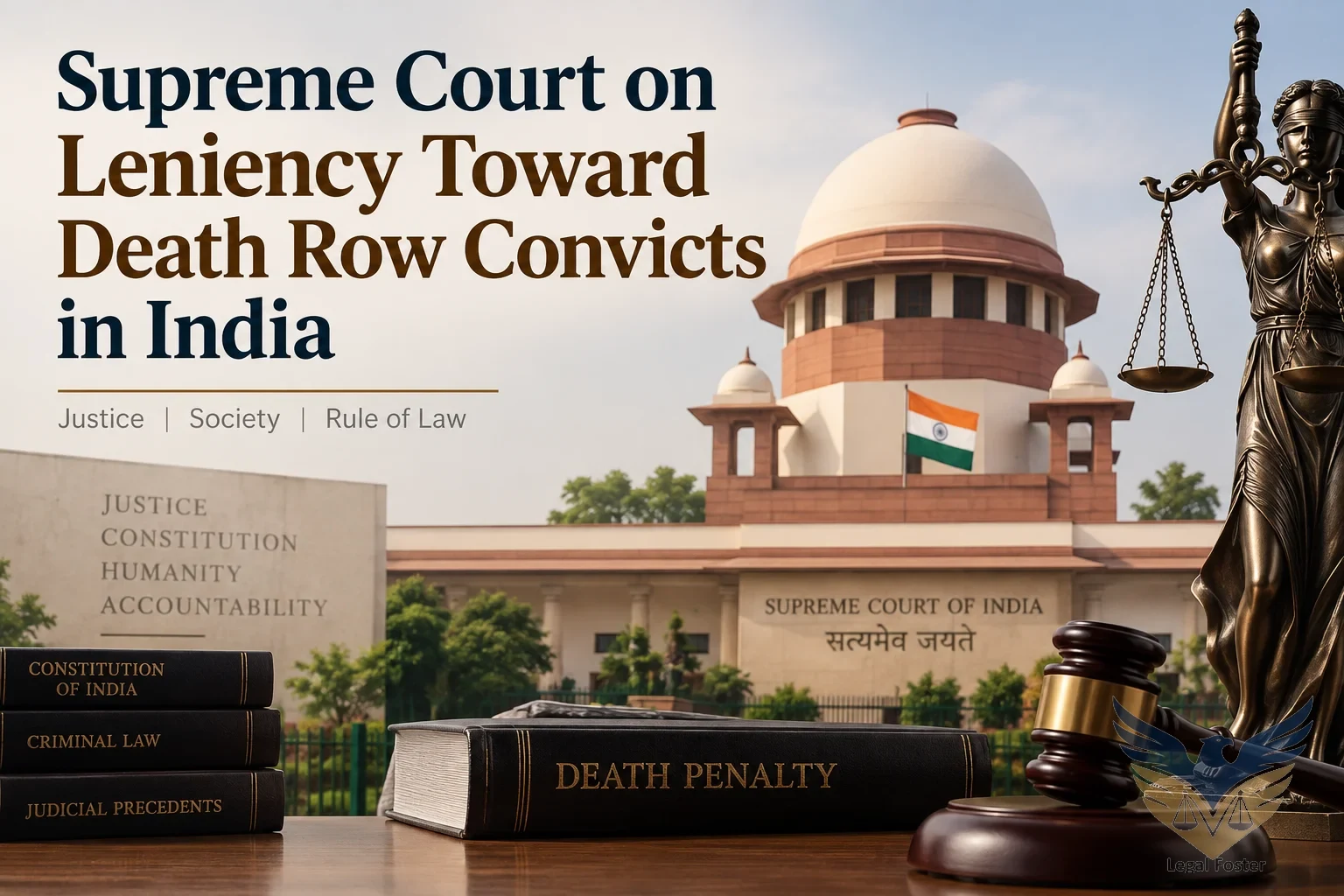
Supreme Court Calls for End to Excessive Leniency Toward Death Row Convicts
Justice Dipankar Datta mentioned a previous incident where the apex court had commuted death sentence. Later on the convict committed another gruesome crime after coming out on parole.
On Thursday the Supreme Court took note of their forgiving nature towards those who commit the crime of murder. Especially when they are awarded death.
Justices Dipankar Datta and Sheel Nagu made observations about the court's tendency to forgive has lead to certain situations.
Justice Datta stated that there needs to be some changes made when it comes to the courts reluctance to award death sentence in murder cases.
"Times have changed. In earlier days murder leading to death (sentence) was on the basis of rarest of rare cases, because murders were rare. Is it the same now? Now murder is not a rare (offence)", he noted.
Earlier he stated about a case where the Supreme Court had commuted a convict's death sentence. The convict went on to commit another heinous offence after he was out on parole.
"It is because of our forgiving nature that India is facing these problems. Forgive, forgive, forgive, you have to draw a line somewhere. This court commuted death sentence in a case where a father raped and murdered his elder daughter. (He) goes to jail on life imprisonment on the basis of the mother's testimony. After some years the father comes out on parole and kills the mother in presence of the younger daughter.
The younger daughter gives her testimony and the father is awarded with death sentence. And death sentence is reduced to life sentence by Supreme Court as he didn't kill the minor. This is Supreme Court (who passed the order). So that's why we are saying that we need to end our forgiving nature", Justice Datta stated.
Times have changed. In earlier days murder leading to death (sentence) was on the basis of rarest of rare cases, because murders were rare. Is it the same now?
Justice Dipankar DattaThe matter was heard by the court when a convict sought for early release.
The convict who was given death sentence had his sentence reduced to life imprisonment. He came to the Supreme Court asking to release him from jail.
The convict was convicted in several murder cases and given death sentence in 2004. The High Court of Punjab & Haryana reduced his sentence to life imprisonment in 2005. However, the Supreme Court cancelled this order in 2007.
After the mercy petition was turned down by the governor and president. The convict once again came to the Supreme Court and he was given life imprisonment in 2014 only due to delay by executives in his mercy plea.
The convict then wanted to be released from prison after serving 20 years of actual sentence under the Haryana remission policy 2002.
"It is because of our forgiving nature that India is facing these problems. Forgive, forgive, forgive, you have to draw a line somewhere."
But in 2024 August, the state denied to allow him to be let off free. Stating that he should serve his remainder of life in prison. They went on to say that he doesn't have good record in jail. As he tried to make a tunnel to run away in 2008. And when he was out on furlough he never returned for almost 3 years. Also adding that he was only awarded life imprisonment on technical grounds.
He challenged the order before the High Court. Which quashed the State's order and asked them to reconsider in 2025 December. As per the law the State couldn't use any wrong doing that occurred more than 5 years prior to his request. The HC also bailed him out meanwhile.
The matter was taken up by Supreme Court and led to Justice Datta's comment today about how far forgiveness can take us.