Delhi High Court Restrains Bajaj Finance From Using AI Facial Recognition Cameras to Profile Visitors Without Consent
The Court made it clear that the Company would be precluded from taking photos of all and sundry entering its premises via AI cameras.
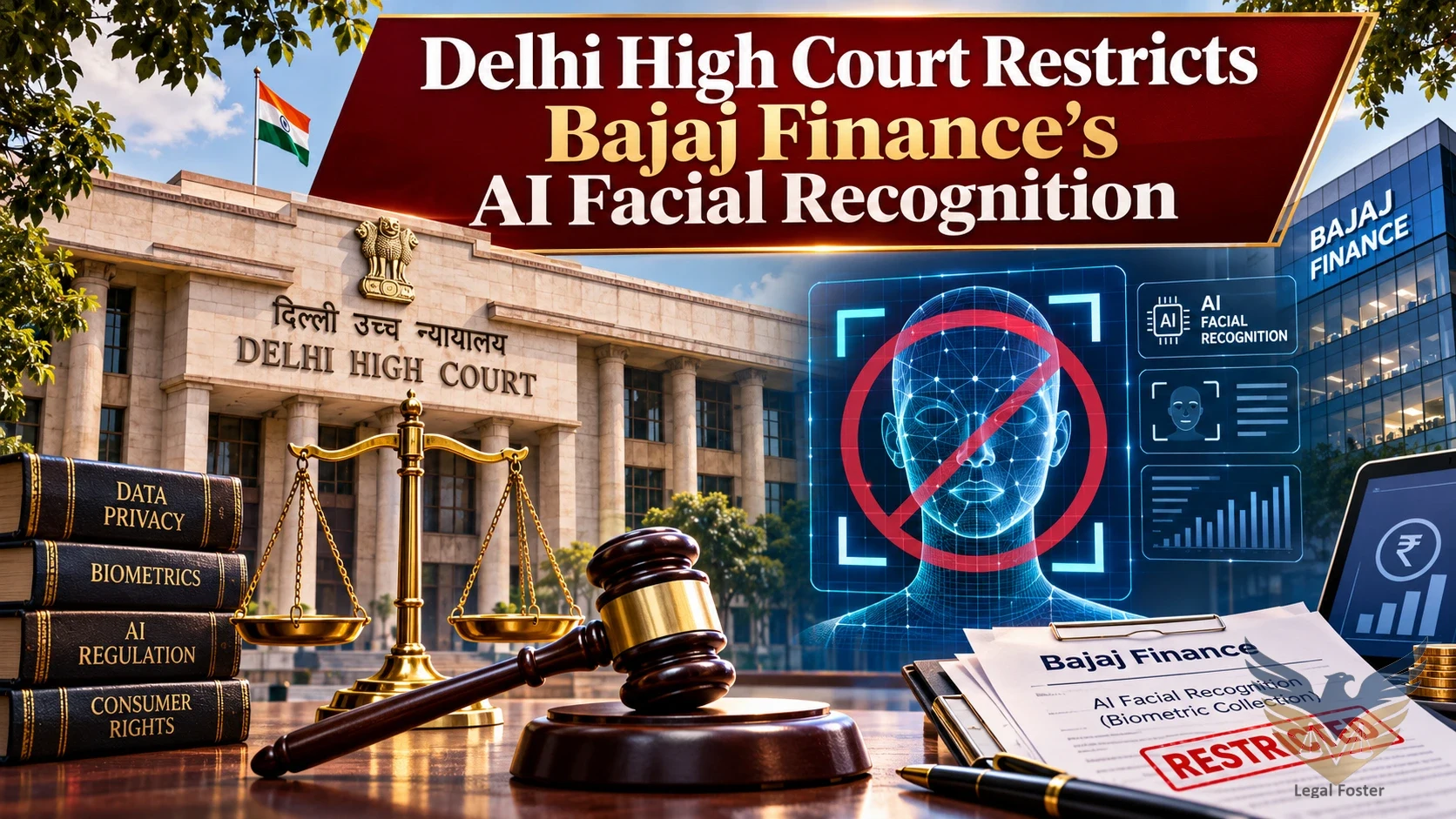
On Friday, the Delhi High Court issued an interim direction preventing Bajaj Finance Ltd., Bajaj Finance Securities Co. Ltd. and Bajaj Housing Finance Ltd. from deploying AI-powered facial recognition cameras across its network of offices and Authorized Dealer outlets. The Court took cognisance of the possibility of such cameras being used to record and collate information about the general public.
Under Justice Jasmeet Singh’s direction, the Company was permitted to deploy the AI camera systems to conduct KYC checks only. It was however clarified that the Company could not take photographs of “any and every person” entering its premises. Nor was it allowed to pass on the records generated by these cameras to third parties.
“On the above grounds, Respondent Nos. 2-4 i.e. Bajaj Finance, Bajaj Finance Securities and Bajaj Housing Finance and their respective agents, servants, representatives and any other person working on their instructions are directed NOT TO COLLECT AND UTILISE the data recorded through the aforesaid facial recognition camera system, except for conducting KYC. They are also expressly directed NOT TO PASS ON the said data to any other party, including related group companies,” the Court held.
In passing the direction, the Court noted the implications of being able to cross-reference facial data captured with records sourced from the Aadhaar database.
“In my opinion, the grievance raised by the petitioner is justified. In today’s scenario with rising instances of fraudulent activities in the financial sector, aided by developments in the field of Artificial Intelligence, I consider it essential to safeguard the petitioner’s right to privacy,” the Court stated.
The Court accordingly transferred the matter, inter alia, concerning the Company’s Privacy Policy and a prayer to issue appropriate relief to the RBI to prevent NBFCs from capturing facial data using AI cameras, absent clear and informed consent of the individual, to a Division Benches handling Public Interest Litigation.
This direction was given following a petition filed by Dhananjay Bhole challenging the Company’s practice of recording individuals’ facial features at its various office locations.
According to Bhole, the Company and its Group undertake facial mapping of all who visit its offices, which is then compared with existing records of its customers and further correlated to their Aadhaar-linked KYC, bank and credit details. The facial data so gathered is also utilized to formulate customer profiles, study patterns and preferences of the customer, and extend customized communication and promotional activity.
As per Bhole, the fact that the petitioner may enter a branch or simply download the Company’s app should not amount to implied or inferred consent for the Company to gather his facial biometrics. Such implied consent cannot be considered ‘clear and informed’, especially in light of the lack of a meaningful option to decline the facial data collection and its conflation in the Company’s Privacy Policy with consent to share data with the Aadhaar Authority and third parties for marketing.
On this basis, Bhole prayed that the Court direct the RBI to prevent NBFCs from utilizing facial recognition camera systems.
While transferring the matter to the Division Bench, the Court directed that no facial biometric data could be captured using AI-enabled camera systems without the express consent of the relevant individual.
Advocates Appearing in the Matter
Amit Prasad (Senior Advocate), accompanied by Akshay Nagarajan and Akash Singh, appeared on behalf of Dhananjay Bhole.
Abhishek Baid and Mohit Kumar Bafna appeared for the RBI.
Chetan Sharma, ASG; Apoorv Shukla, CGSC; and Naman Sehgal, Surjeet Singh and Anuj Dwivedi appeared for the Government of India.