Delhi High Court Quashes TERI ICC Report Against RK Pachauri, Orders Fresh Probe into Sexual Harassment Allegations
The Court therefore directed the Local Committee at the District level to look into afresh the allegations made.
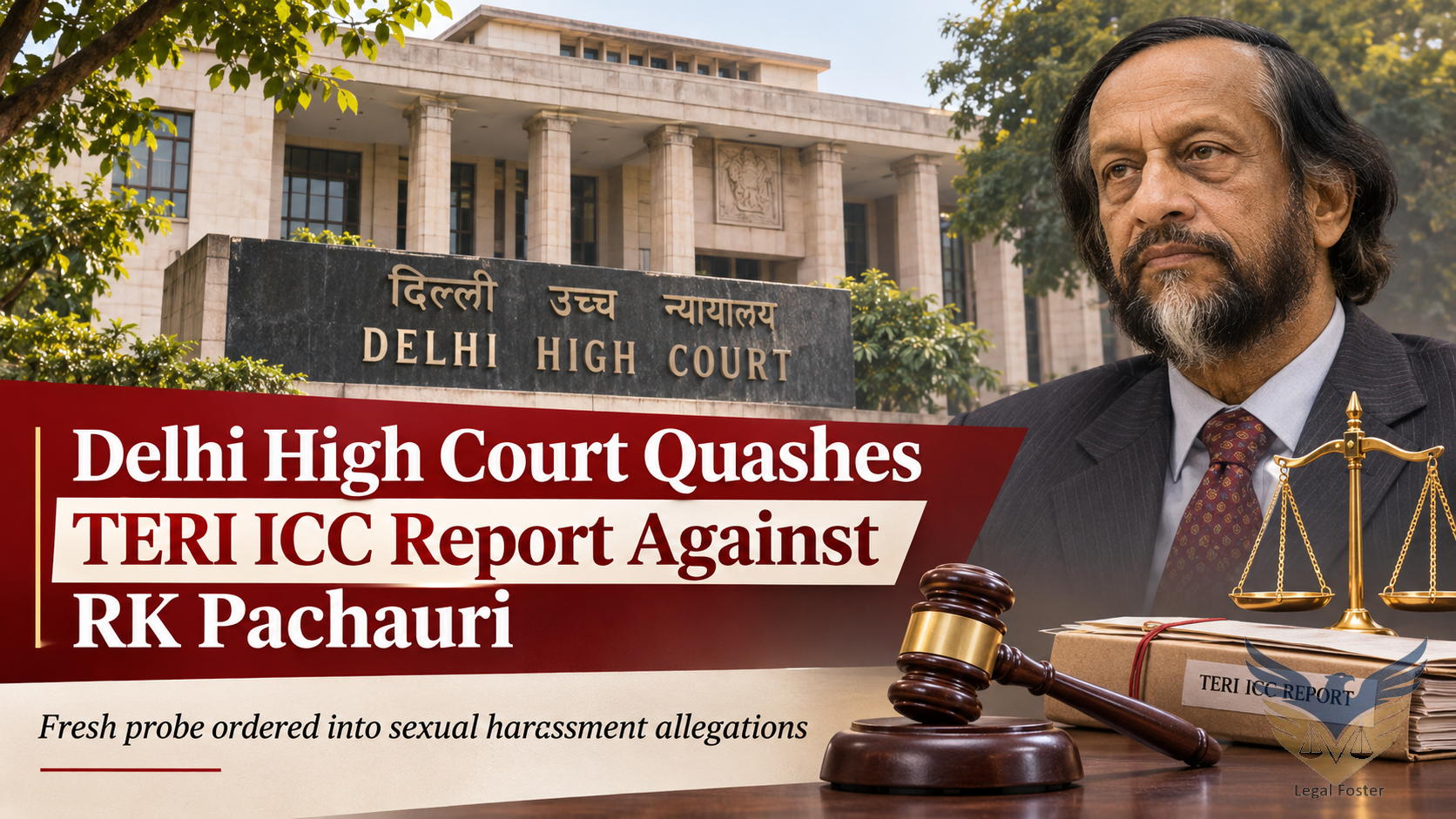
A Bench of the Delhi High Court has set aside the conclusions reached by the ICC of TERI and held RK Pachauri guilty of sexual harassment.
In February 2015, a research assistant made an allegation of sexual harassment against him.
In May 2015, after due inquiry, the ICC held that he was guilty of committing the offence. He disputed this and filed a proceeding before the Industrial Tribunal, where again he was held liable.
RK Pachauri died in February 2020, after which his nominees filed an appeal in the High Court against the report prepared by the ICC as well as the order passed by the Industrial Tribunal.
By an order dated November 17, a Single Judge, Justice Amit Mahajan, was of the view that as RK Pachauri would come under the definition of "employer", the ICC would have no jurisdiction to try the said allegation.
All complaints relating to the "employer" were required to be considered and decided by the appropriate Local Complaints Committee constituted under the provisions of the Act.
Accordingly, the report prepared by the ICC on May 19, 2015, and the judgment and order dated July 3, 2023, of the Industrial Tribunal, were set aside, and the said allegation directed to be considered de novo by the appropriate Local Complaints Committee.
The Court observed that the said Committee would be free to go through all materials on record and decide the issue raised. Further, consequence, if any, of the death of Respondent No. 5 would be left to the appreciation of the concerned authority.
While deciding the issue, it was directed that normal principles and procedures would be required to be followed.
Learned counsel for RK Pachauri, Advocate Ashish Dixit, submitted that TERI's DG, that is, RK Pachauri, was an "employer" within the meaning of the provisions of the said Act. The allegation made against him was, therefore, required to be considered by the Local Complaints Committee for the relevant District under section 6 of the Act. Further submission was that all statements recorded from various persons were not provided to him, nor was he permitted to question them.
The Court was of the view that there may not be an absolute necessity to permit questioning of all the witnesses, but nobody can be held liable without affording an adequate opportunity to meet the allegation or allegations levelled against him. To that extent, all relevant statements and documents, on the basis of which an adverse inference or inferences have been drawn, should be furnished to him. This would be in addition to the obvious position that the standard of proof required in these matters would be lower than proof "beyond reasonable doubt".