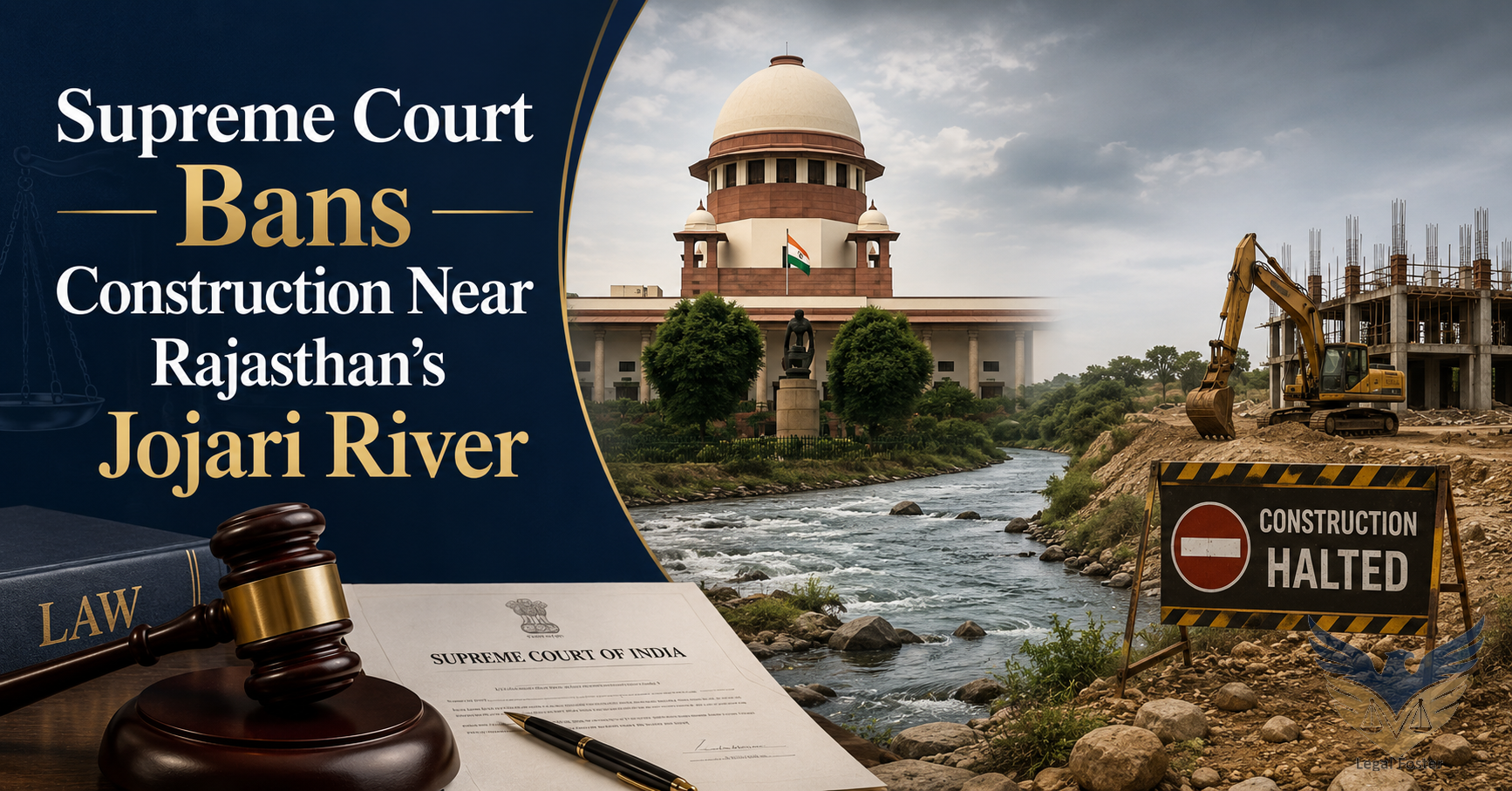
New Delhi: The Supreme Court on Monday banned all construction and development activities within 100 metres from the edge of Rajasthan’s Jojari River till the high flood line and requisite ecological buffer zones are scientifically determined and demarcated.
Potentially polluting activities within 500 meters of river were also banned.
Potentially polluting industries within 500 metres of river have also been prohibited till further orders.
Potentially polluting activities have also been banned within 500 meters of the river. The Court said that this would continue till the high flood line and requisite ecological buffer zones are determined scientifically.
The Court passed these orders in a suo motu case concerning industrial pollution of rivers in Rajasthan including the Jojari river.
“A Bench of Justices Vikram Nath and Sandeep Mehta passed the order yesterday
“We are of the considered view that it is necessary to put in place an interim, definite and measurable area of protection so as to adequately safeguard the riverine ecosystem during the pendency of the scientific exercise for the determination and demarcation of the high flood line and the requisite ecological buffer zones. Hence,” the Court said, “we hereby direct that no construction or development activity of any nature whatsoever shall be permitted within a distance of 100 meters from the edge of the river in accordance with the aforesaid guidelines.”
As a further interim measure, the Court ordered that “no hazardous industry or polluting activity shall be permitted within a distance of 500 metres from either side of the river from the existing flood line, wherever such flood line has been identified, or the present flow path.”
The Bench added,
“The aforesaid arrangement would continue till the high flood line and requisite ecological buffer zones along the banks of the river are scientifically determined.”
The suo motu case was taken up by the Court following a documentary titled “2 Million Lives at Risk | India’s Deadliest River | Jojari, Rajasthan” which highlighted alarming pollution in districts of Jodhpur, Pali and Barmer.
In November 20 25, the Court had revived National Green Tribunal’s directions from 20 22 to clean up the Jojari, Bandi and Luni rivers and had set up an expert high-level ecosystem oversight committee headed by former Judge of Rajasthan High Court Justice Sangeet Lodha to oversee efforts to curb industrial pollution and rejuvenate the rivers.
The Court has been hearing the matter on a regular basis and monitoring the state of industrial pollution and degradation of water bodies in Rajasthan with the help of the high level committee.
At the last hearing, the Court directed the Rajasthan government to form an integrated coordination group to coordinate efforts to check industrial pollution and restore polluted river systems of the State.
The Court ordered the constitution of the group as it noted that the “multifarious environmental concerns” pending before it could not be addressed by isolated interventions by various departments.
The coordination group would be at the level of Principal Secretary to government and would be asked to work with the high-level committee and form a comprehensive resolution plan. The plan would detail out measures, responsibilities, milestones and timelines for achieving pollution control and ecosystem restoration tasks.
Last hearing the Court also directed the State to set up an independent river commission or river rejuvenation authority which would take up the task of conservation, rejuvenation and integrated management of rivers, river basins and catchment areas across the State.
Among other directions, the Court had ordered the State to determine scientifically and demarcate high flood lines and ecological buffer zones for all rivers across Rajasthan.
In today’s order, the Court has effectively stopped industrial activity within 100 metres of the Jojari river line and hazardous/potentially polluting activity within 500 meters till the State completes the exercise of determining high flood lines and ecological buffer zones.
The Court also issued directions to ensure smooth functioning of the high level committee headed by Justice Lodha.
The Court clarified that the intent of ordering the constitution of the coordination group in its last hearing was not meant to create any supervisory overlap with the functions of the high-level committee headed by Justice Lodha.
“The committee so constituted is headed by a very senior jurist, i.e., Hon’ble Justice Sangeet Lodha. His chairpersonship of the committee ensures that there would be coordination between the two groups,” the Court said.
“In fact, the hon’ble chairperson of the committee, in his individual capacity, can issue such instructions and make such allotments as may be required to ensure smooth carrying out of the work of the committee and the coordination group so constituted. As and when considered necessary, the hon’ble chairperson of the committee, in his individual capacity, may also be empowered to pass suitable directions, orders and instructions, etc.” it added.
“The earlier directions given by this Court empowering the committee to take necessary action and pass requisite orders shall continue to operate in letter and spirit.”