Why Do Banks Issue Demand Notices? Meaning and Impact on Borrowers Explained
If your bank has sent you a demand notice, it can cause panic. Borrowers often believe that once a notice is issued, the bank has made up its mind to initiate stringent recovery processes or that they have missed their opportunity to safeguard their interests. That is not entirely true.
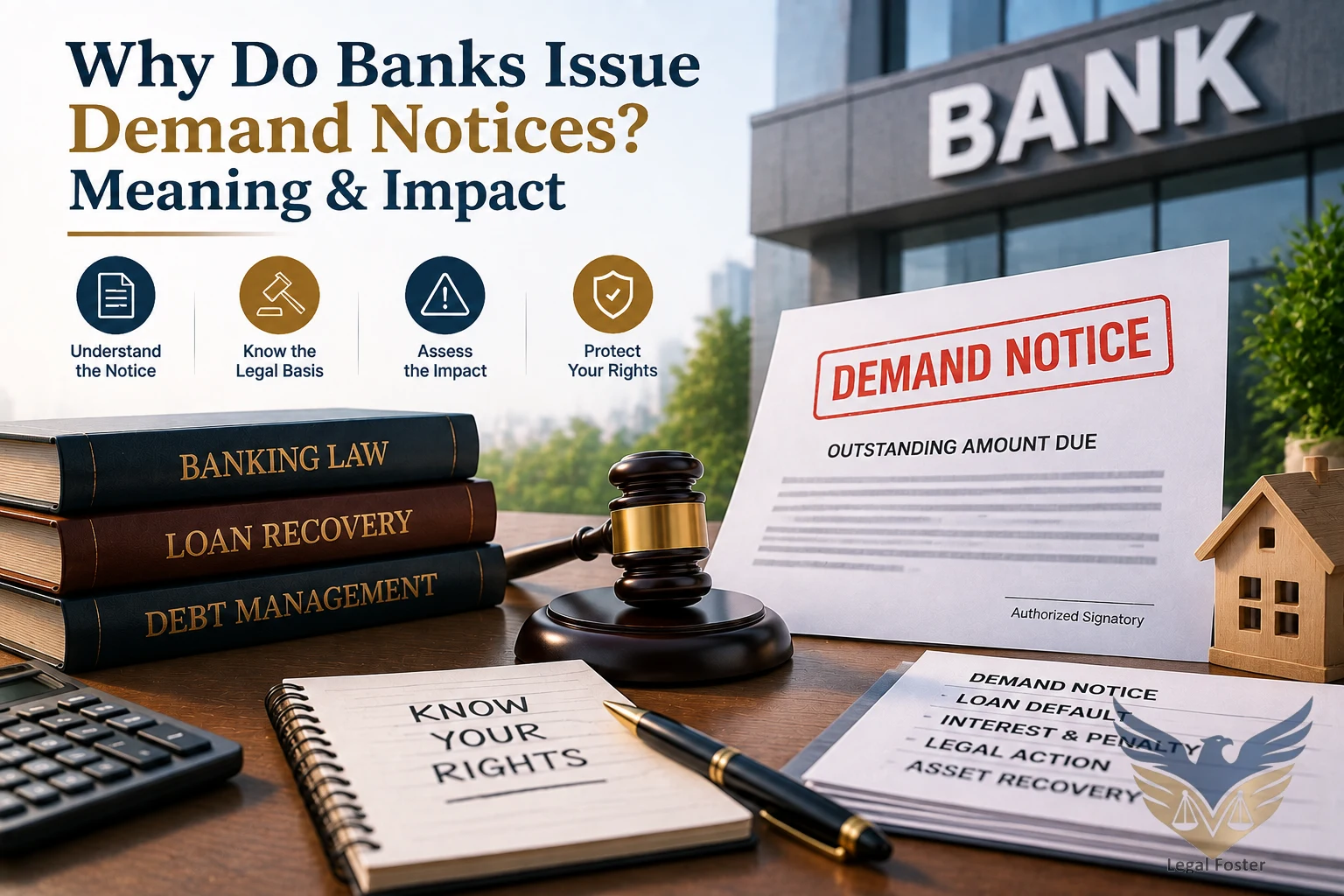
A bank sends out a demand notice as a legal intimation to the borrower. It is usually a formal letter where a bank or financial institution asks you to pay off the pending amount within a certain period or make arrangements to repay the loan. The notice may pertain to any loan instalments you have not paid — credit facility, business loan, personal loan, housing loan, etc.
If you are a borrower living in Delhi NCR, Noida, Ghaziabad, Gurugram, Mumbai, Bengaluru, Hyderabad, Chennai or anywhere else in India and have received a notice from your bank, it is crucial to take note of it within the stipulated time. Failure to respond or take action against the bank’s demand can impact your options available to you under the law, your credit score, settlement negotiations and future recovery processes.
Most borrowers come to Loan Settlement Agency after they receive a demand notice from the bank because they are confused about how to respond. They don’t know if they should negotiate with the bank, send a reply to the notice, opt for a settlement or start preparing for impending legal action. At Loan Settlement Agency, Advocate BK Singh explains to borrowers what the notice is, what their rights are under the law and how timely action at the appropriate stage can help.
Just because you have received a notice, it does not mean that you do not have any rights against the bank. While banks have the right to recover their money, they too must follow the procedures prescribed by law. Every borrower’s situation is unique, which depends on their financial situation, the loan documents signed at the time of borrowing, their repayment records, the security provided for the loan and even the conversation you have had with the bank.
In this article, we’ll learn about what a bank demand notice is, its legal significance, your rights as a borrower, risks of not responding to a demand notice and how having the right lawyer on your side can help.
Why Does a Bank Demand Notice Matter in India in 2026?
A bank demand notice should not be taken lightly because usually the account is already in bad shape by the time you receive it. There could already be repayment problems, overdue amounts or internal recovery could have started.
It’s easy to ignore a demand notice hoping to arrange money later. Unfortunately this may aggravate your financial stress. Late repayment can become expensive with accruing interest, recovery calls, credit bureau notices and impending legal action.
If your loan is secured against property/assets, then additional consequences could follow if bank starts recovery as per law. For unsecured loans, the bank may initiate contractual/legal recovery proceedings depending on facts.
Do remember that bank sending you a demand notice is not simply a correspondence that can be taken lightly. It is an opportunity for the borrower to assess his account position, ascertain the dues, speak to the bank and explore a possible settlement or defending his position (if any) in India.
Quick Facts About Bank Demand Notices
- Notice from bank is a statutory demand to pay up.
- Notice cannot mean that you will lose your property tomorrow.
- You have every right as a borrower to know how much you owe and why.
- Loan agreements, account/history of payments made will work in your favour.
- Chance of settlement depends on bank’s policy & facts of the case.
- Procedure for recovery of secured loans is different than unsecured loans.
- Get a lawyer to know your options.
What Is a Bank Demand Notice and Why Do Banks Send It?
Bank demand notice means, a written notice send by lenders/banks to the borrower for the repayment of their dues. This notice may include terms such as outstanding amount, Loan Account Number, default of repayment or payment of dues etc.
Why banks send such notices? Simple! They want their money back. When you take a loan from a bank, it is signed legally as a contract agreement between the lender and borrower. If there is a default of repayments, the lender can decide to contact you prior to starting their recovery process.
See what does your notice states. Sometimes borrower's get confused if the amount credited to them includes interest or penalty or charges or anything else. So better read your notice carefully before agreeing or disagreeing to pay the dues.
If you need assistance in responding to a formal demand or recovery communication, borrowers can also review the Legal Notice Reply Service available through Loan Settlement Agency.
What Legal Framework Applies to Bank Recovery Notices?
Bank recovery problems may arise either as contractual rights or under the banking regulation and certain debts recovery laws depending on the nature of loan disbursed. If the loan is secured loan and lender wants to enforce his remedies under SARFAESI Act, then he would have necessarily to fulfill the conditions precedent under The Securitisation and Reconstruction of Financial Assets and Enforcement of Security Interest Act, 2002 (for short SARFAESI Act) and issue notices and proceed further under SARFAESI Act in the prescribed manner.
He may also initiate recovery proceedings under Recovery of Debts and Bankruptcy Act, 1993 where applicable.
Notice for recovery should be in such a language that makes the borrowers understand that not every notice sent by banks and financial institutions are followed by the same legal action. Whether such notice would lead to further legal action depends on:-
- Nature of loan facility
- Whether any security has been created or not
- Amount due
- Stage of default
- Documents executed between the parties
- Whether any action has been taken by the lender.
For secured-loan borrowers dealing specifically with a SARFAESI demand notice, the SARFAESI Notice Reply Service provides assistance relating to Section 13(2) notices and related borrower concerns.
As Advocate BK Singh advises borrowers should read the notice once again carefully and should not get into the mind set that the notice sent by bank for demand has some legal effect attached to it.
Who Usually Needs Guidance After Receiving a Bank Demand Notice?
A borrower needs guidance when:
- EMI has been discontinued due to financial stress.
- Cashflow of business has impacted repayment ability.
- Bank has asked for huge outstanding amount to be cleared.
- Recovery calls or notices are harassing.
- Borrower wants to know options to settle loan.
- There is a dispute over interest/charges or calculation of account.
- Asset which is pledged as security may be involved.
Families, individuals and small business can run into trouble repaying money. Stress impacts your decision making. That’s why it’s good to know your rights early on.
Borrowers facing repeated or improper recovery calls can also explore the Recovery Harassment Complaint Service for guidance regarding recovery-related complaints and documentation.
What Should a Borrower Do After Receiving a Bank Demand Notice?
Read the notice carefully and ascertain what the bank is alleging. Never ignore any official communication as it may limit your options down the road.
Get your records in order. This includes your loan documentation, repayment history, bank statements and any previous communication with the bank. These documents may help you to determine if the demanded amount is correct and what kind of negotiation might be feasible.
Talk to your lender. Depending on the situation, you may be able to discuss your repayment issues, restructuring opportunities or settlement options.
Remember that you are not entitled to loan settlement as of right. Each request for settlement is subject to the bank's policies, financial review and facts of the case. Loan Settlement Agency can guide you through issues relating to One Time Settlement and settling your loan.
Documents Required for Reviewing a Bank Demand Notice
Here is a list of few essential documents which might be useful to you:-
- Copy of Bank’s demand notice.
- Loan agreement
- Sanction letter
- Account statement
- EMI receipt
- Previous mail/letters sent/received with bank
- Collateral/ security details if any.
- Proof of Income and any other documents which are finance related.
Having these documents will enable you to understand the borrowers situation and draft appropriate mail.
Where a borrower wants to formally communicate a settlement proposal, the Loan Settlement Letter Service can be relevant for preparing a written settlement request.
What Are the Time Concerns After Receiving a Demand Notice?
Timing considerations are important in workouts as well. The longer you wait, the more pressure you will be under, the more fees will accumulate and the less likely there will be an early settlement. If your issue involves statutory collection remedies, there may even be prescribed time limits for response depending on the statute and type of proceeding. Don't assume that just because a notice doesn't say "Immediate Reply Required" in big, red letters that you have all the time in the world to decide what to do. If you read your mail as soon as it arrives, you'll know whether you need to settle, fight specific allegations or just hunker down.
What Happens If a Bank Demand Notice Is Ignored?
Ignoring a bank demand letter may compound your financial/legal difficulties. Depending upon the loan type and process involved, the lender may wish to pursue additional recovery measures.
Such consequences may include:
- Increased outstanding balance
- Credit rating damage
- Recovery measures
- Harassment for collateral
- Difficulties in future negotiations
The consequences may vary depending on facts and circumstances surrounding your situation. As a borrower experiencing real financial hardship, know your options before the situation compounds.
Borrowers concerned about complaints involving banks or regulated lenders may also review the RBI Complaint Assistance Service where applicable.
When Should You Consult a Loan Settlement Lawyer?
You may take Legal consultation if :-
- You have received Legal Notice from the bank.
- Amount claimed is disputed.
- EMI being paid by you is unsustainable.
- Want to clear your dues.
- If you are getting recovery calls.
- Property/business is involved against loan.
BK Singh will counsel borrower and guide him through the entire process of analyzing the documents & the facts and suggest the borrower the most appropriate legal and financial remedies available.
For borrowers dealing with personal-loan defaults, the Personal Loan Settlement Service provides guidance concerning overdue personal-loan accounts, settlement requests, notices and related borrower concerns.
How Loan Settlement Agency Can Help Borrowers
Loan Settlement Agency Guide loan borrowers with issues regarding loan recovery/settlement related queries or dealing with lender related issues.
Loan Settlement by Advocate BK Singh. Advising you on how to tackle notices, borrower issues and professionally dealing with loan matters. Each case is unique and must be treated as such. Since every loan has different payment history, bank policies and finance conditions.
A lot of borrowers from Delhi NCR & other cities seek our professional assistance when they have loan recovery notices as it affects their household budget, business and their reputation.
Borrowers can also review the MSME Loan Settlement Service where business or MSME borrowing is involved and repayment difficulties relate to business cash flow or overdue loan accounts.
Frequently Asked Questions
1. What is a bank demand notice?
A bank demand notice is a notice which is issued by the lender requesting borrower to repay dues or fix the repayment issues mentioned by him. It could also imply that your loan account is due for attention.
2. Does bank sending demand notice means they have initiated legal proceedings against me?
Not necessarily. Issuing of demand notice can be the first step towards recovery of dues. What follows next would depend on the type of loan, documents available, nature of default, and the legal process that can be initiated.
3. Can I dispute the amount mentioned in the bank notice?
Yes, you can go through the account details along with the loan documents and verify the calculation of the dues mentioned in the bank notice. You have every right to point out charges that you disagree with or feel the outstanding amount is not accurate.
4. What should I do after receiving a bank demand notice?
After receiving the demand notice, you need to read it carefully. Gather all loan related documents and get a clear understanding of your financial and legal standing before taking any further steps.
5. Can I negotiate for loan settlement if I receive a demand notice from bank?
Negotiations for loan settlement can always be initiated. You can talk to your lender about settling your dues depending on your financial situation. Keep in mind that every case is different and approval for settlement would be subject to factors specific to your case.
6. If I ignore bank demand notice, will it cause more problems?
Yes, not responding to a demand notice can lead to more financial and legal problems. Not responding to the notice in a timely manner can reduce your chances of negotiating with the lender and lead to further actions from their end to recover the dues.
7. Can bank seize my property if send me a demand notice?
Receiving a demand notice from the bank does not mean that they own your property now or you would lose your property. There are various factors involved and actions would be taken as per the law.
8. What are the documents required for checking a bank demand notice?
Copies of the notice, loan agreement, sanction letter, account statement, record of payments made and previous correspondence with bank are required.
9. How can loan settlement attorney assist me if I receive a bank demand notice?
A loan settlement attorney would review all your documents, understand your concerns and professionally communicate with the bank. They would also help you understand all the legal aspects and options available for resolution and loan settlement.
10. Can Advocate BK Singh help me with bank demand notice?
Yes, Advocate BK Singh working with Loan Settlement Agency can help you understand the concerns of your loan recovery and analyze the best possible options available as per the facts of your case.
Final Thoughts
A bank Demand notice should not be considered as a plea. Read the facts, documents and assess your options before reacting on receiving such notice.
Each borrower worried about loan recovery has his own set of issues. By objectively evaluating the notice sent to you, loan documents and your repayment capacity you can decide on the course of action to be taken.
If you are a borrower facing highlight for recovery or negotiations for settlement or have received a demand notice, you can contact Advocate BK Singh (Loan Settlement Agency) for help.