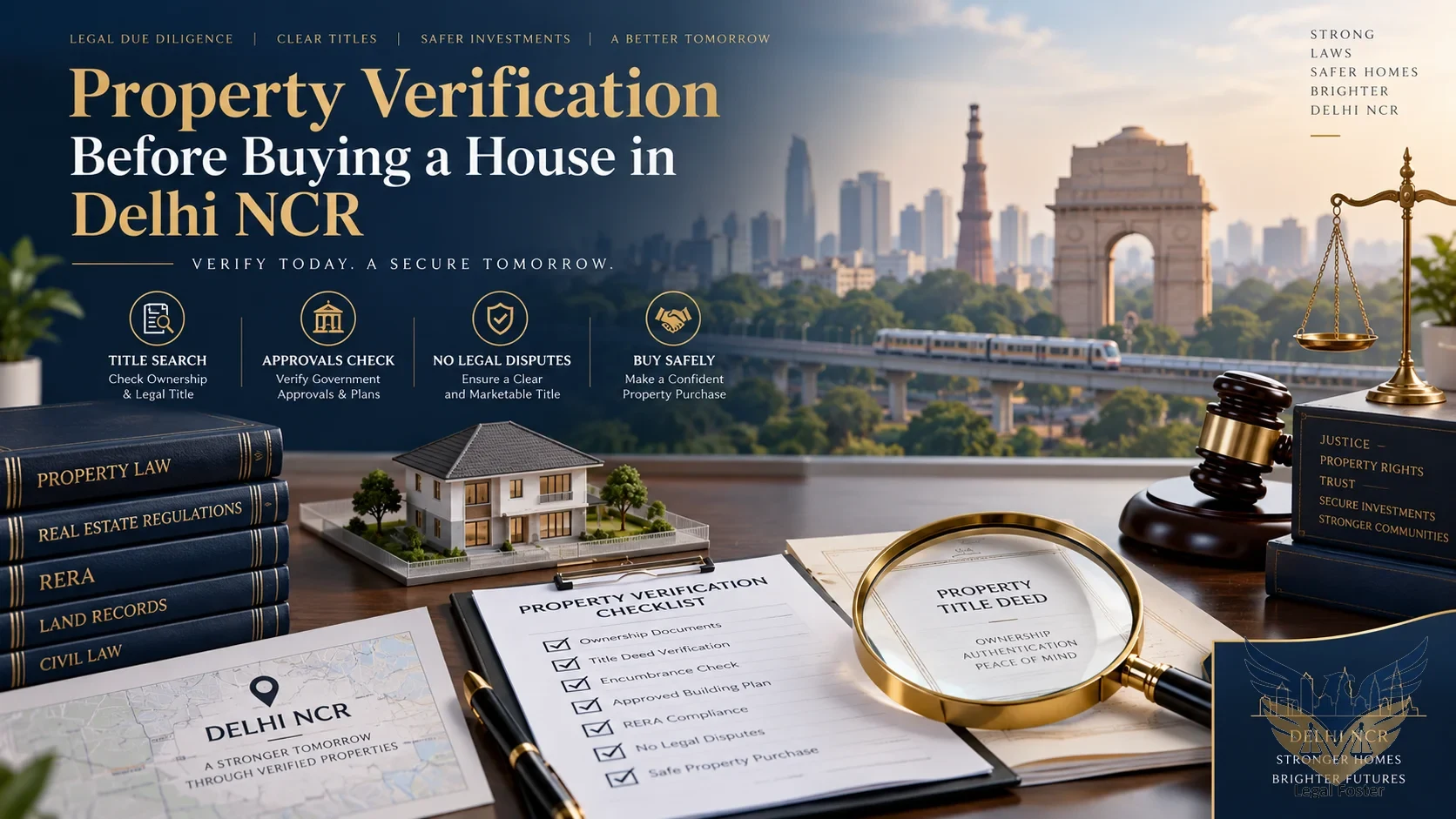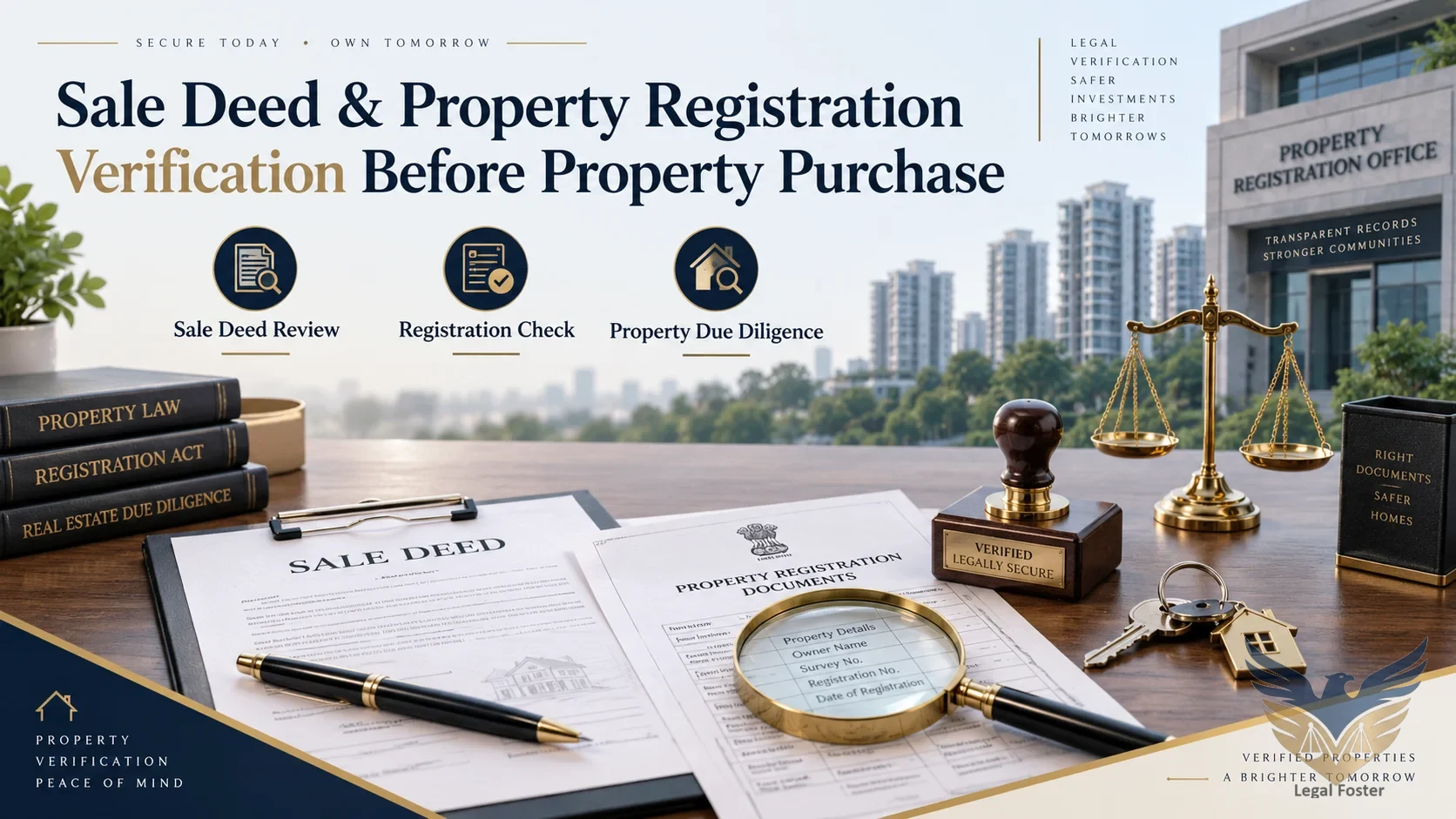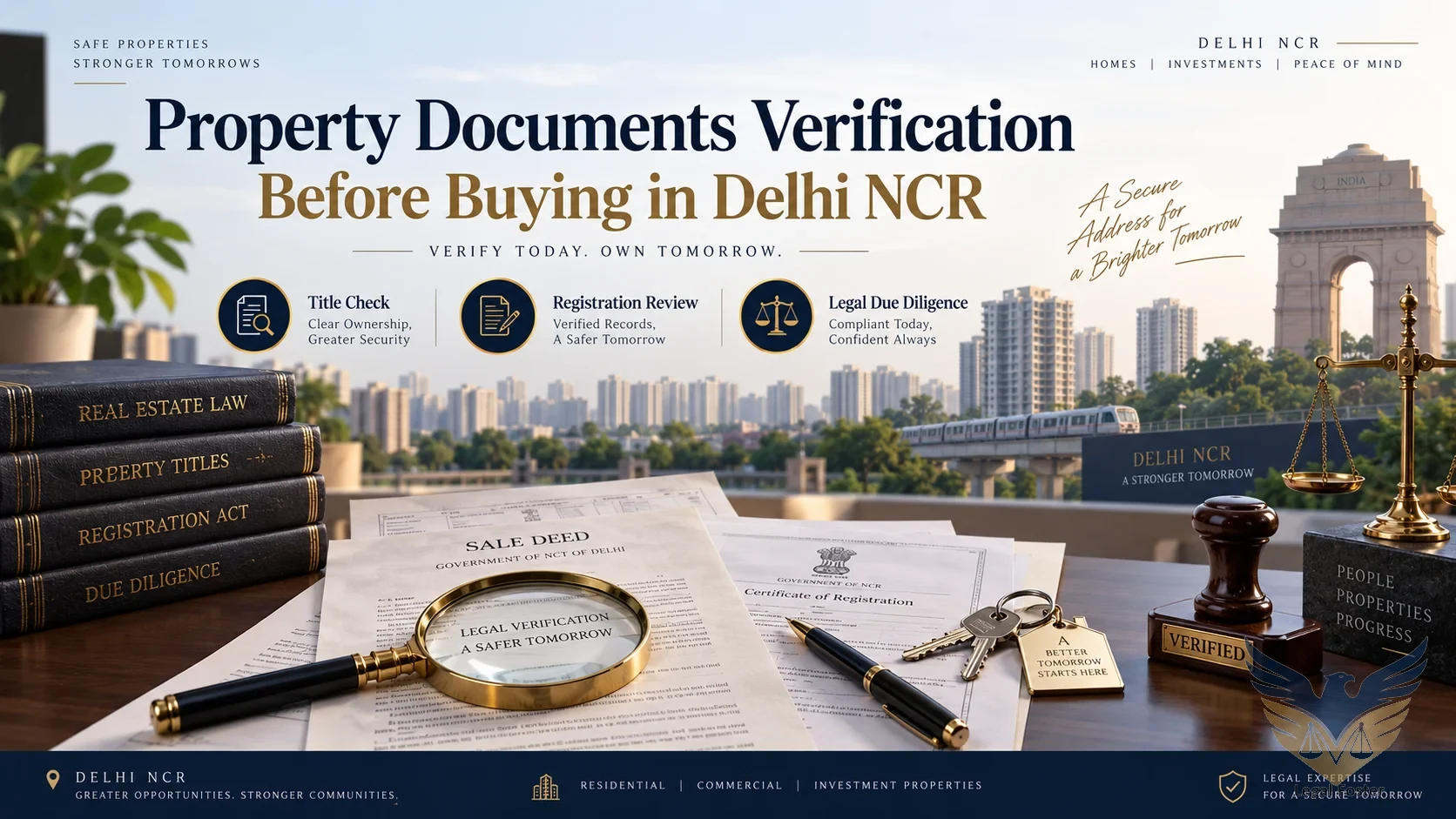
What Property Documents Need Verification Before Buying a Home in Delhi NCR?
It looks like a cakewalk to buy a property in Delhi NCR. Once you find that flat/plot/builder floor/house/commercial space of your dream, which is within your budget you can proceed further for registration of the property. But there are chances that this easy task turns out to be hectic for you when you start analyzing the documents.
Seller may have registered sale deed in his name and some old documents which help him prove the chain of possession. But this is not enough to ensure that the transaction you are about to undertake will be smooth. There are certain points you need to verify before buying a property in Delhi. Like clear title of the property, no dispute on possession, seller is authorized to sell, no previous illegal transfer of property done,etc. These are some of the many points one need to keep a check on while investing in property.
One should get all the documents verified before they lose a huge amount as token and sign an agreement to sell for a property in Delhi NCR whether its Delhi, Noida, Greater Noida, Ghaziabad,Gurugram, Faridabad or any where else.
Section 54 of Transfer of Property act 1882 says that, A sale of corporeal immovable property of the value of rupees hundred and cannot be made otherwise than by a registered instrument. Transfer of property acts also lays down certain duties of the seller under section 55.
Hence it is advisable to get your documents verified by a professional.
If you want PropertyLawyer.in to verify your property documents. Feel free to contact us at Property Lawyer Delhi for property documents verification. Mr. BK Singh will help you.
Why Should Property Documents Be Checked Before Buying in Delhi NCR?
Verification of Property documents mean exactly that...to know everything about the property you want to buy. About its ownership. Whether the property has clear title or there is some problem like title dispute or title defect or some document missing.
Sometimes these problems are obvious. If you are buying in Delhi NCR there could be numerous cases. Where buyer is actually buying a freehold property when it's a leased property. Or builder floor when the property actually belongs to DDA or was allotted by some authority. Group Housing Apartments, inherited Property from parents/guardian, resold flat by owner, Village property in trade area, commercial property and property under restriction of development.
Documents involved in these properties will be totally different.
Then there can be cases where every paper is genuine and shows owner has clear title to property. But still some rights are not with the seller. Example property is there and owner is actually staying in that property. But maybe in middle of the chain of title, there is some defect.
Don't take this as against sellers. Just be sure that you pay the amount for the worth you actually deserve.
Why Is Property Verification Important in Delhi NCR in 2026?
Since Delhi has old records as well as new records there will be instances where you will find DORIS records as well as NGDRS records.
This comes into picture when you are researching an older chain of transfer.
A buyer should know what they are purchasing, where did it originate from who sold it to them and do the documents match with the property that they are actually receiving?
There are different things you need to look for when buying a resale property in rohini vs buying a builder floor in south delhi or even flat in noida.
You should know about the history of the property that you're buying.
What Documents Should Be Checked Before Buying Property?
There is no magical “checklist” that can guarantee safety of every real estate transaction. However, broadly speaking, due diligence on a property and a good title review will include analysis of at least following documents: Title /Earlier title documents , Earlier transfer/ deed documents, Registration Records, Identity/Authority proof documents, Possession related documents, Approvals/ Encumbrance/ Financial related documents.
Final checklist would be decided based on facts and nature of property under transaction.
Sale Deed/Conveyance Deed
Current title document evidencing ownership of property.
Title Review would generally include verification of following:
- Name of seller;
- Description of Property;
- Consideration; and
- Boundaries/ Area. Furthermore,
- Execution and registration part;
- Reference to earlier title.
In addition, the following should be checked:
- Whether the name of seller is consistent with other records/statements;
- Whether said document matches with the property proposed to be transferred; and
Section 17 of Registration Act, 19 08 provides for documents which are required to be mandatorily registered. Sale deeds fall under this category. Therefore it is mandatory to get sale deed registered.
Earlier Sale Deeds/Title back chain
Sale deed recently executed by the seller is just ONE link in the title back chain.
Ideally, the buyer should seek to determine how the seller came to own the property. How did the title move from previous sellers down to the current seller?
Chain may be comprised of sale deeds/conveyance deeds. Earlier links can also be gift deeds, partition documents, release deeds, inheritance documents or any other legally binding instrument. Depending on facts of each transaction, there may or may not be intermediary documents linking current seller to first.
Lack of one or multiple documents in chain could be potential red flag. Missing links should be researched before proceeding with transaction.
Mother Deed/ Parent Title
Taking one step further, it may also be helpful to review prior title document of the property.
Examining parent title deed will indicate origin of seller’ curent title claim. Sometimes title dealings before current seller may give clues how previous transactions affect current transaction.
Importance of this document depends on property’s history.
Encumbrance/Charge related documents
Buyers should evaluate if any mortgages/charges are known to be recorded against the property.
Property which appears free and clear on manual verification could be mortgaged/funds dipped in other manner.
Title verification and encumbrance verification are two different exercise which should be carried out separately.
Mutation/ Revenue records
Mutation records tell how property is registered for purposes of revenue/ local records.
But buyer should NOT treat mutation as establish title on face value. Each record CLAIMS and DOES NOT CLAIM certain things. Buyer should know the difference.
Documents showing Possession
Documents that prove seller was in possession of property should be cross checked against property and transaction.
Including but not limited to Possession Letters, Possession Certificates, Handover Note or any other such record.
Seller’s actual possession should correspond with documentary possession. Any mismatch could indicate red flag.
Property Tax Receipts
Property tax receipts show payment/ acknowledgement of property taxes against the subject property.
Like mentioned above, these are merely ancillary documents which could help build a case. However, tax receipts alone should NOT be viewed as solid proof.
Approved building plan
If dealing with built property, parties should check if construction is as per sanctioned/approved plan of the property.
Special care should be taken while dealing with following:
- Buyer floors vs Builder floors;
- Independent Houses vs Apartment/ Flats;
- Commercial Properties;
- Extensions/ Construction on marginal lands.
- House Redevelopment;
- Additional floors/ Structural alterations.
Buyers should independently verify and NOT assume that every builder has done everything by book.
Completion/ Occupancy certificates
If available, Completion or occupancy certificate should reviewed as well.
Title document required would vary depending on type of project, location and who granted approvals.
RERA Related Documents (For Projects falling under RERA)
The Real Estate (Regulation and Development) Act, 2016 regulates sale and transfer of real estate projects that fall under its domain. Since title transfers from promoter to buyer are dealt within Section 17 of RERA, buyers should carefully examine project registration and allotment documents of a RERA registered project.
Documents Required to Check Before Buying a Property in India was last modified: December 5th, 2020 by Get Legal India
What Should Be Checked in the Seller's Documents?
Things become complicated when you cannot ascertain who is selling you the property.
Ask -
Is the seller –
- The titled owner (Whose name is on the records)
- A Joint owner
- Legal heir
- Power of Attorney holder
- Company/LLP Representative
- Trustee/Authorized person
- Developer/builder?
- Someone dealing in property under some other legal instrument.
Saleability should spring both from title & authority to sell. If you have inherited a property, you might need some extra documents depending on the circumstances- death certificate, will, succession certificate, legal heir certificate, probate (if required), release/partition documents etc. You cannot be certain of your requirements just by viewing the advertisement of the property.
What Should Be Checked Before Buying a Flat in Noida, Greater Noida or Ghaziabad?
Flat purchase deals in NCR on Uttar Pradesh side can involve documents issued by developer/development authority/society or association/registrar and various authorities.
Will cover scrutiny of allotment letter, builder-buyer agreement/paysheet, possession document/conveyance/sale document, approved plan, project specific records from builder/authorities etc.
Checklist will be slightly different for under construction/completed/resold/ held through different ownership/flats etc.
Should not follow Delhi specific checklist for every NCR property-blindly
What Documents Should Be Checked for Leasehold Property?
A Leasehold Property cannot be treated in the same way as straightforward freehold property.
Take for example the buyer may want to see the original lease, the deed of allotment, consent to transfer, conversion documents if applicable, ground rent account, leases covenants and correspondence with the landlord.
The sale may be subject to covenants within the lease.
That is why one reason why you should try and ascertain property type before requesting document checks.
Quick Facts About Property Document Verification
Verification of title ideally should have been done before parting with a large sum of money. The mere existence of a registered sale deed does not obviate the need for doing title due diligence. Section 54 of Transfer of Property Act, 1882 deals with sale of immovable property. Section 55 deal with rights and liabilities of buyer and seller. Registration is mainly governed by Registration Act, 19 .. The following Sections are more relevant:
- Section 17 of Registration Act deals with documents which are to be compulsorily registered.
- Section 49 of Registration Act deals with penalties in event of non-registration of documents which are to be registered.
- Previous deeds/partnerships etc., of the current seller may not always show complete history of title.
- Title search would also entail examining old title documents.
- Mutation is not a proof/conclusive evidence of ownership.
- Property tax receipts are only evidentiary in nature.
- Checking for Encumbrances is one of the key due diligence steps.
- There can be Mortgages against property.
What Is the Legal Framework for Property Verification?
Depending upon the facts of a particular situation, multiple laws could apply to a property transaction in India.
Transfer of Property Act, 1882
This Act deals with sale, gifts, exchanges, leases etc. of immovable property.
Section 54 talks about Sale and mode of making certain sales.
Section 55. Statutory Rights and liabilities of buyer and seller.
Unless otherwise provided in the contract between the seller and the buyer, the following are the rights and liabilities of the buyer and seller.
(This is subject to the provisions of the Act)
Registration Act, 1908
This Act deals with compulsory registration, effect of non-registration. Section 17 of the Registration Act talks about documents which require compulsory registration. Section 49 of Registration Act, 19 08 talks about effect of non registration in certain cases.
RERA may also apply to some real estate projects.
Remember – One simple thing for buyers to keep in mind –
Property verification doesn’t just mean checking if the document you are buying has a registration number or not. Read the documents together.
Who Should Get Property Documents Checked by a Lawyer?
Title search & verification has proved to be most advantageous for the buyer who is:
- Buying a expensive residential property
- Buying an inherited property
- Buying from more than one co-owner
- Buying a builder floor
- Buying a resale apartment
- Buying land/plot
- Buying a commercial space
- Buying property from NRI seller
- Buying an authority allotted / leasehold property
- Buying a property with suspicious title history
- Buying a property when seller is not able to produce complete chain of documents
For first time home buyers……Clarity . is priceless.
You don't have to read each and every line of the law yourself. You need to understand if the seller's documents adequately support the deal you are being offered and what questions remain unanswered.
What Is the Property Document Verification Process?
First, your lawyer will gather the property records that are available.
Next, they will review these documents together rather than one-by-one. Your lawyer may cross-reference names, property description, size, boundaries, dates, registration information and chain of transfer found throughout the records.
Registration or public records may be searched where applicable.
Your lawyer will then note any gaps in the documentation.
This could be that the seller claims inheritance, but the documents do not clearly establish the succession. It could be that the property has changed hands many times, and the previous deeds should be reviewed.
Finally, you will be advised on the strengths and weaknesses of the paperwork and what issues, if any, should be resolved before proceeding with the transaction.
The objective is to provide you with the information you need to make an educated decision – not delay the process unnecessarily.
When Should You Hire Advocate BK Singh for Property Verification?
If the seller does not have a full chain of documents, there are multiple owners, it is heir property, a power of attorney is signing on behalf of the owner, or if there are any other unusual things with how the property is registered or possessed, consider having an attorney review the deal.
The other time that it makes sense to have your deal reviewed by a lawyer is when you are using a substantial amount of your savings or business funds to make the purchase.
Advocate BK Singh will go over with the buyer exactly what the documents say. What the gaps are, or isn't said and what issues you should consider before moving forward with the deal.
You aren't trying to scare the buyer into not buying a property.
You are allowing the buyer to know what they are getting themselves into.
Frequently Asked Questions
Here are some Frequently Asked Questions about buying property and property document verification in Delhi NCR.
Q1) What are the vital documents to be checked while buying a property in Delhi NCR?
Ans. There are few basic documents which need to be verified by every buyer while purchasing a property. They are title documents, previous title documents, registration documents, seller identification & authority to sell documents, possession related documents, property tax papers and encumbrance/ approval related documents(if any). If you are buying a builder floor/ flat, property gifted/ inherited from someone or allotted by some authority then there can be some other document associated with it. You should verify all of them. Contact Advocate BK Singh for help understanding what all documents you should check in your particular case.
Q2) Should the sale deed be enough if it has been registered?
Ans. There is no magic document which you can take and blindly trust a seller on the basis of that document. Yes the sale deed is important and should be verified but how the seller is in possession of the property should also be verified. The buyer should check if the previous documents of the property support the sale being done currently. The registration act 1908 specifies when and what documents need to be registered and the property act talks about few things which the seller and buyer need to keep in mind before sale. Consulting a good lawyer will help you understand all these.
Q3) Is it necessary that I get the property verified by a lawyer before paying the token amount?
Ans. Yes, it would be better if you could verify the property with a lawyer before taking any major step towards the property. However if you discover a grave issue in the documents only after paying some token amount to the seller, then you might face commercial problems later on. Although your lawyer can tell you what documents are there and what things you should clarify before proceeding further. However the answer to this question will depend upon your case and the contract agreed between you and the seller. For legal assistance related to buying property in Delhi you can get in touch with Property Lawyer Delhi.
Q4) Will mutation establish my ownership over the property?
Ans. Mutation is not the proof of title. When a property is sold mutation is done which just involves change of names in different records of the property. Sometimes due to illegal activities even the mutation papers and property tax papers of the property might be in the name of the person who is not the actual owner. So you should get help of Advocate BK Singh to understand what does mutation means with regards to your property.
Q5) What all should I verify before buying a builder floor in Delhi?
Ans. You should verify the parent property documents. That means how the builder came into possession of the property on which he is building the floor and if he has the right to build on that property. You should also verify documents which shows he is in possession of that property and builder floor. Since you are buying a builder floor you should also check from whom you are buying it and if he is authorized to sell the floor. There can be some other documents which you should verify according to your case. Consult a property lawyer who will check all the necessary documents for you.
Q6) What documents should I verify if I am buying a property through inheritance?
Ans. If the property has been sold to someone after inheritance, then you need to check different set of documents. The seller should be able to provide you with all the documents of the previous owner. Meaning the person from whom he inherited the property. This includes death certificate of the previous owner, will(if any), legal heir’s certificate of the seller and all other documents which validates his inheritance of the property. Since every property is different you should consult a lawyer before buying a property which you are going to inherit.
Q7) What should I do if the seller has not all the previous documents of the property?
Ans. Just because a document is missing from the chain of documents doesn’t mean that you should not proceed with the sale. But you should first know what document is missing and why he doesn’t have that document. There are certain cases where we can prove the missing document by looking at the other available documents. But that can be decided only after studying the documents which are available with the seller. Please consult Advocate BK Singh if you are stuck and don’t know what to do when a document is missing.
Q8) Do I have to check different documents if I am buying property in Noida or Ghaziabad?
Ans. Delhi NCR covers alot of districts. According to that the answer can be both yes and no. Some properties will require the same set of documents which are needed to buy property in Delhi. But there can be properties which have documents unique to them. So you should verify your property on the basis of where your property is located and what kind of property are you buying. Property in Noida, Greater Noida, Ghaziabad, Gurugram, Faridabad or Delhi should be checked by a lawyer before buying.
Q9) When is the best time for me to get my property documents verified?
Ans. You should get the property verified as soon as you can. Because once you start paying big amounts of money to the seller or sign a contract with him, it might become troublesome for you to backtrack later on if you find something wrong. So it’s always better to verify your documents before signing any contract with the seller. Property Lawyer Delhi will help you verify the documents before you go and buy your dream property.
Q10) Why should I choose Advocate BK Singh for verification of my property documents?
Ans. Buying a property is one huge investment that you want to make. You definitely want to make sure that you have checked every document related to the property you are buying. Also it’s sometimes difficult for a layman to connect one document with another and see the bigger picture. A good lawyer will help you out. He will verify the document and tell you exactly what you are getting into. Advocate BK Singh provides legal services to those who are planning to buy a property and are confused whether they are going into trouble or not.
Final Thoughts
Buying a property may cost you months of savings, EMI’s etc.
Doing your legal due diligence while buying a property can be the wisest investment you make.
Does the Seller have documents?
No. That’s not the question to ask. You need to ask whether the set of documents which the seller has will enable you to buy this property.
That is where Property Due Diligence helps you.
Buy Property in Delhi NCR after Consulting with an Advocate.
Advocate BK Singh – Property Lawyer Delhi can guide you with the documents involved in the transaction.