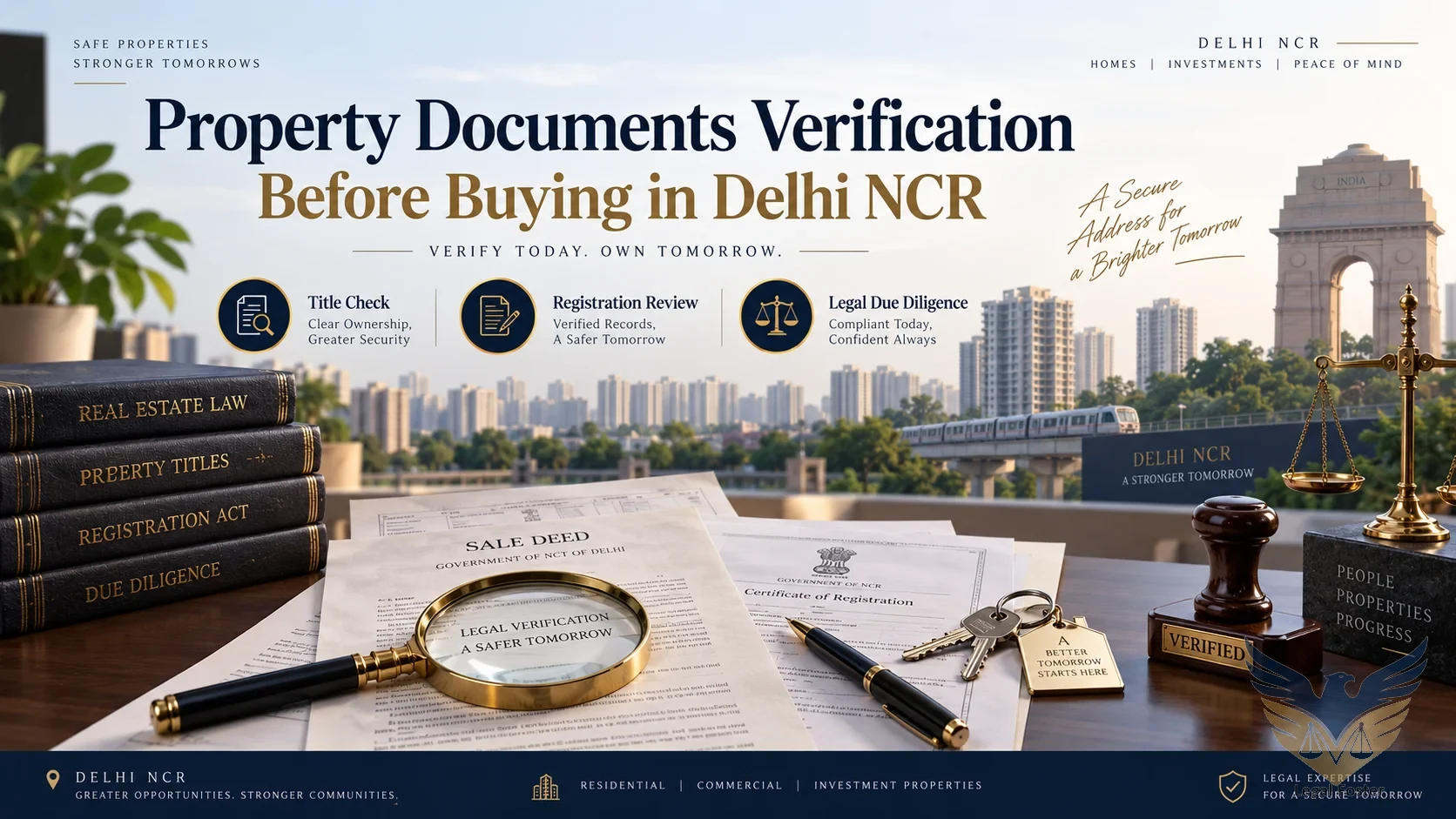
Why Should NRIs Hire a Property Lawyer in Delhi for Property Verification in India?
Buying/selling/managing property from abroad may seem easy until you get a title document/deed of sale/mutation entry/power of attorney that raises doubts. As an NRI, the challenge is often not finding a property you want to buy/sell/manage. The challenge is knowing if you can rely on the property from a legal standpoint before investing your money/signing on the dotted line/finalizing a family arrangement.
NRI Property Verification is a legal due-diligence exercise which analyses the ownership, title history, property registration records, encumbrances, permissions, sale/purchase documents and other records related to a property which is under consideration by an NRI for purchase/sale/ownership. Verification (and the checks required) will vary depending on the property, state, transaction history and available documentation.
You could be residing in Dubai, London, Toronto, Singapore, New York or any other city while the property is in Delhi NCR, Noida, Greater Noida, Ghaziabad, Gurugram, Faridabad or elsewhere in India. When you live far away from your property, verifying documents in person becomes difficult. You may have family members managing day-to-day activities. You may be getting photocopies from a broker. You may be told by a seller that “all documents are clear.”
But can you take that statement at face value?
Property Lawyer Delhi can help you with a comprehensive legal analysis of property documents and transaction risk before you, the NRI, commit to the transaction. The goal is simple: know where you stand legally with respect to the property before you commit to a financial decision.
Related Property Legal Services
- Property Lawyer Delhi – Legal assistance for property-related matters and documentation.
- Property Verification Lawyer – Legal review of property documents and available records.
- Property Title Verification – Review of ownership and title history.
- Property Due Diligence – Legal due diligence before a property transaction.
- Property Documentation Lawyer – Assistance relating to property transaction documents.
- NRI Property Lawyer – Legal assistance for NRIs dealing with property in India.
- Property Dispute Lawyer – Legal assistance concerning property-related disputes.
- Property Registration Lawyer – Legal guidance relating to property registration matters.
- Inherited Property Lawyer – Assistance with property matters involving inheritance and succession documents.
- Power of Attorney Property Lawyer – Review of POA-related property transaction issues.
Why Does NRI Property Verification Matter in 2026?
NRI property transactions often involve more than standard title verification. The sale may also involve FEMA issues, documentation of ownership, registration laws, inheritance, power of attorney, payment routing and repatriation concerns.
According to RBI guidelines, "An NRI or OCI can purchase any immovable property (except agricultural land/plantation/farmhouse) in India." But the purchase should be aligned with FEMA regulations.
But just because a property is up for sale to an NRI doesn't mean it's completely ready to buy. It can have a sale deed executed on government records and still have issues with prior title deeds, inheritance, co-owners, mortgages, court litigation, land-zoning restrictions or encumbrance certificates. And if you're relying on someone in India to handle the transaction, such as a family member or power of attorney, you'll want to be sure they have done their due diligence.
Professional due diligence from a lawyer can help.
If you're using Property Lawyer Delhi, advocate BK Singh will analyze the property paperwork, flag any obvious issues and advise you on what to verify before proceeding with the transaction.
What Should an NRI Know Before Buying Property in India?
Instead of asking “How soon can we register the property?” we should be asking “Can the seller prove he has a clear and marketable title to the property?”
The answer will typically require review of the chain of title and supporting documents. These may include:
- Current ownership and past title documents
- Title transfer documents (deeds, conveyances, transfers)
- Succession documents if inheritance is involved
- Encumbrance and mortgage history
- Mutation/probate/revenue records, as applicable
- Property tax records
- Building/development approvals and land-use records, as applicable
- RERA information for new projects under RERA
- Existing lease agreements, Power of Attorney and authorization documents
- Litigation, if any. (this may be discovered through the above documents)
- Foreign exchange regulations impacting the transaction with the NRI.
Rather than trying to apply the same checklist to every property, the specific issues should be tailored based on the property and deal.
What Are the Quick Facts About NRI Property Verification?
- An NRI means a person resident outside India who is a citizen of India.
- An OCI is defined separately under FEMA.
- FEMA can regulate transfer of NRI property.
- Acquisition and transfer by persons resident outside India relating to specified securities and immovable property in India is regulated by RBI.
- An NRI can freely acquire any immovable property that is not prohibited by FEMA.
- Agricultural land falls under a separate restriction.
- Plantation property falls under another restriction.
- Farm houses have their own restrictions.
- NRIs can acquire residential house property subject to conditions under FEMA.
- Commercial real estate can also be acquired by NRIs.
What Does NRI Property Verification Actually Cover?
NRI property due diligence involves reviewing the legal documents and other records related to ownership and the contemplated transaction.
When reviewing real estate transactions for an NRI buyer, title is of utmost concern. Who is the owner? How did the current owner become owner? Were prior transfers adequately documented? Does someone else have or claim an interest? Is there a mortgage or charge? An inheritance question or dispute? And so on.
When representing an NRI seller, the issues may be different. The legal due diligence may focus on the seller’s ownership, capacity to sell, whether co-owners must join in the sale, documentation, use of power of attorney, FEMA requirements, etc.
At Property Lawyer Delhi, we can tailor the legal due diligence to the specific transaction instead of approaching every NRI property issue the same.
Which Laws Matter in an NRI Property Verification?
Does FEMA Regulate NRI Transactions?
Yes. FEMA forms part of the core regulatory framework for the specified transactions by persons resident outside India.
The Foreign Exchange Management Act, 1999 provides the legislative framework, while the Foreign Exchange Management (Non-Debt Instruments) Rules, 2019 ("NDI Rules") and associated RBI guidelines deal with questions relating to acquisitions and transfers. References are also made to FEMA, the NDI Rules and applicable Master Direction for specifics of various transactions in RBI's FAQ on NRIs currently on their website.
An NRI can, in general, purchase any immovable property other than agricultural land/farm house/plantation property subject to certain conditions.
Does the Registration Act Matter?
Yes. The Registration Act, 19 08 governs registered instruments pertaining to immovable property. Section 17 sets out classes of documents which require compulsory registration.
Consequently, a legal review would necessarily focus on whether or not the documents that make up the chain of title were executed and registered (if necessary) properly.
Does the Transfer of Property Act Even Matter?
Yes. Section 54 of the Transfer of Property Act, 18 82 defines sale, inter alia. It goes on to stipulate how sale of tangible immovable property should be effected by means of a registered instrument in specific circumstances.
The relevant question for an NRI isn't whether a seller has a piece of paper titled "sale agreement." The question is does the ownership and transfer paperwork support the transaction they are proposing.
Who Should Consider NRI Property Verification?
Does an NRI Buyer Have To Verify Property Before Paying?
Yes. If an NRI is buying a flat, builder floor, independent house, commercial unit or land that has been permitted for development, it’s wise to get the legal “documents” verified before paying hard-earned money.
Especially helpful if the NRI has never seen the property, or the sale is being managed by family members, brokers or someone holding power- of-attorney. Delhi Property Lawyer will help clients understand what needs to be checked and if there are any other missing documents or explanations needed.
Does an NRI Have To Verify An Inherited Property?
Yes. Special care should be taken when dealing with inherited property as ownership may be contingent on succession documents, prior title, wills, family arrangements, probate (if relevant to the property) and interests of other heirs.
Even if a family member reassures you saying “don’t worry, the property is in your name”, it doesn’t mean the legal title has been established. It’s best to understand where the property “title” actually stands legally.
Does an NRI Seller Need Property Verification?
Yes. Sellers should also have their property reviewed by a lawyer prior to signing any agreements, particularly if the property has old documents, multiple owners, been inherited or an attorney has been appointed in India.
It can help uncover any missing documents before your buyer conducts their due diligence.
Which Documents Should an NRI Keep Ready?
Documents expected from an NRI Buyer?
The list can vary on a preliminary document check may include:
- Deed of sale/conveyance of property
- Earlier title documents
- Agreement to sell, if already executed between parties
- Allotment/possession document
- Mutation/revenue records, if available
- Property-tax receipts
- Encumbrance free certificate/free title endorsed documents if available
- Approved building plan/layout if relevant
- RERA documents if relevant project
- Documents confirming ownership & identity of seller
- Documents relating to co-owners if any
- Will/Succession certificates if applicable
- Existing Power of Attorney, if any
- Photographs of the property and location wise details, if helpful.
- Disclaimer: The list may vary from property to property.
How Long Does NRI Property Verification Take?
There is no single legally prescribed completion period for every property verification exercise.
The practical duration depends on the property location, number of title documents, availability of records, age of the transaction, ownership history and need for additional verification.
A straightforward document review can be different from an old inherited property involving several transfers and multiple owners.
NRI clients should avoid fixing a registration date first and expecting legal verification to fit into whatever time remains.
Verification should ideally precede the major financial commitment.
What Mistakes Do NRIs Commonly Make?
Do NRIs Rely Too Much on Relatives?
Sometimes. Family assistance is useful, but personal trust cannot replace documentary due diligence.
Is a Broker's Assurance Enough?
No. A broker's commercial representation should not be treated as independent legal verification.
Can an Old Registered Sale Deed Be Accepted Without Further Checking?
Not automatically. Earlier transactions and supporting title documents may still matter.
Is Mutation the Same as Ownership?
Mutation and revenue entries can be relevant evidence, but they should not automatically be treated as a complete substitute for title documentation.
Is a Power of Attorney Enough?
A power of attorney establishes authority only within its legal scope. It does not by itself cure an underlying title defect.
Can an NRI Ignore FEMA Because the Property Is in India?
No. The fact that the property is physically located in India does not remove applicable FEMA considerations for a non-resident transaction.
Can Agricultural Land Be Treated Like a Residential Flat?
No. FEMA contains different treatment for agricultural land, farm houses and plantation property.
Should the NRI Pay First and Verify Later?
That approach can expose the buyer to avoidable risk. Legal review is more useful before substantial commitment.
Is a Family Settlement Automatically Sufficient?
Not necessarily. The legal effect depends on its contents, execution, registration requirements where applicable and surrounding ownership facts.
Does Legal Verification Guarantee a Dispute-Free Future?
No. Verification reduces identifiable transaction risks but cannot guarantee that no future dispute will arise.
What Are the Risks of Ignoring NRI Property Verification?
The consequences can extend well beyond a difficult registration appointment.
A title problem may create financial exposure, transaction delay, family conflict, resale difficulty or litigation risk. An NRI living abroad may then have to coordinate documents and legal proceedings from another country.
A property that looked inexpensive may become expensive after legal complications begin.
The issue can become even more difficult where several family members are involved, the property has passed through inheritance, or the proposed transaction depends on a power of attorney.
Early professional review can provide clarity before those problems become harder to address.
How Can Property Lawyer Delhi Help With an NRI Property Matter?
Will Advocate BK Singh Review Property Documents?
Advocate BK Singh can review property documents that are available and advise on obvious legal and documentation issues for the proposed transaction.
Will Property Lawyer Delhi Be Able to Assist if I Live Abroad?
Yes. Document review and consultation can be tailored around the NRIs schedule while any verification or execution needs would depend on the property and transaction involved.
Will Property Lawyer Delhi Be Able to Assist With Property in Delhi NCR?
Delhi property Lawyer can assist you with regard to properties in Delhi NCR including Noida, Greater Noida, Ghaziabad, Gurugram, Faridabad etc., subject to the availability of the records and title issues involved.
Can Advocate BK Singh Help Me If I Have an Inherited Property?
If inheritance is part of the title history, Advocate BK Singh can review the succession and property documents, if available and explain any legal matters that need attention.
Can Delhi Property Lawyer Review a Power of Attorney?
Yes. A power of attorney can be reviewed to confirm its validity for the transaction including what authority it grants and how it relates to the proposed transaction with property.
We seek to ensure that the NRI client has a clear understanding of the legal position before making a decision on an important property matter.
Frequently Asked Questions
Can an NRI buy property without verification?
Legally, an NRI can buy permitted immovable property subject to FEMA and other applicable laws. Whether to conduct legal verification is a separate due-diligence decision. RBI guidance allows NRI/OCI to purchase specified immovable property other than agricultural land/farmhouse/plantation property subject to the applicable framework. Property Lawyer Delhi reviews the proposed transaction, ownership documents, and supporting records available to the client before they commit.
Can an NRI buy agricultural land in India?
The RBI framework differentiates agricultural land/farmhouse/plantation property from permitted residential/commercial property transactions. Agricultural land in India is treated differently than other immovable property that an NRI or OCI person may buy. State property laws may also apply based on where the property is situated and how the person acquired Indian residency. NRIs should seek transaction specific legal advice from Property Lawyer Delhi before buying agricultural land.
Do you need power of attorney for buying property in India?
A power of attorney may be helpful in certain NRI property transactions but is not required for every situation. Whether to use a power of attorney depends on if the NRI wants to grant authority to an individual in India to act on their behalf. The power should clearly define what authority is granted. Property Lawyer Delhi can review a proposed power of attorney in connection with the planned transaction. This will ensure the NRI understands the extent of authority they are providing.
What documents are verified for property verification for NRIs?
Documents will vary depending on the property and history of transactions. Verification may include reviewing the current sale deed, prior title documents, conveyance/allotment, possession, mutation, property-tax records, inheritance/paternal property, wills, partition/deed of gift, encumbrance certificates, authority approvals and more. Property Lawyer Delhi can pinpoint relevant documents for the subject property instead of using the same checklist for every NRI client.
Can we verify property from outside India?
Yes, the initial legal verification of documents can occur while the client is outside India. Have the necessary documents emailed or scanned for review. Often review will lead to requesting additional information, originals, certified copies, local verification, etc. Property Lawyer Delhi will coordinate the legal document verification process based on the client's needs. Physical inspection, government records, and execution of documents may vary based on the property subject, applicable authority, and transaction details.
Will registration of sale deed ensure that the property has no legal dispute in future?
Registration of a sale deed is one important step in the transfer of property. However, registration does not guarantee that legal issues may not arise in the future. Prior ownership, inheritance issues, co-ownership issues, mortgage/litigation against property, etc. may need to be reviewed. Legal Advisor BK Singh knows the various documents which require compulsory registration under The Registration Act, 19◦08. A lawyer can review the chain of title and other supporting documents before you make decisions about the property.
Can a person residing abroad inherit property in India?
Yes, an NRI or foreign citizen can inherit property in India. However, there are nuances under Indian law that may apply. For example, RBI's FAQ regarding Foreign Exchange Management Act (FEMA),states Section 6(5) of FEMA does permit acquisition of certain property inherited from property held or owned when person was resident in India. Depending on how the property is inherited, other details of the deceased owner may need to be reviewed. Property Lawyer Delhi reviews property paperwork for clarification of title when inherited property is concerned.
Will FEMA regulations apply when selling an NRI property in India?
Yes, FEMA India regulations apply to certain portions of the sale and repatriation of funds. RBI provides guidance regarding transfer of immovable property by NRIs. Certain conditions apply to repatriation of sale proceeds once cleared for foreign exchange. The specific situation depends on the history of how the property was acquired and other conditions. Property Lawyer Delhi reviews sale of NRI property including legal concerns and documentation.
Property verification is only for Delhi NCR?
Property Lawyer Delhi assists clients with property matters involving Delhi NCR and beyond. Property transactions are location specific and authority/public records differ. Contact Property Lawyer Delhi about property verification in India outside of Delhi NCR. For NRIs living abroad, start by sharing the property location and any known about the title. Property Lawyer Delhi will advise on specific verification requirements based on property location.
Why should I hire Advocate BK Singh for NRI property verification in India?
Indian property law may be confusing for persons living outside of India. Advocate BK Singh can explain documents related to your property transaction in India. Instead of just giving a general overview of property laws. Hire Property Lawyer Delhi to research your property and provide legal advice on any concerns. Whether verification of documents or reviewing title history.Property Lawyer Delhi can assist with NRI property matters based on your needs.