What Can Borrowers Do After a Cheque Bounce Following a Loan Recall Notice?
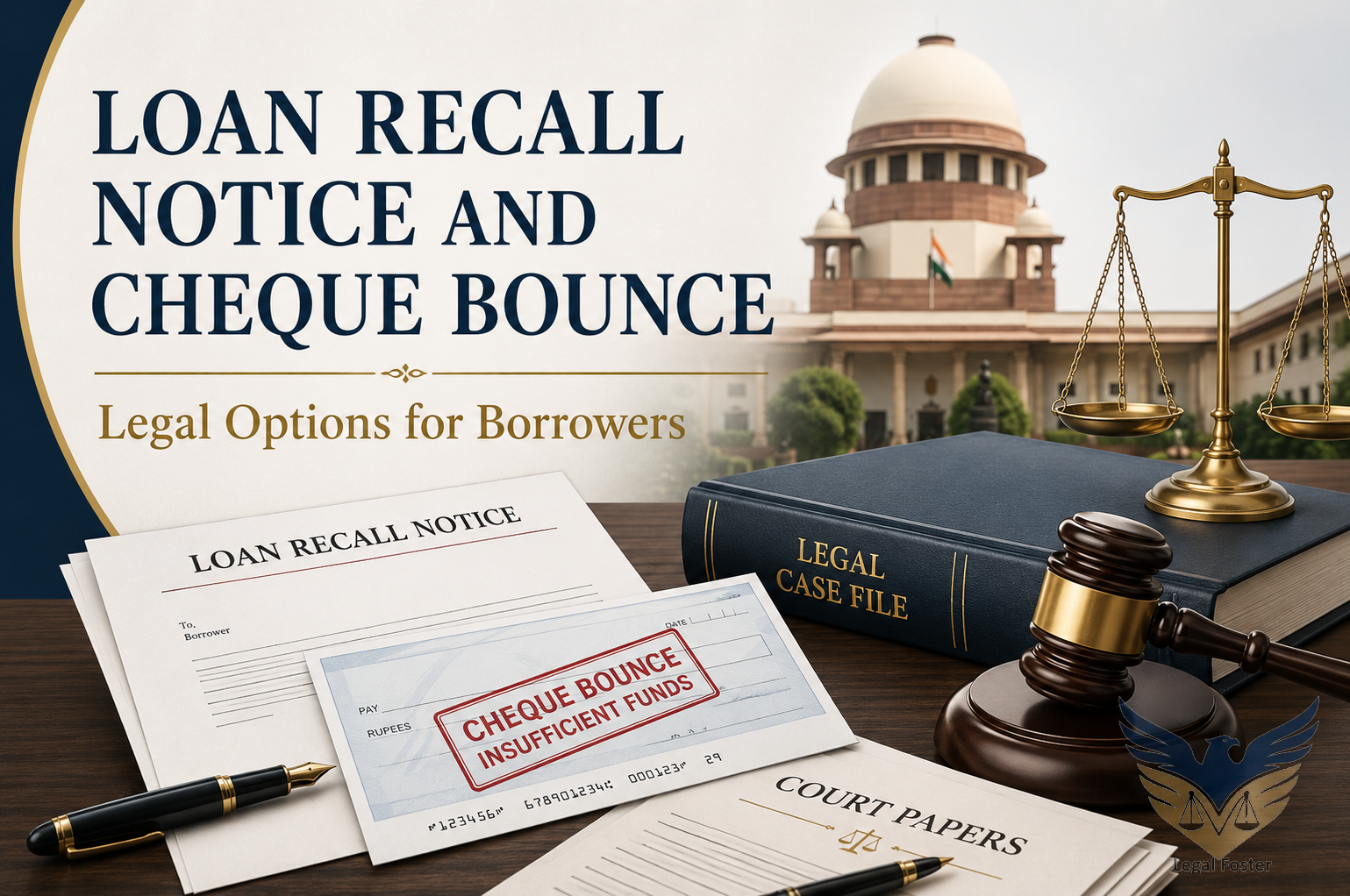
A cheque bouncing can turn a bad loan repayment situation into a legal nightmare overnight. While it delivers one notice demanding repayment of the outstanding loan amount, the next one may very well be a statutory demand for cheque dishonour. The two notices are connected, but are legally separate issues.
Missing an EMI may be the first inkling for a salary-earning borrower that something has gone wrong after changing jobs, falling ill or facing delay in receiving salary. For an SME owner, it could follow a period of negative cash-flow, where an oldsecurity cheque gets presented after his account balance has fallen. Pressure from relatives, anxiety and fear of legal notices force people into panic mode: avoiding calls, accidentally sending an acknowledgement or issuing new cheques “sight unseen.” Typically people take action, which makes the situation worse.
Don’t panic. Or agree to pay up, if you can’t. Don’t lose any of the correspondence. Verify why the cheque was deposited in the first place, and deal with the loan/account dispute separately from the cheque issue. Loan recall notice and cheque bounce issues have three components: recovery under the contract, a Sec. 138 claim and, where applicable separate enforcement action on the security.
“For both borrowers and lenders,” says advocate BK Singh, “I generally advise people to go step-by-step. Understand what paperwork is available, respond as per the facts and if you are agreeing to a payment schedule, get that in writing. Don’t let emotions or panic cloud your judgement, because a missed deadline will limit your choices going forward.”
Why a Loan Recall Notice Can Become Urgent Across India
Receipt of a recall notice itself is only prima facie evidence that the entire outstanding loan amount became due and payable under the terms of the loan agreement.
Typically, this would be after a default or other event of default specified in the agreement, explains Singh. It does not confirm that every sum of money claimed was correctly owed. Nor does the recall notice, alone commit a Section 138 offence.
The cheque, the purpose for which the cheque was issued and the statutory notice period-end record are still highly relevant evidence. Most defaulting borrowers in Delhi, Noida, Ghaziabad, Gurugram and Faridabad encounter bank branch visits, NBFC recovery agents and civil court summons while commuting to work or managing petty businesses. Mumbai, Pune, Bengaluru, Hyderabad, Chennai, Kolkata, Ahmedabad, Jaipur and Lucknow are no strangers to this stress. WhatsApp promises or oral assurances rarely ever solve the legal problems that a recall and dishonour indicate, says Advocate BK Singh.
Quick Facts
Remember that cheque- bounce complaint cannot be filed mechanically upon receipt of the statutory notice. Section 138 would have relevancy only if the cheque was issued for discharge of any debt or other liability enforceable by law when the cheque was issued and there exists a statutory set- of- conditions. Also , the payee bank is required to send a statutory notice asking for repayment within a period of 30 days from when the bank had received the knowledge and information of the cheque having been dishonoured. The drawer has 15 days of receiving the said notice to make the payment good. If he fails to do so , statutory cause of action accrues in favor of the payee bank. Cheque- bounce complaint must be filed within one month from the date on which such period of 15 days expires and may be extended further by the court exercising its discretion to condone the delay if the law permits. If a lender lends money as a secured creditor , it can always enforce its remedy under the security without having to rely on Section 138 . Therefore , a secured lender cannot recover twice for the same debt.
What Is the Actual Legal Problem After a Recalled Loan Cheque Bounces?
In shortterms, The question is,Was the dishonoured cheque drawn for an amount which was legally enforceable against the drawer on the date of its presentation? Merely describing a cheque as a “security cheque” cannot stave off investigation.Whether if amount became payable on presentation of the cheque, merely describing it as such would not defeat a Sec 138 claim; If the amount which became payable, authority to present cheque, debt/transaction trail exist etc, is seriously in dispute, that is a relevant fact.If amount became payable on date cheque was presented, Section 118 & 139 of NI Act will not help the debtor make a defense in a Section 138 NI Act case and Dated Promissory note/loan agreement overrides an older signature only loan agreement.
Section 118 along with Section 139 of NI Act gives rebuttable presumption in favour of consideration and liability once execution of the document is proved. BK Singh Advocate says sir has analyzed loan account register, terms on which cheque was issued, recall computation and correspondence collectively and not bank’s return memo in isolation as a complete case.
Which Laws and Proceedings May Apply?
Suppose a cheque bounce happens after defaulting in a loan agreement. In that case, what laws would be applicable to the situation, and what proceedings might be initiated? Dishonour of cheque is mainly a criminal offense. Section 138 of the NI Act, 18 81 punishes the dishonour of cheque for insufficiency, etc. of funds or it exceeding the amount arranged to be paid by drawer, if the requisite conditions are fulfilled statutorily.
Imprisonment for up to two years or with fine which may extend to twice the amount of cheque or both, are the punishments. Section 142 lays down when cognizance may be taken, who can complain and the statutorily laid complaint mechanism.
The lender's ability to recall would depend on the loan agreement, the default clauses in the agreement and the account records. Civil recovery can be initiated along with cheque case, but both the remedies are available only for the same principal debt. SARFAESI Section 13(2) demand, subsequent Section 13(4) action and Section 17 application before DRT are different questions altogether from Section 138.
Attorney at law BK Singh will easily know if the notice sent to you is merely a loan recall letter, a cheque law notice, a SARFAESI notice or a notice wrongly amalgamating all. That makes a difference to the urgency of your response and manner of it.
Who Should Read This Before Replying?
Guidance is given to those who have borrowed money and provided post-dated or loan closure cheques, Guarantor whose property is being threatened for recovering the loan, director of the borrower-company against whose cheques are being dishonoured. Attention has been given to those relatives who are being threatened in case of personal-loan accounts and even to owners when his business is undergoing a temporary phase.
If you believe that the loan was never disbursed in writing, partially refunded, unlawful amounts were added or the debt was sold to another firm please do not shred the documents. Collect proof first before sending out a boilerplate denial or an emotionally penned reply. Says Lawyer BK Singh.
Documents Which Can Shift The Stand
Keep originals and make clear copies of:
- loan sanction letter, loan contract, schedule of repayment/slippage and recall notice;
- bank statement/ e Statement, EMI receipts and proof of part- payments;
- cheque slip/ print out/counterfoil, return memo and stop- payment (if given any) instructions;
- demand notice/letter, covering envelope, tracking number and proof of delivery receipt;
- negotiations/settlement messages/ emails, text talks and lender’ banker’s worksheet.
- board resolution of company, surety/ security docs whereever relevant.
If you dont have these paperwork, it will not “rule” against you. But you will find it difficult to establish your legitimate claim. As per Advocate BK Singh , Keep it in softcopies.
When To Get Legal Help For Cheque Return Notice?
If the cheque was signed in blank, if it is a security cheque, if it was signed by someone else on your behalf, if it was issued for a balance you’re disputing or if it is presented to the bank after you’ve entered a fresh payment plan, contact a lawyer immediately. Also seek advice at the earliest if the notice mentions more than one agreement, a guarantor/company or seeks action for recovery of possession or mentions/threatens a case under Section 138.
Consider Advocate BK Singh to understand the timings you have before you choose to respond to the notice, make a payment offer or defend against a summon. Other readers looking for a more comprehensive help can look at Cheque Bounce Lawyer for help with the legal notice, drafting your response and assistance with reaching settlements across India.
How Cheque Bounce Lawyer Can Assist Without Overpromising
At Cheque Bounce Lawyer, we conduct a fact- based analysis of loan agreements, cheques, bank memos & notices. Advocate BK Singh leads our clients through the process of understanding what legal action is appropriate, preserving evidence and pursuing a settlement or court judgement in favour of our clients where the facts will allow.
The value for a borrower is understanding how not to inadvertently make admissions and lose important dates. The value for the lender/payee is understanding how to make sure the statutory documents are complete before proceeding.
Outcomes will depend on the cheque, the underlying debt, the paperwork involved and each party's actions.
Frequently Asked Questions
Q1. Can loan recall notice itself amount to guilt of cheque bounce?
Ans. No. If its only a contractual recall then it does not by itself satisfy Section 138 which must be predicated on the dishonoured cheque and a legally enforceable liability subject to conditions precedent.
Q2. Can bank demand security cheque from me after recalling my loan?
Ans. Possibly, it depends on the paperwork related to the loan and if any amount was due on any Liability. Security cheques can still be valid depending on the underlying transaction they are securing.
Q3. What is the time period to respond after getting notice under Section 138?
Ans. 15 days to make payment from the date of receipt of the demand notice. Bouncing cheques can lead to prison. Based on experience, please do NOT rely on received/noted etc. on delivery. Please seek advice early.
Q4. Can I contest the wrongful amount against my cheque mentioned in cheque-bounce case?
Ans. Yes. Facts regarding liability, payment, authority to present the cheque, and the amounts involved can be contested. It depends on what paperwork exists and timeline.
Q5. Will cheque-bounce case get over if I pay after receiving the notice?
Ans. You can stop the cause of action from accruing by paying within the statutory period. Once a complaint is filed, it normally cannot be closed without going through documented steps and some form of compounding accepted by the bank. It will not go away on its own.
Q6. Can bank file cheque bounce case and recover loan based on same loan?
Ans. Bank can try both. Cheque bounce is criminal proceedings vs. loan recovery which is based on contract or any security provided so they are separate proceedings. However, twice the underlying amount should not be able to be recovered by the creditor.
Q7. What should I do if I receive notice that I am summoned to court from cheque bounce on recalled loan?
Ans. Don’t ignore it. Keep the information about the court case and summons in a safe place. If you suspect the court is not real, verify it is. But do NOT ignore it. Get advice regarding appearing in court and the court record quickly.
Q8. Does a cheque bounce complaint show in CIBIL record?
Ans. Reporting to CIBIL would normally be related to the loan account itself and if the lender has marked you as a default. Each situation may be different depending on the history of the account and the bank actually reporting you and not just that a Section 138 notice has been sent.
Q9. Can Guarantor be made liable for loan recall?
Ans. Yes. If the guarantee was provided then it can result in a separate contractual liability. Can a Guarantor be implicated in a cheque bounce matter? Possibly, it depends on the facts. Also consider who cheque was issued by.
Q10. How can Advocate BK Singh help me in loan recall and cheque bounce case?
Ans. Advocate BK Singh can analyze your facts to determine the significance of the order of notices received, purpose of cheque issued, amounts calculated relating to the loan and potential risk you face if it goes to court and help you work on a proper documented response tailored to your specific situation.
Conclusion
Neither cheque recall pressure nor loan recall pressure should compel you to surrender your copy. Read notices verbaly, preserve evidence and respect statutory periods, ignore oral commitments. To find out early whether borrowers have a recall objection or a Section 138 exposure or a secured-recovery claim or a mixture thereof consult Advocate BK Singh.