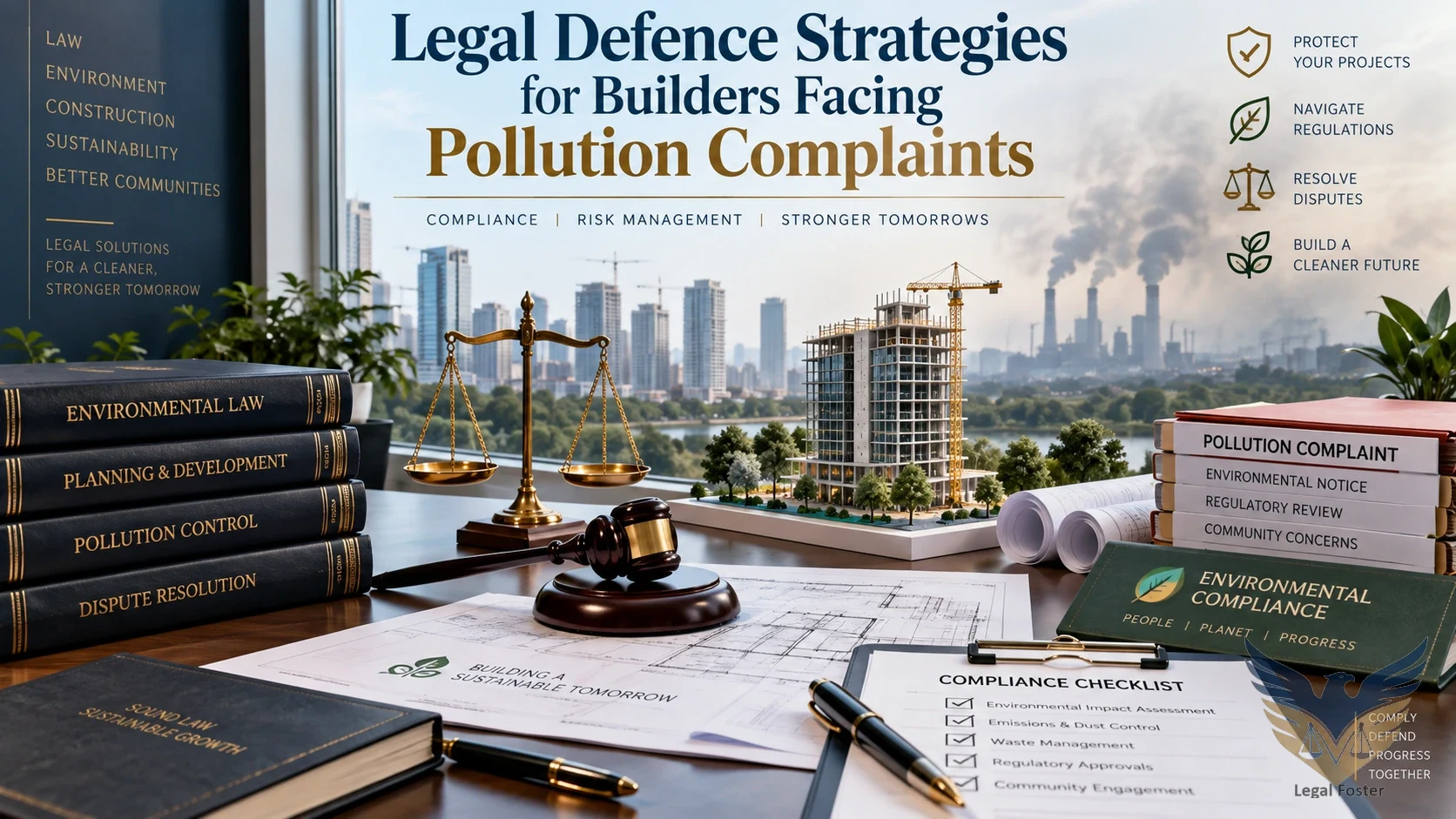
Legal Defence Strategies for Builders Facing Pollution Complaints in India
Construction sites are common sources of complaints. Dust from demolition work, trucks entering/exiting a site, drilling, cutting concrete, generator sets, working during night hours are all examples of how someone can make a claim for air or noise pollution against you. Even receiving a complaint can put pressure on the resident/homeowner by the local body or Pollution Control Board.
Building a defense against allegations of air pollution and noise at a construction site is rarely about saying “there was no pollution.” Did the complaint have merit based on evidence? Were any environmental standards violated? Were reasonable steps taken to reduce emissions/noise at the worksite? These are common issues in any construction environmental dispute.
NGT Lawyers routinely represent clients in environmental cases where construction activity is being questioned at the regulatory agency or in front of environmental courts and tribunals. Part of our investigation often involves visiting the site to become familiar with the project, allegation and documents in your possession. We also look at where any investigation or other regulatory action may be in its process.
If the project is in Delhi NCR, Noida, Ghaziabad, Gurugram or even another major city in India then the local air quality standards, environmental clearance conditions, local Pollution Control Board orders or even other local limits that apply to your area could become part of any issue. Similar issues could arise if the construction project is located in Mumbai, Pune, Bengaluru, Hyderabad, Chennai, Kolkata, Lucknow or other cities in India.
One tip Advocate BK Singh likes to provide clients is to not accept liability by signing or agreeing with any pollution notice.
If your company is already in the midst of an environmental enforcement action, having legal eyes review the matter early can also help you understand if your matter is a compliance matter, environmental damages claim, enforcement agency instructions, appeal or NGT case.
Why Does Construction Pollution Defence Matter in India in 2021?
Construction activity will continue to be scrutinized for their environmental impacts. Air quality can become a concern with fugitive dust, construction material handling, vehicles/equipment being used at the site. Noise pollution can arise from equipment being used at the site, generator sets being used, activity at the perimeter of the construction site next to residents homes or even silence zones.
Indian laws that may apply to the project will determine the legal position. This can include but are not limited to The Air (Prevention and Control of Pollution) Act, 1981; The Environment (Protection) Act, 1986; Noise Pollution (Regulation and Control) Rules, 2000 ; conditions of environmental clearance issued to the project and any order by the relevant Pollution Control Board.
India has a specialized environmental court called the National Green Tribunal (NGT). The NGT is empowered to hear environmental cases relating to the following. protection of environment, prevention of pollution, relief and compensation where the NGT has jurisdiction.
The NGT has a Principal Bench located at New Delhi and four Zonal Benches at Bhopal, Pune, Kolkata and Chennai. Construction Projects around Delhi NCR could have other factors to consider as there is also The Commission for Air Quality Management which has jurisdiction over air quality in NCR and neighbouring states.
Your takeaway from the above paragraph is that pollution allegations can harm construction projects. In addition to halting construction activity, regulatory relationships can sour, project reputation can be tarnished and money is usually involved. For these reasons and more, Advocate BK Singh recommends sitting down with your attorney to understand your legal position and gather documents before responding to a complaint/allegation.
Quick Facts About Construction Air and Noise Pollution Defence
When does construction dust become an ENVIRONMENTAL compliance issue? When the dust violates an applicable standard, permission or condition of the project.
The Air Prevention and Control of Pollution Act, 1981 is the main statute which contains provisions related to air pollution.
The Environment Protection Act, 1986 specifically allows regulators to issue environmental directions and manage pollution.
Noise pollution from construction machinery is directly managed under The Noise Pollution Regulation and Control Rules, 2000.
Construction machinery which emits noise cannot be used during night time in residential areas/silence zones (Rule 5A(3) of the Noise Rules.)
An environmental clearance may have specific conditions about air monitoring, noise monitoring and managing dust on the site.
Creating a legal defense based on “we didn’t know” can be difficult. Showcasing knowledge through receipt of a notice, evidence, permissions, monitoring results and actual site conditions will help demonstrate a reasonable defence.
What is a Construction Pollution Allegation?
To keep it simple, a construction pollution allegation means that the construction work, or a portion/part of the project is accused of creating environmental pollution or breaching an environmental requirement.
Could be dust in the air, particulate matter, equipment idling emissions, vehicle emissions/traffic, solid waste/construction debris and/or noise. Just because construction dust is bothering neighbors, doesn’t always equal an allegation of a violation of an environmental clearance condition. Noise pollution from machinery during the daytime could be looked at separately from using construction equipment that is prohibited at night.
Advocate BK Singh believes it is important to separate the allegation from the potential evidence behind the allegation.
What Documents Should be Kept at a Construction Site?
Environmental paperwork can become paramount to any environmental defense. Any project should keep accurate records that reflect the current regulatory position of the facility and actions taken at the construction site. Examples include:
- Environmental clearance and Terms of Consent, if applicable.
- Permissions, consents, orders, letters and any correspondence with the Pollution Control Board.
- Site inspection reports and your responses to the remarks mentioned during the inspection.
- Air and noise monitoring results that have been conducted.
- Photographs and time-stamped documentation that can prove dust mitigation measures were implemented or noise was abated.
- Equipment specifications of generators, machinery and other notable equipment/items on-site.
- Documentation related to solid waste management of construction and demolition debris.
- Vehicle logs of entrance/exit from site and movement of material (if this information relates to the allegation).
- If you hired contractors ensure any environmental compliance requirements provided to them while on-site are available.
Any notices/comments/receipts received from regulators/authority/neighbouring properties.
Documents should not be generated after-the-fact to build-up a defense. It can actually be more helpful to have detailed contemporaneous records which allow you and your legal advisers to determine what exactly happened.
Advocate BK Singh can review what you already have and help you identify any gaps before you need to respond to the notice, attend a hearing or proceed with an environmental enforcement action.
When Do I Need to Contact an NGT Lawyer about Construction Pollution?
It is best to speak with an attorney when the issue has progressed past a verbal complaint. Construction sites receive all sorts of complaints from neighbors and pass them off as non-issues too often. A construction pollution defense becomes applicable when.
- The issue receives formal attention from the authorities such as receiving a PCB Notice, Site Inspection / Observation Report, Environmental Direction, Demand for Compensation (or some other communication) where a person is alleging an environmental condition has been violated.
- You feel you need urgent advice because the construction activity is facing a potential restriction, shut-down / project related direction, environmental compensation demand or NGT proceeding.
- The project is covered by more than one permission. Remember, conditions are placed on environmental clearances, there can be standalone pollution control permissions and municipal permissions. Just because you have one permit, does not mean other permissions do not apply to the construction project.
Advocate BK Singh likes to get a complete record of what happened. The sooner he has access to the documents and can review them the easier it will be to determine what the true problem is. Many times people think a simple complaint was received but it can actually be covering up a larger regulatory issue.
How Can NGT Lawyers Help With Defence Against Construction Pollution?
NGT Lawyers provides legal services for environmental disputes, NGT litigation such as Pondicherry Pollution Control Board notice defence, environmental clearance advice, environmental compensation claims, appeals and defending prosecutions under the Environment Protection Act. This information is found on their website detailing the services they provide involving NGT applications/appellate litigation and how to respond to notices from regulators.
Advocate BK Singh will go through your project documents, assess the allegations being made and guide you on the best course of action. Whether it be drafting a response to a notice, compiling evidence or advising you on compliance matters. Legal representation at a proceeding can also be provided if necessary.
NGT Lawyers provide legal services for individuals and businesses who are looking for an environmental lawyer. You can learn more about their environmental law services for businesses here on NGT Lawyers website.
Construction Pollution FAQ’s
Will construction have to stop because of an air pollution complaint?
Just because a complaint is made, this does not mean construction must come to a grinding halt. The authority issuing the notice or competent court/tribunal has the power to give directions they deem necessary based on the law, facts and evidence.
Can a construction site receive noise complaints during the day?
Yes. Noise pollution can occur any time of the day. There are ambient (background) noise standards which have to be complied with during daytime hours just as there are standards for nighttime hours. An additional noise specific restriction involves the use of construction equipment that emits sound during night time hours in residential areas and silence zones.
What is the main law relating to construction and noise?
The Noise Pollution Regulation and Control Rules, 2000 is the primary law which sets out how to regulate noise pollution. It contains ambient noise standards as well as specific rules related to sound emitting construction equipment.
Does the Air Act apply to Construction Projects in India?
The Air (Prevention and Control of Pollution) Act, 1981 will apply to construction projects based on the type of work being performed, where the work is occurring, what notifications/permissions are obtained and the facts of the scenario. Specific provisions of the Air Act would need to be evaluated.
Can an NGT lawyer help me file an appeal against an environment directive?
Every situation is different and will depend on who gave the direction, under what law or provision they issued the direction, what the direction entails and which court/tribunal has jurisdiction to hear the appeal. Advocate BK Singh can assess the enforcement action being contested and see what legal remedies are available.
What kind of evidence would be required for a construction pollution matter?
There is no standard form of evidence that would help every construction pollution case. Some examples include Environmental Permissions, site inspection reports, air monitoring results/reports, noise monitoring results/reports, photographs of the site, construction equipment inventory, contracts with any hired contractors that mention environmental compliance obligations, any notices/comments/receipts given to you by other authorities/regulators or neighboring properties.
Can a construction project be ordered to pay environmental compensation?
Yes, if the facts support doing so and a competent authority decides environmental compensation is appropriate to levy against you. Environmental compensation can be ordered by an environmental judicial forum like the NGT or ordered by a Pollution Control Board if they find an environmental law was broken or environmental damage occurred. Everyone loves to speculate about compensation amounts. Unfortunately, until we know the facts and have all the relevant information, compensation amounts can’t be speculated upon.
Can a construction project rely on their Environmental Clearance and no other laws?
No, environmental clearance means the project can break ground and begin construction. Once construction begins there may be conditions on the environmental clearance which need to be followed along with other environmental laws which will also need to be complied with.
What happens if I ignore a notice from the pollution control board?
Non compliance with a regulatory notice can lead to increased legal jeopardy. Every situation is different depending on what the notice requires, who issued the notice and under what law.
Will NGT Lawyers accept my case if the construction project pollution is happening outside of Delhi?
NGT Lawyers explains their areas of practice on their website. Their experience includes environmental law and cases in NGT throughout India. Since NGT Lawyers and Advocate BK Singh have clients throughout Delhi NCR and India we cover many key cities. BK Singh can determine if your matter would fall under the NGT or whether another forum would have jurisdiction like the Environmental Agency, High Court or another authority.
Conclusion
Don’t ignore a construction pollution allegation just because you deny it happened. The best construction pollution defense starts with knowing what actually occurred, keeping accurate records and knowing what environmental laws apply to your construction project.
Allegations of air pollution and noise from construction work can trigger a variety of different statutes, project specific facts and existing regulatory directives. This is why each legal response should be tailored to the allegation.
BK Singh and NGT Lawyers can assist homeowners, developers, contractors and business’s with reviewing any environmental notices, compliance orders or pending NGT litigation. Environmental issues can cause construction delays which can result in expensive environmental damages or regulatory penalties. Don’t take that chance.