Legal Action Against River Pollution Caused by Industrial Discharge
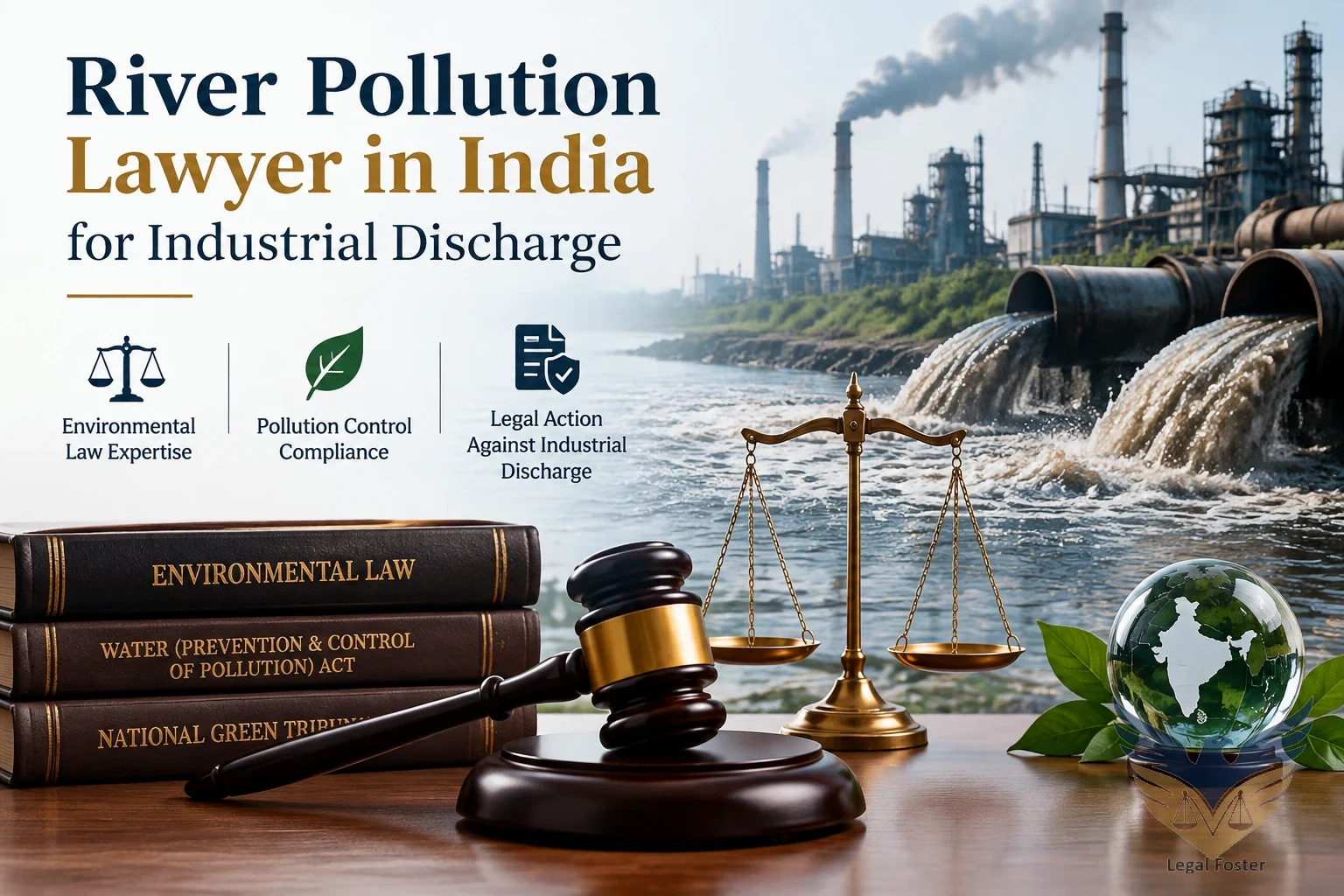
Pollution of a river by industrial waste is not just an environmental problem. When that river runs behind your house or farm where you use the water for irrigation or when you own a business, shop, restaurant or are impacted otherwise by the water being polluted … it becomes a legal and public-health issue very quickly.
If there is an industry polluting a river with toxic or untreated waste, what can you do about it? Can you complain to the Pollution Board? Can you file a legal case in the National Green Tribunal (NGT)? What sort of evidence will help you? And why hire a lawyer to deal with it instead of doing it yourself?
These are all valid questions. While many people can file a complaint, environmental pollution cases require one to sift through technical documents such as records, consent conditions, inspection reports, laboratory analyses, orders from regulators and understand the proceedings and technical aspects of forums such as NGT. Taking that first step and filing a complaint is easy. Putting together something that is actually usable in a legal matter requires more work.
Our Environment Lawyers can assist you with legal advice on matters involving industries, water pollution, non-compliance to rules and regulations and help with pending cases or cases that need to be initiated in the appropriate environmental agency and forum.
We will not just file another complaint on your behalf. We will help you understand the facts, identify potential legal issues, go over what you already have and determine the appropriate legal route for your particular case.
Why Does River Pollution by Industrial Discharge Matter in India in 2026?
Pollution of a river from industrial outlet may affect surface water quality, crops & agriculture, fisheries, ground water, livelihoods and the villages downstream. Civil and criminal liabilities may also follow outside the factory/outlet premises if damage to environment or injury to persons is alleged.
It is unlawful to knowingly cause or allow poisonous, noxious or polluting matter to enter into a stream or into any other receiving place under Section 21 of the Water (Prevention and Control of Pollution) Act, 1974, as per terms of the Act. Section 25, which deals with regulation of new outlets/new discharges requires prior approval of the concerned State Board in which such provision would be applicable.
But if you are a victim of river pollution, the pragmatic question is not whether pollution is occurring. It is:
What are my legal options available based on the facts? What evidence would I need to take these options? and
Who should I contact?
that is where professional assistance incorporating environmental law perspective can assist.
At Advocate B.K. Singh you can find out what legal options you may have based on the facts you possess if you suspect industrial pollution Delhi NCR, Uttar Pradesh, Haryana or India and before you take any further steps.
Quick Facts: What Should You Know First?
- The Water (Prevention and Control of Pollution) Act, 1974 (ACT39 of 1974) is the omnibus legislation for prevention and control of water pollution in India.
- Section 24(1) of Water Act prohibits entering polluting matter into water bodies or land in any manner. Thus, no owner or occupier of any premises shall cause, allow or suffer any polluting matter to enter into any stream or well or sewer or land except in accordance with the provisions of this Act.
- Section 25 of Water Act further empowers State Governments to regulate by making rules all new outlets and new discharges which require previous consent of the State Board.
- Water pollution regulation and enforcement is delegated to the State Pollution Control Boards(PCBs). The PCBs plays crucial role in regulatory and enforcement functions under Water Act.
- The NGT orders cannot be challenged in any court of law. NGT has jurisdiction over civil cases where a substantial question relating to environment is involved. It can grant all kinds of relief and compensation and also has the power to order restitution in appropriate cases.
- Penalties and adjudication were incorporated in Water Act by way of amendment.
- Environmental cases are fact-sensitive. Appropriate remedy would depend on the nature of the pollution, evidence that can be gathered, parties affected, regulatory history and laws applicable to the particular case.
What Exactly Is Considered River Pollution by Industrial Discharge?
Industrial pollution of a river can normally be classified as the releasing of sewage, trade effluent, chemicals, raw effluent or treated effluent or any other polluting substance into a river, lake or water course where the discharge of such material is prohibited by law or subject to environmental regulation.
If an industrial premises says it has treatment works or permission from the environmental agencies, it should be remembered that just because a site has effluent treatment plants it does not mean all discharges to the foul sewer/drainage watercourse are lawful. Permission conditions, what is being discharged, relevant standards, monitoring data and what actually happened will need checking.
Similarly, if somebody sees colour, smell or foam does not automatically mean that an offence has been committed. Although these can make somebody believe there is a problem, proof in environmental offences can be made up of documents, technical data and regulation information.
That is why LCE Lawyers will normally carry out a legal and evidential review when somebody believes that river pollution is occurring. Photos or verbal assertions are rarely sufficient.
Which Laws Apply to Industrial Discharge Into a River?
Does the Water Act, 1974 Apply?
Yes, the Water (Prevention and Control of Pollution) Act,1974 does apply to industrial water pollution problems. Section 24 penalizes entering or allowing the entry of poisonous, noxious or polluting matter into a stream, well, sewer or land in the circumstances described in that section. Section 25 controls new outlets and new discharges requiring that where the activity falls within the scope of that section the prior consent of the State Board be obtained.
Exact regulatory requirements should be confirmed by reference to the industry's actual consent, the conditions applicable to that consent and the particular facts relating to the discharge at issue.
Can the Pollution Control Board Take Action?
The State Pollution Control Board has authority to regulate and enforce under the Water Act. The Boards powers under the Act include powers and functions in relation to inspection, effluent standards, consent to sewage discharges and control of water pollution.
Sections 20 and 22 also contain inspection powers, sampling rights, emergency measures and directions. Each set of powers allows the Board to take certain enforcement actions. Which powers can be exercised and what action can be taken will depend on the facts and the applicable statutory provision.
If you are the person or entity who is being impacted by pollution, the important thing to remember is that any complaint you make should be detailed and include facts and supporting documents to allow the applicable regulator to understand what happened, where and when it happened, who might be responsible and what evidence you have to prove it.
Can the National Green Tribunal Be Approached?
Under Section 3 of the National Green Tribunal Act, 2010 NGT has jurisdiction over civil cases where a substantial question relating to the environment is involved. The Tribunal has the power to hear any civil case which relates to the enforcement of any legal right relating to the environment. It can hear those cases subject to the Act and other conditions as may be prescribed.
The Tribunal also has powers to grant relief and compensation for harm to the environment in respect of cases that the Tribunal has jurisdiction over. Section 17 lays out who would be liable to pay that relief or compensation for damages to the Tribunal. Section 18 provides for applications and appeals to be made to the Tribunal in a prescribed manner.
Whether filing a complaint or proceeding with the NGT is the right course of action will depend on the facts of the matter. Advocate B. K. Singh can help his client decide if the information and facts they have would support initiating a complaint to the regulators, representing a client before the regulators, appealing a decision made by the regulators, bringing an NGT proceeding or some other course of action.
How Quickly Should You Act?
Is there any Particular Period Of Limitation for All Rivers Pollution Complaints?
Don’t assume just because there is ONE limitation period for filing a complaint with one forum that there is a similar period for all others. Different forums have different limitation provisions, statutes of limitations and prescribed time frames and procedures. Even appeals, applications, and objections to certain orders may have differing bars.
Limitation can be specially provided for in each statute dealing with appeals and Limitation.
The NGT Act itself has special provisions relating to appeals and limitation, including a statutory limitation period for certain appeals. This limited period can be extended only to a limited extent if the Tribunal feels that there was sufficient cause for not filing the appeal within the prescribed period.
Time can also become an issue with respect to evidence. The pollution may stop, the point of discharge may be changed, records may be unavailable, and the environment itself may have changed.
If the pollution is ongoing, don’t wait to file a complaint just because you’re not sure which forum has jurisdiction. Get legal advice as soon as possible and your attorney can help you figure out where and when to file.
When Should You Hire an Environmental Lawyer?
Do I need to consult a lawyer before filing a complaint?
Not necessarily. Every complaint may not lead to litigation immediately. But legal advice may become necessary where the pollution continues unabated, where the alleged polluter is an industrial unit, where earlier complaints have not been responded to appropriately or where substantial environment damage and/or monetary interests are involved.
I have already complained to the Pollution Board. What should I do now?
Your advocate can help you go through the complaint registered with the Board, the reply (if any) received, inspection carried out and subsequent action taken by the regulator and guide you as to what legal options are available to you.
The Industry has rejected the allegations in my complaint. What should I do?
Legal counselling can help you differentiate between allegation and evidence collected and guide you towards what information/technical data may help establish your claim.
I have received a Notice from the State Environment Department. What should I do?
Do not ignore the Notice. There may be obligations to reply to such Notices and the Notice itself may become a part of future legal proceedings.
I am not sure if NGT is the right forum to file my complaint?
THEN YES You should consult a lawyer. If you have any doubts regarding Technical expertise or jurisdiction of various Forums please consult an environmental lawyer. Advocate B.K. Singh can guide you before you decide to initiate any legal proceedings.
Why Hire Environmental Lawyers for River Pollution Matters?
You should look for more than just a draftsman of a complaint.
Does your lawyer understand environmental regulation, pollution control proceedings, documentary proof and expert environmental tribunals.
First we want to understand your real issue.
Will Someone Review the Facts of Your Potential Case?
Yes. River pollution cases can be very different from each other. Where does the alleged pollution originate from? Where is it located? What is its history with regulatory agencies? What type of discharge is involved? How much information and what evidence do you have to prove it?
Will you be advised on what Proof You Have is Important?
Photographs, video, reports, notices, correspondence, and other information you may have can help us determine what may be used as proof.
Can you receive help with enforcement actions?
Why Is Early Legal Consultation Useful?
Don’t wait until the environment starts to smoke.
By that point in time, critical facts on the ground may have changed. The discharge may have stopped, at least temporarily. The source may be unknown. Important correspondence may have been sent or received without cover.
Meet with Environmental Lawyer B.K. Singh to answer a simpler question first:
What can you DO about the situation you DO find yourself in?
That action may involve a regulatory submission. It may involve gathering or preserving evidence. It may involve appealing an order. In appropriate situations, it could even include filing a petition in the NGT.
Let YOUR facts change the course, not change to fit a course.
Frequently Asked Questions
Can I sue an industry for polluting river?
Yes. You may have legal & regulatory remedies if industrial effluent is being discharged in violation of environmental laws. The appropriate remedy will depend on the facts & evidence, any consent conditions/approvals, the regulatory history etc., and will also vary depending on the jurisdiction. You may want to file a complaint with the State Pollution Control Board and/or may be able to file a proceeding directly with the NGT, if your case falls within their jurisdiction. Advocate B. K Singh will be able to review your facts and help you understand your legal options before you decide how you would like to proceed.
What is the law relating to industries polluting rivers in India?
The Water (Prevention and Control of Pollution) Act, 1974 is one of the main environmental statutes that deals with water pollution. Section 24 prohibits the discharge of a ‘specified polluting matter’ into ‘streams’ and ‘other water bodies’ or onto land, etc. Section 25 allows the authorities to regulate new outlets and new discharges for matters mentioned in section 24. The exact legal position would vary based on the specific activity complained of, whether the industry had consent from the regulator to discharge wastewater, what the discharges consists of, etc.
Can I file a complaint to PCB about pollution of river?
Yes. You may file a complaint with the State Pollution Control Board if you believe a river is being polluted by industrial activity. A complaint should include details such as date, time and location of the suspected discharge, who you believe may be responsible for the pollution, and any other details you have about what is being discharged into the river. Environmental Lawyers can help you determine how best to proceed based on the evidence you have and help draft your complaint to ensure it contains all the necessary information to properly convey your environmental complaint to the PCB.
Can I approach NGT for river pollution?
NGT has been given jurisdiction to hear civil cases where a substantial question relating to environment law is involved. Section 22(1) also enables the Tribunal to award relief and compensation in appropriate cases. You would need to consult with a lawyer to determine whether NGT can hear your dispute. Advocate B. K Singh can assist you further once you provide details regarding the river pollution.
What evidence should I gather to make a river pollution case?
Pictures and/or video can be helpful, as can location information, correspondence with the polluter, previous complaints you’ve made to the authorities (if any), official inspection reports, a copy of the polluter’s consent order, lab test results (if you have them) and any proof of damage if applicable. Evidence should be authentic and it should be preserved in a manner which will not affect its admissibility or reliability. Simply having a picture of pollution in a river will not help prove who is polluting, or that the pollution was illegal. Advocate B. K Singh can provide you with advice on what evidence would be helpful once you explain to him what evidence you already have.
Do industries need permission to discharge into rivers?
Yes. Section 25 of The Water (Prevention and Control of Pollution) Act, 1974 states that prior consent of the State Pollution Control Board is required for new outlets and discharges. There are crimes under the Water Act for both operating without approval from Section 25, and for operating in violation of conditions of consent. A copy of the industry’s consent would also be useful for determining what they are actually permitted to discharge into the river.
Can I claim damages if river pollution affects my property?
Potentially yes. If you have suffered damage to property you may be able to make a claim for damages. This would not be guaranteed but if a river has been polluted, there could be damage to livelihoods, property and the natural environment. The NGT Act specifically allows the Tribunal to grant relief and compensation for certain types of environmental damage. Contact an Environmental Lawyer to determine if the facts of your case would support a claim for damages.
What should I do if the PCB is not taking any action?
It depends on what the PCB has or has not done. If they have refused to inspect or you have received a decision from them you should get a copy of that order or of the inspection reports before deciding how to proceed. Often, there is no obvious ‘next step’ that applies to every situation. You could consider making another representation, filing a statutory appeal or perhaps consider pursuing your case with the NGT. Advocate B. K Singh can review the specifics of the PCB action and help you understand your options.
Can the polluter also hire an environmental lawyer?
Yes. Environmental Lawyers represent the interests of both the public and industries. If the PCB starts any inspections, serves any notices or initiates proceedings against your business, you will need legal advice on how to respond. Environmental Lawyers can help you understand the PCB’s allegations and help you ensure that your company remains compliant with environmental laws going forward.
Why should I contact Advocate B. K Singh for industrial pollution matters?
Environmental law is complicated and can depend on the exact terms of the environmental statutes, procedural laws, technical evidence, and the appropriate forum for your matter. Advocate B. K Singh will take the time to review your case, explain your legal rights and options to you and ensure you understand all of your options before incurring significant legal fees.
Final Thoughts
River pollution should not be treated as local problem when serious or continuing pollution is caused by Industry from their premises.
In India we have Water Act and NGT Act which empowers environment court NGT to take up cases which comes under its jurisdiction.
It is easy to know that " something is wrong " but difficult to know what can legally " be proved ". What will be treated as relevant . Which court to approach and what all reliefs are you entitled to.
This is where a Consultant Environment Lawyer can help you and guide you from breaking any law unknowingly.
If you have any suspicion that a River is being polluted by Industry you can always consult us Environment lawyers Advocate B.K. Singh. before you decide to take any radical step. Know your rights and responsibilities, what evidence you should collect and what all you can demand from the Courts.