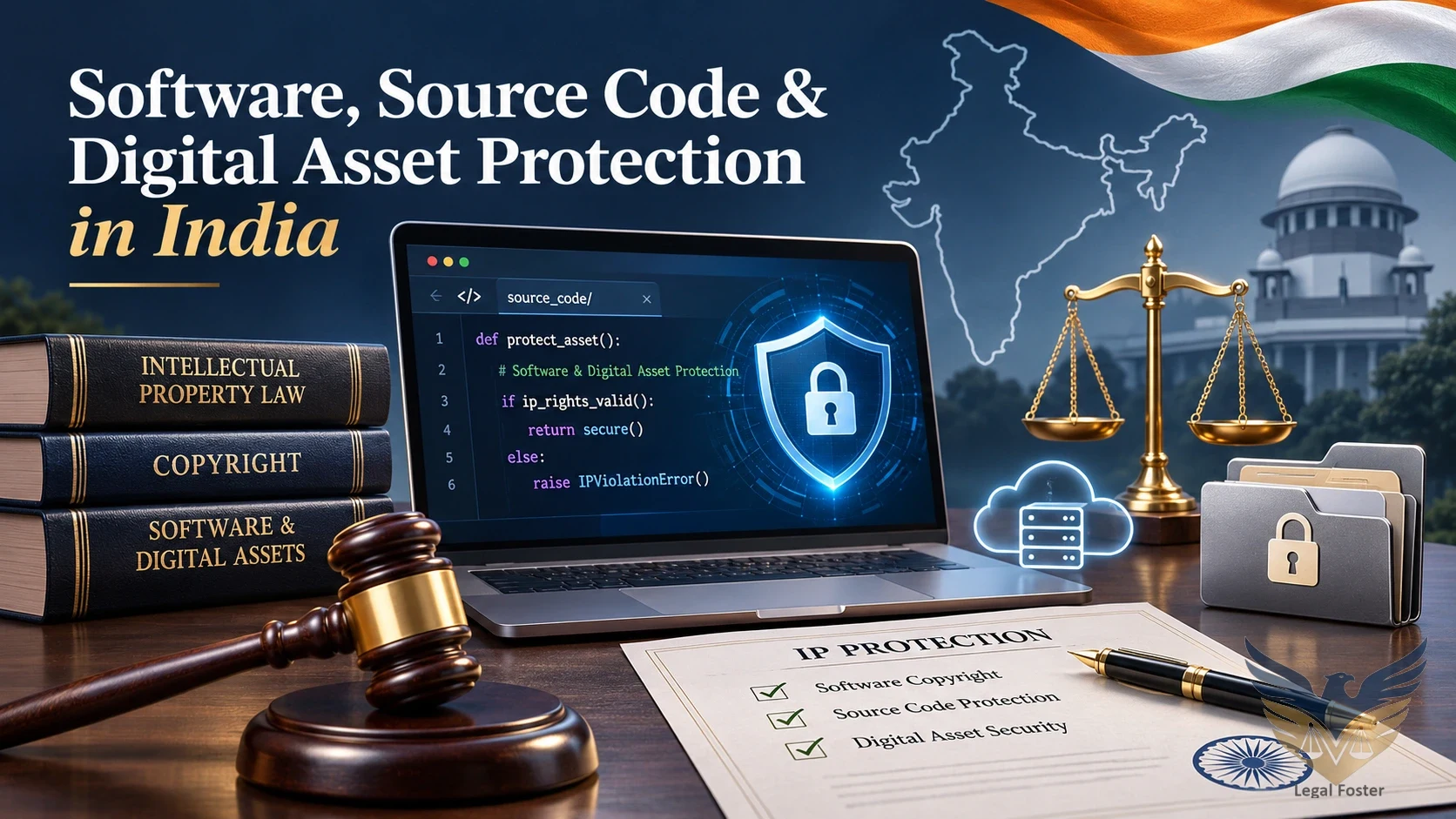
How Can IT Companies Safeguard Software, Source Code, and Digital Assets in India?
Software is sometimes a company’s product. Other times the value of the software can be found in its source code, unique algorithms, customer lists, trade secrets or even the employees who know how to work with it. Software can affect a company’s revenues, its investors, and its future business opportunities if ownership is suddenly lost.
Software ownership is a legal issue. However, IT Companies registered in Delhi NCR Bangalore, Hyderabad, Pune or any other Part of India should view ownership from a business perspective as well. Registering copyright can prevent some software ownership issues from occurring. Having solid agreements with employees, contractors, licensees, and reliable protection over confidential information can benefit the business. Lastly, if someone steals software that your business owns, your business should have already thought about how to react.
Instead of addressing this issue from a legal standpoint, Corporate Lawyer wants to discuss software protection from a business stand point. What should your company own? What Indian laws apply to software? What can your business do if someone who had access to your software steals it? An ex-employee? Contractor? Competitor? Business partner?
Maybe your company developed an incredible product. But do you know if your business owns the code? What information would you even need to determine if someone is abusing it? All of these problems can be prevented by defining who owns software and who is allowed to access it before it’s too late.
Software protection goes beyond copyrighting IP. Businesses should know who owns what, keep records of who is allowed to access what information, protect trade secrets, and know their legal options to enforce their rights.
Corporate Lawyer will break down the different ways software can be protected by law in India. What records should you keep? And when it may be beneficial to talk to a lawyer about protecting your software.
Why Does Software Protection Matter for Indian IT Companies?
Tech companies operate across virtual teams, the cloud and outsourcing partnerships and commercial counteragents. Software developers based in Noida may be developing products for a Product Lead in Gurugram and customers abroad. Each situation poses different problems surrounding access, privacy, licensing and ownership.
Ownership can become problematic for early-stage companies when digging through who owns what while preparing for fundraising or acquisition due diligence. Investors will often want to see that a company owns, or has clear enough rights to use software that their business depends on daily. Lost assignments or murky third party licenses can not only prolong the process, but be held as a bargaining point during negotiations.
Larger IT services companies have many different disputes surrounding ownership. The client may contest who owns rights to custom developed software. Another frequent altercation involves ex-employees taking confidential information with them when they leave the company. SaaS companies need to be able to distinguish between their actual SaaS offering vs. customer data, licensed software, configurations etc.
Companies operating in Delhi NCR may need legal help with contract negotiations, intellectual property disputes and commercial litigation. Businesses operating across India may need lawyers that can collaborate remotely under agreement and governing facts. Corporate Law Firm recommend taking ownership into account as you would any business issue, instead of trying to figure it out after your product has been copied.
Quick Facts
- Copyright: Computer programmes are defined as a literary work under the Copyright Act, 19 57.
- Ownership: First ownership in copyright is decided on the basis of statutory provisions, relationship between the parties and any agreement entered into.
- Patents: Per se computer programme is not patentable under Section 3(k) of the Patents Act, 1970 . However, if the invention involves software, it would have to be examined under the various patentability criteria.
- Confidentiality: Protection can be ensured to underlying trade secrets / confidential technical information by entering into contracts, non-disclosure agreements or any other legal principles.
- Trademarks: Brand name, logo and any other mark which is eligible for registration can be protected under the Trade Marks Act, 1999.
What Counts as Software and Digital Assets?
Software and digital assets include more than just the application you see delivered to the customer. Software assets can include source code, object code, scripts, databases, technical documentation, algorithms, design related to a specific product, business expertise and processes, domain names and undisclosed methods of creation.
Different types of assets will be protected by different types of legal rights. Copyright will protect any original work recorded in software. A trademark can protect brand names and logos. Patents can protect inventions that are eligible for patent protection. Information covered under confidentiality provisions must be protected through the use of contracts and other practical measures.
There is another important distinction to consider: When you purchase software, you do not automatically own the intellectual property associated with that software. You may be given a license to use the software, but that does not mean you acquire ownership of the source code, or allow you to reproduce and sell the software. Paying a developer does not necessarily mean all intellectual property questions are resolved. The written agreement, employer/employee relationship, the work itself and statutory provisions must be taken into consideration.
At Corporate Law Firm, we can assist your business with these issues before they become a part of a contract, investment analysis or legal issue.
Who Needs Software and Digital Asset Protection?
Who needs clarity on software ownership?
Startups and technology founders
Founders need to decide who owns software that is written before incorporation, while developing products and after initially hiring employees. Where founders personally own code that is important to their business, they should enter into an agreement that makes this situation explicit.
IT service providers and software development agencies
Companies which build custom software for clients should ensure their contracts specify what deliverables the client will own, and what pre-existing tools, reusable libraries and independently developed software are being used. If not, arguments can crop up later about whether a client is entitled to modify, transfer or sell the code they have received.
SaaS companies and product businesses
Businesses that provide subscription software will want to clearly set out rights to use the software, access the software, restrictions on copying the software, any limitations on availability of service and consequences for terminating an agreement. They should also consider how they will handle customer data, confidentiality, support obligations and if applicable, source-code escrow arrangements.
Companies using freelancers or remote teams
Sometimes a contractor or freelance developer will work on something as important as a core feature, but will not be classified as an employee. Businesses should not assume that this work automatically falls in line under the “work made in the course of employment” rule. Having written assignments and clear deliverable terms can be particularly helpful.
Businesses acquiring software companies
An acquisition can bring into play a whole gamut of ownership records to review along with software licences, open-source obligations, any disputes, and restrictions on the target’s ability to transfer rights. Corporate Law Firm can help clients understand why intellectual property due diligence should be conducted before buying a company.
What Documents Should an IT Company Keep?
THESE ITEMS CAN FORM THE BASIS OF A CHECKLIST FOR IDENTIFYING RECORDING GAP IN A COMPANY:
- Founder agreements, and documents evidencing the transfer of any pre-incorporation IP that's relevant.
- Employee offer letters, non-disclosure provisions and IP assignment clauses.
- Executed freelancer and software development contracts.
- Software licences, third party terms, and records of open-source components.
- Copyright registrations, where applicable, and evidence of authorship.
- Privacy/Data- processing agreements.
- Copying evidence, access records, communications, and business damages, if you suspect copying.
- Proof of copying, access records, and evidence of loss.If you have a dispute with another party.
Obtaining a certificate of registration can help to prove your claim. But a registration certificate should not be considered as a substitute for keeping careful evidence of authorship, ownership, assignment and authorization.
When Should an IT Company Consult a Lawyer?
Advice at an early stage can help if your company is about to launch a product, contract external developers or enter into a substantial software development contract. It can also be useful before licensing source code, transferring IP or completing a takeover.
Immediate advice should be sought if an ex-employee is suspected of removing sensitive information, a contractor alleges ownership of key software or a competitor is accused of copying copyright-protected code. Professional legal advice should also be sought if your company receives a notice of infringement before admitting liability, destroying records or making any promises.
Corporate Law Firm can review the relevant contracts, ownership documentation and legal remedies for businesses based in Delhi NCR or any other technology hub in India. If a dispute has already arisen, the best course of action will depend on the evidence available, contractual rights and the remedies available under the law.
How Can Corporate Law Firm Help Protect Digital Assets?
Corporate Law Firm can help clients review software ownership issues, intellectual property assignments, confidentiality provisions and technology agreements. The scope will vary depending on the issues relevant to the business and its assets.
Services may include review of employee/independent contractor agreements, evaluation of copyright and trademark protections, software licensing agreements, open source compliance issues and preparation of agreements for sale. If infringement is suspected, the legal review may include sending notices, negotiating, preserving evidence and pursuing appropriate civil litigation.
The startup may want to first determine the ownership rights of founders and developers before seeking funding. An existing IT services business may be reviewing client agreements or have a dispute over ownership of a software application developed at the client's request.
Frequently Asked Questions
1. Is software copyrightable in India?
Software can be protected through copyright, written intellectual property assignments, non-disclosure agreements and restricted access to code. Be sure to keep documentation to establish ownership and help prevent theft.
2. Is source code protected under Copyright Act 1957?
Yes. Computer programmes qualify as literary works under the Copyright Act, meaning source code can be protected by copyright so long as it constitutes original expression and meets other copyright requirements.
3. Who owns the copyright to software? Employer or employee?
Normally, the employer will be considered the first owner of copyright of qualifying software created during the course of employment under a contract of service. This is subject to certain statutory exceptions and unless there is an agreement to the contrary. To avoid doubt, employers should specify in employment contracts who owns IP created by employees.
4. Who owns software if developed by a third-party freelancer?
Ownership depends on many factors such as the governing law, underlying facts and the nature of the work. IT businesses should not rely on verbal agreements and instead execute written agreements such as copyright assignments or licences from third-party developers.
5. Can we file a legal suit against someone who copies our software?
Companies may be entitled to take legal action against unauthorized copying. Once infringement is established, the appropriate remedy may include sending a legal notice, filing a civil lawsuit and seeking an injunction to prevent further infringement.
6. Are NDAs sufficient to protect software?
Non-disclosure agreements (“NDAs”) allow companies to protect confidential information. When NDAs are in place, both parties have a duty to maintain confidentiality. Companies can further limit access to code repositories and maintain ownership records.
7. Can software be patented in India?
Software cannot be patented in India. Under Section 3( k) of the Patents Act, 1970 (“Patent Act”), computer programmes “as such” are not patentable. The Supreme Court has ruled that software can only be patented if there are patentable technical features in the invention.
8. How can IT businesses prevent employees from stealing software?
IT businesses should have comprehensive employment agreements which include provisions that address the assignment of intellectual property and restrict confidential information. Access to repositories should be disabled on termination of employment.
9. If someone steals software in India, what legal recourse do I have?
Indian copyright law allows companies to pursue legal action against illegal copying and infringement. The available legal remedies will depend on a variety of factors. These include the ability to prove ownership, how copyright has been infringed and potential remedies under law.
10. How can CLF assist with software copyright?
Corporate Law Firm( “CLF”) can help clients conduct software ownership audits, draft intellectual property agreements and help protect valuable digital assets. CLF can also assist businesses with technology related disputes. Please get in touch with us to discuss your specific situation and documentation.
Final Thoughts
Intellectual property and software are businesses assets. Well drafted ownership documents, carefully considered agreements and reasonable access limitations can prevent disputes and allow you to enforce your rights when a business opportunity or legal issue arises.
If you work in the IT field, it’s best to assess your situation before you’re faced with a dispute. Here at Corporate Law Firm we can identify where your documentation is lacking, go over possible protections and walk you through your options based on your specific situation.
Don’t let the code be fought over. Properly document ownership and review your agreements beforehand.