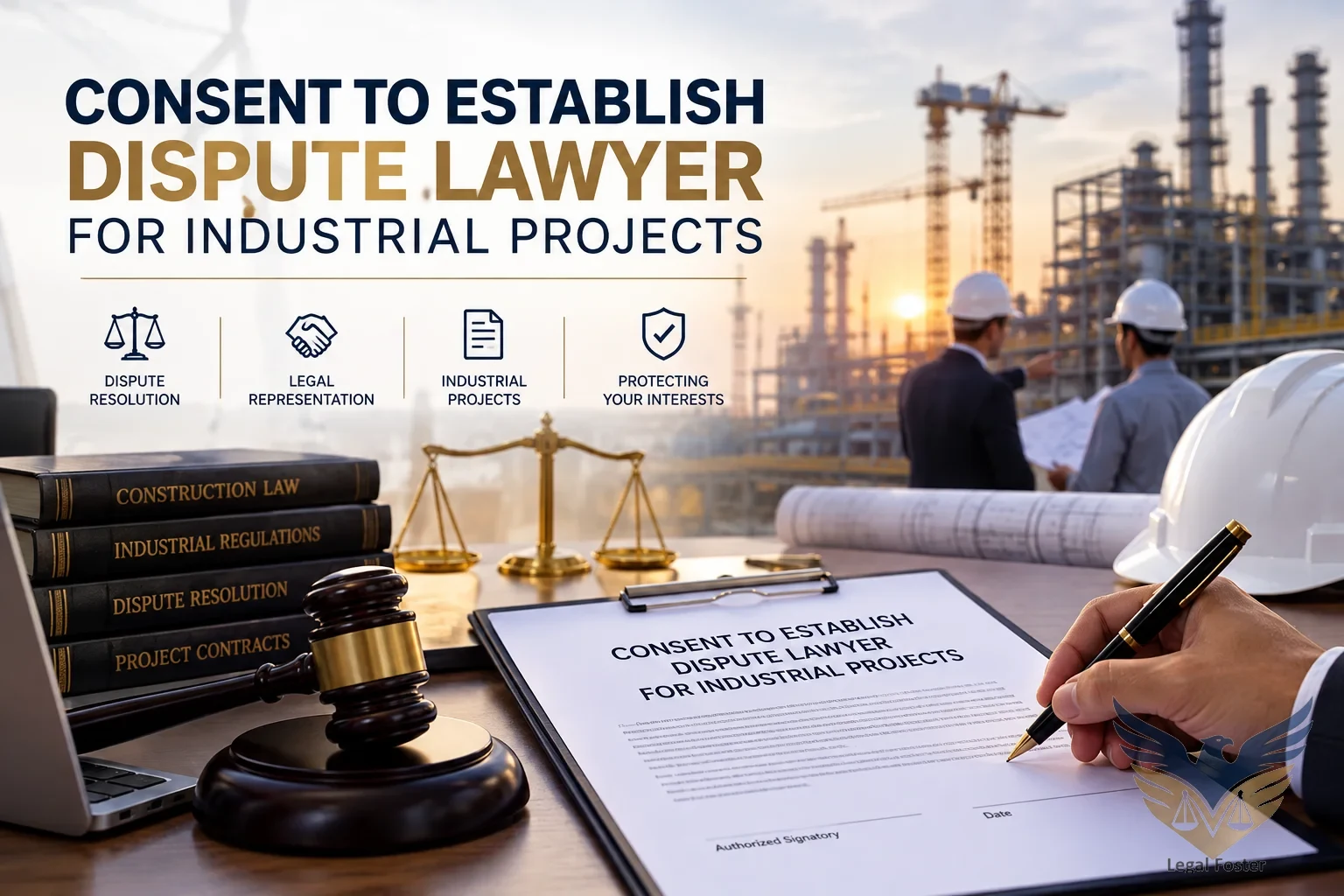
How Can Businesses Address Consent to Establish Disputes in New Industrial Projects?
Setting up a new factory, processing plant, associated warehouse facility or industrial expansion is often a substantial financial investment prior to beginning commercial operations. Difficulties arise when the State Pollution Control Board rejects, delays or imposes unreasonable demands for Consent to Establish (CTE) applications.
CTE is generally the approval required before establishing the industry activity for consent-required pollution-control projects. Consent to Operate is generally obtained after the fact, and before beginning commercial production. Permissions are currently issued by governmental bodies under the Water (Prevention and Control of Pollution) Act, 1974 and Air (Prevention and Control of Pollution) Act, 1981.
CTE holds can delay land purchases, equipment purchases, financing and project schedules. NGT Lawyers fight for businesses and addresses environmental issues through Advocate BK Singh to assist you with reviewing your legal and regulatory options.
Why Do Consent to Establish Disputes Matter in 2026?
India has seen amendments in its consent regime over the years. Just last month in January 20 26, the Central Government had notified amendments to Uniform Consent Guidelines for simplifying industrial clearances issued under the Air Act and Water Act separately with riders on bringing in an umbrella consent and authorisation regime.
Delays or denial of CTE approvals for developers based out of Delhi NCR, Noida, Ghaziabad, Gurugram, Faridabad and industrial areas across India can halt projects.
Quick Facts
- CTE is generally awarded before commencement of a Consent required industry.
- The Consent Required (Under Water) Act is primarily Sections 25 and 26.
- Consent Required (Under Air) Act falls Under Section 21.
- Pollution Control Boards evaluate the proposed emission, effluent and pollution- control equipment & technology.
- CTE and EC are two seperate permissions issued where they both exist.
- Consent requirements differ depending on what your activity & what category of activity you fall under.
- BK Singh and the NGT Lawyers team can evaluate your regulatory history before you proceed any further.
What Is the Core Legal Issue in a CTE Dispute?
A CTE issue usually centers on whether the project meets applicable pollution- control standards and if the Pollution Control Board properly considered the application, accompanying documents, proposed technology and conditions of the site. Problems may arise over how the industry is classified, allowable zoning restrictions, inadequate pollution-control technology, discrepancies in project information, or missing approvals or conditions of consent. NGT Lawyers can determine whether the matter involves a correctable compliance issue, an unfavorable administrative decision or a larger environmental law issue.
What Legal Framework Applies to Consent to Establish?
Water (Prevention and Control of Pollution) Act, 1974 and Air (Prevention and Control of Pollution) Act, 1981 are two primary statutes. Pollution board of states like Haryana refer to sections Water Act Sections 25–27 and Air Act Section 21 while publishing their respective CTE/CTO process.
Environment (Protection) Act, 1986, rules on waste-management, rules on environment clearance etc. and State specific consent rules can apply as well depending on the type of project.
For example, as per Delhi's present published consent policy. Consent is required to be applied by Industries falling under certain Red, Orange and Green categories. However, White category industries are treated differently as per their published consent order.
With help of NGT Lawyers like BK Singh, one can find out what permissions apply to a specific industry.
What Documents Should Be Checked?
Before filing/uplifting a CTE issue (defense/appeal), commercial unit must have following under its record:-
- CT-e form & receipt
- Site & plan layout
- Process information
- Water consumption & wastewater generation estimates
- Design of proposed ETP/STP or treatment units for pollution-control
- Air- emissions & stack details
- Land- use/zoning clearances
- Environment Clearance if required
- Permission for wastes if required
- Notices of inspection & correspondences
- Cause- show/ refusal or deficiencies notices
- Replies already submitted to Pollution Board
Files speak for themselves if they are updated regularly & uniformly. NGT Lawyers normally reviews technical documents along with the agency correspondences to initially identify what issues are raised.
When Should an Industry Consult an Environmental Lawyer?
Legal opinion can serve useful where compensation has been denied, department has issued numerous objections, dispute regarding project construction/execution/field inspection reports, conditions to approval are unreasonable/unrelated to project etc., order granting permission or any other official action is jeopardizing funding/commencement. In such cases, the developers understand their problems at the beginning itself whether the issue necessitates compliance/removal of objections or submissions to be made to the concerned department/challenge to an order through exercising statutory jurisdiction after getting legal counsel from Advocate BK Singh or lawyers at NGT. The recourse would vary depending on the enactment under which the order is passed and the facts and circumstances of the case.
How Can NGT Lawyers Assist With a CTE Dispute?
NGT Lawyers We deal with Pollution Control Board notices, CTE/CTO appeals and cancellations and/or environmental clearances or issues arising out of the same. Advocate BK Singh and our NGT Lawyers team of environment lawyers can study the copy of the consent order and conditions, technical evaluations and government correspondence to advise you on the appropriate legal strategy to adopt. Where necessary file legal proceedings/appeals and work out jurisdiction and maintainability rather than thinking that there is a one solution fits all approach to every condition dispute of a consent.
Frequently Asked Questions:
01. What is Consent to Establish?
Consent to Establish (“CTE”) is generally required to be obtained before setting up of an industry/activity which comes under the ambit of consent regime of the pollution-control laws. NGT Lawyers can help you figure out whether your proposed project requires consent to establish or not.
02. Can construction of the plant begin prior to obtaining CTE?
Where consent to establish is required under the statute, beginning the work of establishment prior to obtaining such consent subjects you to regulatory risks. However, this would depend on the State involved, category of the project/activity and the relevant consent regime.
03. Is Consent to Establish the same as Environmental Clearance (“EC”)?
No. Consent to Establish (“CTE”) and Environmental Clearance (“EC”) are two distinct approvals. Different projects/activities require obtaining either or both of these approvals, depending on the nature, size and impacts of the proposed project/activity.
04. My Pollution Control Board has refused to grant CTE. What can I do?
The order refusing to grant CTE needs to be analyzed for the reasons stated, statutory validity of the order and the remedy available. Advocate BK Singh and NGT Lawyers can help you analyze such order and documents upon which the order was made.
05. Can conditions imposed at the time of granting of CTE be challenged before a court?
Yes, they can be challenged in certain circumstances. It would depend on whether the PCB was empowered to impose such condition under the statute, whether technical/feasibility factors justify the condition and what reasons are recorded by the PCB while imposing such condition.
06. Can my application be rejected for being incomplete? Can this cause delay in obtaining CTE?
Yes. Applications which are submitted without supporting technical information, have inconsistent production information/plant capacity, pollution-load etc. Or applications made without requisite approvals supporting your application can cause delay and/or rejection.
07. Is Consent to Establish required to be obtained for all types of industrial units?
No. Depending on the statutes under which consent is required, category of industry and policies of the State Government, requirement of consent differs.
08. Do NGT Lawyers assist with notices from Pollution Control Boards?
NGT Lawyers can assist you with any environmental regulatory matters including notices from PCBs and preparing required documentation for consents. This would be subject to facts of your case and the forum that you are involved in.
09. Can Advocate BK Singh help me if my CTE application was rejected?
Yes. Advocate BK Singh would need to review the order of refusal along with technical documents and correspondence to identify the issues involved.
10. Should I speak to a lawyer before investing a significant amount of money into a project?
If your proposed commercial activity requires any environmental approval, it may be worthwhile to have the regulatory aspects looked over at the beginning. This can help prevent finding out about consent, zoning or environmental clearance issues after investing your money.
Final Thoughts
Consent to Establish dispute is rarely just a paperwork issue. It can affect construction works, commissioning of equipment, financing of projects and commercial operation of an industrial plant.
Advocate BK Singh and our NGT Lawyers can help you if you are a project sponsor facing CTE notices/denials/lack of regulatory certainty. We can walk you through a thorough evaluation of the applicable environmental legal framework, paperwork and corrective steps.