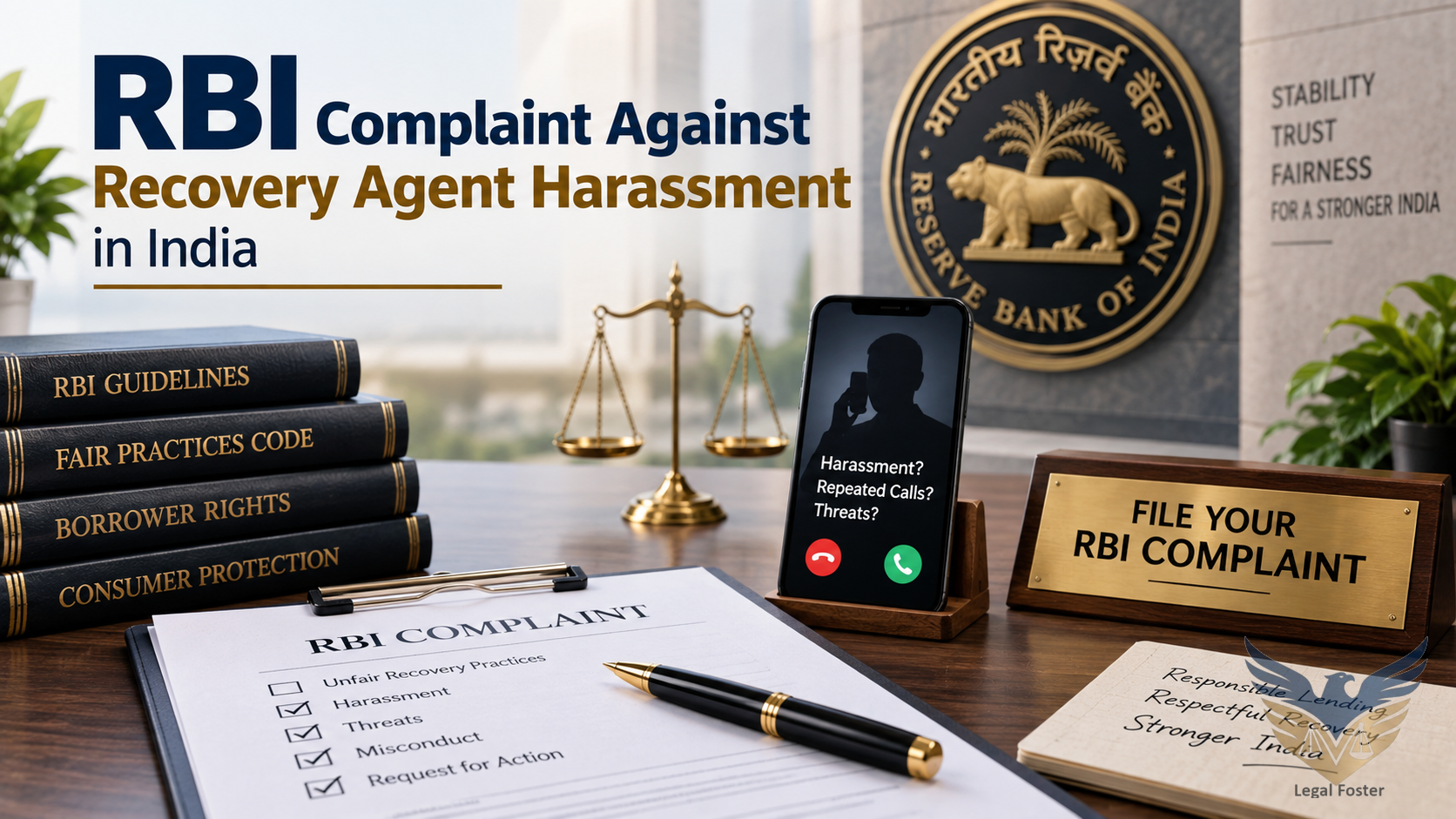
How Can Borrowers Report Recovery Agent Harassment to the RBI?
Loan EMIs are stressful as it is. But harassment over default shouldn’t include rude phone calls, WhatsApp messages/posts on social media berating you publicly, abusing your family members over phone or repeatedly coaxing your family members to push you to pay up. Yet, borrowers across India, especially Delhi NCR, Mumbai, Bengaluru, Pune, Chennai among others have come forward to discuss how harassment during loan recovery has crossed all limits of civil reminders.
Knowing where to draw the line between loan recovery and harassment is necessary. While lenders have every right to recover their dues and use means available to them legally to do so. Borrowers have rights too. Privacy. Right to be treated with respect and dignity. RBI has issued guidelines wherein lenders/recovery agents can not harass borrowers – by intimidating or threatening them, by making their details public, by invading the privacy of the borrower and their family/friends, by making anonymous/threatening calls or by continuous calls or by calling before 8 am. or after 7 pm. to collect their dues.
If you are looking at filing a complaint with RBI on harassment by recovery agents, there is one thing you must keep in mind. Keep records. Detailed records. It is far easier to explain harassment if you can point to a pattern of calls with time and date stamps, screenshots of messages/emails/WhatsApp calls (where legally permissible) than it is to file a complaint against a drunken voice-call you can’t prove. Loan Settlement Agency can help you understand the process of recovery harassment complaints, escalating your complaints about the lender and help with other loan troubles. We can also arrange a review from Advocate BK Singh before you make that crucial loan representation/response.
Why Does Recovery Agent Harassment Matter Across India in 2026?
The acceleration of recovery calls comes with digital lending and outsourced collection. The borrower from Noida can receive calls from a collection centre based out of a different city; WhatsApp messages for the credit card borrower from Delhi; workplace calls for the salaried borrower from Gurugram. Physical distance cannot be a pretext to accept abusive language or harassment when it comes to recovery.
Responsibility for service providers’ behaviour when engaged for recovery rests with the regulated entity itself. RBI guidelines issued in 20 22 clearly mention “the regulated entities shall be responsible for ensuring that agents do not engage in any activities such as verbal and physical abuse…” It also mentions that agents shall not humiliate the borrower in public, intrude upon the privacy of the borrower’ s family, send offensive mobile or social- media messages, make threatening or anonymous calls or continue to contact borrowers persistently.
Harassment complaint can be filed even if the debt is not waived. Harassment complaint settlement and settlement of dues on the loan are 2 separate issues.
This concept is most misunderstood. Borrowers have every right to raise a complaint for unethical collections and be held accountable for legitimate amounts owed on the agreement. Contact Advocate BK Singh if you are undergoing harassment during recovery along with receiving a legal notice sent to you, arbitration proceeding started, SARFAESI notice being issued or any other form of recovery.
Quick Facts About RBI Recovery Agent Complaints
- Intimidation through threats by recovery agents is not acceptable.
- "No Silent Calls"before 8: 00 am and 7:00 pm as mandatory as per RBI instructions.
- Insulting you or your family, neighbours or employers is not part of the recovery process.
- Even if the regulated bank,NBFC or other covered entity outsources its recovery functions, it shall remain responsible for compliance with these directions.
- If you decide to complain, keep a written record of all events, as they may be useful should you file a complaint.
- The Ombudsman may refer complaints not resolved to his satisfaction and meeting the eligibility criteria to RBI's grievance redress mechanism under the Financial Services Ombudsman Scheme, 20 26.
- Filing a complaint with RBI will not make your debt disappear.
What Is Recovery Agent Harassment?
Loan recovery harassment is what happens when recovery agent actions escalate from legitimate conversations about overdue payments to threatening and embarrassing calls, excessive unwanted contact, invasion of privacy, threats and abusive or deceptive behaviour.
Not every recovery call will rise to this level. Friendly reminders of an overdue EMI, legitimate demands for payment or collection or reasonable field visits can be part of the debt collection process.
The problem occurs when these actions become unfair. Imagine, for instance, that a borrower has notified their bank that they’ve lost their job. A bank agent then harasses them on the phone, contacts family members, sends embarrassing WhatsApp messages and threatens to publicly shame them at their workplace. This clearly crosses the line from a legitimate repayment request.
If you’re being harassed by a loan recovery agent, you can begin by documenting what happened and filing a complaint about bank loan harassment. Loan Settlement Agency can guide you through the loan recovery complaint process. You can also contact Advocate BK Singh if the harassment you faced touches on any legal issues that should be addressed.
What RBI Rules Apply to Recovery Agent Harassment?
One could summarise RBI’ s regulatory expectations on collection practices with the following rule of thumb- “If you outsource collection, you cannot outsource responsibility”. Take for example RBI’s guidelines issued on August 12, 20 22 where RBI directs regulated entities to “ensure with strict responsibility that they and their agents at no point indulge in intimidation/ harassment. RBI goes on to give non-exhaustive examples of activities that would amount to harassment at include: public humiliation, invasion of the privacy of debtors or their family members and relatives and friends, unpleasant messages/ threatening/ anonymous calls, harassment through incessant calls and/or recovery calls beyond the stipulated time frame.”
You will see similar expectations around confidentiality, sensitivity and professionalism in RBI’ s regulations on collection practices throughout. RBI has certainly taken action against banks where agents have not acted in a compliant manner.
Who May Need Guidance About Recovery Harassment?
Any borrower can submit a recovery harassment complaint. Whether you borrowed money from personal loans, credit cards, home loans, vehicle loans, student loans, small-business loans or RBI- regulated NBFC loans. If you default on any of these loans, you could become a victim of collection harassment.
Be on the lookout for examples of recovery harassment such as collection agents continuing to call you after you’ve asked them in writing to only contact you during reasonable hours, using vulgar language, threatening to embarrass you in public, contacting third parties who aren’t responsible for your debt, sharing your debt details with anyone else who doesn’t need to know and threatening you with false consequences if you don’t pay your debt.
Be on the lookout for collection harassment against family members. Collection agents should not contact your family if they do not owe the debt.
Note legal action. If your debt harassment complaint includes official legal action initiated by the creditor, Advocate BK Singh can help you with harassment issues that involve creditor’s legal notices, arbitration and mediation clauses, secured loans and/or court and tribunal proceedings.
How Can You File an RBI Complaint Against a Recovery Agent?
Don't get provoked. Maintain a documentary trail.
Keep a log of The FactsNote down the phone number, date, time and duration of each illegal call. Preserve SMSes, WhatsApp messages, emails and screenshots. If an agent visits your residence or office, note down the date, time, name and agency of the person and take notes during the conversation.
Stick to the facts. A complaint will be stronger if it differentiates legitimate recovery communications from the specific acts you believe went too far.
Submit a Written Complaint to the BankIdentify who the bank/NBFC was that lent you the money. Submit a written complaint to that bank/NBFC's preferred complaint redressal mechanism. Mention the loan account number. Mention (if known) the name of the recovery agency they have outsourced to. Mention the date(s) on which the objectionable incidents occurred. Describe the conduct of which you are complaining.
Ask for a written response.You will want to do this step because the Reserve Bank of India Ombudsman scheme requires, as a first step, that the complainant first attempt to resolve the matter with the regulated entity against whom the complaint is made before she can file an eligible complaint with the Ombudsman.
What Documents Should You Keep for an RBI Recovery Agent Complaint?
Evidence to collect prior to filing a complaint: May want to keep these (they will be useful again later too):
- Loan agreement/dis sanction letter
- Loan account number and lender name
- EMI/ repayment information
- CDR of multiple/important time calls
- Screenshots of all SMS/WhatsApp conversation.
- Copies of e-mails sent/ received with the recovery agents
- Date and time of visit at home/office
- Name/number and agency name of the recovery agent(if known).
- Copy of the complaint you sent to bank/NBFC
ONLY take screenshots that are readable i. e. don’t crop them to the point where it becomes difficult to understand what the context is. Original screenshots/docs usually help better than “clean” copies.BK Singh can suggest what may or may not be considered evidence from a legal standpoint if the calls become harassment beyond normal collection efforts.
When Should You Consult a Lawyer?
Legal advice becomes relevant if – threats are serious; multiple agents come to your home or office; private loan information is being revealed to outsiders; fake legal notices are sent or lender is not stopping illegal recovery tactics even after sending a written grievance. Legal advice is most useful when a recovery notice is accompanied with a legal notice, arbitration notice, SARFAESI notice, possession suit, DRT proceeding or any other legal method to recover the loan.
You can consult Advocate BK Singh to review the lender, loan type, agreements, recovery notices, upcoming proceedings and then decide how to proceed further which is best suitable for your facts like complaint with banking ombudsman or initiating legal proceedings.
Consultation won't guarantee that calls will stop or your grievance will get accepted. But it will help you segregate your recovery harassment issue from dispute regarding debt.
How Can Loan Settlement Agency Help With Recovery Harassment?
Loan Settlement Agency offers help to borrowers facing EMI default, collections calls, loan settlement or bank harassment in India. These services include help with collection harassment, RBI complaint inquiries, loan settlements, help with issuing notices and more. Depending on the documentation the borrower has and the state of their account they could receive help with any or all of these issues. Call logs, messages left, bank correspondence, loan statuses and received notices can all be reviewed while looking over your case. Reviewing this will allow us to determine what issues would apply to your case. A borrower would have to be referred to Advocate BK Singh for legal advice or action on their case. Keep in mind that the realistic goal is to simply keep records of what happened, use RBI complaint channels if necessary and handle the loan itself separately.
Frequently Asked Questions
1. Is it possible to file an RBI complaint against recovery agent?
Yes. As debt collection harassment laws in India do not permit the use of offensive language, threatening behavior, persistent calling or undue influence etc., a consumer may initially complain to the respective bank/NBFC against the harassing recovery agent and approach RBI complaint portal if the problem is not resolved by the lender.
2. What are the legal hours during which recovery agents can call?
They cannot call before 8.00 a.m. or after 7.00 p.m. for repayment of a defaulted loan installment. Always take screenshots or call logs for calls received beyond the specified timings.
3. Can banks/recovery agents threaten or abuse me?
Recovery agents are not supposed to intimidate you with threatening calls, abusive language, threats of dire consequences or humiliating treatment to force you to repay. You should screenshot the messages, record the calls (wherever legally permitted) and keep a track of all such incidences before filing a complaint against recovery agents.
4. Can they threaten my family members and friends?
Harassing your family members, friends or referees and disclosing details about your private loan are definitely not permitted. In case your family is being threatened by recovery agents, maintain a record of all proofs and file a written complaint with your lender.
5. What evidence will help me with my complaint against harassment by recovery agents?
Call history, WhatsApp messages, SMS, emails exchanged between you and the recovery agents, recordings (where legally not prohibited), visit details, name of the agents who visited you, copies of the complaint submitted to the bank/NBFC will help you file a strong complaint against recovery agent harassment.
6. Can I file a complaint to RBI online?
Yes. As a consumers, you can file complaints against eligible complaints through RBI Complaint Management System portal after exhausting the prescribed grievance redressal process by the concerned regulated entity.
7. If I file an RBI complaint against harassment by recovery agents, will my loan be waived or canceled?
No, filing an RBI complaint against recovery agents for harassment will not nullify your loan, waive or settle your dues. The issue of repayment or settlement of loan is different and is to be resolved separately.
8. Can recovery agents visit my office?
The recovery agents can visit your office premises legally to recover your dues. However, if they indulge in threatening you with loss of job, publicly humiliate you or your employer or threaten to disclose your loan details to colleagues at your workplace, take a screenshot or record the conversation (wherever legally allowed) as it may constitute a serious offense.
9. What should I do if my bank doesn’t resolve my complaint about harassment by recovery agents?
Keep a track of every incident of harassment and also maintain a record of the lender’s response to your complaint. In case your issue is still not resolved by the bank, your complaint is eligible to be escalated to the RBI Ombudsman scheme.
10. Should I hire a lawyer for harassment by recovery agents?
Yes. A lawyer can go through your notices received, call details, messages and responses from your lender regarding your loan and the subsequent recovery process. You can consult our Advocate BK Singh for any legal assistance or help regarding the matter.
Final Thoughts
If you are a borrower getting calls/messages with unreasonable or multiple threats, receiving abusive/ insulting letters which invade your privacy or harass you by calling before 9am or after 9pm (RBI has prohibited such calls for recovery purpose), Keep Records and File a Complaint rather than shouting on phone.
Ombudsman Scheme, 20|26 provides an avenue of approach to eligible customers to resolve their grievances regarding certain services deficiencies of regulated entities, free of cost. This scheme is not a waiver of your genuine dues, hence should not be considered or accepted as settlement/ restructuring or as a defence against any independent proceedings.
We at Loan Settlement Agency will help you understand about harassment during Recovery and other loan related matters. If your case has been served with legal notice, or has disputed recovery or proceedings pending we may co-opt our Advocate BK Singh for his legal opinion.