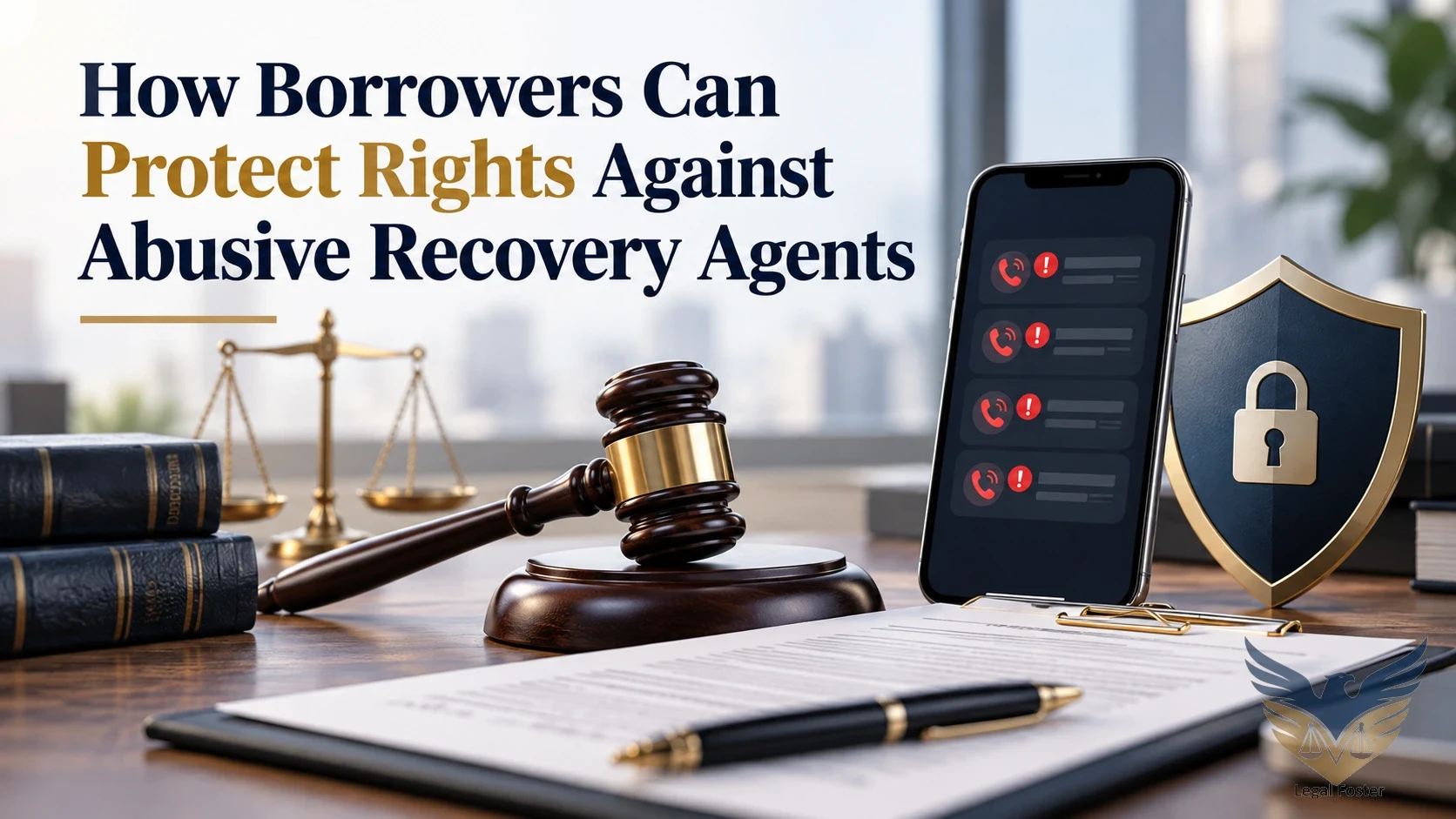
How Can Borrowers Protect Their Rights Against Abusive Recovery Agents?
Loan Settlement Lawyers generally receive calls from borrowers after they have received calls/angry messages/vendors visiting office/home/address of customer/relative in claimed representation of bank/NBFC/recovery agency or they are already talking to some person about loan settlement but even after talking, calls/vendors continue to bother.
Just because a person has defaulted on a bona fide loan does not give a recovery agent the right to threaten, publicly embarrass or intimidate a borrower into doing what they want. The bank/lender has every right to recover any dues which are payable to them legally but the manner of recovery should be within the set rules/regulations.
Negotiating a settlement is a fine line. Reporting someone for abusive tactics should not be confused with forgiving the underlying loan. Just because a lender can recover x amount of debt does not give them the right to be abusive in their collection.
Loan Settlement Lawyer will explain this difference to you, analyze your collection letters and review the terms of the settlement prior to you agreeing to anything which may be detrimental to you in the future.
Why Does Recovery Agent Harassment Matter for Borrowers in India in 2026?
Overdue recovery attempts can affect more than your loan account.
Clients have reported late-night calls during office hours, calls to family members, endless WhatsApp messages or threats of a visit. For business borrowers, there’seven more anxiety about customers, employees or suppliers finding out you’re having a financial dispute.
No one wants to be embarrassed in public. The fear of social embarrassment can make borrowers do silly things.
He or she may transfer funds to a particular recovery agent without verifying that the settled amount agreed upon is part of a written settlement. Another borrower may accept a collector’s verbal promise that by paying him “will settle your loan”, while your account actually has dues.
At Loan Settlement Lawyer, we typically treat recovery induced behavior and loan settlement documents as two separate legal issues.
Quick Facts About Abusive Bank Recovery Agents
- Yes, owing money doesn’t take away your right to not be harassed. For instance,
- Debt collectors can’t harass you. As per RBI instructions, no regulated entity or its agents shall practice any coercion, intimidation, force, harassment or humiliation or should intrude into the privacy of the borrowers or their families for recovering the loans.
- Loan settlement – If you and the bank have mutually agreed to a settlement. Just because you ask for 50% cut etc. doesn’t mean all lenders will have to follow that.
- Filing a harassment complaint will not make the loan you owe go away.
- If you are eligible to complain, you should normally complain to the regulated entity concerned itself under the RBI Integrated Ombudsman Scheme, 2026.
What Is Considered Abusive Recovery Conduct?
Harassment can occur in several ways. Recovery agents don’t harass you just by calling and letting you know an EMI is overdue. While a lender can call a borrower, ask for payment and engage in all collection activities allowed by law, harassment occurs when those activities become threatening, embarrassing, unduly oppressive or dishonest.
Examples of harassment defined by RBI include threatening/calling from anonymous number, incessant calling, or any other activity that is intended to embarrass the borrower publicly.
Harassment by incessant calls
Informing a borrower that a payment is overdue and of the contractual or legal consequences of being overdue is not the same as using obscene language, threatening physical harm or repeatedly calling from an anonymous number to scare the borrower. If a borrower feels he/she is being harassed by recovery agents, he should record the conversation (e.g. write down what exactly was said) whenever possible.
Contacting your family/friends
Another common form of harassment is through contacting family, references or friends. RBI explicitly refers to communication intended to “intrude upon the privacy of guarantors, referees and relatives of the borrowers”.
What Is the Difference Between Recovery Harassment and Lawful Loan Recovery?
The word legal recovery means any and all attempts to recover that debt through permissible communications, through a remedy for breach of contract, through settlement discussions, through civil recovery proceedings or through any other lawful means. Harassment is a description of HOW the collection effort is being made.
A consumer debtor cannot assume that because a creditor’s agent stepped over the line the debt disappears. Likewise a lender cannot assume that because a debtor defaults that it can by-pass consumer protection laws. Additionally, if the loan is a secured loan there can be SARFAESI Act, 2002 proceedings available if the requirements are met. Otherwise there can be civil suits or civil recovery proceedings, arbitration or Debt Recovery Tribunal proceedings, or contract remedies depending upon the lender, the language of the loan agreement, the collateral for the loan and the amount of the loan.
For these reasons a legal professional must look at more than the calls. A Loan Settlement Attorney can evaluate whether the debtor is receiving simple collection calls, a formal demand letter, an arbitration notice, a lawsuit, a SARFAESI or Asset Reconstruction Company Proceeding or a legitimate settlement offer.
What Legal Framework Applies to Bank Recovery Agent Harassment?
Creditors are regulated by RBI instructions, governed by contract law, subject to customer complaint mechanisms and (in extreme cases) the general civil or criminal laws of India.
RBI Instructions
On August 12, 20 22, the RBI instructed all regulated entities that they “shall not indulge in or allow any person working on its behalf to indulge in any form of harassment or coercion to a borrower. This includes verbal as well as physical harassment.”
Some specific examples of harassment include “casteist or communal names,” embarrassing someone in public, intruding on family members, sending romantic or sexual social-media messages or text messages, threatening or anonymous calls, repeatedly calling or contacting the borrower for repayment of debts after allowed hours.
Contract Law & Borrower Complaints
Not only are there RBI instructions regarding the treatment of borrowers, but contract law applies and regulated lenders should have customer complaint processes in place. Guidelines for recovery agents can include training, information privacy protocols, and standards of behavior for proper collection practices.
BK Singh can help you understand where regulatory lines are crossed, what your lender may have contractually “encouraged” you to do to repay your debts and what actions may have their own civil or criminal remedies.
Can Loan Settlement Continue While a Borrower Complains About Recovery Harassment?
Yes both issues can exist separately. Customer can file grievance against harassment during recovery / bundled inappropriate behavior and accept the fact that there is a valid loan account which needs to be paid back. RBI's June 8, 20 23 framework also says compromise settlement can be a legitimate tool in the arsenal of regulated entities which can utilize such facility subject to board approved policies. According to RBI , " a compromise settlement can be construed broadly as a settlement where the borrower and the regulated entity enter into a mutually agreed arrangement wherein the borrower pays some amount to the regulated entity to redeem its claim against the borrower in cash and the regulated entity forgives part of its claim."
You can hire Loan Settlement Lawyers who can help analyze if the lenders communication is genuinely an OTS or compromise settlement or a restructuring or a repayment plan or just a recovery demand.
What Should a Borrower Check Before Paying a Loan Settlement Amount?
Payment should be made according to what is stated in writing.
Borrowers may feel forced by their lender to send an immediate wire if their agent yells at them about closing out the account. That could create issues with that lender down the road if they consider your payment a partial-payment.
Asking questions about the following before agreeing to any settlement can prevent borrowers from being misled later:
- Amount owed
- Due date or payment arrangement.
- Account number and loan number.
- Is this a verbal offer or written offer from the lender themselves.
- What happens if the date passes.
- What happens to any remaining balance if the payment arrangement is accepted.
- Will you receive a letter stating the account is closed with no balance due.
Instead of making payments back to the lender as agreed when you took out the loan. Loan settlements can be reported to credit bureaus differently. Borrowers should never think "settled" means "closed" on their credit-history.
If something doesn't seem right or you are getting mixed information from the bank agents and the lenders. Have Loan Settlement Lawyer review the written offer before you send any payment.
Can Recovery Agents Visit a Borrower's Home?
Mode, time, reason & behaviour also matters. He has the right to carry out his recovery activity if he is functioning within his authority. The agent should be acting under the regulatory guidelines and also bank' instructions. He can ask the agent to identify himself & whom he has come from.
Harassing his family members, staging a drama in front of neighbours, abusive language & intentionally embarrassing borrower is different kettle of fish.
If anybody is receiving such frequent visits, it will be in his best interests to keep a chronological fact sheet than getting into a fit of anger. Advocate BK Singh will see that whether the objectionable behavior complained of is a matter of excess recovery efforts or has violated any regulatory/legal guideline.
Can Recovery Agents Call a Borrower's Employer or Colleagues?
Sure they probably know your phone number from your loan application. But there are rules governing collections activity because of privacy issues and harassment. Collections agencies can't shame you around other people willy nilly. For instance RBI instructions forbid any action to harass or spy upon debtors, their relations, references and friends or humiliate them in public.
However if that agent is telling other non loan involved people about your debt to shame you into paying up, that's reportable. If they are a joint-applicant/guarantor/authorized signatory/business reference there may be some leeway.
When Should You Consult a Loan Settlement Lawyer?
Its advisable to speak with an attorney when recovery pressure is paired with an official legal or financial decision being made.
Some examples include-
- You were offered a settlement but aren’t sure what you are agreeing to.
- You sent a written request but are still receiving collections calls.
- They are calling family members, neighbours or office employees.
- You (as a borrower) are being called for settlement and have received an official legal notice.
- There is a secured asset/property involved.
- The account has been declared NPA and they are trying to collect.
- A legal proceeding has been started(i.e. cheque- bounce/ arbitration/ civil recovery/DRT).
You (as a borrower) have already settled an amount but the account hasn’t been marked as settled.
Loan Settlement Lawyer provides legal consultation for loan settlement, recovery disputes and borrower issues through their website. Legal remedies and settlement possibilities vary depending on the situation.
How Can Loan Settlement Lawyer Help With Recovery Harassment and Settlement?
Loan Settlement Lawyer will understand both sides of the issue – the collection approach and the monetary disagreement behind that approach. If the method used is unethical, then your lawyer can suggest you send a representation to the bank / NBFC highlighting your side of the story.
Advocate BK Singh will try to help you document your grievances in a realistic way and not make exaggerated claims which you are unable to substantiate. Even if settlement is being offered, Advocate BK Singh will review the settlement terms and ensure that it mentions specifically which account is getting settled, how much is the settlement amount, when the payment should be made and what happens if you agree/disagree to the terms.
Loan Settlement Lawyer can also help you understand the difference between settlement, restructuring, closing of account, technical write off and continuing recovery so you are clear on what you are agreeing to.
Frequently Asked Questions
1. Can the bank recovery agent threaten me for non-payment of EMI?
Ans. Bank recovery agents can ask you to repay your loan. However, recovery agents are not allowed to threaten you or indulge in abusive/humiliating conduct. Save proof of such calls/messages.
2. When can bank recovery agents call me?
Ans. Loan recovery agents should not call you before 8.00 am or after 7.00 pm for recovery of an overdue loan. Repeated and threatening calls can also amount to harassment.
3. Can bank recovery agents speak to my family members?
Ans. Bank recovery agents cannot involve your family members, friends, or third parties to harass or publicly shame you. Legal position might change if that person is your guarantor or co-applicant.
4. Can I file a complaint against a bank recovery agent?
Ans. Yes, you can file a written complaint to the respective bank/NBFC quoting dates/call details/messages/saved proof. You may also have additional remedies for such grievances.
5. Will recovery harassment erase my outstanding loan dues?
Ans. No. Loan harassment by the bank and legal dues owed by you are separate matters. You can challenge recovery harassment, but still be liable for legitimate dues.
6. Can I negotiate a loan settlement during bank harassment?
Ans. Yes. You may negotiate with your lender for loan settlement even if you have filed a harassment complaint. Ensure that you get the settlement in writing.
7. Should I pay the recovery agent if he says my loan will be closed?
Ans. Do not rely on verbal agreements. Check with your lender, and ask for a written settlement specifying amount, dates and the bank account into which you will pay the settlement amount.
8. Can recovery agents come to my house or office?
Ans. Recovery agents can visit your home or office to discuss loan recovery. However, threatening visitors or taking you/publicly humiliating you may not be lawful. Note down the date and person who visited and mention what happened.
9. What proofs should I collect if my lender is harassing me?
Ans. Keep a record of call detail notes, WhatsApp conversations, emails, screenshots, details of recovery agents and copy of your complaint to your lender.
10. When should I contact a Loan Settlement Lawyer?
Ans. You may contact a lawyer if harassment continues, loan settlement is not clear, your family is being contacted, or if you have received a legal notice from the lender. You can consult Advocate BK Singh for legal advice regarding loan settlements and recovery.
Final Thoughts
Loan default is stressful enough without letting the recovery agent push you into undocumented or unsafe alternatives.
Separate the two issues. If there is genuinely money overdue, figure out what your repayment/settlement position is. If the recovery agents are engaging in bullying/threatening/offensive behaviour, record that misconduct and pursue the appropriate complaint/legal channels.
BK Singh Advocate and Loan Settlement Lawyer can help with loan settlement, recovery agent harassment, bank/NBFC disputes, settlement agreements and other borrower issues throughout Delhi NCR and India.