It is an understatement to say that a borrower against whom a bank auction notice has been issued is already facing monetary as well as mental pressure. After all, the property being used as security for loan repayment is often the result of years (or even decades) of blood, sweat and tears for most families and businesses. Borrowers are intimidated by the very notion of losing their property in a SARFAESI auction and feel they will not get an opportunity to present their side of the story.
While receiving an auction notice from the bank under SARFAESI is a matter of concern for borrowers, it does not mean that the borrower has no recourse against the bank. Indian judiciary has empowered borrowers to seek legal remedy against actions taken by secured creditors in certain circumstances. These are typically cases in which the secured creditor may not have complied with statutory requirements in terms of notices, auctions, valuation, etc.
Under SARFAESI Act, banks and other secured creditors have the power to enforce their security interest when a borrower defaults on their loans. This typically happens when a loan account is classified as NPA. Although the bank has the power to enforce its rights under the security, it also has to follow certain statutory requirements under SARFAESI Act and the rules made there under i.e., Security Interest (Enforcement) Rules, 2002.
In cases where borrowers have successfully challenged bank auctions, it is usually due to the fact that the borrower felt that the auction was held in violation of certain mandatory provisions. A borrower disputing an auction will review all relevant facts including the loan documents, notices issued by the bank and SARFAESI proceedings, auction pamphlet, and any other evidence required. Often a borrower files a suit in the Debt Recovery Tribunal (DRT) exercising its authority under Section 17 of SARFAESI Act.
BK Singh Advocate can assist borrowers with SARFAESI proceedings, analyze the issues regarding the auction and explore legal options available to you based on the facts of your case.
Why Borrowers Need to Understand Their Rights Before a SARFAESI Auction?
Bank auction affects not only the borrower but his family members dealing in trade/business transactions and future financial requirements. Borrowers typically consult an advocate only at the stage of final auction. At this stage borrower will have limited options depending upon the facts of the case.
If a borrower knows his legal standing at the earliest he can plan his course of action and see whether bank has followed the mandated procedure and even if yes, whether there is any flaw in bank’s recovery proceedings.
Few common questions borrowers ask are:-
- Did bank send required notices?
- Did bank follow proper auction procedure?
- Was the property valued at right price?
- Did bank send borrower every notice mandatory?
- Did bank consider objections of borrower?
Just because bank has performed a certain act during auction process doesn’t mean you accept every act as lawful. But each and every SARFAESI matter is determined on its own merits i.e. facts of the case, documents & compliance with the laid down procedure.
BK Singh Advocate guides borrowers after going through records of bank’s recovery proceedings and explain the borrower his legal rights.
Quick Facts About Challenging Bank Auction Under SARFAESI
- a) Proceedings initiated by banks under SARFAESI Act shall mean Proceeding under Securitisation and Reconstruction of Financial Assets and Enforcement of Security Interest Act, 2002.
- b) The following actions by secured creditors can be contested by borrowers at Debt Recovery Tribunal.
- c) Application for relief against action initiated u/s 13(4) can be filed under Section 17 of SARFAESI Act.
- d) Auction Proceedings should be conducted in accordance with statute and enforcement policies.
- e) Notice, valuation report, auction ads and loan file are some of the documents.
- f) All decisions will be made based on the merits of individual cases.
What Does a Bank Auction Under SARFAESI Mean for Borrowers?
A SARFAESI bank auction basically is an attempt by the secured creditor to dispose of the security asset in order to recover the outstanding amount due after fulfilling the requirements of law in terms of procedure laid down under the Act.
If there is a default in a secured loan account, the bank would start recovery process which would entail issuing of demand notices, starting of possession proceedings, starting of auction/sale proceedings of the asset etc.
Find out at what stage they have issued you these papers and scrutinize the documents.
Don’t allow banks to take your rights away from you. Legal scrutiny is not intended to unnecessarily prolong the legitimate recovery process, but to make sure that it is carried out according to law and that your rights as every individual is entitled to, are protected.
Why Do Banks Initiate Auction Proceedings Under SARFAESI?
Typically banks initiate SARFAESI auction proceedings when the borrower is unable to repay the outstanding amount against a secured loan and the account is declared as non-performing (defaulted).
The mortgaged asset is provided as collateral against repayment of the loan. During the recovery process, the bank holds SARFAESI Act rights against the asset.
Here are some scenarios when banks begin auction proceedings:
- Loan Overdues
- Non Performing Accounts(NPAs)
- Not paying the outstanding amount due
- Not following the agreed upon loan repayment terms.
However, banks SARFAESI rights are not above the law. As a borrower you can fact check if due process was followed.
What Legal Rights Does a Borrower Have Against SARFAESI Auction?
Does borrower have a right to object auction?
Yes,Borrower has right to verify whether secured creditor has followed all the procedural aspect as mentioned under SARFAESI Act and the Rules made there under. If a borrower is confronted with SARFAESI auction proceedings then he can object the proceedings initiated by bank or society if they have not complied with the procedures/notice/possession/auction steps etc.
If any person is aggrieved by any of the measures taken by the secured creditor u/s 13(4) then such person can make an application before DRT under Section 17 of SARFAESI Act, 2002. Borrowers should keep in mind that mere by objecting to auction, the recovery gets suspended / cancelled.
DRT examines whether the secured creditor has adhered to the procedure requirements under the Act and Rules i.e. Security Interest (Enforcement) Rules, 2002.
Some of the points which can be examined are
- Whether proper notice was issued or not.
- Whether the auction was conducted in the prescribed manner.
- Whether possession was taken as per the Rules.
- Whether the valuation & sale document require examination etc.
BK Singh Advocate assesses the position of borrowers in any matter related to SARFAESI and peruses the record available and advise the borrower as to what remedies are available.
Can a Borrower Approach DRT Against Bank Auction?
Yes he can file before Debt Recovery Tribunal. Any person aggrieved by any of the measures taken by a secured creditor in the matter of recovery of his dues, as provided under SARFAESI, can approach Debt Recovery Tribunal under the remedy prescribed under Section 17 of SARFAESI Act.
So DRT can inquire whether bank/ financier has followed the procedure prescribed under SARFAESI Act and rules made there under. Whether borrower has a case would depend upon the documents, facts including notices served and facts surrounding auction etc.
He can still file an appeal against the order of DRT before Debt Recovery Appellate Tribunal (DRAT) under Section 18 of SARFAESI Act subject to certain conditions of law.
What Are the Common Grounds to Challenge a SARFAESI Auction?
If there are violations of law/procedural requirements at auction, then the borrower has the opportunity to challenge such auctions.
Some questions, which are commonly reviewed, are :-
Violation of Notice Requirements
Notice of Sale, notice period etc. is an integral part of SARFAESI process. Non- compliance of any of this requirement can be looked into while consulting.
Violation of Auction Guidelines
Security Interest (Enforcement) Rules, 2002 which deals with taking possession of secured asset and further sale of such property. Challenge to mandatory requirements such as notice of sale have already been entertained by various Courts.
Erroneous Valuation
If you feel that there was incorrect valuation. Moreover, if the sale is taking place at a price much below its market value, you can have the ground to knock the Courts door.
Material Facts Overlooked
History of loan, status of repayment, any settlement discussion (one time settlement) (if happened), objections received and other related communications.
Based on the facts of your case BK Singh Advocate can guide you through the related documents and help you determine if a cause of action exists.
What Documents Should Borrowers Review Before Challenging Auction Proceedings?
Documents have an important place in SARFAESI matters because everything depends upon record and procedure. Some documents which a borrower would want to gather and go through are:-
After collecting all of the above documents in one place properly, it becomes very easy for the borrower and his lawyers to get an understanding of the history of dispute.
How Can a Borrower Protect Property Rights During Bank Auction?
If you are a borrower, you should read each and every letter sent by the bank and understand the stage at which SARFAESI proceedings are currently at. You may even want to postpone the consultation with a lawyer until you know what remedies are available to you depending on your circumstances.
Save copies of all notices, payments, correspondence, and documents that pertain to the property being contested. These will help you to draft a timeline of the facts at issue.
Going over your case with a lawyer will help you determine if you have issues with how the matter was handled, what documentation is being used against you, or something else that needs to be taken care of.
BK Singh Advocate helps borrowers in cases like Bank auction issue SARFAESI notice SARFAESI Recovery Proceedings.
When Should a Borrower Consult a SARFAESI Lawyer?
As a borrower, you would need the expertise of a SARFAESI lawyer when you have received a recovery notice from the bank or financial institution, served a possession notice or when you have been served an auction notice. At the earliest possible opportunity the borrower should seek legal help to know what remedies are available with him to analyze the documents governing the recovery proceedings.
Most borrowers approach a lawyer only when auction date is announced. By that time most of the crucial dates would have been lost and you will be fighting a purely factual battle to see what legal remedy is left.
You will require legal help when:
- Notice served under section 13(2) SARFAESI Act.
- Bank has initiated possession proceedings.
- Notice of Auction Sale issued by bank.
- Valuation issues /dispute/partial sale unfair sale procedure.
- Discuss the Remedies available with borrower under DRT.
- Legal drafting purposes in case of settlement.
etc.
A SARFAESI matter involves various documents such as financial statements, title deeds, bank correspondence and other statutory requirements. If a borrower reads all the documents applicable to his case, he will know exactly where lies his dispute.
BK Singh Advocate will review all the documents of your SARFAESI proceedings, help you understand the nature of recovery initiated by bank and discuss the various legal options available with you with respect to the facts and circumstances of your case.
How Can BK Singh Advocate Help Borrowers Facing SARFAESI Auction?
Facing a bank auction is always stressful, especially when the property being auctioned is your home or business premises. Borrowers are often unsure whether the recovery was legal and what relief can be claimed against the bank.-
Services of BK Singh Advocate include drafting and guidance in matters related to :
- SARFAESI notices & recovery
- Bank auctions
- DRT matters
- Property taken as loan against
- Loan & auction papers verification.
Legal approach differs from case to case depending on facts. Loan agreement, payment evidence, notices issued by bank, property title documents, auction details are some of the many documents examined before advising on the issue.
Borrowers should understand that not all SARFAESI cases are the same. Each case is different and depends on facts. Whether any relief is available would depend on the applicable law, technical procedural issues, evidence and forum's decision.
BK Singh Advocate helps borrowers understand your standing in the matter and decide on a course of action to safeguard your legal rights when confronted with bank recovery.
Frequently Asked Questions
1. Can a borrower stop bank auction?
Yes. There are certain steps taken by secured creditors which can be challenged by an aggrieved borrower by approaching the relevant forum to seek relief from such action as provided by law. Under Section 17 of SARFAESI ACT, an aggrieved person can file an application before Debt Recovery Tribunal challenging action taken by secured creditors u/s 13(4).
Its all depends on facts and documents. Proceeding have to be challenged highlighting the non compliance with legal procedures.
2. Where Can a borrower File a Case Against SARFAESI Auction?
As a general practice, a borrower files an application before Debt Recovery Tribunal when he wants to challenge certain action taken by banks u/s 13(4) of SARFAESI.
The Debt Recovery Tribunal analyses if the secured creditor has complied with SARFAESI Act and Rules made there under.
3. Can DRT Stop Bank Auction?
Yes. Debt Recovery Tribunal has power to decide if the measures taken u/s 13(4) of SARFAESI are legal and can grant relief to borrower as may be appropriate in facts and circumstances of each case.
Disclaimer: Every legal decision is based on facts and circumstances of individual case. Please consult a lawyer for legal advice.
4. Documents Required To File Case Against SARFAESI Auction?
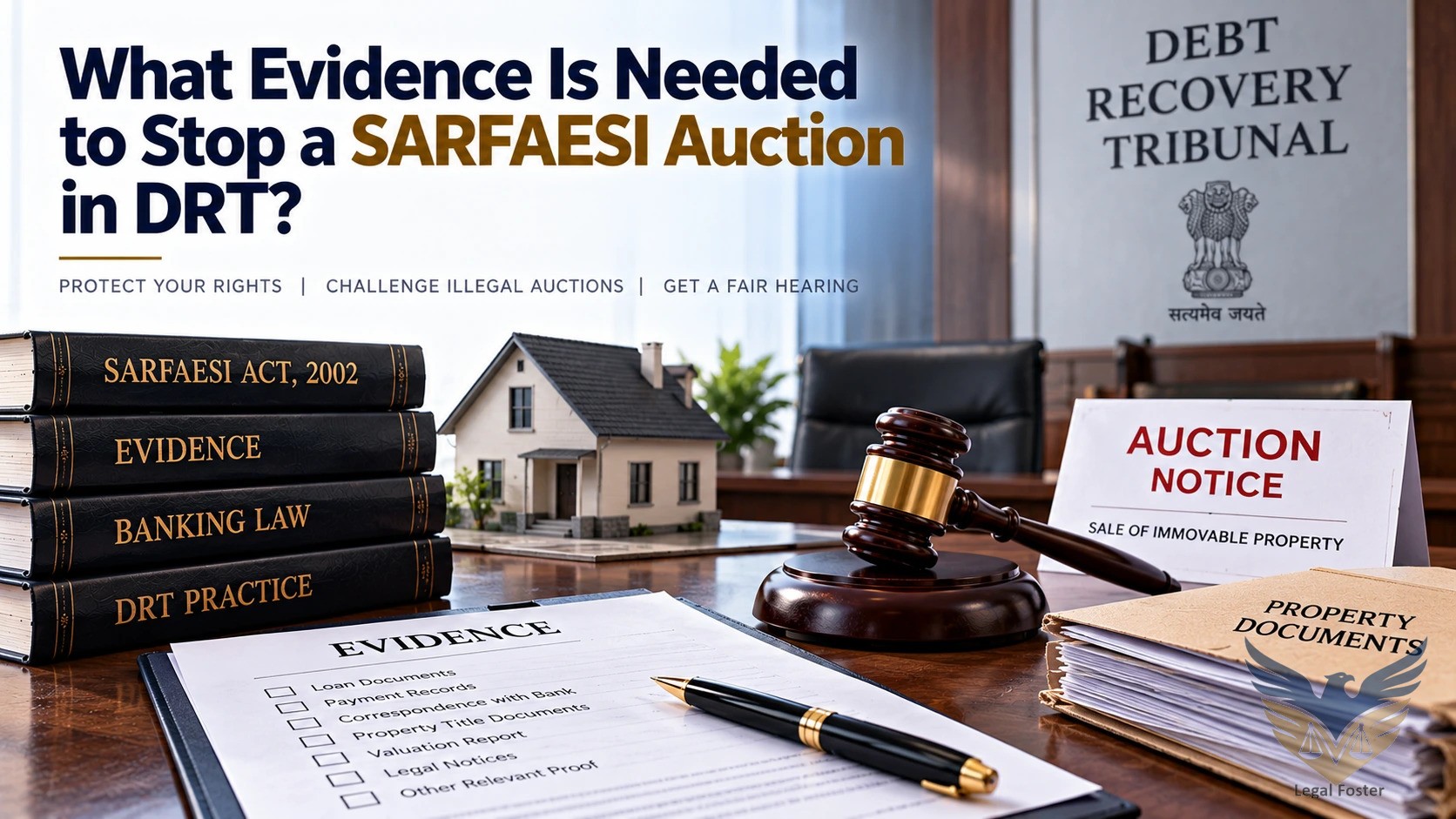
As mentioned above, loan documents, sanction letter, demand notice, notice of possession, auction notice, title documents of the property put up for auction, bank’s records of valuation and correspondences with bank are few of the many documents which are required to be submitted while challenging bank auction.
Documents required would vary depending on facts.
5. Can we object the notice of possession sent by the bank?
Yes. If notice of possession sent by bank has legal issues, then such action by bank can be challenged by borrower.
Disclaimer: Borrower’s legal standing would vary on particular facts of every case. Notices received and documents available would play important role.
6. Can We Stop Bank from Taking Possession If Bank Has Not Send Demmand Notice?
Yes. If bank has not followed legal procedures, then borrower can point out such deviations before Debt Recovery Tribunal. Tribunal would look into whether bank has followed SARFAESI procedure.
Depends on facts and documents of every legal case.
7. Can we Stop Completed Auction under SARFAESI?
Completed auction under SARFAESI can be challenged, however, the chances of challenging completed auction would vary on facts and legal technicalities of each case. Borrower can prevent bank auction depending on the stage of the case, what legal provisions apply and what are the issues in that particular case.
Bank auction notice, sale documents, records with bank, procedural technicalities etc. would have to be looked into before advising borrowers.
BK Singh Advocate would analyze each completed auction case to understand various legal points which can be used to challenge auction.
8. Why You Should Hire a Lawyer For Bank Auction Notice?
SARFAESI proceeding involves various legal aspects like going through legal technicalities mentioned in bank’s notice, analyzing loan documents, understanding property related documents and various debt recovery laws. Any error in understanding bank’s notice or ignoring a crucial stage of bank proceedings can adversely affect your rights.
A SARFAESI lawyer would help you
- Understand the Bank’s Notices
- Analyse Loan Documents
- Get clarity on Auction related issues
- Understand what you can do at Debt Recovery Tribunal
- Get professional help in drafting your legal representation.
Hiring a lawyer would ensure that you know your rights and obligations when dealing with secured creditors.
9. How Can I Benefit from Hiring BK Singh Advocate?
BK Singh Advocate have had experience of assisting borrowers dealing with bank recovery actions, SARFAESI notices, bank auction notices. Since no two legal cases are the same. We analyze your case depending on documents provided to us, loan history and what step has bank already taken.
Legal analysis would help borrowers understand following matters:
- Bank Notices
- Recovery Process Initiated by Bank
- SARFAESI Process
- Relief at DRT
- Problems with Auction
- Suitable Legal Approach.
Remember, every legal case is unique and has to be analyzed on facts. BK Singh Advocate would analyze all your records before advising you on your legal position.
BK Singh Advocate strives hard to provide its customers understand their legal rights when they are facing legal issues against bank.
10. What To Do After Receiving Auction Notice?
After receiving auction notice from bank, borrower should read the notice thoroughly, understand the contents and verify with loan records. Borrower should try to find at what stage has bank initiated the recovery process.
Documents like demand notice, notice of possession, auction newspaper, bank’s records showing payments received from you and all property documents should be retained safely.
Contact BK Singh Advocate to understand what steps would be appropriate after you receive auction notice from bank.
Final Thoughts
Bank auction under SARFAESI can create severe financial hardship on borrowers if your residential/ commercial property is subject of auction. Recovery proceedings issued by bank can be challenged by borrowers to see if bank has complied with the due process as required under law.
Only upon review of notices served, preserving the relevant documents and consulting a lawyer at the earliest will help borrowers asses their options. Any challenge to action initiated under SARFAESI will depend upon facts & evidence available, procedural compliance & the discretion of the forum.
Rather than ignoring the recovery notices and sitting until the last proceeding to find out what rights you have, Reading through your loan documents, Bank Notices, auction diary will help you know the options available to you at the earliest.
BK Singh Advocate has assisted numerous borrowers in successfully challenging SARFAESI notices, bank auction notices, DRT proceedings as well as disputes related to loan recovery. Every case strategy would be designed according to facts and documents.