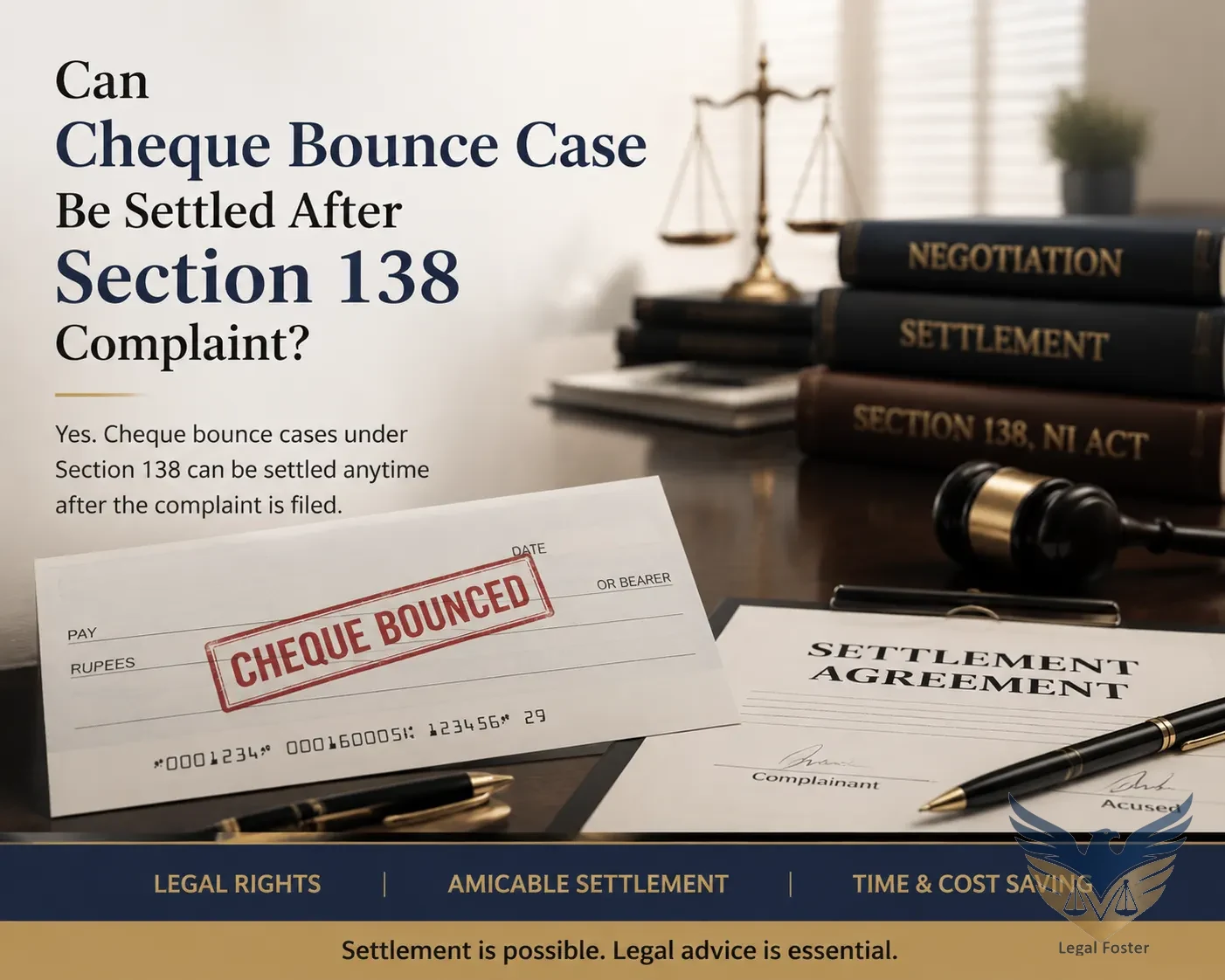
Can Cheque Bounce Case Be Settled After Complaint Under Section 138 Is Filed?
Yes you can compound a cheque bounce case even after filing of complaint under section 138 NI Act, read below 1881. A written settlement can be moved to Court by the parties which would also pray for compounding of offence. This Act allows for compounding of offences under Section 147 provided the Court is satisfied to the facts and circumstances of the case. The parties Section 147
The “heat” often associated with filing a complaint under Section 138 NI Act seems to dissipate when both parties agree to settle. Business payment didn’t go through as planned, a personal loan wasn’t paid back or perhaps you’re a supplier waiting on cheque funds that won’t bounce back. When summons are issued, both parties are feeling the pressure. The complainant wants their money. The drawer doesn’t want to continue losing time/ wages at Court, pay costs and risk getting convicted.
Both parties can still settle the dispute. Just because you filed a complaint, gave evidence or are appearing before the Magistrate for the first time doesn’t mean it’s too late to compound the offence. I’ve seen many cases through Advocate BK Singh where neither party wants to negotiate up until they’re sitting in front of a Judge realizing this dispute is ‘now for real’.
Signing a piece of paper should not be an informal oral “I’ll pay you type promise”. Terms of payment, total amount payable, instalments (if applicable), any pending interest, when to withdraw/ compound and what happens if you don’t pay an instalment should all be clearly documented. Spend time drafting a proper settlement agreement so there’s no uncertainty for all parties involved.
The Importance of Sec 138 Settlements Everywhere In India 2026
If for anywhere India cheque dishonour happens almost every day between traders, business bodies, landlord & tenets, employers & employees, family money lenders & borrower, doctor & consultants. If a cheque bounces it affect the drawer’s cash flow, their reputation in the commercial world and can leave them very stressed.
The drawer may not respond to summons leading to hostile court actions like bailable warrant (BW) or non-bailable warrants (NBWs) at various stages of litigation. If the complainant is not willing to compromise and wants to drag the litigation then he himself will be visiting the court for years without any money recovering. Whereas if the drawer is willing to settle the matter at a later stage they could be imposed cost by the Court for not settling earlier and the Court will scrutinise the matter.
Before signing any compromise,Advocate BK Singh suggests parties to understand their stage of litigation, how much money is at risk, can you pay the amount, How much should you pay and do you want a written record of the compromise.
Quick Facts
- Section 138 lays down the offence of cheque dishonour where a cheque was issued for discharge of any debt or liability.
- Cheque bounce complaint can be settled after filing as well as after trial and various other stages through the process of compounding of offence in the Court.
- Offences under Negotiable Instruments Act, 1881( NI Act) are compoundable in nature under Section 147.
- Cheque bounce complaint can be settled by a written deed of settlement along with the proof of payment to the complainant.
- Proper intimation to the Court/Magistrate through an application or a statement showing that the parties have settled their dispute.
- Cheque bounce settlement at later stages will invite cost or harsher scrutiny of the matter by Court in certain situations.
- Settling a cheque bounce complaint will not stop the separate civil claim/loan claims/ business claims the parties may have against each other unless it’s stated in settlement agreement.
What is the Meaning of Settlement After Section 138 Complaint Filed?
Let’s say you and the complainant agree to settle the matter after a Section 138 complaint is filed. A ‘settlement after filing’ means both parties enter into an agreement and settle the amount involved in the issued cheque and on any other terms the parties wish to include. You would then jointly file an application to court asking them to record your compromise and allow compounding of offence. Once the Judge allows compounding of offence, the criminal complaint is over with a fresh order of acquittal passed.
Remember, A Section 138 proceeding is not a Recovery Suit. It is a statutory offence pertaining to the dishonour of cheque which was issued by drawer for discharge of any legally enforceable debt or liability. There are procedure laid under the Act which mandates that cheque must be presented within its validity period, Notice demanding payment must be issued within 30 days of bank returned information and drawer has 15 days to make payment from the date of receipt of notice. Section 138
Analyse whether the settlement genuinely settles the entire dispute or leave certain claims open-ended. Advocate BK Singh will review your offer or terms proposed by the other party.
Law Regarding Compound Cheque Bounce Case After Complaint Is Filed
Section 138 NI Act imposes liability on drawer for dishonour of cheque which was issued by him for discharge of any legally enforceable debt or liability. Such offence is triable by Magistrate as is provided under the Act.
Section 147 provides that the offences under NI Act are compoundable in nature. Accordingly, the Court can accept an application alongwith consent statements, affidavit, compromise deed, proof of payment, copy of cheque and a statement from complainant that matter is settled between parties and allow compounding of offence.
Such settlement can be done at any stage either during trial or appeal or revision stage. The procedure at each stage are different and also the Court which will entertain the application differs. Advocate BK Singh will advice whether such compounding application needs to be filed before Trial Court or some other method is to be followed at appellate court.
Who may need help with Post filing compromise/settlement?
- drawer against whom summon has been issued in 138 Cases.
- complainant who has received a part payment and wants to settle the matter finally.
- business associates who want to settle the outstanding dues for invoices/ supply debts.
- directors against whom proceedings have been initiated for cheque- bounce.
- Relatives and family members against whom complaint has been filed for personal loan/friendly loan amount.
- Individuals who have issued multiple cheques/ wants to settle defaults on instalments payments/ have related Civil suits pending.
Process Involved in the Cheque Bounce Settlement
Firstly the settlement starts with understanding how much money will change hands. Write down specifics of what the cheque would be issued for (amount finally agreed), whether any interest/costs if the parties have agreed to this, any part payments already made, litigation expenses if any, associated invoices, loan agreement/finance contract, Acknowledgements.
Secondly, the Terms of agreement should be reduced to writing. “The matter settled “ does not cut it and could come back to haunt you. Clearly specify who is paying whom, how the payment will be made, when it needs to be paid by, whether it is a full and final payment and what happens if an instalment default occurs.
Once the payment or agreed security has been provided to the complainant, you are now in the position to file an application for compounding before the Court where complaint is pending. You and the other party will probably need to attend Court to confirm your consent and file affidavits with supporting documents. Advocate BK Singh will guide you in a manner where what gets filed in Court is a reflection of the settlement reached instead of him trying to figure out half of a verbal agreement.
Documents you should Prepare
Like any well thought out and planned claim, if you keep a proper record of the settlement it’ll hold more weight. Here is a list of documents you should prepare:
- Cheque and bank return memo.
- Statutory demand notice and service slip.
- Complaint, summons & previous order passed by the Magistrate.
- Settlement deed/ joint application/ affidavits.
- Bank passbook copy/receipt of demand draft or receipt of payment.
- Invoice/loan agreement/ledger/Whatsapp chat or any written admission, if available.
- Identity proof and power/ documents of company or authorized person.
Advocate BK Singh usually insist on holding on to the original payment receipt till you’ve received the final order from court.
When to Contact a Lawyer
Contact a lawyer immediately if you have been served summons/warrant/draft of settlement/proposal for part payment/demand for huge amount. Even if cheque has been issued by your company or you have multiple cheque cases pending against you or the underlying transaction is disputed. Advocate will know what a genuine settlement offer looks like and what agreement would leave you exposed to future liability. Advocate BK Singh will go through the complaint, cheque memo, settlement proposal and what stage the case is at in Court before you agree to any conditions.
Legal Services Best Bail Lawyer Can Provide
Best Bail Lawyer will be able to assist you with cheque bounce specific matters once we know the details pertaining to the summons/warrant, Court you are required to appear in and what documentation you have related to your settlement. We can help review the settlement deed, compound application on your behalf, assist with warrant issues, appear for you in concerned Court and tell you realistically what can be done from a legal point of view moving forward. There should never be any guaranteed legal outcome in any legal matter as every situation is different and based on the documents/facts.
FAQ’
Q1) Can a Section 138 Case Be settled after summons are issued?
Ans. Yes, it is possible to settle after summons are issued. You can apply to court to compound the offence under section 147 of NI Act.
Q2) Does the compromise need to be in writing? Can we orally settle?
Ans. It is recommended that parties execute a written deed of compromise. This would document the payment terms, clearly state its a full-and-final settlement and set out responsibilities of each party.
Q3) If we make a payment, will the complaint just go away?
Ans. No, you will need to inform the Court and get an order from the Judge to compound the offence (stop the matter).
Q4) Can I settle even if I’ve already been convicted?
Ans.Yes. This can be considered on appeal. Procedure will vary depending on what stage the case is at and the facts of your record. Advocate BK Singh will review the facts and advise on what procedure is available.
Q5) Does the complainant have to agree to settle?
Ans.Yes, typically the complainant has to agree. Compounding requires a bona-fide settlement agreement between two parties. It’s not advisable to force someone to settle if they don’t want to.
Q6) Can I settle by paying in instalments?
Ans.Yes. Parties are free to agree to payment by instalments. It is advisable to clearly document the due date of instalments, consequences of missing an instalment and when a “no objection” certificate can be provided to drawer.
Q7) What if the Accused wants to pay some money now and settle?
Ans.Partial payments does not result in the Complaint being thrown out. Both you and the complainant will have to come to an agreement if he will pay the balance or if he wants to continue with the complaint.
Q8) Can companies settle cheque bounces?
Ans.Yes. When making a compromise with a company, ensure the settlement deed clarifies who the company is, who authorised person is signing the settlement, who are the directors named in the complaint and if applicable, where the funds will be obtained from.
Q9) Will I get cost against me if I settle at a late stage?
Ans.This is up to the Court to decide. If a matter is settled at a later stage it could be scrutinised more by the Judge. He has the discretion to order costs if he sees it fit.
Q10) If we sign a full and final settlement can the complainant still open another case?
Ans.Yes. It’s possible but having a well worded full-and-final settlement should limit this risk. Whether such clause would be effective would depend on the wording and facts surrounding your case. Please get Advocate BK Singh review your settlement before you sign it.
Help settle your Cheque Bounce Case With Advocate BK Singh
If a cheque issued by you bounces and a complaint has been made and you have been summoned to appear in court then here’s what you should know. You can settle a cheque bounce case after filing a complaint. A complaint under section 138 NI Act can be compounded at any stage after filing of the complaint even after it has been tried.
Advocate will guide you with the proper drafting of settlement agreement, bench warrant issues, represent you in the Court where your matter is pending and advise you on the possible legal remedies that you can pursue.
Conclusion
Filing a complaint under section 138 NI Act won’t stop you from settling.
Gift wrap that settlement agreement with all the facts drafted, collected proofs of payment and proper application in proper format to Court and watch your cheque bounce matter conclude with a clean chit.
Don’t leave your pending Court case on assurances. Meet Advocate BK Singh, discuss your situation and allow him to review your matter before you file a compromise or compounding application in Court.