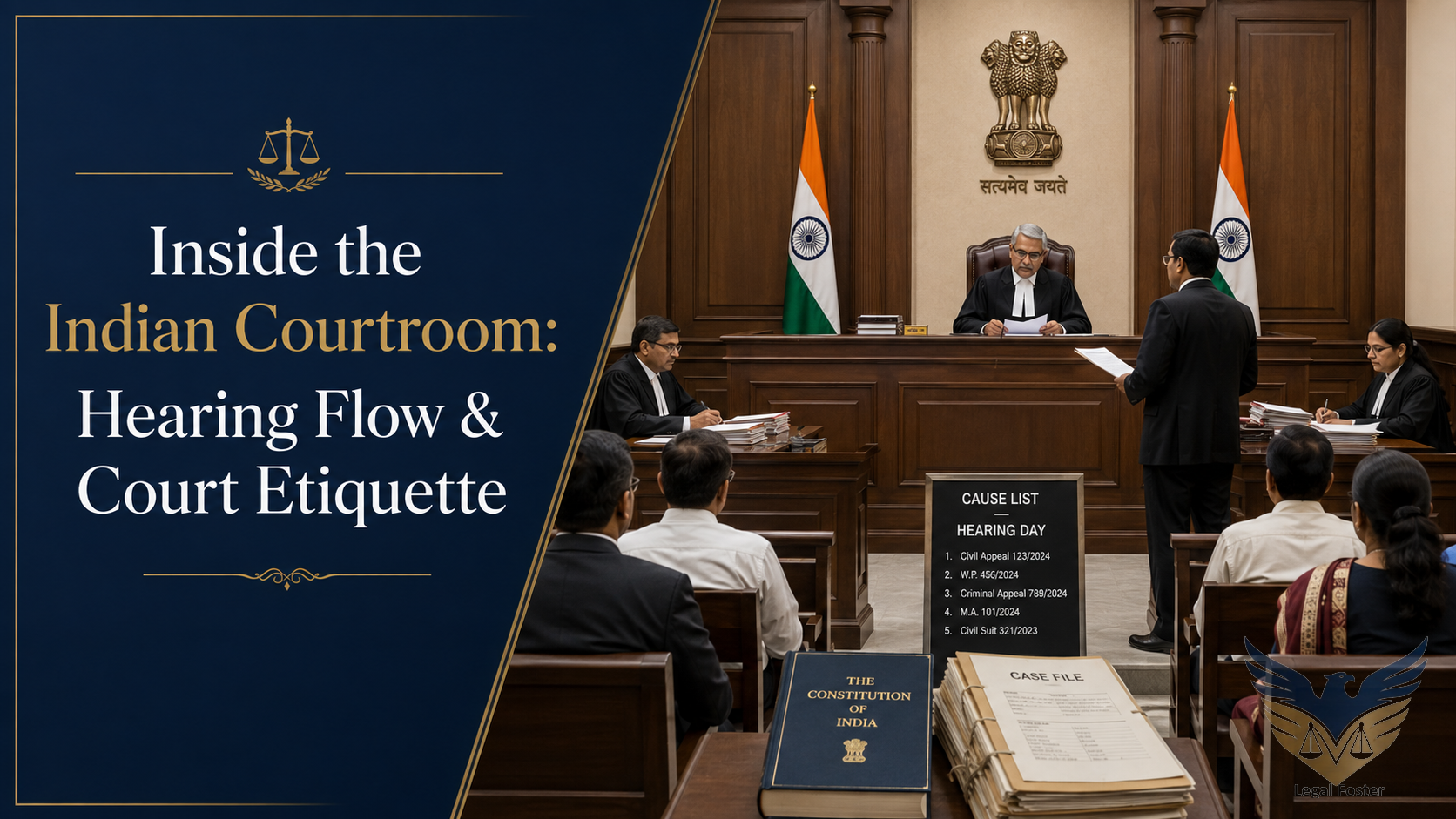
Courtrooms often seem like an alien place for many people visiting for a hearing for the first time. They are clueless about what happens in the court, how judges behave and proceed with hearings, what papers they need to carry, and how they need to conduct themselves when arguments are presented before them. Learning about court procedures, flow of hearing days and courtroom etiquettes help you feel less bewildered when walking into a courtroom and face legal hearings with confidence.
Indian courts have a set procedure for conducting trials, and everything from calling a case to final arguments happens in a specified manner. If you are party to a civil suit, criminal case, property litigation, family matter, consumer dispute or commercial litigation; you might want to know what to expect in court.
How Does a Typical Hearing Day Begin in an Indian Court?
The hearing day for advocates and litigants typically starts when they reach the court premises well ahead of time. All courts function during fixed hours and appearances before the courts should commence only after the court is open for regular business. If counsel reaches the court after the time they are likely to get delayed either in court security checking procedures, locating the courtroom where their matter is listed, organizing the file documents.
In the courtroom lawyers go through the file and re-familiarize themselves with the previous orders passed, notices given, documents submitted as evidence and key points which are likely to be raised during the hearing. The litigants should also not depart from the vicinity as hearing of the matter can be called anytime earlier or later depending upon the listing of the matters for the day.
Cause list also referred to as the courtroom list mentions the particulars of all the matters listed for hearing that day in the respective courtroom. Usually, matters are called up for hearing in the order they are listed however urgent matters may be heard first or if the court issues any specific directions.
What Happens When Your Court Is Called?
Advocates appearing for parties should expect to stand before a judge when the matter is called. The lawyers then say who they are and state that they appear for such-and-such party. The judge may then listen to argument, look at documents, review prior directions or issue further orders, depending on what stage the case is currently at.
Arguments on behalf of parties are not necessarily made at every hearing. Sometimes parties are merely making procedural applications, filing documents, complying with prior orders or asking for an extension of time. Knowing this will help litigants not expect fireworks at every court appearance.
Why Is Courtroom Etiquette Important During Legal Proceedings?
Courtesy in the courtrooms honours the judicial system and maintains decorum in the court. Judges preside over hundreds of cases every day. When people are courteous, trials can go on without interruption. Speak only when necessary and listen attentively. Shouting, screaming, or yelling while in court is completely disrespectful. Speaking out of turn can cause inconvenience to others. Obey courtroom deputies and refrain from talking while court is in session.
Don't wear expensive clothes to court, but be neat and clean. Dress conservatively and avoid revealing clothing.
How Should Litigants Communicate Inside the Courtroom?
Petitioners should keep in mind that when in court, there are rules of communication to which they must adhere. Typically, the attorney will be addressing the judge and the client will give instructions and information outside of the hearing process.
Should the client have an explanation to make, it's typically best to arrange a conversation with the attorney outside of court rather than interrupt the proceedings.
When a client clearly communicates with his or her attorney, they can be sure that all relevant facts, paperwork and concerns will be brought before the court.
How Do Lawyers Prepare for a Court Hearing?
Preparation by lawyer include reading facts, orders passed earlier in that matter, related laws which will be applicable and potential arguments which can be put forward by the other party. A well-prepared lawyer will be able to explain the matter in front of the court without any confusion.
Seasoned Advocates concentrate on the facts of the matter rather than cluttering it with irrelevant details. They know how to respond to the queries put forth by the Judge and how to safeguard their client’s legal rights during the hearing.
The legal proceedings in courts require one to be patient. Know the law and present your side strategically. A good lawyer will make you understand the possibilities and what to expect in the court room after proper preparation.
Why Should First-Time Court Visitors Understand Judicial Procedures?
Going to court for the first time can make anyone feel intimidated. Courtrooms seem serious and scary. Knowing the basics of what to expect when you're in court can help you feel confident and less frazzled. Here's what you need to know.
Knowing courtroom vocabulary such as date of hearing, adjournment, and interim order will help you understand where you are in the process of your case.
Your case may deal with important life issues like money or job matters. You want to be sure to go into court prepared and know how to behave.
How Can Professional Legal Guidance Help During Court Matters?
Going to court is more than showing up on your day in court. There is legal strategy, paperwork, communication, and procedure involved in every issue.
An attorney can walk you through the importance of every hearing, prepare documents, and speak on your behalf. They can also advise you on risks and potential issues that may arise from your case.
Civil cases, criminal defense, real estate conflicts, family law, business disputes, consumer issues- no matter what your court case may be, having help will make your time in court that much easier.
Frequently Asked Questions
1. What occurs during the first hearing in India?
The parties file a written statement leading to identification of the case, preliminary submissions, verification of documents and directions of the court leading towards final submission dates as per the discretion of issues in the matter.
2. Does an individual get an opportunity to speak before the judge?
No. Advocates place arguments before the judge. An individual can speak only when asked to by the court or during the course of proceedings where his personal input is necessary.
3. What should one wear while going to court?
One must always dress well while entering the court. Wear clean clothes and decent formal clothes. One must not enter the court half naked or with inappropriate dressing.
4. How much time the hearings take in court?
Not much time. Depending on the cause list and arguments, the matter can get disposed within a few minutes or can go longer.
5. What is Cause list?
Cause list means a list of cases scheduled before a court on daily basis.
6. Can parents attend the court hearing?
Yes, parents are allowed to attend the court hearing in open court subject to any restrictions and directions of the concerned court.
7. Why are hearings adjourned?
There can be several reasons for adjournment such as shortage of time, documents awaited, parties not being present, legally required or directed by the court.
8. Are clients required to attend every hearing?
It depends on the nature of the case and the direction of the court. In most cases, advocates appear on behalf of their clients. But clients are required to appear for arguments suggested by their advocate or as directed by the court.
9. How do lawyers assist us during hearings?
Advocates can assist you by placing arguments before the court, elucidating on legal matters, arranging your documents, answering queries asked by the court and protecting your interests.
10. Why we need to maintain decorum inside the court?
Maintenance of decorum leads to proper hearing of the matter. With peaceful atmosphere, the judge, lawyer and parties can understand the matter and help settle the dispute.
Conclusion
Going to Court can be less intimidating if you know how a court hearing will flow and by following some basic courtroom etiquette. The court system functions through processes and procedures, and although you can’t always predict what will happen during your hearing, being prepared, being patient and knowing how to conduct yourself in court will serve you well.
The accused during their hearing should pay attention to their case study, speak when required to the judge and behave properly with their advocate. If represented properly and prepared well, you can make legal issues appear simple and comprehensible.
If you are looking for a professional guide for representing yourself in court, court procedures and hearing related assistance. Inside the Indian Courtroom: Hearing Day Flow & Court Etiquette is one of the best firm which can assist you to know about your requirements. You may also contact Advocate BK Singh for professional legal advice.