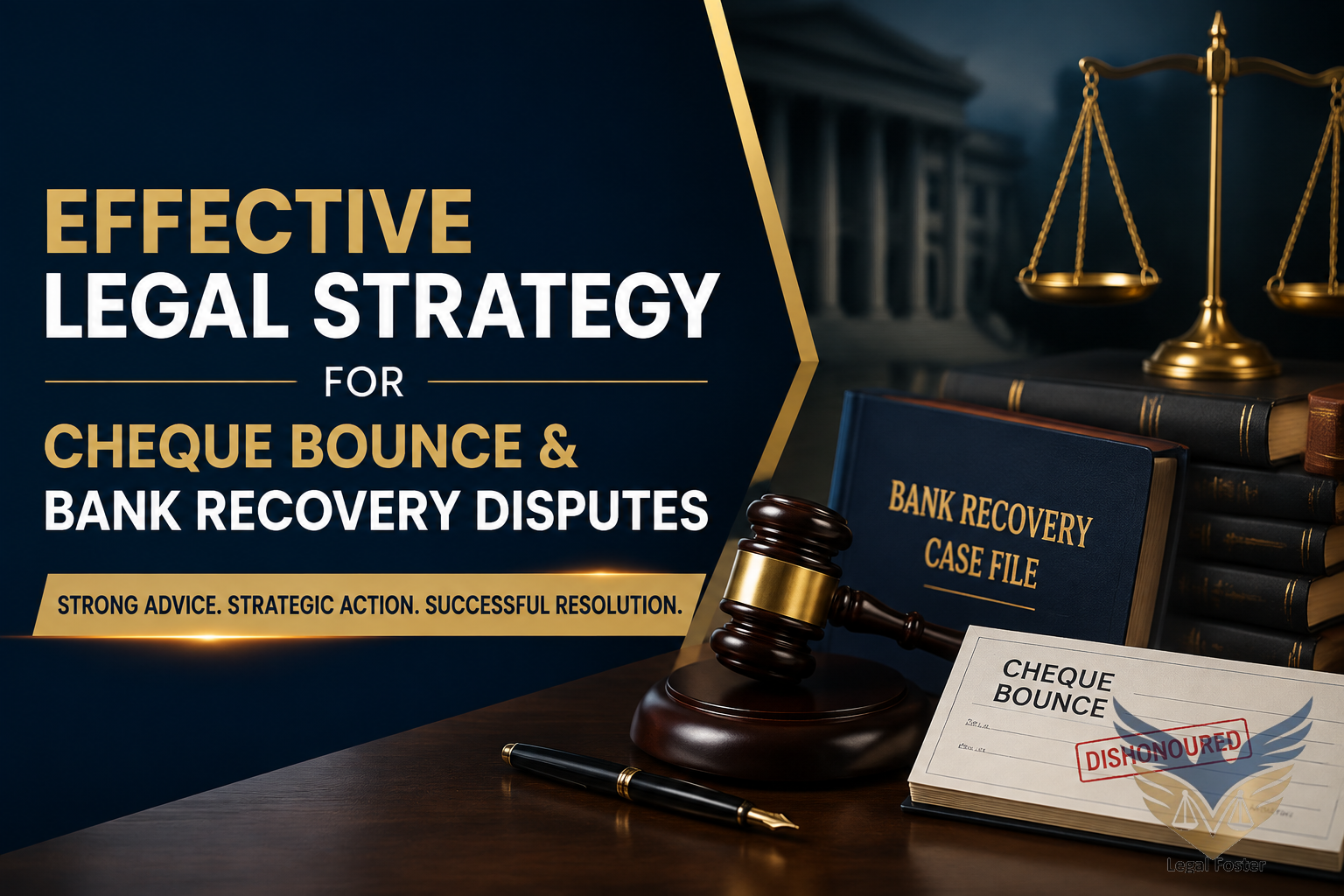
How Can You Build an Effective Legal Strategy for Cheque Bounce and Bank Recovery Disputes?
Cheques issued towards a loan gets bounced can lead to multiple proceedings at the same time. The bank/financial institution/NBFC/company/business individual payee can launch a 138 complaint, Civil recovery, Debt Recovery Tribunal or enforcement under SARFAESI. Responding to each proceeding separately exposes borrowers, guarantors, companies or directors to the risk of making contradictory statements, paying twice, missing critical deadlines and making detrimental admissions.
Cheque Bounce Lawyer coordinates legal defense and counter-claims and treats all proceedings at one integrated dispute. Lawyer identifies original liability amount, squares up all payments made, segregates secured/unsecured demands, verifies purpose of cheque and negotiates settlement across all forums.
BK Singh Advocate helps business owners, lenders, borrowers, directors and guarantors with coordinated defense and counter-claims. Cheque bounce complaints, loan agreement, account statements, cheque recall notices, recovery applications, enforcement under securities etc. are reviewed.
The objective is not simply to respond or file multiple lawsuits. Objective is to correctly position yourself (or your client) as per liability, preserve procedural rights and prevent double recovery. Approach also opens a path towards payment, defense or settlement.
Why Coordination Matters Across Indian Cities
Cheque-bounce as well as bank-recovery proceedings can be scattered all over the place. The borrower has its principal place of business in Delhi but the branch where the money was lent is in Noida. The company has its registered office in Gurugram, its properties which are charged located in Jaipur and guarantors residing in Mumbai.
The cheque was deposited through a bank account branch in Bengaluru while the recovery proceeding are pending before a DRT in some other jurisdiction.
Similar complexities arise when the transactions are taking place from Hyderabad, Chennai, Kolkata, Pune, Lucknow, Ahmedabad, Surat, Chandigarh, Kochi, Indore, Nagpur, Patna, Bhopal, Dehradun, Guwahati and all other business centres.
A Cheque Bounce Lawyer can look at where each proceeding has been initiated, whether the appropriate authority has jurisdiction and whether the same debt and payments are being duplicated. If multiple lawyers are appearing in different cities there is no coordination since there is no single team following all the litigation.
Cheque Bounce Lawyer should map:
- Where the cheque was sent and deposited;
- Payee’s account bank branch;
- Drawer’s bank and address;
- Company’s registered office;
- Location of charged assets;
- DRT or civil court where recovery is pending;
- Where the notices were issued and received; and
- If any related proceedings are pending elsewhere.
Quick Facts
- One cheque- bounce complaint and Civil/ bank- recovery proceeding can be initiated for the same Liability.
- Section 138 Proceedings are Foreign to DRT / SARFAESI / Contractual/ Civil Remedies.
- If already recovered under any one head it should be adjusted/set off against all proceedings.
- Presentment of cheque has to be made for discharge of a legally enforceable debt or liability.
- The nature of notice and complaint to be filed under NI Act is Time bound. There should be a clear carve out in the settlement as to how all pending complaints/tribunal cases/securities being enforced/guarantees would be taken care of.
Documents Needed for a Coordinated Review
All documents relevant to a strategy are essential for the strength of the strategy being created. Parties should maintain originals and chronologically organize their paper documents. Lets see what documents we may get.
Cheque-Bounce Documents
- Cheque -Original cheque or any other legally admissible document.
- Bank-Return memo
- Deposit / Presentation receipt
- Statutory demand notice
- Postal/courier/email/electronically recorded methods of service.
- Tracking report and returned envelope copy.
- Complaint, Affidavit of evidence and summons served.
- Orders by Magistrate.
- Bail/appearance documents.
- Application(s) for interim compensation (if any).
Loan and Recovery Documents
- Sanction letter and facility agreement.
- Loan application and disbursement details.
- Account statements.
- Repayment schedule.
- Renewal/restructuring/acknowledgement.
- Recall Demand notice.
- Guarantee and security documents.
- Mortgage/Hypothecation documents.
- DRT pleadings/orders.
- SARFAESI Notices/objection letters.
- Possession /valuation/auction details.
- Recovery certificate if granted.
Payment and Settlement Documents
- Proof of bank-transfer.
- Receipts
- Ledger uts.
- One Time Settlement proposal.
- Settlement agreement.
- Email and Whats App chats.
- Appropriation statement.
- No-dues/closure letter.
BK Singh can verify the above documents along with the lenders sanctioned account statement and allegations in his complaint. The unavailable documents can be identified beforehand so that the party doesn't fight a battle on assumptions.
How Should Settlement Be Structured?
Settlement should relate to entire dispute, not just next hearing.
An oral agreement to stay a cheque complaint after one instalment payment can fall through if the recovery suit, guarantee claim or security enforcement goes ahead. Similarly, a borrower should not expect that payment pursuant to a tribunal order will automatically result in withdrawal of an existing Section 138 complaint pending against him.
Elements of a comprehensive settlement could include:
- Amount finally payable (as certified)
- Interest / costs
- Dates / mode of payment
- Set-off for previous receipts
- Treatment of security / guarantees
- DRT / civil proceedings
- SARFAESI actions
- Compounding / withdrawal of cheque complaint
- Release of documents / charge
- Default on agreed instalments
- Statements to be submitted to every court / tribunal
- Fully-operative no-dues certificate
Cheque Bounce Lawyer will ensure that these steps in the payment schedule are co-ordinated with the procedural stages. The complainant may need sufficient protections before agreeing to any form of closure. The payer will typically want an enforceable undertaking that the payment will result in discontinuation of all the proceedings identified in the settlement.
Offences under the Negotiable Instruments Act are compoundable under Section 147. However, the terms of the settlement, timing of the agreement, recording of the compromise by the court and performance of the agreed settlement are all crucial.
When Should You Consult a Lawyer?
Seek Legal Help as Soon as Possible:
- Your cheque is bounced.
- You receive a statutory demand notice.
- You receive summons/complaints under Section 138.
- Bank has recalled loan.
- Case is initiated by DRT.
- Received SARFAESI notice/ Possession proceedings initiated.
- One Time Settlement or settlement talks have failed.
- Cheque amount is different from what is stated on loan statement.
- Multiple directors/guarantors are being named.
- Property which is pledged/seized is being sold.
- Payments are not being properly credited.
- Cases have been initiated in different cities.
This helps BK Singh Advocate save you from getting barred by limitation and save your documents. It also helps to quickly figure out the real amount payable to you and avoid you from answering anything which may be against you.
How Can a Cheque Bounce Lawyer Help?
Cheque Bounce Lawyer prepares a coordinated game plan for cheque dishonour, loan recovery, company liability, settlement and resulting litigation.
Services include:
- Scrutinizing the cheque and underlying debt claim
- Verifying limitation dates
- Reviewing notice and jurisdiction problems
- Matching loan account and payments
- Matching claims pending in courts & tribunals
- Assessing company / director liability
- Coordinating with lawyers in multiple cities/states
- Drafting replies/settlement terms
- Strategizing for recovery / defence
- Recording withdrawal from every forum if required.
BK Singh Advocate formulates a consolidated game plan rather than reacting defensively to each notice or court hearing. The specific game plan depends on whether you are the lender/payee/borrower/guarantor/company/director.
Read more about defending against cheque bounce due to insufficient funds, stop-payment cheque fraud complaints and personal loan cheque-bounce cases.
Frequently Asked Questions
1. Can cheque-bounce complaint and recovery case be filed by bank both?
Ans. Both proceedings can be filed by bank. They address different offenses against the law. It depends on the transaction, parties, documents and statutes as to whether both causes of action can be maintained. Any recovery would have to be properly credited.
2. Can filing of DRT case stop Section 138 complaint?
Ans. No. Cheque Bounce Lawyer will review both proceedings as they tend to seek redress for different legal wrongs with different requirements in most instances.
3. What happens if the loan is partially paid back already?
Ans. Such payment should have been set-off in the account and against cheque liability. Timing, appropriation and proof of such payment may be very important in your case.
4. Can we proceed against a director since the company borrowed money?
Ans. Not necessarily. BK Singh Advocate will need to review how the director was involved, whether he signed the cheque, statutory language in the complaint, what appointment or resignation is recorded against the director and whether he personally indemnified anyone.
5. Does putting “security cheque” on a cheque avoid its prosecution?
Ans. Merely stating that a cheque is a “security cheque” will not dispose of a prosecution. The enquiry typically addresses whether there was an enforceable liability outstanding when the cheque was deposited with the bank.
6. Can we sell a property which is given as security if cheque case is filed?
Ans. Simply filing a cheque complaint will not automatically stay enforcement of a rightful security interest. However, sale of that property would still have to be done in accordance with the law under which such security was given for recovery. Other parties may have separate legal remedies.
7. Can we settle a cheque case?
Ans. Yes. Cheque Bounce Lawyer can help you out with working out payment, compound or withdrawal of complaints and addressing any linked recovery cases.
8. If we are acquitted from cheque case, does that nullify the loan taken?
Ans. Not necessarily. Statutory offenses can be compounded or withdrawn while other forms of contract or civil liability remain.
9. How do I make a record of payments I have made during proceedings?
Ans. BK Singh Advocate will suggest you get all receipts acknowledged in writing and request a statement of account be updated to reflect loan amount, cheque number, legal proceedings, appropriation and balance amount.
10. What is the first step to take when there are multiple cases pending?
Ans. Create a timeline, proceeding matrix, document index and note of payments made. Seek lawyer’s advice on limitation issues with pending filings and any contradictions in claims before pleading to any additional documents.
Final Thoughts
Cheque bounce cases and bank recovery proceedings cannot be approached in isolation. It is only prudent to view the cheque complaint,FDR,DRT Petition,SARFAESI proceedings,Civil remedy the company/person liable to pay,guarantees and any compromise decree/statement of account together holistically where multiplicity of proceedings have been initiated on the same transaction. Only then can a consolidated game plan be worked out to fix the legitimate debt amount, overcome legal limitations, prevent pleading adversely against each other in multiple proceedings, ensure all payments are credited to the correct accounts and turn any compromise into a true amicable settlement.