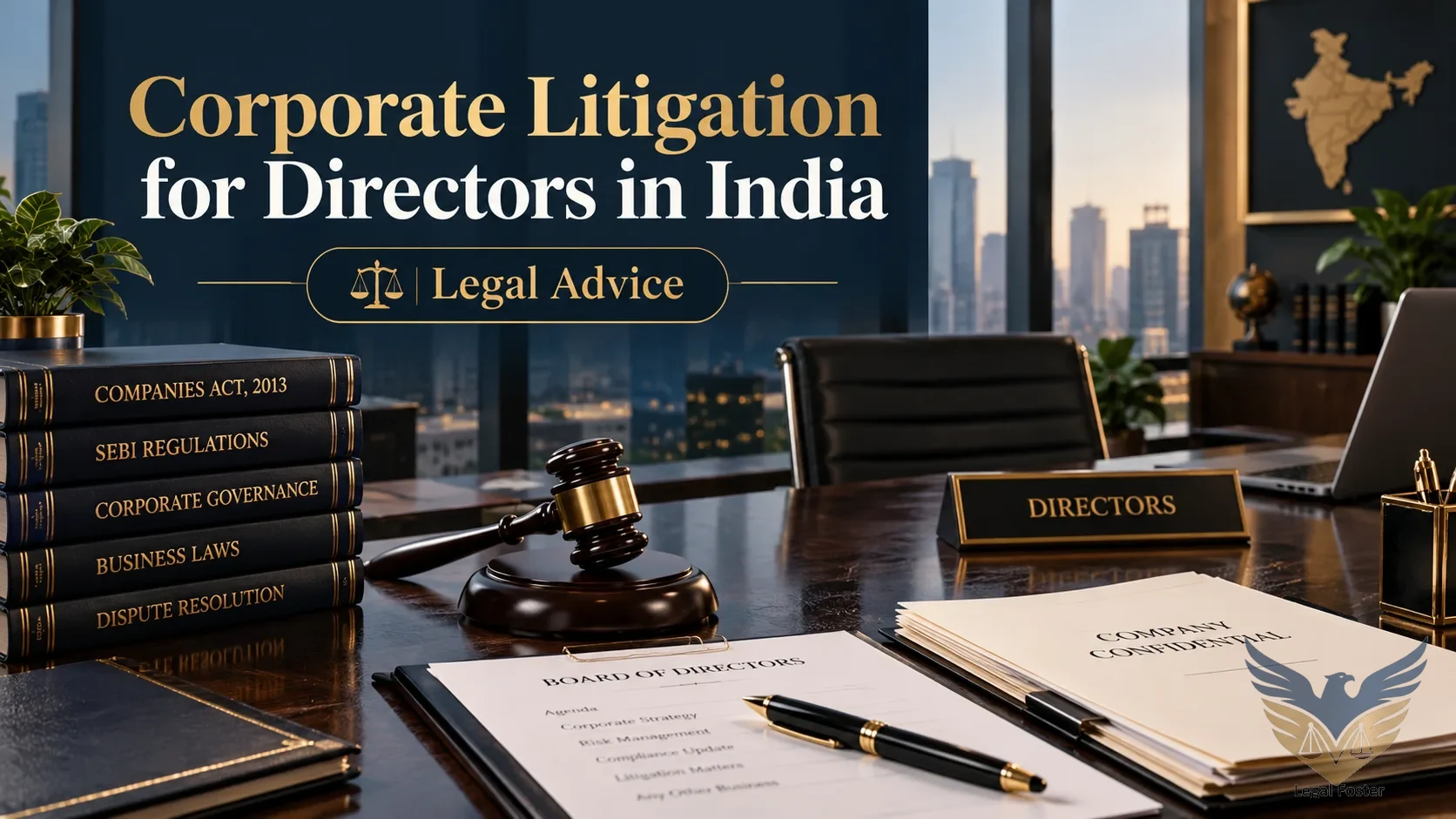
How Can Company Directors Safeguard Themselves Against Corporate Litigation in India?
The reason for the dispute can range from non-payment of invoices to a botched business contract, shareholder dispute or even an allegation of a director breaching their duties to the company. Even if the company is the named party in a dispute, a director can be served with a separate notice or joined in the legal proceedings.
If you are involved in business litigation in your capacity as a managing director, whole-time director or nominee director, the risk may feel very personal as well as to your company. You may have questions like – Am I at risk of losing my personal assets? Do I need to personally attend court? What about my reputation and future business?
Business litigation refers to legal proceedings related to a company’s business operations, management, contractual obligations or disputes with shareholders/stakeholders. The dispute may be resolved through civil courts, commercial courts, arbitration or National Company Law Tribunal (“NCLT”), depending on the issues.
Although a director is a legal person separate from the company, directors are generally not personally liable for the debts of the company just because they are a director. Whether a director is personally liable for a dispute or debt will depend on several factors. These factors include the statute, the nature of the director’s relationship with the company, the alleged wrongful conduct and available evidence. Statutory offences and guarantees are examples of separate personal liability.
This is where the right legal advice can help. If you need assistance with understanding a corporate dispute, know your options for responding to legal notices, evaluating personal liability as a director or representing you in any legal proceedings, speak to Advocate BK Singh and Corporate Law Firm .
At the right time, not too soon, but at the right time. It is not about bulldging business disputes into litigation. It is about helping directors understand their position before a business dispute becomes a legal dispute.
Why Does Corporate Litigation Matter for Directors Across India?
Whether you operate in Delhi NCR, Mumbai, Bengaluru, Hyderabad, Chennai, Pune or elsewhere your business will at some point face a dispute. This may be in regard to a contract, shareholder, insolvency or regulation.
As a director, you may even find yourself personally named in a dispute with business partners or an entity based in another state. Whether the matter should be heard in Mumbai, Delhi or Chennai will depend on the subject matter of the dispute, the contract, relief sought and the applicable governing law. Failing to respond to a legal notice on time or missing a hearing can cause costly avoidable issues.
Directors should also identify whether the allegations pertain to the entity or against them personally. Consulting with Advocate BK Singh at the beginning will ensure you understand what requires a response from a legal perspective, documents you should have been made aware of and whether the matter should even be in court, a tribunal or an arbitral forum.
Quick Facts About Director Liability
- Directors are not automatically personally liable for all debts of the company.
- Separate contractual liability may be incurred by way of personal guarantees.
- The Companies Act, 2013 is a primary statute that deals with duties, responsibilities of directors.
- NCLT deals with company law and insolvency appeals that fall under its jurisdiction.
- Commercial Courts Act, 2015 or arbitration clause, if any, would adjudicate commercial disputes.
- Copies of legal notices, Board minutes, company emails would be some of the documents that would be evidence.
- The suggested legal action would depend on the exact allegations made, documents involved, stage of proceedings.
What Does Corporate Litigation Mean for a Company Director?
Corporate disputes can emerge out of breach of contractual, financial, management or shareholder relationships. A director could become involved due to their official capacity, because of a particular decision they have made, as a result of an alleged breach of statute or due to a personal commitment they have made to another party.
Not all corporate disputes give rise to a personal claim against directors. Often a key legal issue will be whether a claim should be brought against the company or individually against a director. For instance a supplier may commence litigation against a company for non-payment. A director would usually be added to the lawsuit separately if the claimant is also alleging personal misconduct against the director or if the director has provided a personal guarantee. You cannot tell from the mere use of the word "director" how the law applies.
BK Singh can guide a director as to the nature of the allegations against them and whether the documentation allows for a personal claim.
Which Indian Laws Can Affect Directors Facing Corporate Litigation?
The governing law depends on the facts of the dispute. Various statutes would apply in different situations.
Companies Act, 2013
The Companies Act, 2013 includes provisions relating to duties of directors, company law governance and defaults. Section 166 specifies the duties of directors. Other sections relate to specific defaults, transactions or provisions of corporate obligations.
If a dispute relates to an alleged mismanagement or oppression of shareholders, the matter may be within the NCLT ambit under Sections 241 and 242 if the statutory criteria are met.
Insolvency and Bankruptcy Code, 2016
The Insolvency and Bankruptcy Code, 2016 (“IBC”) deals with defined processes relating to corporate insolvency. Depending on the facts, a director may require advice on matters related to a corporate debtor, claims by creditors, applications for insolvency or their duties on insolvency.
The mere initiation of insolvency proceedings against a corporation does not itself prove that each director will be personally liable for the debts of the company.
Indian Contract Act, 18 72 & Commercial Disputes
If the dispute concerns claims arising out of a supply agreement, shareholder agreement, loan agreement, service agreement or personal guarantees, the Indian Contract Act, 18 72 may be applicable to interpret contractual rights and obligations.
Commercial disputes would be adjudicated by the competent commercial court or arbitrated if the arbitration clause and governing law allow.
Other Statutory and Regulatory Proceedings
In some cases, the facts may give rise to additional issues under tax laws, securities laws, competition law or any other applicable laws. If the allegations include fraud or another offense, the applicable penal law would apply.
BK Singh can identify the applicable statute rather than approach every corporate dispute as a litigation matter.
Who Should Consider Corporate Litigation Advice?
Advice may be applicable to:
- Executive directors who are being accused of anything related to the company
- Full time directors or chairmen served with legal documents
- Outside or nominee directors worried about their particular liability
- Founders! Who have disputes with investors or fellow founders
- Directors who feel they are being oppressed by shareholders or accused of wrong doing
- Directors where the company are being claimed against e.g Contractually, gone insolvent or being investigated by an authority
The level of responsibility a director has had within the company they served, their involvement with the matters in dispute & their statutory position is significantly more important than what type of director they were.
Why Should Directors Consult Advocate BK Singh Before a Dispute Escalates?
Legal advice should help you understand your true exposure, not just provide a canned response to a notice.
Advocate BK Singh can provide a bespoke evaluation of your corporate dispute. This includes what is being alleged against a director, what documents are being relied upon and what forum the dispute is in. This can help you see if the issue you are facing is mainly contractual, statutory, shareholder or personal in nature.
With a focus on the legal needs of directors and businesses who want knowledgeable advice on corporate litigation, commercial disputes and company law issues, Corporate Law Firm can establish itself as
Lawyers can help directors if they tailor their advice to the client's role as a director, explain the options in layman's terms and highlight key deadlines. A lawyer cannot ethically guarantee that a dispute will resolve in a certain manner.
What Documents May Be Relevant to a Director's Corporate Dispute?
Documents required will vary depending on the allegations. Documents to be prepared for an initial legal review will often include:
- The notice of legal proceedings, summon, petition or tribunal order received.
- Applicable company agreements, loan documents and personal guarantees.
- Directors resolutions, minutes and written approvals.
- Shareholder agreements and pertinent company filings.
- Email, letters and any other business correspondence that relates to the dispute.
- Accounting records or documentation of transactions that relate to the allegations.
In general, directors should retain all information that may relate to the allegations and should not destroy, alter or pick and choose what documents to provide. If proceedings have already been initiated, the notice or order should be forwarded to the attorney immediately so that applicable deadlines can be determined.
When Should a Director Seek Legal Advice?
You may want to seek advice if you are served with a legal notice, made a respondent in a petition, accused of mismanagement or fraud or otherwise wrongdoing or learn that a shareholder or creditor is about to initiate proceedings against you.
You may also want to seek advice prior to signing a personal guarantee, approving a related party transaction (where there is a conflict of interest) or agreeing to be bound by the terms of a major commercial contract. Waiting until the hearing is around the corner may limit the amount of time you have to review the papers and prepare a response. Advocate BK Singh will help you understand not only the immediate legal issue but the next legal issue that you should be concerned about.
How Can Corporate Law Firm Assist Directors Facing Corporate Litigation?
Directors sometimes require clarity before they can make an informed business decision. Corporate Law Firm who is providing the requested corporate legal services may be able to assist with:
- Corporate dispute evaluation - Know what you are alleged to have done and what role the director has stated they performed.
- Notice and document review - There may be correspondence, agreements, or company documents to review.
- Company law advice - Know what statutes apply to the dispute.
- Representation - Understand if you need representation and before what court, tribunal or arbitral forum; depending on the matter and engagement.
- Dispute resolution advice - Determine if negotiation, mediation or some other lawful alternative should be considered if possible.
You may speak with Advocate BK Singh to know what legal issues you may have and how we may be able to help. The scope of work, fees, forum and next steps will be all be discussed before you engage our services.
Frequently Asked Questions
1. Will I be liable for all the debts of the company as a director?
No. You will not be personally liable for debts of the company because you are a director. Personal liability would arise due to a personal guarantee, wrongful action or certain laws.
2. How can I, as a director, protect myself from litigation against the company?
Consult a lawyer as soon as possible, maintain proper records of company transactions and be aware of your legal duties. BK Singh will provide you with an initial assessment of your legal concerns.
3. Can I be sued as a director after I cease to be a director of the company?
Yes. Being a director is not a determinative factor of whether someone can be sued. A person who was formerly a director of a company can be liable for actions taken prior to ceasing to be a director. Also, a director can have continuing liability after they cease to be a director. Liability for past acts and/or continuing liability is dependent on the facts and laws applicable to those facts.
4. Can a shareholder sue the company’s directors?
Yes. Under certain circumstances the shareholders of a company can start legal proceedings. This includes certain oppression and mismanagement cases under the Companies Act, 2013.
5. Why should a director speak with a corporate litigation lawyer? BK Singh?
Corporate litigation lawyers can review any allegations against you and advise you on possible liability. A lawyer will also explain your legal rights and options. Corporate litigation lawyers can explain key deadlines.
6. Can BK Singh help directors?
BK Singh can help you with corporate disputes, liability issues as a director and other company law litigation depending on your specific situation.
7. Where are corporate disputes heard in India?
This will depend on the dispute. The National Company Law Tribunal (“NCLT”), Civil Courts, or Commercial Courts or perhaps an arbitration tribunal may be the appropriate place to bring a dispute. The NCLT has exclusive jurisdiction to hear certain types of disputes.
8. What records should I keep as a director if the company is involved in litigation?
Examples of documents that may be useful include: notices received or issued, contracts, minutes of board meetings and resolutions, email exchange between you and others and financial records. Directors should not destroy any documents or records.
9. Can a director settle a corporate dispute without going to court?
Litigation is not always necessary. Depending on the facts, there may be other alternatives such as negotiation, mediation or arbitration. Please contact a lawyer to determine if any of these alternatives are available to you and whether any of these alternatives would be appropriate in your situation.
10. If I retain a corporate lawyer, does that mean I will not get sued?
No.Because a Lawyer can advise you on the possible legal outcomes but cannot guarantee any particular result. Evidence, law and facts will play a major role in the outcome of your legal matter.
Final Thoughts
Corporate litigation can affect your business operations, reputation and even your sanity. Don't panic when faced with a letter, shareholder dispute or regulator inquiry. Directors should understand their legal position first. Lawyers may involve Advocate BK Singh and Corporate Law Firm. We can help with director liability issues, corporate disputes and company litigation. It all starts with reviewing your facts, documents and the applicable law.