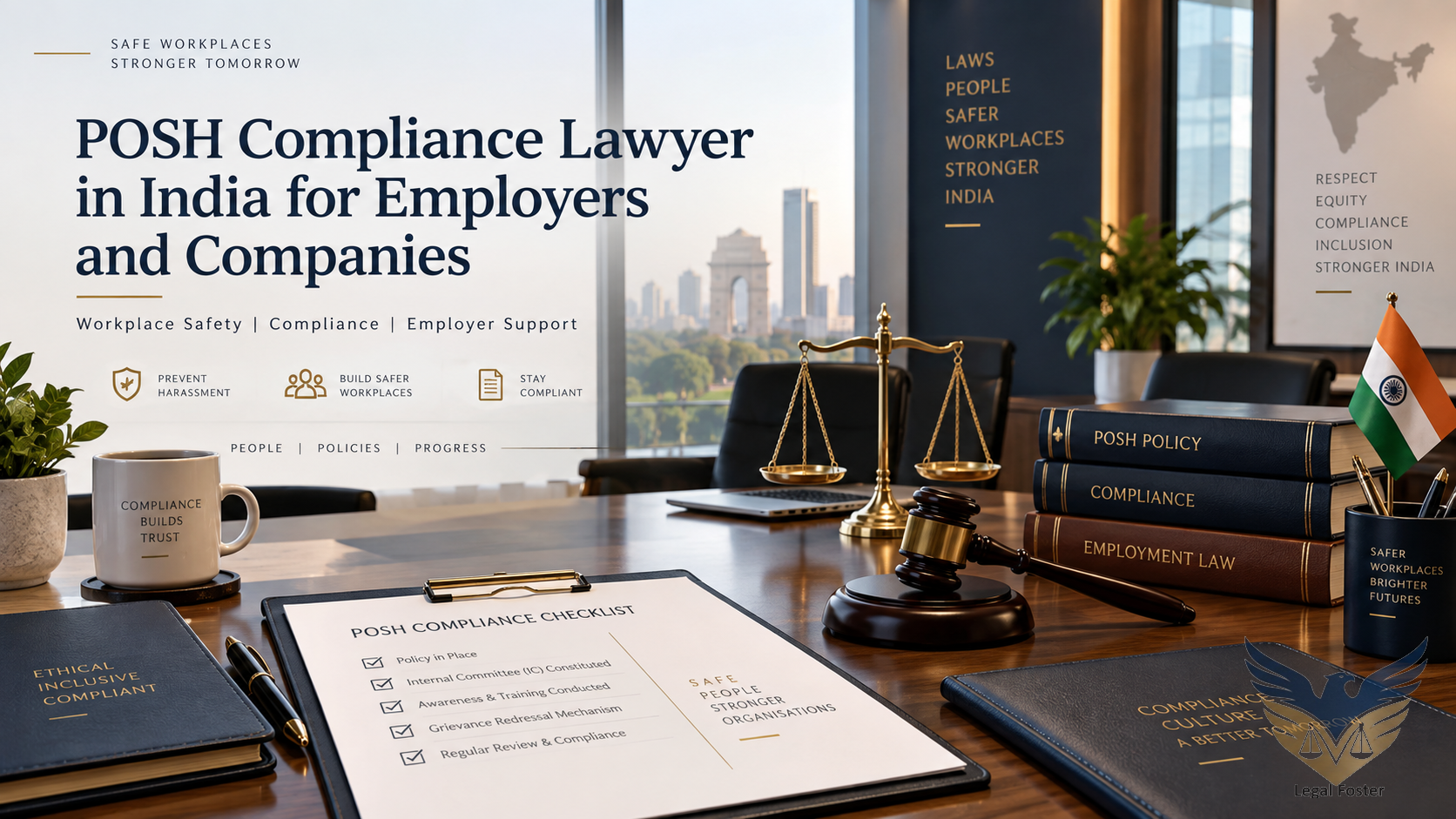
How Can Employers Ensure Prevention of Sexual Harassment Compliance in India?
Workplace safety is everyone’s priority employees and employers. Every business established in India is bound by laws to provide protection to their employees at the workplace. It doesn’t matter if you own a company, a startup, an institution or any other form of a business establishment. You are responsible for providing your employees with a safe environment that allows them to work with their dignity intact.
Often times when running a business, owners get caught up in investing towards expansion, hiring new members for their team and just being operational. They lose sight of the legal importance of having proper POSH compliance in place. Not having a policy, poorly structured Internal Committee, lack of employee awareness sessions or not having any documentation can lead to serious compliance penalties.
Enacted with the hope to provide women employees a safe environment against sexual harassment at the workplace, The Sexual Harassment of Women at Workplace (Prevention, Prohibition and Redressal) Act, 2013 – also known as POSH Act mentioned the roles & responsibilities of employers and what provisions they must adhere to. Non-compliance can put your brand at risk of legal lawsuits and brand reputation damage.
POSH compliance is now ingrained in how businesses operate in Delhi NCR, Mumbai, Bengaluru, Hyderabad, Chennai, Kolkata and other business hubs of India. They know they need to have the right measures in place to show their employees that they are valued and have a proper system that safeguards them.
BK Singh & Associates help business owners understand the need for providing a safe workplace for their employees. We help you draft the required policies and review internal processes to make sure you’re employee complaint satisfy the requirements. Every business has different requirements based on their work environment.
Why Is POSH Compliance Important for Companies in India?
POSH Compliance is important because it creates a set (and legal) procedure for addressing sexual harassment at workplace and resolving any complaints thereof. An employer is responsible for providing a safe workplace and ensuring employees know their rights & responsibilities.
Sexual harassment at workplace not only affects the victim and the perpetrator. It affects employee morale, your brand, workplace culture, operations and much more.
Employers get caught because they treat POSH as a checkbox exercise of having a policy document. POSH Compliance is an ongoing process of creating awareness, implementing procedures, maintaining documentation and following up on complaints.
Businesses believe POSH isn’t applicable to small businesses. POSH Act covers all workplaces that are applicable across industries, offices, shops, schools, hospitals etc.
Let BK Singh Advocate analyse your compliance process and highlight what law applies to you.
What Is POSH Compliance Under Indian Law?
POSH compliance ensures compliance with legal as well as organisational requirements to prevent sexual harassment at workplace and for having a proper complaint mechanism to facilitate redressal of complaints by affected employees.
Employers are required to take all reasonable steps to prevent sexual harassment at the workplace and for dealing with complaints, if any.
A POSH compliant workplace will typically have the following:
- A well drafted POSH policy
- An Internal Committee, if required
- Employee Awareness training
- Well defined process for handling complaints
- Maintaining records/reporting
As is obvious from the above, the law seeks to have both preventive as well as remedial measures in place. Employers are expected to ensure that employees know what constitutes acceptable workplace behavior and what their options are when they face an issue.
BK Singh Advocate can guide you through the POSH legal requirements and help you understand ways in which you can make your workplaces POSH compliant.
Quick Facts About POSH Compliance
- Dos and Don’ts of POSH Act, 2013 compliance
- Employers in India must follow these legal requirements under The POSH Act, 2013 to prevent sexual harassment of women at workplace.
- Do ensure a safe work environment free of sexual harassment
- Do form an Internal Committee as required by law in eligible organisations.
- Do provide a POSH Policy which explains the procedure for making a complaint and the rights of the employees.
- Do carry out POSH training and create awareness
- Do Keep Records to prove your effort toward POSH compliance.
- Don’t risk facing fines and prosecution for non-compliance.
What Legal Framework Governs Workplace Sexual Harassment Prevention?
India’ Sexual Harassment of Women at Workplace (Prevention, Prohibition and Redressal) Act, 2013 (“POSH Act”) is the statute that primarily governs Sexual Harassment at Workplace. Under the POSH Act, an employer is required to sensitization of work force and provide redressal of complaints of sexual harassment through ICC or LCC, as the situation demands.
Essentially the POSH Act can be classified into three components –
Steps to be taken by the employer to prevent such misconduct from happening by creating awareness.
Ensure that the workplace prohibits such harassment and makes it clear what would constitute acceptable behaviour.
Ensure that a mechanism is created to redress complaints by adopting the procedure prescribed under POSH Act.
It is important for Employers to understand that POSH compliance is not an isolated requirement. It’s just one-step in a broader corporate governance initiative. Simply having policies is not enough; Implementation is key.
BK Singh Advocate help you review all legal aspects of POSH compliance and help you understand your obligation.
What Are the Mandatory POSH Compliance Requirements for Employers?
Employers are a critical link in the POSH Act, 2013 and are tasked with providing a workplace where a complaint of sexual harassment can be heard and the legal process outlined in the Act implemented.
Creating POSH compliance requires more than creating a policy document and filing it away.
Employers are accountable for making sure employees are aware of the policy, have access to the complaint process and the Internal Committee functions legally.
This typically means:
- Creating a POSH policy
- Displaying clear information on the complaints process
- Establishing an Internal Committee if necessary
- Providing employee training
- Support during the complaint process
- Maintaining required records/reports
An establishment that doesn’t take these responsibilities seriously could be at a disadvantage if any workplace conflicts, employee complaints, or government inspections occur.
The challenge most employers face is meeting their responsibility to support the employee while maintaining fairness for all involved. POSH requires confidentiality, sensitivity, and following prescribed legal processes.
Let BK Singh Advocate help you understand your establishment’s POSH responsibilities and evaluate your internal process against the law.
How Should Companies Constitute an Internal Committee Under the POSH Act?
Internal Committee is one of the key pillars of POSH compliance. Internal Committee on redressal of Sexual harassment complaints at workplace needs to be formed by the Employer as required under POSH Act.
Composition :-
The committee needs to be formed as specified under the law. Employer needs to ensure that the committee members understand their role and responsibility in handling the complaints with fairness and confidentiality.
A well-stitched together Internal Committee sends out a signal to the employees that their complaints are respected and would be addressed by a predefined process.
Typically these are the areas where the committee requires focussing on:-
- Selecting the members who are eligible to sit in the committee.
- Training the members about POSH process.
- Making sure they understand the confidentiality concerns.
- Handling the complaint records with confidentiality.
- Ensuring the inquiry is conducted based on principles of natural justice.
- Many a times we see that HR leaders try to form a committee just to fulfill the statutory requirement. Internal committee should be practical enough to investigate the complaints as mandated by the statute.
BK Singh Advocate helps companies with Internal Committee requirements and compliances for harassment free workplace.
Which Documents Should Employers Maintain for POSH Compliance?
Record Keeping is one of the important components of Compliance. Proper record will allow organisations to demonstrate that they have taken all reasonable steps to implement POSH in the workplace.
Records that may be useful POSH related include:
- POSH policy
- Constitution of the Internal Committee.
- Record of Employee awareness sessions conducted.
- Record of Complaints received.
- Annual report, where applicable.
- Communication on expected workplace conduct.
The need for above record keeping will vary depending on the size of your company, legal requirements and what has occurred.
Ideally organisations should have these records in place long before any complaint is made. Documents shouldnt be created as a response to a complaint. Having strong compliance measures in place from the beginning is essential to ensuring your workplace is practising responsible behaviour.
BK Singh Advocate can assist your business in understanding what POSH related records you should be keeping.
When Should Companies Consult a POSH Compliance Lawyer?
It is best to consult a lawyer while creating your in-house processes for workplace compliance. Whether it’s reviewing your current policies or for complex POSH matters.
Here’s when you should consider talking to a lawyer:
- If your company wants to create a POSH policy from scratch
- If you want to audit your Internal Committee setup
- If you want to strategise employee awareness programs
- If a complaint has been filed against your company
- If Management wants a compliance audit
There have been changes in the company that affect workplace policies
Reach out to a lawyer at the earliest to understand your obligations and reduce ambiguity while dealing with sensitive situations.
BK Singh Advocate can guide you through with legal advice for POSH compliance, corporate legal requirements, commercial contracts and more. Book a consultation.
How Can Corporate Law Firm Help With POSH Related Compliances?
POSH compliance is more than just the implementation of a policy at the workplace. You must have an effective compliance mechanism which enables your organisation to prevent workplace sexual harassment, build awareness, document incidents and manage complaints in a manner that is legally compliant.
At Corporate Law Firm, we make sure businesses know what they are required to do as per the POSH Act and how they can implement POSH compliance processes suited to their organisation’s requirements.
We provide the following legal services:
- POSH policy drafting/review
- Internal Complaints Committee requirements
- Review of your existing compliances for the workplace
- Legal advisory for conducting employee awareness programs
- Reviewing your documentation
- Handling corporate compliance issues
Because every organisation functions differently, POSH compliances can differ from one company to the next. An SME or startup, for instance, may have different compliances in place than a manufacturing organisation or IT business. Even an Educational institute or a large corporate may have varied processes based on their employee strength, workplace structure and operations.
BK Singh Advocate provides legal advice to organisations on issues related to POSH compliances and assists them in understanding the importance of having strong POSH compliance measures in place.
A POSH compliance will help you inculcate a safer environment for your employees and protect your business by ensuring you have the right systems in place.
Frequently Asked Questions
1. What is POSH compliance for companies?
POSH compliance involves adhering to the relevant statutory requirements under Prevention of Sexual Harassment of Women at Workplace (POSH) Act, 2013. This includes workplace policies, complaint mechanisms, formation of Internal Committee (if required), conducting awareness drives etc.
2. Do all organisations need POSH compliance?
Organizations that fall under the scope of POSH Act are mandated to comply with the relevant compliances prescribed under the POSH Act, 2013. Depending on the type of workplace, number of employees and various other factors, the POSH compliances can vary.
3. Why does a company need POSH policy in the workplace?
Having a POSH policy ensures that the employees are aware of the kind of behaviour that is not tolerated at the workplace. It educates them on ways to file a complaint etc. Having a POSH policy also demonstrates that the employer has taken steps to prevent or deal with any instance of sexual harassment at workplace.
4. What is the role of Internal Committee under POSH Act?
Internal Committee has been mandated under POSH Act so as to provide a mechanism to address complaints of sexual harassment at workplace. Once a complaint is received by the Internal Committee, the committee will look into the matter and try to settle the matter internally.
5. What documents should be maintained for POSH compliance?
Documents such as POSH policy, details of Internal committee, awareness training documents, Records of complaints etc. Needs to be maintained by the company. Certain compliance reports also need to be maintained under the statute.
6. Do startups have to follow POSH compliance?
Yes. Even startups and small businesses have to understand their POSH compliance in light of their workplace and the statutes that apply to their business. It is advisable to take care of the compliances at the initial stages of your business to prevent any workplace conflicts in the future.
7. How often should POSH training be conducted at the organisation?
Under POSH Act, the employer is required to take steps to promote awareness regarding sexual harassment at workplace. The frequency of the training would be determined by the organisation you work for and how they want to go about conducting POSH compliances.
8. What happens if POSH compliance is not satisfied?
There can be legal consequences if your organisation do not follow the POSH compliances required by law. During such instances, your company can also face investigations by regulatory bodies and suffer from reputational damages. It is best to speak to a lawyer regarding what your compliance requirements are.
9. How can BK Singh Advocate assist you for POSH compliance?
BK Singh Advocate can help you understand your POSH compliances, review your existing POSH compliance and assist you with any corporate legal issues that your business faces.
10. When should you contact a POSH compliance lawyer?
You can contact a lawyer who specializes in POSH compliance during the time you create your POSH policy, while setting up your Internal Committee, if you wish to conduct a POSH compliance audit, if you are faced with situations of sexual harassment at workplace or any situation that involves employee disputes.
Final Thoughts
POSH compliance is one of those tick boxes when running your business responsibly. After all, an employee’ place of work shouldn’t just make them work better, they should feel safe and respected whilst there.
If your business has proper channels set up for awareness as well as providing safe channels to lodge complaints, then you’l be far better prepared to deal with any workplace situations legally and appropriately.
Employers who operate in Delhi NCR, Mumbai, Bengaluru, Hyderabad, Chennai or any other place in India are recommended to get periodic reviews of their workplace compliance systems as required under the relevant laws.
BK Singh Advocate and Corporate Law Firm can assist you with POSH compliance, your company documents and know what workplace compliances you need to follow. Contact Advocate BK Singh if you need assistance with any workplace compliances such as POSH compliance. We will guide you about your legal duties.