LEGAL HELP WITH WRITS MANDAMUS / CERTIORARI / QUO WARRANTO IN INDIA
When constitutional rights or important statutory duties are at stake, Mandamus / Certiorari / Quo Warranto matters can impact personal rights, business continuity, assets, reputation, finances and long-term legal interests. Early review is important since legal rights may be governed by limitation, procedure and the stage of the dispute. Legal Foster introduces the client to advocates experienced in constitutional law and writ matters across India. Counsel will review the situation, clarify legal options and help prepare a responsive pleading that is appropriate to the laws and forum. Each case is unique. Potential relief depends on the documents, parties’ conduct, applicable legislation, procedural posture and evidence. Consult early, and never assume the result before counsel has reviewed the facts.
TYPES OF WRITS AND PURPOSE
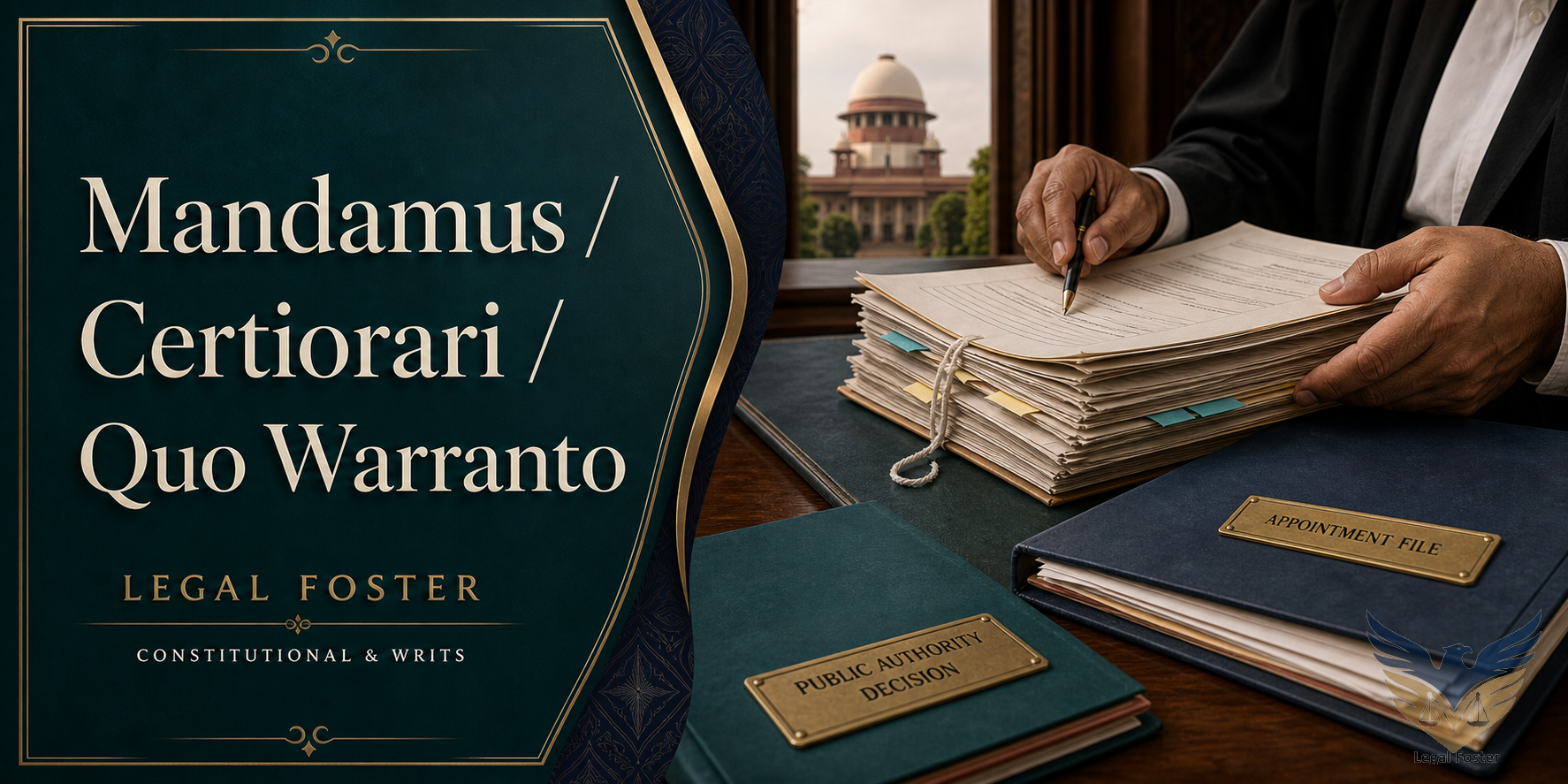
Remedies include mandamus, certiorari and quo warranto depending on the nature of the defect in public law and the relief required.
- Mandamus orders performance of an enjoined public duty;
- certiorari quashes a decision affected by jurisdictional error or error subject to review;
- quo warranto challenges lawful entitlement to a public office.
- Counsel will identify applicable statutory duties, records of the decision, appointment qualifications and relevant parties; while the legal issues of standing, alternative remedies, delay and disputed facts may also arise.
- Drafting typically requests the proper writ and any necessary consequential directions supported by official documents and records of proceedings.
A Mandamus / Certiorari / Quo Warranto engagement begins when counsel understands the legal relationship between parties and what happened to cause the dispute. Many seemingly similar matters involve different laws, agreements, agencies and remedies.
- Counsel will identify who has standing, which obligations are in dispute, what remedies are available and where the matter can be filed.
- Advice can be preventive or reactive, transactional or contentious; involving drafting of documents, responding to a notice, protecting rights during pending proceedings, or making claims and defenses.
- Legal Foster can connect you with experienced counsel.
- Once retained, the advocate will provide advice specific to the facts and law.
CASE REVIEW
The first review generally covers the client’s goals, timeline, timeline of events and any evidence.
- Counsel may ask when events occurred, what conversations took place or reminders were sent, if any admission was made or settlement offered and whether another proceeding exists between the parties.
- This allows counsel to identify short-term risks and avoid procedural errors that may delay relief.
- A case review is strongly recommended when an order, hearing, filing deadline, investigation or compliance date, enforcement step or transaction closing is imminent.
- Try to compile favourable and unfavourable information, even if it seems detrimental to your position.
- Incomplete information impairs counsel’s ability to advise and documents later obtained by the other party can materially change the strategy.
TYPES OF DOCUMENTS REVIEWED
Documents to retain and review may include:
- order of decision or appointment being challenged;
- applicable statute and rules;
- evidence of eligibility and qualifications;
- copies of reminders sent and received;
- hearing file and order;
- official notices received;
- chronology, affidavits and pleadings from alternative remedies;
- complaints or petitions filed elsewhere.
Counsel may also request related agreements, official notices, replies and account statements; electronic communications; evidence of other orders from official sources; identification and registration records; photographs, maps or videos; reports from technical experts; pleadings or orders from earlier proceedings. Counsel will request documents specific to the relief you are seeking.
- Keep originals safe.
- Provide counsel with legible copies organised by date.
- Emails should retain metadata if available, and should not be altered.
- Documents are only as useful as your ability to explain where they came from, that they are authentic and how they relate to the matter at issue.
- Counsel can help you organise an indexed brief containing date, source and purpose of each important record.
LEGAL AND PROCEDURE REVIEWED
After reviewing and organizing the client’s information, counsel determines what laws apply and identifies potential legal issues based on those laws.
- Issues may include standing, limitation period, factual credibility, jurisdiction, authority, procedure followed, burden of proof, admissibility of evidence and the kinds of relief available from the forum.
- Procedure is often as important as substance.
- A meritorious claim may still be dismissed if filed too late, in the wrong agency or without evidence to support factual allegations.
- Technical defenses should also not be raised without consideration of whether they would support dismissal on legal grounds and whether they are material to the ultimate resolution.
PREPARE LEGAL APPROACH
Advice will consider both rights and goals to determine potential legal approaches. Some matters must be addressed immediately to protect rights; while other matters permit negotiation, allow for business completion or may benefit from a longer-term strategy for compliance. Counsel will discuss the potential cost, time and evidence required to pursue each option, and how legal remedies can be enforced.
- Recommended next steps could include delivering a formal representation, negotiating a solution, mediating the dispute;
- making an application to regulators or statutory authority;
- filing a suit or petition;
- filing a defense or Reply;
- appeal or coordinated pursuit of remedies from more than one forum.
- Strategy evolves with new evidence and should consider future conduct by others.
- Clients should confirm substantial decisions in writing.
LEGAL DRAFTING AND FILINGS
If filing a pleading is necessary, counsel will draft pleadings which state the material facts, identify applicable laws and request relief. Affidavits, annexures, power of attorney and procedural forms may also be required.
- Drafting focuses on proved facts and distinguishes between what the client can know, from what counsel can argue based on the law and documents.
- Facts should be supported by material evidence.
- Finally, counsel will review court rules to determine if there is jurisdiction, whether limitation has expired, who are the proper parties, if valuation or court fees are required and how documents should be served.
- Formats vary between High Courts, India’s Supreme Court, government agencies and constitutional forums.
- Local practice also should be considered.
- Avoid bringing matters until counsel confirms they can meet these obligations.
INTERIM APPLICATIONS
It is possible to request temporary relief in Mandamus / Certiorari / Quo Warranto proceedings if irreparable harm may occur before final disposal.
- Possible interim orders include preservation of property, restraint against doing something that threatens rights; maintaining a current position, protecting documents or other temporary directions.
- Interim relief is not automatic.
- It is granted at discretion if there is a credible case on the merits, urgency and the prejudice that may occur without protection is explained.
- Merely filing a lawsuit does not stay proceedings or actions by others.
- Clients should continue complying with notices and deadlines until a court or written agreement imposes restrictions on another party.
- Counsel cannot guarantee that interim relief will be granted.
PROCEEDINGS AND REPRESENTATIONS
Representation could include preliminary hearings; procedural applications; presenting evidence, preparing witnesses; written submissions and argument.
- Counsel will help explain what forum expects and how to put information and evidence into compliant form.
- Oral evidence must not contradict facts or documents presented in pleadings.
- Expert opinion evidence may be useful if the court will consider it.
- Finally, when making submissions counsel focuses on the law, material facts and relief requested.
- Clients should not provide information or statements to others that contradict counsel’s case strategy or create binding admissions while a proceeding is pending.
NEGOTIATION AND COMPROMISE
Filing litigation is only one strategy among several. Negotiation, mediation and a written settlement can save time and money if compromise is legally possible and supports your business goals.
- Matters covered should include: obligations of each party, payment or performance due dates; releases, confidentiality (to the extent lawful), discontinuance of pending proceedings, fundamental rights, liberties; preservation of official records and documents; whether previous official orders should be withdrawn; Constitutional remedies barred and applicable costs for breach of the agreement.
- Understand tax, regulatory consequences, reputation and enforceability before agreeing to terms.
- Voluntary payments should not be made without consideration of the full commercial effect.
- Conversations and agreements do not automatically stay proceedings.
- Compare settlement to applicable limitation periods, calendar hearings and whether enforcement actions may continue by law or Court order.
COSTS AND RISKS
- Clients should consider cost, timelines to obtain relief, quality of evidence, impact on business, ability to enforce orders and the possibility of receiving an unfavourable order.
- Public proceedings can also affect reputation and operations.
- Counsel can help develop a realistic strategy that avoids duplicative applications and focuses spending on core issues.
- Store documents safely, mark deadlines on calendars and follow agreed processes for communications between parties.
- Clients should not destroy evidence, provide false information, make threats against another party or attempt to influence witnesses.
- Parties should comply with existing orders unless they receive permission from the issuing authority or both parties agree otherwise.
- Clients should inform counsel of any updated information or changes in goals.
LEGAL FOSTER’S ROLE
Legal Foster introduces clients to experienced Advocates in Mandamus / Certiorari / Quo Warranto law across India. Your Advocate can review records, identify the proper forum and advise you on next steps including procedural requirements or commercial consequences. Try to consult soon after receiving a notice, learning of harmful action, needing to close a transaction or when waiting will prevent you from exercising your rights. Your actual strategy will depend on current laws, procedural requirements and facts of the matter. Legal Foster cannot predict results or assure work by selected counsel.
HOW TO PREPARE FOR CONSULTATION
- Clients should try to prepare a chronology of events, identify parties with interests in the matter, gather notices and orders received; key contracts and proof of payments, performance or compliance; and consider what result you would like to achieve.
- Highlight relevant proceedings and deadlines.
- Facts should be distinguished from thoughts or suspicions.
- If you have documents, try to organise them by date and create your own labels so they can be quickly located.
- Questions about jurisdiction limitation, process, evidence, fees and costs; likely timeline and enforceability of court orders should all be researched with counsel at the consultation.
- Counsel can provide better advice when they understand the entire timeline and your business constraints.
Consult a Lawyer about Mandamus / Certiorari / Quo Warranto
Timeline is often important in legal matters. Legal Foster makes it easy to speak with Lawyers who will advise you on Mandamus / Certiorari / Quo Warranto across India. Advocate care includes an initial consultation where counsel can review your documentation, assess jurisdiction and procedure and recommend next steps.
- Clients should retain copies of every filing and request a delivery receipt whenever possible.
- Clients should try to verify dates using official documents. An incorrect timeline could impact jurisdiction, limitation and damage your credibility.
- A legal opinion will highlight strong and weak points. Demand clarity on confusion legal terms. Counsel should explain both legal theory and likely practical outcomes associated with each option.
- Clients with multiple parties, forums or types of disputes should ensure their instructions are coordinated. Separate engagements increase risk of inconsistent facts and wasted expense.
- Commercial goals can change with time. Counsel should know your short and long-term goals at the outset. Revisit interests and instruct counsel if they change due to cost, proof or opportunity."