Supreme Court Plea Raises Concern Over Vacancies in State Human Rights Commissions
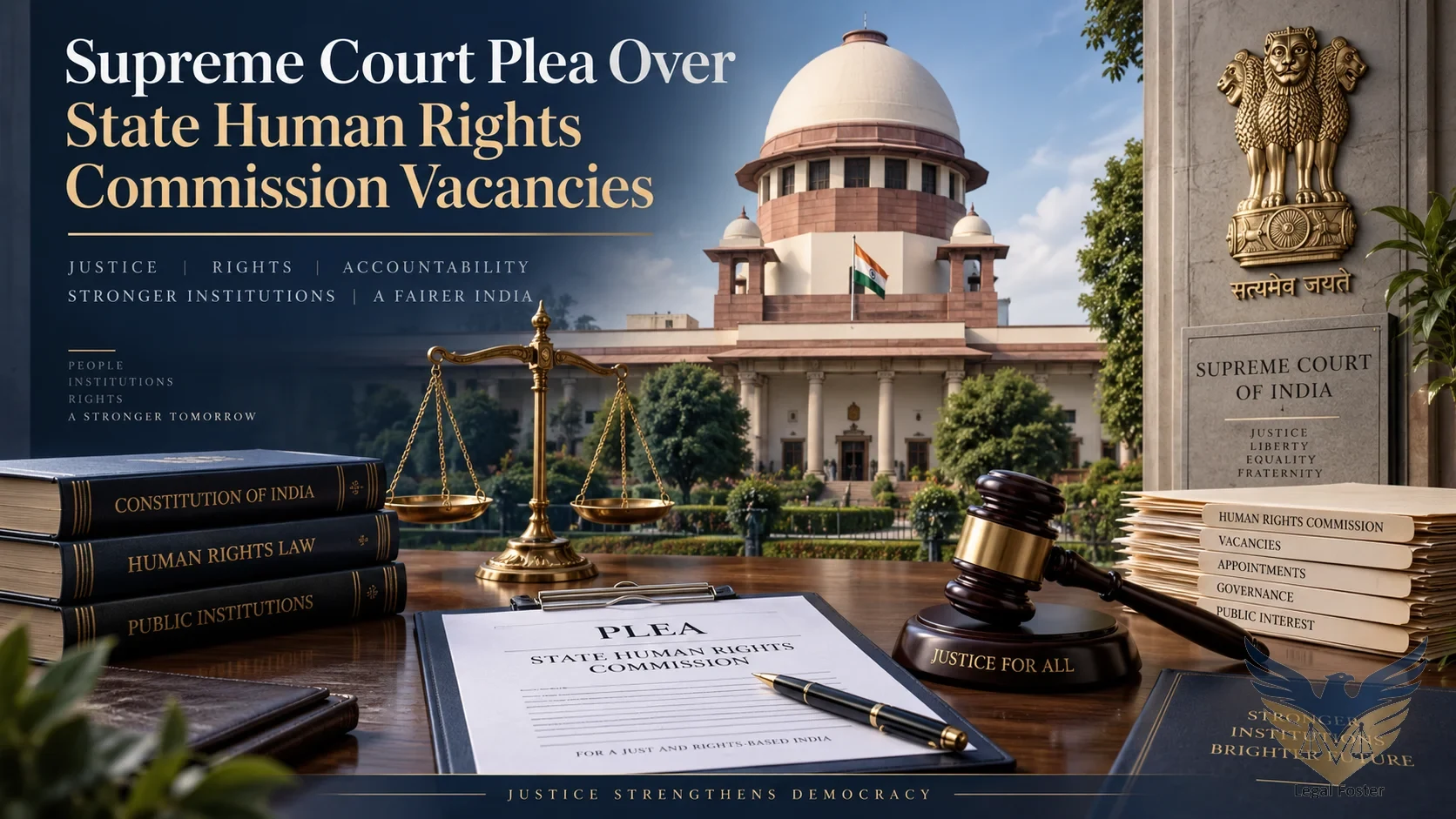
Seeking replies from the National Human Rights Commission (NHRC), Centre and States over vacancies in State Human Rights Commissions (SHRCs), the Supreme Court issued notice Monday on a plea claiming many SHRCs are vacant, understaffed or not functioning.
“A Bench of Chief Justice of India (CJI) Surya Kant and Justice Joymalya Bagchi and Justice V Mohana issued notice on the PIL filed by Association of Retired Judges of the Supreme Court and High Courts of India seeking necessary directions to ensure State Human Rights Commissions…are manned adequately and are able to function,” the top court said in an order.
In their petition, they have sought directions to the Union and State governments to ensure the SHRCs function properly under the provisions of the Protection of Human Rights Act, 1993 (which establishes the commissions to inquire into complaints of human- rights violations). The petitioners pointed to the 2015 ruling in DK Basu v. State of West Bengal where the Supreme Court had said filling vacancies in SHRCs was not optional for governments but compulsory.
“Alas! More than a decade has elapsed since the aforesaid directions were issued by this Court and the default continues in different parts of the country,” the plea said.
According to the petition, several States have vacancies in posts reserved for Chairpersons and Members. The plea says some SHRCs have not functioned for years.
The plea claims that based on an analysis of the composition of the 28 State commissions, 10 States are currently without a permanent Chairperson; 3 State Human Rights Commissions are non-functional; 7 States do not have a judicial Member and 16 States do not have a non- judicial Member.
It also alleged that 23 States have failed to make their State Human Rights Commissions’ annual reports available online.
As per the 1993 law, the annual reports are supposed to detail the work done by these commissions and be placed before state legislatures. The petition notes only five States — Goa, Maharashtra, Punjab, Sikkim and Uttarakhand — had these annual reports available to the public.
The plea also highlighted what it called a shortage of administrative staff and investigators in the SHRCs, citing Section 27 of the Protection of Human Rights Act. It says State governments are required under the law to provide commissions with the necessary officers and police and other staff.
The plea has questioned the practice of the National Human Rights Commission (NHRC) transferring complaints to allegedly non-functional SHRCs.
Petitioners cited the NHRC annual report for 2023-24 to say 239 complaints were transferred to the Andhra Pradesh SHRC while the Jharkhand SHRC had 144 cases transferred to it. The petition said both SHRCs did not have a functioning Chairperson and Members at the time of these transfers.
The plea also says transferring a complaint to a body that is unable to function could leave complainants without any meaningful place to pursue their grievances.
Petition cites prolonged vacancies in State commissions as well. The SHRC for Uttar Pradesh, the plea said, does not have a Chairperson since June 4, 2024. The post of judicial Member is vacant since June 2026.
In the case of Andhra Pradesh, the plea said the commission has been without a Chairperson, Members and key administrative personnel since March 2024. During this time, over 10,000 complaints have allegedly gone unaddressed.
Apart from directing the Centre and States to fill vacancies in the SHRCs, the petitioners have also sought:
- Reviving SHRCs that are non-functional and ending prolonged arrangements where Acting Chairpersons have stayed in office for years.
- Ensure adequate staff to take care of administrative and investigation functions in these commissions.
- Direct all SHRCs to publish their annual reports.
- Direct NHRC not to transfer complaints to SHRCs that are non-functional. Further, disclose the status of complaints already transferred.
- Directions to the top court to regularly monitor compliance with its orders rather than dispose of the matter after pronouncing the order.
- Direct States to maintain functional and updated websites for their SHRCs which contain details of their composition (including vacancies) and annual reports.
The PIL was drafted by advocate Anchal Kanthed and filed through advocate Srishti Agnihotri on behalf of Association of Retired Judges of Supreme Court and High Courts of India.